PublicSphere Live
Health
Nigeria’s Ebola Case Shares Genetic Similarities With Kenya Virus, FG Says
Government says further investigations are needed to establish epidemiological link; contact tracing, surveillance and public health response intensified
The Federal Government has disclosed that genomic analysis of Nigeria’s confirmed Ebola Virus Disease (EVD) case in the Federal Capital Territory (FCT) has revealed that the virus is genetically related to a virus identified in a case in Kenya, raising fresh questions about the possible geographical connections of the infection and the importance of international disease surveillance.
The Coordinating Minister of Health and Social Welfare, Prof. Muhammad Ali Pate, disclosed this on Saturday while providing an update on the outbreak, stressing, however, that genetic similarities alone do not establish that the Nigerian case originated from Kenya or that the two cases are directly connected.
According to the minister, further epidemiological investigations are required to determine whether there is a direct link between the cases, including whether the individuals involved shared a common source of infection, had contact with one another, or were exposed to a related chain of transmission.
“The findings provide important scientific information, while further investigations are required to establish whether the two cases are epidemiologically linked,” Pate said.
The genomic analysis was conducted by the Nigeria Centre for Disease Control and Prevention (NCDC) in collaboration with the Institute of Genomics and Global Health (IGH) at Redeemer’s University, Ede, Osun State, led by Professor Christian Happi.
Pate commended the institutions for the speed and scientific rigour of their work, describing the findings as an important contribution to the country's response to the confirmed infection.
The development highlights the growing importance of genomic surveillance in identifying the characteristics of infectious diseases, comparing viral samples and helping public health authorities understand how outbreaks may be connected across geographical boundaries.
However, the minister's statement does not, by itself, establish that the infection was imported from Kenya, that the two patients had direct contact, or that a common source has been identified.
Contact Tracing Continues
The Federal Government said contact tracing and monitoring of individuals identified as having possible exposure to the confirmed case remain central to efforts to contain the infection.
Pate disclosed that some identified contacts had tested negative, while laboratory results for others were still pending as of Saturday.
The distinction is important because a negative result at a particular stage does not necessarily eliminate the need for continued monitoring where public health authorities consider the timing of exposure and testing relevant. Contacts may require follow-up in accordance with the applicable public health protocols.
The government has consequently intensified surveillance, laboratory capacity, case management, risk communication and infection prevention and control measures.
Healthcare facilities have also been reminded to identify and promptly report suspected cases to the appropriate public health authorities. Additional training and sensitisation for healthcare workers are expected to strengthen the implementation of established response procedures.
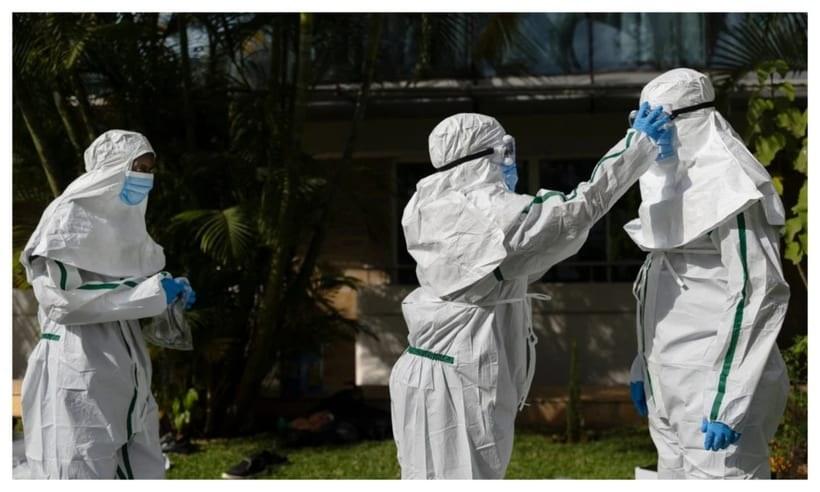
These measures are particularly important because healthcare workers can face elevated risks when caring for suspected or confirmed Ebola patients without appropriate protective equipment, training and infection-control procedures.
The government is also seeking to ensure that information about the outbreak reaches the public promptly, accurately and consistently.
Pate announced that the NCDC director-general had indicated that the agency would begin issuing short daily public updates from October 24, 2026, to keep Nigerians informed about developments.
The minister urged Nigerians to remain calm and vigilant, observe recommended safety precautions, follow official public health guidance and avoid circulating misinformation or unverified reports.
He identified the NCDC, the Federal Ministry of Health and Social Welfare, the World Health Organization (WHO) and the Africa Centres for Disease Control and Prevention (Africa CDC) as recognised sources of information.
What The Genetic Connection With Kenya Means
The reference to Kenya is significant because genomic analysis enables scientists to examine the genetic material of a virus and compare it with samples collected from other patients or outbreaks.
Viruses accumulate genetic changes over time. By examining these changes, scientists can determine how closely related different viral samples are and assess whether they may belong to the same viral lineage.
When two samples share close genetic similarities, it can suggest that the viruses have a common evolutionary ancestry. Depending on the quality and extent of the evidence, the findings may help investigators identify possible transmission pathways or narrow down the circumstances surrounding an infection.
Nevertheless, genetic relatedness is not the same as proof of direct transmission.
Two people may become infected with closely related viruses without having met, travelled together or had any direct contact. They could have been exposed through separate transmission chains originating from a common source, or the viruses could belong to a lineage circulating in a wider geographical area.
For investigators to establish a meaningful epidemiological connection between Nigeria and Kenya, genomic findings would need to be assessed alongside information such as the patients' travel histories, dates of illness onset, possible exposure to infected individuals, contacts and other relevant circumstances.
Investigators would also need to consider the timing and geographical distribution of related cases, as well as any evidence of transmission through intermediate contacts.
Consequently, the Federal Government's disclosure should be understood as a scientific finding that may help guide further investigation, rather than a final determination of where the Nigerian infection originated.
The key question is whether the genetic relationship can be supported by a demonstrable epidemiological pathway connecting the cases.