PublicSphere Live
Health
Ebola Without A Vaccine: Is Africa Being Abandoned By Global Health Research?
The absence of an approved vaccine against the Bundibugyo strain raises troubling questions about global health priorities, unequal access to scientific innovation and Africa’s preparedness for epidemics that can threaten the entire world.
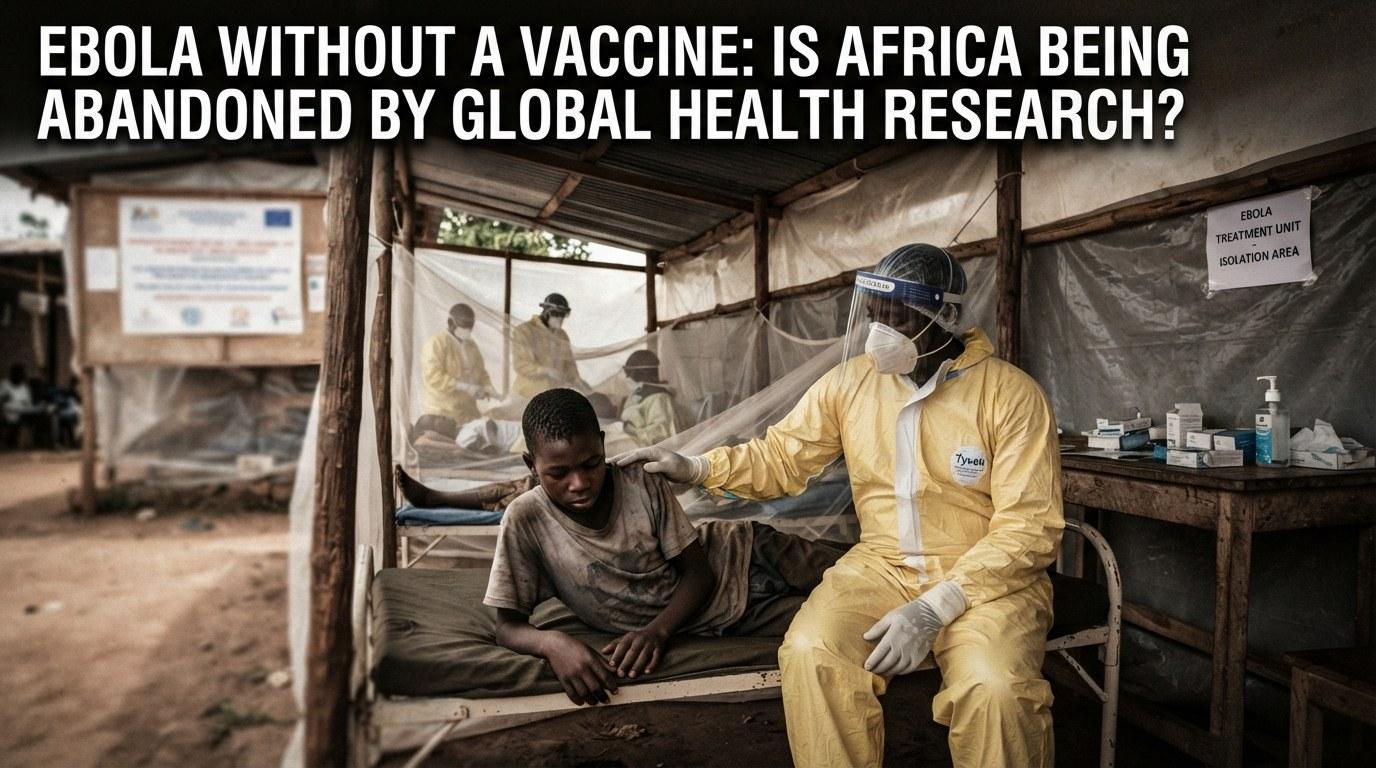
The most frightening aspect of an Ebola outbreak is not merely the possibility of a deadly infection spreading from one community to another; it is the realisation that, even in an age of extraordinary scientific advancement, people may find themselves confronting a lethal disease without an approved vaccine to protect them or a specific treatment to save those already infected. For families watching loved ones fall ill, the distinction between a virus for which a vaccine exists and another for which science has yet to produce an approved shield can be the difference between reassurance and helplessness.
That fear has assumed a disturbing new dimension following the explanation offered by Dr Jean Kaseya, Director General of the Africa Centres for Disease Control and Prevention, that vaccines are unavailable for the current Ebola outbreak partly because international partners regard the disease as an African problem. Speaking during an interview on Channels Television’s The Morning Brief, Kaseya reportedly declared that if the outbreak had occurred in Western countries, vaccines would already have been available.
His assertion is a serious indictment of the international health system. It raises questions that extend beyond the immediate outbreak: whose lives receive priority in global medical research, who determines which diseases deserve urgent investment, and why must African populations repeatedly confront dangerous infectious diseases while depending heavily on scientific resources developed elsewhere?
These questions deserve urgent attention, not because every allegation of international neglect should be accepted without examination, but because the history of epidemic preparedness provides sufficient grounds for Africa to demand a more equitable, transparent and dependable global health system.
The Troubling Reality Of A Vaccine Gap
According to the report, the current outbreak is caused by the Bundibugyo virus, a relatively uncommon Ebola strain for which there is no approved vaccine or specific treatment. This distinction is crucial because the existence of a vaccine against one Ebola strain does not automatically mean that the same vaccine will protect against another.
The Ervebo vaccine, for instance, is licensed against the Zaire ebolavirus species, which caused the devastating 2014–2016 West African epidemic. Its availability represents a major achievement in medical research and epidemic control, but it cannot simply be assumed to offer protection against Bundibugyo virus.
Consequently, the current crisis exposes a critical weakness in the world's approach to epidemic preparedness. Scientific advances against one dangerous pathogen do not necessarily provide protection against related strains, and the existence of an effective intervention for one outbreak cannot substitute for the research required to confront another.
The absence of an approved Bundibugyo vaccine does not mean scientists have done nothing. Kaseya said the Africa CDC had initiated clinical trials of new vaccines, including a candidate manufactured in Egypt. That development offers some hope, but a vaccine candidate undergoing clinical trials is not the same as a proven, approved product that can immediately be deployed to protect exposed populations.
Clinical trials must establish whether a vaccine is sufficiently safe and effective, while regulatory authorities must evaluate the evidence before approval. Manufacturing capacity, distribution arrangements and access to suitable vaccination supplies must also be considered. These processes cannot responsibly be bypassed simply because an emergency has arisen.
Nevertheless, the obvious question is why the world should still be struggling to develop a vaccine against a known and dangerous Ebola strain when the disease has repeatedly threatened African communities. If the international community recognises the possibility of future outbreaks, why has preparedness not advanced far enough to ensure that promising vaccine candidates are available for rapid evaluation and deployment?
This is where the debate must move beyond expressions of sympathy to an examination of priorities, funding and accountability.
Does The Global Health System Value African Lives Equally?
Kaseya's assertion that vaccines would already be available if the outbreak were occurring in Western countries strikes at the heart of a long-standing concern about inequality in medical research. The issue is not simply whether Western governments care about African populations; it is whether the financial and institutional arrangements governing scientific innovation adequately reflect the health needs of people outside the wealthiest countries.
Research and development are expensive. Pharmaceutical companies and biotechnology firms require substantial investment to discover promising compounds, conduct trials, secure regulatory approval and establish production facilities. In commercial settings, expected demand, purchasing power, investment returns and the availability of government support can influence which projects attract funding.
This creates a fundamental inequity. Diseases concentrated in poorer populations may generate less predictable commercial returns, even when they pose enormous public-health risks. Consequently, research into such diseases can depend disproportionately on public funding, philanthropic contributions and international partnerships.
When those funding arrangements fail to sustain research before an emergency, the consequences are borne most immediately by the communities already facing the disease.
Africa's concern, therefore, is legitimate. A health emergency affecting populations with limited resources should not have to compete for attention against the commercial priorities of a global pharmaceutical market that may offer stronger incentives elsewhere.
Yet a balanced analysis must acknowledge that the absence of an approved Bundibugyo vaccine cannot, by itself, prove that international partners deliberately withheld one from Africa. Vaccine development is scientifically complex, and different Ebola species can require distinct research approaches. The relevant question is whether sufficient, sustained and appropriately directed resources have been committed to overcome those challenges before outbreaks occur.
Kaseya's statement should prompt international health institutions, donor governments, research organisations and pharmaceutical companies to provide clear answers about the funding, research programmes and preparedness arrangements supporting neglected high-risk pathogens.
Africa should not have to wait until an epidemic becomes an international emergency before its medical needs command the urgency they deserve.
Africa's Dependence On External Scientific Capacity
The Ebola crisis also exposes Africa's continuing dependence on scientific institutions, pharmaceutical manufacturers and funding sources located outside the continent. Despite its large population, substantial human resources and growing number of research institutions, Africa remains inadequately positioned to develop, manufacture and distribute essential vaccines on the scale required during major public-health emergencies.
This dependence is dangerous because outbreaks do not respect international borders, commercial calculations or the administrative timelines of donor agencies. When an epidemic emerges, countries need access to reliable diagnostics, protective equipment, trained personnel, vaccines where available and medicines supported by scientific evidence. They cannot afford to discover that critical research has been neglected until the disease begins spreading.
The reported development of a Bundibugyo vaccine candidate in Egypt is encouraging precisely because it demonstrates the potential for African and other developing-country scientific institutions to contribute to solutions rather than remain passive recipients of products developed elsewhere. But one promising initiative cannot substitute for a comprehensive continental research and manufacturing strategy.
African governments must invest more deliberately in biomedical research, clinical-trial infrastructure, specialist training and pharmaceutical production. Universities, public-health agencies and private companies should be encouraged to develop partnerships capable of sustaining research between epidemics, when international attention inevitably diminishes.
This is particularly important because vaccine research cannot always be initiated and completed within the short period between the identification of an outbreak and its spread. Scientific preparedness requires years of sustained investment, careful experimentation and cooperation among institutions.
Africa must therefore confront an uncomfortable reality: although the continent cannot independently finance every aspect of modern medical research, it cannot continue to treat dependence on external goodwill as a satisfactory public-health strategy.
9,500 Infections And 4,600 Deaths: The Human Cost Of Failure
The figures cited by Kaseya in the report are deeply disturbing. More than 9,500 infections and approximately 4,600 deaths in the Democratic Republic of Congo alone, if referring to the outbreak under discussion, would represent a catastrophic human toll. The figures require clarification regarding the reporting period, outbreak classification and whether they refer exclusively to the current episode or encompass a broader period of transmission.
Whatever the precise scope of those figures, the underlying lesson is unmistakable: Ebola outbreaks can devastate families, overwhelm healthcare workers and disrupt the economic and social life of affected communities.
Behind every reported death is a household that may have lost a breadwinner, a parent, a child or the person responsible for caring for other family members. Survivors may face prolonged recovery, social stigma and financial hardship. Healthcare workers, who must care for infected patients while protecting themselves from exposure, face extraordinary physical and psychological pressures.
Communities can also suffer when fear overwhelms confidence in public institutions. People may avoid health facilities, conceal symptoms or distrust official advice, particularly where communication is poor or previous experiences with healthcare authorities have been disappointing.
The consequences extend beyond those infected. Businesses may lose customers, transport and trade may be disrupted, schools may face interruptions, and already vulnerable households may struggle with rising economic insecurity.
It is against this human background that the absence of an approved vaccine should be examined. The issue is not merely a gap in a pharmaceutical catalogue; it is a weakness in the world's ability to prevent avoidable suffering.
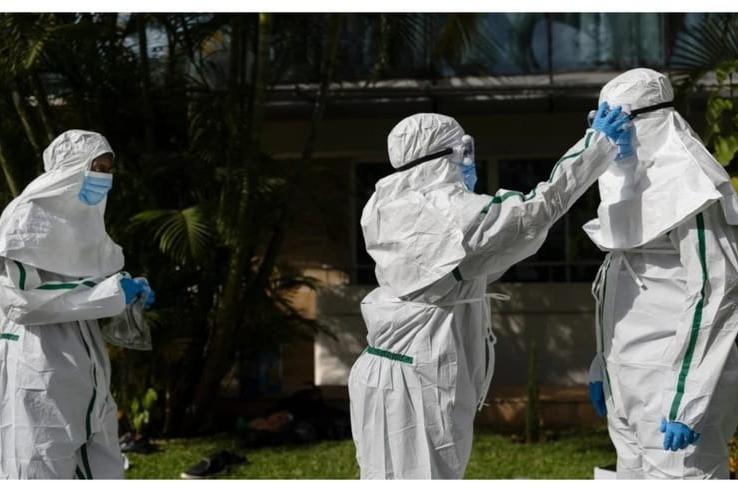
However, the lack of a vaccine does not mean there are no ways to combat Ebola. Rapid diagnosis, isolation and supportive clinical care, infection prevention, contact tracing, safe burial practices and effective public communication remain essential. These interventions can reduce transmission and save lives even where a strain-specific vaccine is unavailable.
The appropriate response, therefore, is neither despair nor the assumption that vaccination alone will end the crisis. It is a coordinated emergency response supported by sustained scientific investment.
Nigeria Must Not Underestimate The Danger
The report's account of Nigeria's first confirmed case, involving a woman who reportedly arrived from Uganda on October 3, should command the attention of public-health authorities and citizens alike. The reported confirmation on Tuesday and the monitoring of 44 contacts underscore the importance of rapid detection and transparent communication.
The identification of a case does not automatically mean that Nigeria is facing widespread community transmission. Equally, the fact that only one case has initially been reported should not encourage complacency. The immediate objective must be to establish the extent of possible exposure, monitor contacts, identify symptoms promptly and prevent further transmission.
Nigeria has considerable experience managing infectious-disease emergencies, including the successful containment of the 2014 Ebola introduction. That experience demonstrated the importance of coordinated surveillance, laboratory capacity, trained health personnel and swift action. But past success is not a guarantee of future security.
The authorities must establish clear lines of responsibility among the Nigeria Centre for Disease Control and Prevention, state health ministries, hospitals, port-health officials and other relevant agencies. Healthcare facilities need appropriate protective equipment, infection-control procedures and clear protocols for identifying and referring suspected cases.
Contact monitoring must be professionally managed, with appropriate support for those required to comply with public-health guidance. Authorities must protect patient confidentiality while providing the public with accurate, timely information about the outbreak, its transmission and the measures being taken to contain it.
Citizens also have responsibilities. Anyone who has potentially been exposed should follow guidance from public-health authorities and seek medical advice promptly if symptoms develop. People should avoid spreading unverified reports, stigmatizing patients or assuming that nationality alone determines who poses a risk.
Public communication must be calm, factual and consistent. Sensationalism can create panic, while excessive reassurance can weaken vigilance. Nigeria needs neither.
The country must also establish whether its emergency preparedness arrangements can support rapid access to the diagnostic tools, clinical expertise and protective supplies needed to respond to a Bundibugyo case. Waiting until more infections are recorded would be an expensive and potentially dangerous mistake.
The Africa CDC Must Turn Its Warning Into Action
Kaseya's intervention is valuable because it has drawn attention to a problem that could otherwise remain overshadowed by the immediate demands of outbreak management. But raising the alarm is only the beginning. The Africa CDC must use its continental position to press for measurable commitments from governments, research institutions and international partners.
These commitments should include transparent funding for research into Ebola strains without approved vaccines, support for clinical trials conducted to rigorous ethical and scientific standards, and agreements that facilitate affordable access to successful products.
African governments should also agree on mechanisms for pooling resources. Individual countries may struggle to finance expensive vaccine research, but collective investment can create a more sustainable foundation for continental preparedness.
Regional manufacturing arrangements deserve particular attention. Building factories without the necessary technology, trained personnel, reliable supply chains and guaranteed demand will not solve the problem. Governments must create a coherent ecosystem in which research, regulation, production and distribution reinforce one another.
The continent also needs stronger arrangements for sharing epidemiological information and coordinating clinical trials. In an emergency, fragmented responses can waste time and resources. Cooperation should make it easier to mobilise expertise, identify suitable trial sites and evaluate promising interventions without compromising scientific standards.
International partners, for their part, should explain what resources are available for Bundibugyo research, what obstacles remain and how those obstacles can be addressed. Such transparency would help distinguish genuine scientific difficulties from failures of funding, coordination or political commitment.
A Call For Global Solidarity And African Self-Reliance
The international community must recognise that investing in Africa's epidemic preparedness is not an act of charity. Infectious diseases emerging or spreading in one country can create risks far beyond its borders. Strengthening surveillance, laboratories and vaccine research in Africa therefore serves a shared global interest.
The COVID-19 pandemic demonstrated the consequences of unequal access to medical countermeasures. Wealthier countries were able to secure substantial vaccine supplies, while many poorer countries struggled to obtain timely access. Africa should not have to experience another major health emergency before the world recognises the strategic importance of equitable preparedness.
At the same time, African leaders cannot place the entire burden of responsibility on foreign governments and pharmaceutical companies. They must examine their own budgetary priorities, the effectiveness of regional health institutions and the consistency of their investment in scientific research.
Healthcare preparedness must not depend on whether an outbreak attracts international headlines. Governments should support public-health institutions before emergencies occur, retain qualified professionals, strengthen local manufacturing and ensure that resources allocated to health deliver measurable results.
The Bundibugyo outbreak presents an urgent test of that commitment. The reported Egyptian vaccine candidate offers a potential avenue for progress, but its promise must be assessed through rigorous clinical research, not political rhetoric or premature declarations of success.
Ultimately, the question raised by Kaseya is larger than the availability of one vaccine. It concerns whether the international health system is prepared to protect people wherever they live, regardless of their income, nationality or economic importance to the pharmaceutical market.
If the absence of an approved Bundibugyo vaccine reflects years of inadequate investment in a known public-health threat, the world must confront that failure honestly. If scientific challenges are the principal obstacle, governments and research partners must provide the resources and cooperation required to overcome them.
For Nigeria, the immediate priority is to contain any transmission, protect healthcare workers and maintain public confidence through credible information. For Africa, the longer-term task is to build the research, manufacturing and regulatory capacity required to reduce dependence on external suppliers. For the international community, the obligation is to ensure that preventable inequalities do not determine who receives the benefits of scientific progress.
No continent should have to wait for a dangerous disease to threaten wealthy countries before its people receive the urgency, investment and protection their lives deserve. Ebola has once again exposed the cost of inadequate preparedness. The response must be a commitment to scientific cooperation, equitable access and African capacity-building that endures long after the current outbreak has disappeared from the headlines.