PublicSphere Live
Health
Nigeria Intensifies Ebola Containment Measures as 44 Contacts Placed Under Surveillance
The Federal Government has intensified public health surveillance, contact tracing and infection prevention measures following the confirmation of an imported case of Ebola virus disease in the Federal Capital Territory (FCT), with 44 close contacts identified for monitoring.
The Ministry of Foreign Affairs disclosed this in a statement issued in Abuja, confirming that the case was recorded on October 20, 2026, following the arrival of a female passenger from Uganda on an international flight.
The development has prompted a coordinated response involving the Federal Ministry of Health and Social Welfare, the Nigeria Centre for Disease Control and Prevention (NCDC), the FCT Health Services Secretariat and other relevant agencies, as authorities move to contain the infection and prevent possible further transmission.
According to the statement signed by the Ministry of Foreign Affairs spokesperson, Oluwafemi Adeniyi, the woman was admitted to a private hospital in the FCT, where she received medical attention for several days before the Ebola diagnosis was confirmed.
The government said the patient had been placed in isolation and was receiving treatment, while public health officials had commenced the process of identifying and monitoring people who might have been exposed to the virus.
The confirmation has placed Nigeria's disease surveillance and emergency response arrangements under renewed attention, particularly the capacity of health authorities to identify suspected infections promptly, protect healthcare workers and prevent transmission within hospitals and communities.
Although the government has urged Nigerians to remain calm, it stressed the importance of public vigilance, adherence to official health advisories and avoidance of unverified reports that could generate unnecessary fear or undermine the response.
44 Contacts Identified For Monitoring
Adeniyi disclosed that contact-tracing operations had commenced, with 44 close contacts identified for monitoring and appropriate public health follow-up.
The contacts are being assessed as part of efforts to establish who might have been exposed to the infected woman and determine whether any of them develop symptoms requiring further investigation.
The statement indicated that the response teams were working to identify and monitor individuals potentially linked to the patient's movements and medical care, including healthcare workers, other patients, carers and people associated with her travel.
Contact tracing is a central component of Ebola containment because it enables health authorities to follow the chain of possible exposure before additional infections go undetected.
Under this approach, officials seek to establish the infected person's movements, identify individuals who may have had direct contact with her or her bodily fluids, assess the nature of their exposure and maintain appropriate follow-up throughout the relevant monitoring period.
People identified as contacts are not automatically infected with the virus. Their identification means that public health authorities consider them potentially exposed and need to assess and monitor their circumstances.
The effectiveness of the exercise will depend on how quickly contacts can be reached, the accuracy of the information provided, the consistency of monitoring and the speed with which suspected symptoms are reported and investigated.
The government did not provide further details in the statement about the identities of the 44 contacts, their individual exposure levels or whether any of them had developed symptoms.
It also did not indicate that secondary infections had been confirmed among the contacts.
The distinction is important because identifying contacts is a preventive measure, not evidence that the disease has spread beyond the index patient.
Health authorities will need to continue providing verified updates on the tracing exercise as more information becomes available.
Patient Isolated As Authorities Coordinate Response
The Ministry of Foreign Affairs said the infected woman was receiving treatment in isolation, while the relevant government institutions were coordinating surveillance, laboratory testing and other response activities.
Isolation is intended to prevent an infected person from transmitting the virus to others while receiving appropriate medical care.
The circumstances surrounding the patient's admission to a private hospital before confirmation of the diagnosis also underscore the importance of infection prevention and control across healthcare facilities.
When a disease such as Ebola is suspected, healthcare workers must be able to recognise warning signs, obtain a relevant travel and exposure history, apply appropriate infection-control precautions and promptly alert public health authorities.
The response must also establish whether anyone who attended to the patient before isolation may have been exposed and whether the facility requires additional infection-control measures.
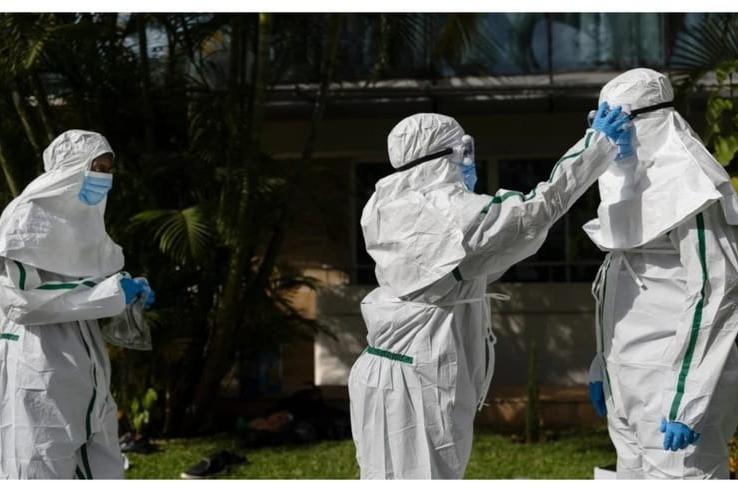
Healthcare workers are particularly important in an Ebola response because they may come into contact with infected patients before the disease is recognised. Adequate protective equipment, training, safe clinical procedures and effective reporting systems are therefore essential.
The government said its response was being coordinated through the Federal Ministry of Health and Social Welfare and the NCDC, working alongside the FCT Health Services Secretariat and other relevant agencies.
Such coordination is necessary because containing an imported infection requires more than treating the affected individual. It also involves surveillance at healthcare facilities, the investigation of potential exposures, laboratory confirmation of suspected cases and communication with members of the public.
The statement said the measures were designed to facilitate early identification of potential cases, strengthen infection prevention and control, and minimise the risk of further transmission.
However, the government did not disclose the full operational details of the response, including the number of surveillance teams deployed, the precise monitoring arrangements for the contacts or the scope of any additional screening measures.
Further official updates would be necessary to establish how the situation develops and whether the response identifies additional suspected cases.
Why Ebola Requires Rapid Public Health Action
Ebola virus disease is a serious and potentially fatal illness caused by viruses in the orthoebolavirus group. Its symptoms can include fever, fatigue, muscle pain, headache and sore throat, followed in some cases by vomiting, diarrhoea, rash, impaired kidney and liver function, and internal or external bleeding.
The early symptoms can resemble those of other illnesses, making a careful assessment of a patient's symptoms, travel history and possible exposure important when investigating a suspected case.
According to established public health guidance, Ebola is transmitted primarily through direct contact with the blood or other bodily fluids of an infected person who is showing symptoms, or through contaminated materials and surfaces.
It is not generally spread through the air in the manner associated with measles or some other respiratory infections.
People do not become infectious simply because they have travelled on the same flight as an infected individual. The risk depends on the circumstances of exposure, including whether direct contact with infectious bodily fluids occurred.
This is why authorities need to investigate the circumstances surrounding the woman's international journey, identify any potentially relevant exposures and assess contacts individually rather than treat everyone who travelled with her as infected.
The disease's incubation period can extend to 21 days. Consequently, contact tracing and follow-up may continue for a period after the last possible exposure, depending on the applicable public health protocols.
Individuals who develop compatible symptoms after a possible exposure should promptly contact health authorities and follow instructions on how to obtain medical assessment without exposing others unnecessarily.
Early recognition, appropriate clinical management and effective infection prevention are important both for the patient's care and for limiting further transmission.
Public Urged To Avoid Panic And Misinformation
The Federal Government has appealed to Nigerians to remain calm and avoid speculation as health authorities continue their containment efforts.
Adeniyi said the government remained committed to safeguarding the health and well-being of Nigerians and other residents, urging the public to follow advisories issued by the Federal Ministry of Health and Social Welfare, the NCDC and other relevant authorities.
He also advised Nigerians to rely on verified information from official government channels rather than circulate unconfirmed reports about the case.
The appeal highlights a recurring challenge during public health emergencies: misinformation can spread rapidly, particularly through social media platforms, where unverified claims about infections, suspected patients and alleged deaths may circulate before authorities have established the facts.
False information can create panic, stigmatise people who have travelled from affected areas and discourage individuals who may need medical attention from seeking help.
It can also distract health workers from essential containment activities and undermine public confidence in the official response.
Responsible communication is therefore an important part of outbreak management. Authorities need to provide timely, clear and consistent information about confirmed cases, possible exposures, symptoms and preventive measures while protecting the privacy of patients and their contacts.
Members of the public also have a responsibility to avoid publishing the identities or photographs of suspected patients and to refrain from presenting rumours as confirmed information.
The government's appeal for calm does not mean that the public should ignore the development. Rather, it means that vigilance should be guided by reliable information and established health advice instead of fear.
Flight And Health Surveillance Under Scrutiny
The reported arrival of the patient from Uganda places international travel and cross-border disease surveillance among the issues requiring attention in the ongoing response.
The movement of people between countries means that infectious diseases can cross borders before symptoms become apparent or a diagnosis is established.
Consequently, public health authorities rely on a combination of surveillance systems, information-sharing arrangements, clinical vigilance and contact tracing to detect and investigate possible imported infections.
The patient's travel history will be relevant to the investigation, but her arrival from Uganda alone does not establish where or when she contracted the virus.
That determination requires epidemiological investigation and reliable information about possible exposures.
The Ministry of Foreign Affairs said it would continue liaising with relevant national institutions and other stakeholders, as necessary, to support the coordinated government response.
International cooperation may also be important where the investigation requires the exchange of epidemiological information with health authorities in other jurisdictions.
At the same time, an imported case should not automatically be interpreted as evidence of widespread transmission within Nigeria. The extent of the public health risk depends on the circumstances of the case, the patient's infectious period, the exposures that occurred and the effectiveness of containment measures.
The identification of 44 contacts provides an initial indication of the scale of the tracing exercise disclosed by the government, but it does not, by itself, establish the likelihood of a wider outbreak.
Need To Strengthen Healthcare Facilities
The incident also reinforces the importance of maintaining strong infection prevention and control standards in public and private hospitals.
Private hospitals, general hospitals, teaching hospitals, emergency departments and primary healthcare centres all have a role to play in identifying unusual illnesses and alerting the appropriate authorities.
Frontline healthcare workers need clear procedures for taking travel histories, recognising possible high-risk infections, reporting suspected cases and protecting themselves and other patients while investigations are conducted.
Facilities also need appropriate protective equipment, trained personnel, effective waste management systems and protocols for safely handling potentially infectious materials.
Where a suspected case is identified, communication between the treating facility and public health authorities must be prompt enough to prevent avoidable delays.
The circumstances of the confirmed case make it important for the relevant authorities to establish whether any healthcare workers or other patients had potentially significant exposure before the diagnosis was confirmed and to ensure that appropriate follow-up is undertaken.
The broader lesson is that outbreak preparedness cannot begin only after a laboratory confirms an infection. It depends on systems that can recognise warning signs, respond to alerts and coordinate clinical and public health action before the circumstances become more complicated.
Sustained investment in disease surveillance, laboratory capacity, emergency preparedness and healthcare-worker training is therefore essential to Nigeria's ability to respond to imported infections.
Government Promises Further Updates
The Ministry of Foreign Affairs said further information would be communicated through official channels as verified details became available.
It also expressed appreciation to members of the public and relevant stakeholders for their cooperation as the authorities worked to contain the infection and protect public health.
The immediate priorities remain the treatment and isolation of the patient, the identification and monitoring of potentially exposed individuals, the investigation of possible transmission risks and the maintenance of effective surveillance.
The outcome of the contact-tracing exercise will be particularly important in determining whether the case remains isolated or whether additional suspected infections require investigation.
For now, the government has urged Nigerians to follow official advisories, avoid spreading unverified information and report relevant health concerns through appropriate channels.
The confirmation of an Ebola case is a serious public health development, but the identification of a case does not automatically mean that a widespread outbreak has occurred.
The effectiveness of the response will depend on prompt detection, transparent communication, coordinated medical care and the ability of health authorities to follow up on all relevant exposures.
As the investigation continues, Nigerians will be looking to the government and public health agencies for timely, credible updates that explain the evolving situation without creating unnecessary alarm.