PublicSphere Live
Health
Ebola in Abuja: A Diplomat’s Fight for Life Rekindles Nigeria’s Fear of a Deadly Outbreak
For one woman who travelled from Uganda to Abuja, however, what initially appeared to be a malaria-like illness has become a medical emergency with implications far beyond the walls of the hospital where she is receiving treatment.
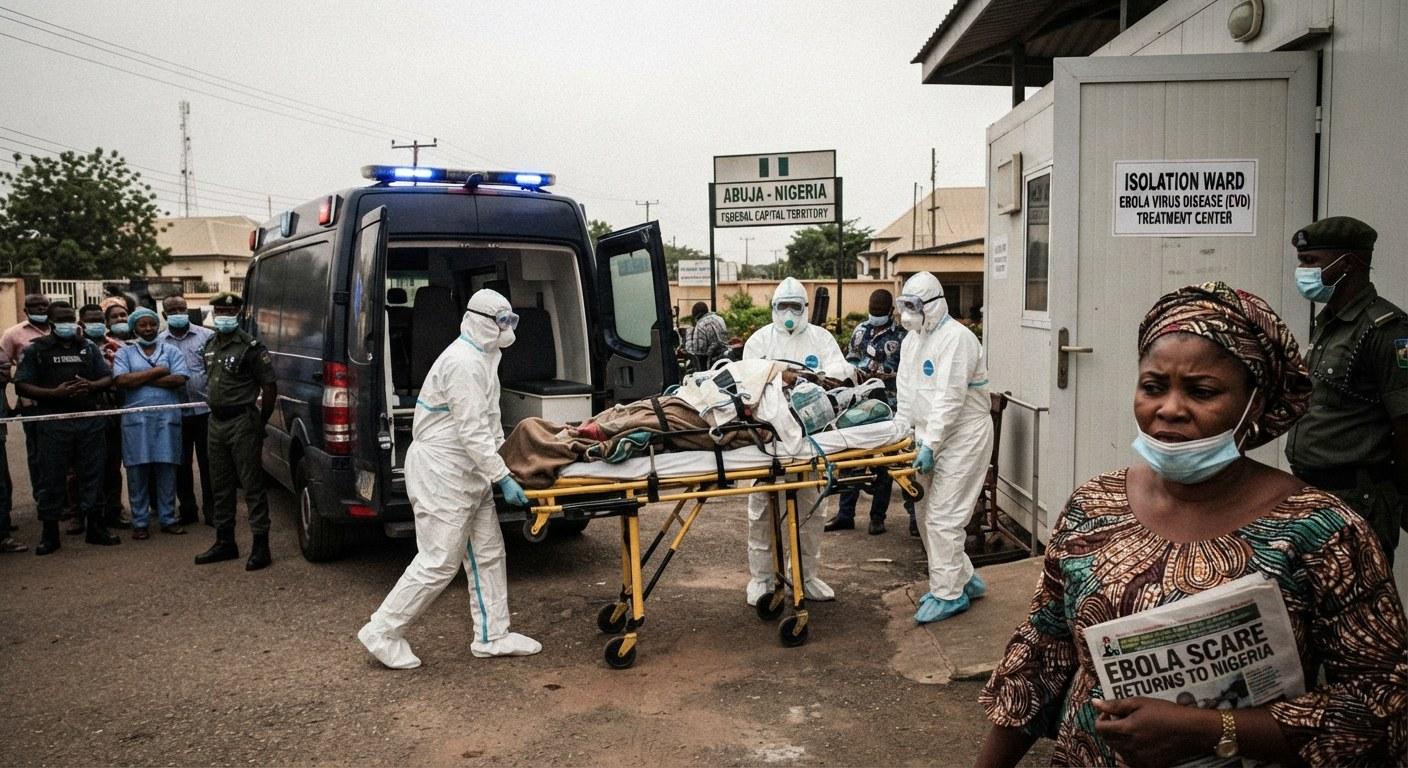
As a woman battles multi-organ failure after testing positive for the Bundibugyo strain, 44 contacts come under surveillance, raising urgent questions about Nigeria’s preparedness, the safety of international travel and the ability of the health system to stop a localised infection from becoming a national emergency.
The danger of an infectious disease outbreak is that it can begin with symptoms so ordinary that nobody immediately suspects the extraordinary threat hiding behind them. A fever, a headache, weakness in the body or a sudden loss of appetite can look like malaria, the familiar illness that millions of Nigerians have learnt to recognise, endure and often treat before seeking professional medical attention.
For one woman who travelled from Uganda to Abuja, however, what initially appeared to be a malaria-like illness has become a medical emergency with implications far beyond the walls of the hospital where she is receiving treatment.
The woman, a diplomat whose identity has not been disclosed in the information released by health authorities, is battling a severe case of Ebola virus disease in Nigeria’s Federal Capital Territory. According to the Nigeria Centre for Disease Control and Prevention (NCDC), her condition has deteriorated to multi-organ failure, an alarming development that underscores the seriousness of the infection.
Behind the clinical language lies a human story: a woman who arrived in Nigeria on October 3, 2026, developed symptoms four days later and sought hospital care on October 11, only for investigations to identify a disease capable of triggering fear across families, workplaces, hospitals and international travel networks.
For her loved ones, the immediate concern is whether she will survive. For the medical professionals attending to her, the challenge is to provide care while protecting themselves and others from infection. For the people who may have come into contact with her, uncertainty has replaced the routine of everyday life. And for a country that remembers how Ebola entered Lagos in 2014, the case has reopened a question Nigerians would rather not confront: how prepared is the country to contain a potentially deadly disease before it spreads?
The NCDC’s confirmation that the infection involves the Bundibugyo strain adds another layer of urgency. The agency says three levels of molecular testing were conducted to establish the strain, which the World Health Organisation (WHO) has also confirmed.
This is no longer simply a story about one patient's deteriorating health. It is a test of Nigeria’s public health surveillance, emergency response, hospital infection prevention and ability to communicate risk without creating panic.
And with 44 close contacts identified for monitoring, the response has entered a critical phase in which speed, scientific discipline and public cooperation could make a decisive difference.
The Strain That Has No Approved Vaccine
What makes this case particularly troubling is the identity of the virus responsible for the illness. The Bundibugyo virus belongs to the Ebola virus family, but it is distinct from the Zaire ebolavirus responsible for several of the best-known Ebola outbreaks.
According to the WHO, there is currently no licensed vaccine or approved specific treatment for Bundibugyo virus disease. This does not mean that infected patients cannot receive medical care or recover. Supportive treatment, careful clinical monitoring and the management of complications remain essential, while researchers and international health agencies work to develop effective countermeasures.
For the woman in Abuja, the reported deterioration to multi-organ failure illustrates the potentially devastating consequences of severe infection. It also places enormous responsibility on the clinicians providing care, who must manage the patient's condition while observing strict infection-prevention procedures.
The absence of an approved vaccine specifically targeting this strain makes early detection, isolation and contact tracing even more important. When a disease cannot be prevented with an available strain-specific vaccine, public health authorities must rely heavily on identifying infections quickly, preventing further exposure and ensuring that those who become ill receive appropriate care.
This is where the distinction between Ebola and more familiar illnesses becomes crucial.
In Nigeria, fever is frequently associated with malaria, particularly during periods of intense mosquito activity. Yet fever can also be an early symptom of several other infections, including Ebola. The WHO has specifically warned that Bundibugyo virus disease can be difficult to distinguish from endemic febrile illnesses without laboratory testing.
The lesson is not that every fever should trigger panic or that Nigerians should abandon established malaria treatment. Rather, patients with relevant travel or exposure histories, or symptoms that raise clinical suspicion, must be assessed carefully by qualified health professionals.
A dangerous delay can occur when an unfamiliar disease is treated as an ordinary illness for too long. Conversely, an informed medical response can create an opportunity to isolate a suspected case before additional people are exposed.
The 44 People Who Now Wait For Answers
The NCDC has identified 44 close contacts of the infected woman, including health workers, patients, caregivers and travel contacts. These individuals are being monitored as part of the national response.
The number is important, but it must be interpreted correctly. Identification as a contact does not mean that a person has contracted Ebola. It means that the individual may have experienced an exposure that requires assessment and follow-up.
For those being monitored, the uncertainty can be unsettling. They may be wondering whether they were sufficiently close to the patient to face a risk, whether they should continue their normal activities and whether a symptom they experience could be significant.
For healthcare workers and caregivers, the questions may be even more immediate. They need to know whether protective measures were adequate, whether any exposure occurred and what steps are required to protect themselves and their families.
The public health response must therefore do more than compile names and telephone numbers. It must maintain reliable communication with contacts, assess their exposure risks, monitor their health and arrange prompt medical evaluation if symptoms develop.
The standard monitoring period for Ebola contacts is generally 21 days after their last possible exposure, reflecting the recognised incubation period. Contacts should follow instructions from public health authorities rather than attempt to diagnose themselves or conceal symptoms for fear of being isolated.
Contact tracing is among the most effective tools for interrupting transmission because it allows health officials to identify people who may become ill before they unknowingly expose others. But its effectiveness depends on the willingness of people to cooperate, provide accurate information and report symptoms promptly.
That willingness cannot simply be demanded. It must be earned through clear communication, confidentiality, respectful treatment and assurances that people who need care will receive it.
Nigeria's authorities must also establish whether the investigation has identified every relevant contact, including passengers and other individuals who may have shared travel connections with the patient. Reuters reported on October 21 that authorities were tracing airline passengers as part of the wider investigation.
The objective should be to establish the chain of possible exposure with as much precision as possible, not to generate fear about everyone who has travelled from Uganda or any other affected country.
Why Nigeria's 2014 Experience Matters
Nigeria is not confronting Ebola for the first time. Its experience in 2014 provides an important reminder of both the dangers of imported infections and the value of a coordinated response.
That year, an infected Liberian-American, Patrick Sawyer, arrived in Lagos and subsequently tested positive for Ebola. The case triggered an emergency response in a city whose population density, international connections and crowded transport networks presented significant challenges.
The outbreak was contained through a combination of contact tracing, isolation, laboratory investigation, public communication and coordination among health authorities and other institutions.
The experience demonstrated that a single imported case does not automatically lead to a nationwide epidemic. It also showed that containment depends on the speed and quality of the response, especially during the first days after a case is suspected.
Nigeria's previous success should inspire confidence, but it should not encourage complacency.
The present outbreak involves a different Ebola strain, and the epidemiological circumstances are not identical to those of 2014. Moreover, the spread of Bundibugyo virus disease across several countries has created a broader challenge for regional surveillance and international cooperation.
In an update published on October 8, the WHO reported extensive transmission in the Democratic Republic of Congo and confirmed an imported case in Kenya. It described an outbreak requiring intensified surveillance, contact tracing and cross-border preparedness.
Nigeria's response must consequently be informed by the lessons of the past without assuming that yesterday's solutions will automatically address every aspect of today's emergency.
The country needs to know not only whether its emergency plans exist on paper but whether they can be activated quickly, whether trained personnel are available and whether the required equipment is operational when a suspected case arrives at a hospital.
The Senate's Warning: Preparedness Must Go Beyond Announcements
The Senate's intervention has added a financial and institutional dimension to the emergency.
Following a motion sponsored by Senator Francis Faduyile, the lawmakers urged the Federal Government to release emergency funds from the service-wide vote to strengthen disease surveillance and introduce compulsory health screening for international travellers entering Nigeria.
They also called for mandatory screening at international airports, seaports and designated land borders, regardless of passengers' nationalities or countries of departure.
The proposal reflects a concern that screening restricted to travellers from selected countries could leave gaps in the country's surveillance system. In an interconnected world, an individual may travel through several airports or countries before reaching a final destination. The country from which a passenger boards a flight is not necessarily the place where that person encountered an infection.
The Senate further drew attention to shortages of personnel and screening equipment at some entry points, alongside the need to modernise the legal framework governing public health emergencies.
Its recommendations include providing thermal scanners, protective equipment, trained Port Health Services personnel and isolation facilities; improving readiness at treatment centres across the states and the FCT; and replacing the Quarantine Act of 1926 with updated legislation consistent with the International Health Regulations of 2005.
The lawmakers also urged the relevant ministries to release outstanding funds for disease surveillance and make adequate provisions for the NCDC and Port Health Services in the 2027 budget.
These are proposals and directives requiring effective implementation, not proof that the necessary resources have already been deployed.
Their significance lies in the recognition that emergency preparedness cannot be improvised after an outbreak has arrived. Equipment must be purchased and maintained before it is needed. Health workers must be trained before they confront a suspected case. Laboratories must be able to test samples safely and rapidly, while designated facilities must have the capacity to isolate patients without exposing other people.
Funding is therefore not a peripheral issue. It is part of the country's defence against an infectious disease capable of disrupting hospitals, travel, commerce and ordinary social life.
Nevertheless, screening must be designed around scientific evidence. Temperature checks can identify some people with fever, but they cannot detect every infected person, particularly someone who has not yet developed symptoms. Screening forms also depend on honest disclosure and the quality of the information supplied.
The most effective border measures must therefore operate alongside surveillance in communities, strong hospital referral systems, laboratory confirmation and contact tracing. Border screening is a valuable layer of protection, but it cannot substitute for the entire public health system.
How Does Ebola Spread, And What Should Nigerians Know?
Fear often grows when people do not understand how an infection is transmitted. Ebola is a serious disease, but accurate information can help the public distinguish genuine risks from rumours.
Ebola spreads primarily through direct contact with the blood or other bodily fluids of a person who is sick with or has died from the disease, or through contaminated objects such as needles and medical equipment. Transmission can also occur through contact with infected animals. People who have not developed symptoms are not considered to be transmitting Ebola in the usual course of the disease.
This means that simply sharing a city, travelling on an aircraft or being in the same public space as an infected person does not automatically establish that someone has been infected. The actual nature of the exposure matters.
The distinction is important in Abuja, where news of the confirmed case could prompt unnecessary alarm among residents, travellers and people who have no known connection to the patient.
At the same time, Nigerians should not assume that an absence of visible bleeding means that Ebola is impossible. Early symptoms can be nonspecific and may include fever, fatigue, headache and muscle pain, followed by other symptoms such as vomiting, diarrhoea and, in severe cases, organ dysfunction or bleeding.
Anyone who believes they may have had a relevant exposure and develops symptoms should contact health authorities or seek urgent medical guidance, disclose their travel and exposure history, and avoid unnecessary close contact with others while awaiting instructions.
People should not attempt to manage suspected Ebola with unverified herbal remedies or medicines purchased without medical advice. Nor should they visit several hospitals without informing health professionals of a suspected exposure, because doing so could create avoidable opportunities for transmission.
The public also has a responsibility to reject misinformation. False claims about the identity of the patient, alleged locations of additional cases or supposed cures can undermine the response and place vulnerable people at risk.
Health authorities must communicate regularly, acknowledge what remains unknown and correct inaccurate information quickly. Silence creates a vacuum that rumours can fill.
The Human Cost Of Stigma
There is another danger that often accompanies outbreaks: the tendency to turn a sick person into a symbol of fear rather than recognise a human being in need of care.
The woman at the centre of Nigeria's confirmed case is a patient, not a public threat by virtue of her nationality, profession or travel history. Her diplomatic status does not make her more deserving of care than another infected person, just as it does not make her less deserving of privacy and dignity.
The same principle applies to people who may have been exposed. They should not be subjected to public harassment or treated as though infection has already been established.
Stigmatising patients and contacts can make an outbreak harder to control. People who fear discrimination may hide their travel histories, avoid hospitals or refuse to cooperate with contact tracers. Such behaviour can delay detection and increase risks for the wider community.
The public health response must therefore balance vigilance with compassion. Isolation, where medically and epidemiologically indicated, is a protective measure, not a punishment. Contact monitoring is a precaution, not a declaration of guilt.
Families also need clear information about how they can remain in communication with patients receiving care, subject to appropriate infection-control measures. Where patients deteriorate, communication should be sensitive and responsible, avoiding speculative reports about their condition.
For the woman in Abuja, the immediate priority remains the best available medical care. For those monitoring her contacts, the priority is to establish whether further infections have occurred. For the country, the challenge is to protect public health without sacrificing the humanity of those caught up in the emergency.
Can Nigeria Prevent A Wider Outbreak?
The answer will depend on what happens next.
The NCDC has confirmed the Bundibugyo strain, placed the patient in isolation and identified 44 contacts for monitoring. These are important elements of an outbreak response, but the effectiveness of the intervention will depend on sustained implementation, accurate epidemiological investigation and the prompt identification of any additional cases.
First, surveillance must extend beyond international airports. State health ministries, public and private hospitals, laboratories and community health workers should know how to recognise a suspected case, where to report it and how to arrange safe referral.
Second, frontline health workers must have adequate protective equipment and practical training in infection prevention and control. No doctor, nurse, laboratory worker or hospital cleaner should have to improvise basic protection while responding to a suspected Ebola case.
Third, the government must ensure that isolation and treatment facilities are functional, with reliable supplies, trained staff and procedures for handling suspected and confirmed infections. Preparedness is measured not by the number of emergency plans announced but by whether the plans work when a patient needs them.
Fourth, public communication must be consistent. The NCDC and the Federal Ministry of Health and Social Welfare should provide verified updates on the patient's condition when appropriate, the status of contact tracing and any changes in the national risk assessment. Confidentiality must be respected, and unconfirmed reports should not be presented as established facts.
Finally, Nigeria must strengthen cooperation with neighbouring and affected countries, airlines, airport operators and international health agencies. Infectious diseases do not respect national borders, and no country can effectively manage an outbreak of this nature without timely information-sharing and coordinated action.
The Senate's call for emergency funding should be followed by clear accountability for the release and use of resources. Equipment must reach the locations where it is needed, personnel must be deployed according to risk, and public health agencies must have the capacity to sustain surveillance for as long as the situation requires.
Beyond Fear, A Test of National Readiness
The story of Ebola in Abuja is still unfolding. The woman's deteriorating condition is a reminder of the disease's potential severity, while the identification of 44 contacts marks the beginning of a critical effort to determine whether the infection has remained confined to the known case or has created additional risks.
There is reason for urgency, but urgency should not be confused with panic.
Nigeria's experience in 2014 demonstrates that a coordinated response can contain an imported infection. The present case, however, demands that the country reassess its readiness in light of a different strain, an expanding international outbreak and the continuing need to strengthen health infrastructure.
The most important measure of success will not be the number of emergency meetings held, screening orders announced or statements issued. It will be whether the patient receives appropriate care, whether contacts are followed up effectively, whether health workers remain protected and whether any further transmission is prevented.
For the woman fighting for her life, the outcome remains uncertain. For the 44 people under surveillance, the coming days are a period of careful monitoring. For millions of Nigerians, the case is a reminder that public health security is not an abstract government responsibility; it is the protection that allows people to travel, work, care for relatives and go about their daily lives without unnecessary exposure to preventable danger.
The lesson is clear: a virus may cross a border with a single traveller, but stopping it requires an entire system to work together.
Nigeria must ensure that the alarm raised by this case becomes an opportunity to strengthen that system—before another patient arrives, before another family faces uncertainty and before a preventable exposure becomes a much larger national emergency.