PublicSphere Live
Business
Nigeria’s Active Oil Rigs Rise to More Than 70 as Production Hits 1.82m bpd — Lokpobiri
Minister of State for Petroleum Resources (Oil), Senator Heineken Lokpobiri, has disclosed. Lokpobiri said the dramatic increase in rig activity was an indication of renewed investment and exploration across the Nigerian oil industry, stressing that the drilling campaigns taking place today would ultimately determine the country’s production capacity in the years ahead
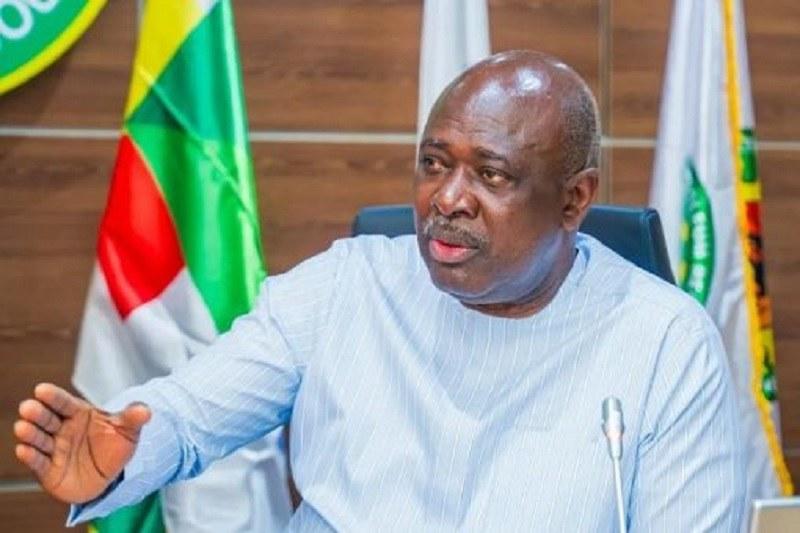
Nigeria’s upstream petroleum sector has recorded a sharp increase in drilling activity, with the number of active oil rigs rising from fewer than 10 when the President Bola Ahmed Tinubu administration assumed office in 2023 to more than 70 currently, Minister of State for Petroleum Resources (Oil), Senator Heineken Lokpobiri, has disclosed.
Lokpobiri said the dramatic increase in rig activity was an indication of renewed investment and exploration across the Nigerian oil industry, stressing that the drilling campaigns taking place today would ultimately determine the country’s production capacity in the years ahead.
The minister made the disclosure at the fifth anniversary of the Nigerian Upstream Petroleum Regulatory Commission (NUPRC) in Abuja, where he highlighted developments in the upstream sector and urged the regulator to sustain reforms aimed at attracting investment, accelerating project development and increasing crude oil production.
From Fewer Than 10 Rigs To More Than 70
According to Lokpobiri, one of the most significant changes in Nigeria’s petroleum industry since 2023 has been the resurgence of drilling activity.
“When we came, we had less than 10 active rigs. So now we have over 70 active rigs,” he said, describing the current drilling campaign as unprecedented.
The development represents a substantial turnaround from the period preceding the current administration, when declining investment, operational challenges, insecurity and regulatory uncertainties had contributed to reduced exploration and drilling activity.
The latest rig figure is particularly significant because an increase in active rigs is not merely a statistical development. It represents companies committing capital to exploration, appraisal, field development and production activities, with the potential to increase Nigeria’s reserves and future output.
Available NUPRC data had already shown a substantial recovery in rig activity during 2026. The regulator's rig disposition records track drilling operations across onshore, swamp and offshore locations, while industry reports showed the national rig count reaching 73 earlier in the year.
The latest figure announced by the minister therefore places Nigeria's drilling activity at a level far removed from the fewer-than-10-rig situation he said existed when the administration came into office.
Production Also Climbs Above 1.8 Million Barrels Daily
The increase in drilling activity has coincided with a substantial rise in reported crude oil and condensate production.
Lokpobiri said Nigeria was producing less than one million barrels per day of crude and condensate when the Tinubu administration assumed office in 2023.
He said the latest report from the upstream regulator showed production at about 1.821 million barrels per day, including condensates.
In a separate recent statement, the minister put the figure at approximately 1.824 million barrels per day, describing the increase as more than 80 per cent from the level recorded when the administration began.
The distinction between crude oil and condensate is important because condensate is not counted by OPEC in the same way as crude oil for production quota purposes. Lokpobiri has consequently used the combined figure to illustrate the broader level of petroleum liquids being produced in Nigeria.
The production improvement is taking place against the background of years of underinvestment and declining output, making the resurgence in drilling activity a major issue for the country's petroleum-dependent economy.
Why The Rig Count Matters
For an oil-producing country such as Nigeria, the number of active rigs is one of the indicators of upstream activity.
Rigs are deployed to drill new wells, develop existing fields, undertake appraisal work and, in some circumstances, support re-drilling and other well interventions. More sustained drilling can therefore create a pipeline of wells capable of contributing to future production.
Lokpobiri's central argument is that today's drilling activity should not be viewed only through the lens of current production.
“The drilling campaigns of today will account for the production capacity in years to come,” he said.
That point places the current increase in rigs within a longer-term investment cycle. A company that commits billions of dollars to exploration and field development does not necessarily see the full production benefit immediately. The economic impact can extend over several years through increased reserves, new wells, additional production, service contracts, employment and government revenues.
The challenge for Nigeria, therefore, is to ensure that the present increase in activity becomes sustained rather than another temporary cycle in the country's volatile petroleum history.
Investor Confidence and Regulatory Reforms
The Federal Government has attributed the revival in upstream activity to reforms introduced under the Petroleum Industry Act and subsequent measures designed to improve regulatory certainty and investment conditions.
The Ministry of Petroleum Resources said the government was seeking to sustain reforms aimed at creating a more predictable environment for investors, while increasing production beyond current levels through investment, improved security and collaboration between government and industry.
Lokpobiri has repeatedly argued that Nigeria must compete with other oil-producing jurisdictions for capital.
His message to the NUPRC is that regulation should ultimately facilitate business and investment rather than become an obstacle to them.
At the fifth anniversary event of the commission, he urged the regulator to accelerate processes and reduce unnecessary delays, warning that investors have several alternative jurisdictions where they can deploy their capital.
The minister said the commission should not be judged simply by the volume of regulations it produces but by the businesses and investments its policies enable.
That emphasis reflects the increasingly competitive nature of the global oil and gas investment market. Countries with large reserves are competing not only on geological potential but also on fiscal terms, regulatory efficiency, security, infrastructure and speed of project approvals.
Nigeria Still Has Enormous Reserves
The increase in drilling activity is occurring against the backdrop of substantial petroleum reserves.
Lokpobiri said Nigeria had approximately 37.01 billion barrels of official oil and condensate reserves as of January 1, 2026.
But he stressed that reserves have little economic value if they remain underground.
The implication is clear: Nigeria's principal challenge is no longer simply establishing that it possesses substantial hydrocarbon resources. The country must attract the capital, technology and expertise required to transform those resources into commercially viable production.
For decades, Nigeria's oil industry has been characterised by the paradox of enormous reserves alongside inadequate investment and declining production. The latest drilling figures suggest that some of that investment gap may be narrowing.
Deepwater Investment Gains Momentum
The renewed drilling activity is also being accompanied by developments in Nigeria's deepwater sector.
In July, ExxonMobil and its partners announced a $1 billion investment in the Usan Infill Project offshore Nigeria. According to the NUPRC, the project is expected to add about 40,000 barrels per day to production and represents a return to drilling activity by an ExxonMobil affiliate in the field after several years.
In August, the Federal Government also approved a new regulatory and fiscal framework for deepwater oil and gas projects, with the administration saying the framework could unlock as much as $50 billion in investment and revive delayed offshore developments.
These developments provide important context for the rising rig count. The objective is not simply to increase the number of rigs operating in Nigeria but to establish a continuous chain connecting exploration, investment, field development and sustainable production.
NUPRC And The New Investment Landscape
The NUPRC, which was established under the Petroleum Industry Act, has become central to the government's strategy for revitalising the upstream industry.
At its fifth anniversary, the commission highlighted its efforts to improve the investment environment and facilitate new projects.
NUPRC's Chief Executive, Mrs Oritsemeyiwa Eyesan, said Nigeria accounted for 38 per cent of upstream capital sanctioned in Africa in 2025, compared with only four per cent in 2021.
That comparison illustrates the scale of the change the government and regulator are seeking to project to international investors.
It also comes at a time when international oil companies have been restructuring their Nigerian portfolios, with some divesting from mature onshore assets while retaining or expanding their interests in deepwater projects.
The shift has simultaneously created opportunities for indigenous producers, which have increasingly assumed greater responsibility for oil production from assets previously operated by international majors.
Indigenous Producers Take A Larger Role
Lokpobiri has also pointed to the changing composition of Nigeria's oil industry.
According to the minister, indigenous companies now account for about 60 per cent of local oil production, compared with a situation in which international oil companies once dominated approximately 90 per cent of production.
The changing ownership structure could have far-reaching implications for Nigeria's petroleum industry.
Indigenous producers are increasingly involved in marginal fields, mature assets and other opportunities created by the restructuring of international oil company portfolios. Their ability to sustain production and attract financing will therefore be important to the country's overall output trajectory.
At the same time, the continued presence of major international companies remains important because large offshore developments require enormous amounts of capital, sophisticated technology and extensive project-management capacity.
Security Remains Critical
The increase in rigs and production also raises the question of security.
For years, crude oil theft, pipeline vandalism and disruptions in producing communities have affected Nigeria's ability to maximise production from its installed capacity.
More drilling alone cannot guarantee higher national output if newly drilled wells are subsequently affected by operational disruptions, insecurity or inadequate evacuation infrastructure.
This means that the current increase in drilling activity will need to be accompanied by sustained improvements in the security of oil-producing areas and infrastructure.
It will also require stronger relationships between operators and host communities, particularly as new projects move into areas where communities expect employment, infrastructure and other tangible benefits.
The Economic Stakes Are High
The significance of the development extends beyond the petroleum industry.
Nigeria remains heavily dependent on oil and gas revenues for foreign exchange earnings and a substantial portion of government income. Higher and more stable production can therefore affect government revenues, external reserves, the balance of payments and the capacity of both federal and subnational governments to finance development.
For the wider economy, increased petroleum production can also generate additional activity for drilling contractors, engineering firms, logistics companies, equipment suppliers, financial institutions and other businesses supporting the industry.
However, the ultimate test will be whether the increase in drilling translates into sustained production growth and whether the resulting revenues are efficiently deployed to diversify the economy.
A New Test For Nigeria's Oil Industry
The rise from fewer than 10 active rigs to more than 70 is undeniably a major change in the level of upstream activity reported by the government.
But the more important question now is what happens next.
Nigeria has experienced periods of rising oil production before, only for gains to be undermined by underinvestment, technical challenges, insecurity, falling global prices or policy uncertainty.
The present challenge is therefore to convert the current drilling campaign into a durable production cycle.
That will require predictable regulation, commercially viable fiscal terms, security of assets and personnel, efficient approvals, access to finance, reliable infrastructure and confidence that contracts will be respected.
President Tinubu, represented by Vice-President Kashim Shettima at the NUPRC anniversary event, also urged oil and gas operators to comply with approved work programmes, local-content obligations, environmental standards and commitments to host communities. He called on the regulator to remain transparent, fair and independent while publicly accounting for its performance.
From Drilling Activity To National Prosperity
For Nigeria, the figure of more than 70 active rigs is therefore more than a measure of activity in the oil fields.
It is an indication that capital is once again being deployed into exploration and production at a much higher level than was evident at the beginning of the current administration.
The country's oil reserves remain substantial, while production has risen to more than 1.8 million barrels per day when condensates are included. New investments are being announced in both onshore and offshore assets, and indigenous producers are playing a larger role in the industry.
But Nigeria's history with petroleum makes one lesson particularly important: the presence of oil underground is not the same thing as prosperity above ground.
The current drilling campaign will matter most if it produces additional commercially viable reserves, raises sustainable output, strengthens government revenues, creates jobs, expands local capacity and contributes to a broader industrial economy.
For Lokpobiri and the petroleum authorities, the immediate task is therefore to maintain the momentum. The more than 70 rigs now operating represent the beginning of another phase of Nigeria's upstream story. Whether that phase becomes a durable petroleum revival will depend on how successfully the country transforms today's drilling activity into tomorrow's production, investment and economic value.