PublicSphere Live
Business
Dangote Refinery Cuts Diesel Price by N80, Sells Below Imported AGO
The latest reduction places the refinery’s diesel price between N75 and N85 per litre below the prevailing landing cost of imported diesel, according to industry data
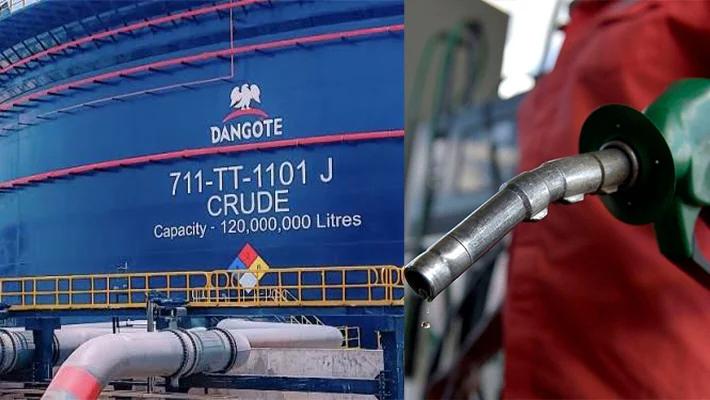
The Dangote Petroleum Refinery has reduced the gantry price of Automotive Gas Oil (AGO), popularly known as diesel, by N80 per litre, bringing its new selling price to N1,700 per litre.
The latest reduction places the refinery’s diesel price between N75 and N85 per litre below the prevailing landing cost of imported diesel, according to industry data.
The refinery disclosed the new price in a price template circulated to its customers, indicating that the reduction takes effect from Wednesday.
The new price represents an appreciable reduction from the previous gantry price of N1,780 per litre and comes amid renewed attention to the competitiveness of locally refined petroleum products against imported alternatives.
Data contained in the latest price template showed that customers would now obtain diesel from the Dangote Refinery at N1,700 per litre, representing a reduction of about 4.5 per cent from the previous price.
The development is significant for businesses and other major users of diesel, particularly manufacturers, transport operators, telecommunications companies, construction firms, agricultural enterprises and small and medium-sized businesses that rely heavily on Automotive Gas Oil to power generators and other equipment.
Checks on the import landing cost published by the Major Energies Marketers Association of Nigeria (MEMAN) in its petroleum products price bulletin dated October 5, 2026, showed that imported diesel was landing in Nigeria at between N1,775 and N1,785 per litre.
On that basis, the Dangote Refinery's new gantry price is approximately N75 to N85 per litre lower than the cost of bringing comparable imported diesel into the country, before additional expenses associated with distribution and marketing are factored in.
The price differential could potentially strengthen the competitive position of locally refined diesel and encourage marketers and bulk consumers to source more of their requirements from domestic refineries.
The reduction also comes against the backdrop of movements in international crude oil prices, which remain an important factor in determining the economics of petroleum refining and product pricing.
At the time of the report, West Texas Intermediate crude was quoted at about $89 per barrel, while Brent crude was trading at approximately $101 per barrel.
Despite the relatively elevated international crude prices, the Dangote Refinery's latest adjustment has resulted in a domestic diesel price below the reported import parity level.
Industry observers have increasingly viewed the emergence of large-scale domestic refining capacity as potentially transformative for Nigeria's downstream petroleum market, particularly because the country had for decades depended heavily on imported refined petroleum products despite being a major crude oil producer.
The Dangote Refinery, located in the Lekki area of Lagos State, has become a major component of Nigeria's effort to increase domestic refining capacity and reduce dependence on imported petroleum products.
The latest diesel price reduction could therefore have implications beyond the immediate savings available to individual consumers. Diesel remains an important component of the operating costs of businesses across the Nigerian economy, especially in an environment where unreliable electricity supply has historically forced companies to depend heavily on diesel-powered generators.
For manufacturers, for instance, lower diesel prices can translate into reduced energy costs and potentially provide some relief against the high cost of production. Similar benefits could extend to logistics companies, commercial transport operators, telecommunications firms and other businesses whose operations depend on diesel-powered equipment.
The reduction is also likely to be closely watched by petroleum marketers, who have to balance the cost of sourcing products with prevailing market prices and consumer demand.
The N80 reduction from N1,780 to N1,700 per litre means that a bulk buyer purchasing 10,000 litres of diesel from the refinery would, at the gantry-price level, save N800,000 compared with the previous price.
For larger industrial consumers purchasing hundreds of thousands of litres, the financial implications could be considerably greater.
However, the extent to which the reduction will be reflected in retail prices across the country will depend on distribution costs, transportation, storage, marketers' margins and prevailing market conditions.
The latest development nevertheless provides another indication of the growing role of domestic refining in Nigeria's petroleum products market.
For years, fluctuations in international crude prices, foreign exchange movements, shipping costs and other factors associated with imports have had significant implications for the prices of refined petroleum products in Nigeria.
Local refining introduces a different dynamic by reducing the country's exposure to some of the costs associated with importing finished products, although domestic refiners still face the realities of crude supply, operating costs, logistics and international commodity prices.
The Dangote Refinery's ability to offer diesel below the reported import landing cost could also intensify competition within the downstream market.
Importers and domestic refiners may increasingly have to compete on price, quality, availability and reliability of supply as Nigeria's refining landscape evolves.
For consumers, one of the most important questions will be whether the lower gantry price translates into sustained reductions in the prices paid by end-users.
Diesel prices have a particularly broad economic impact because the product is used extensively outside the conventional retail petrol market. A reduction in diesel costs can affect the cost of transporting goods, operating machinery and generating electricity, thereby influencing production and distribution expenses across several sectors.
The latest price adjustment therefore comes at a time when Nigerian businesses are under pressure from high operating costs and persistent infrastructure challenges.
If sustained, cheaper locally refined diesel could provide some measure of relief to businesses and households that depend on diesel-powered generators, while also strengthening the case for greater investment in domestic refining capacity.
The development also highlights the increasing importance of price competition in Nigeria's downstream petroleum sector following the expansion of local refining capacity.
With the Dangote Refinery now offering AGO at N1,700 per litre, compared with the reported imported landing cost of N1,775 to N1,785, the domestic market has reached a point where locally refined diesel is not merely available as an alternative to imports but is being offered at a measurable price advantage.
The latest reduction will therefore be watched closely by petroleum marketers, industrial consumers and policymakers as the Nigerian downstream sector continues its transition towards greater domestic refining and a more competitive petroleum products market.