PublicSphere Live
International Finance
AFIS 2026: AfDB President Sidi Ould Tah Calls for Financial Reforms to Accelerate Africa’s Economic Transformation
African Development Bank Group President advocates stronger coordination, faster financing processes and improved access to capital for businesses, particularly SMEs, to unlock the continent’s productive potential.
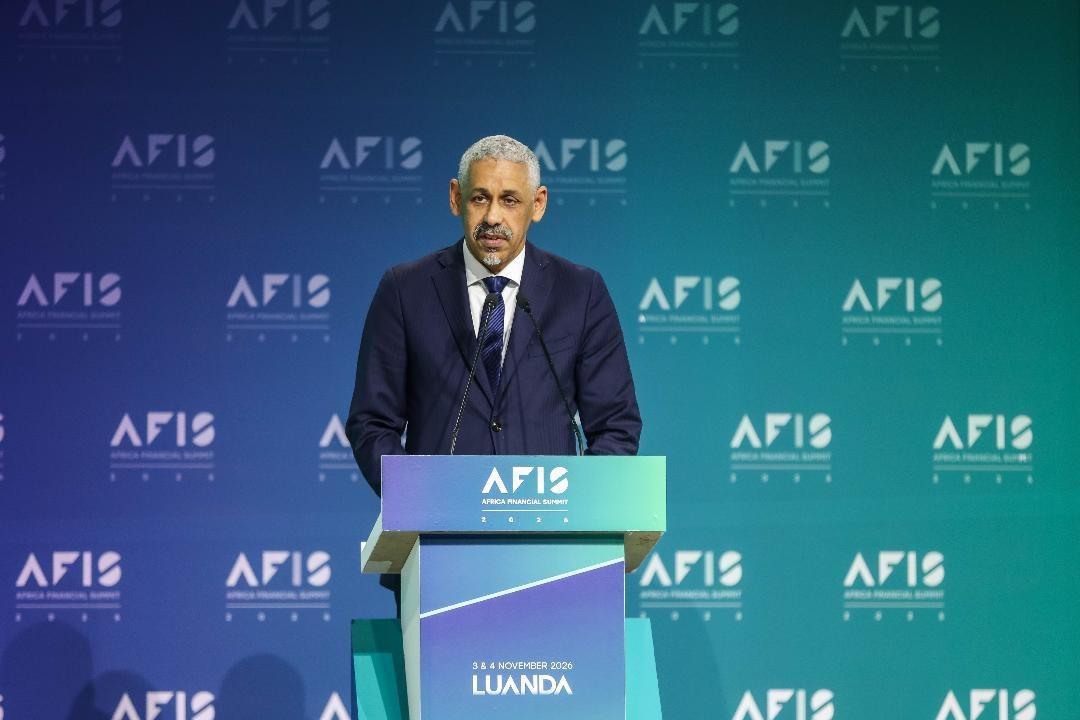
African Development Bank Group President, Dr Sidi Ould Tah, has called on financial institutions across Africa to urgently reform their operational processes, strengthen coordination and align their financing mechanisms with the needs of businesses to accelerate economic transformation and unlock the continent’s vast productive potential.
Ould Tah made the call while delivering his keynote address at the opening of the Africa Financial Summit (AFIS) 2026 in Luanda, Angola, on November 3, where he warned that the disconnect between financial institutions and businesses was undermining economic growth, investment and job creation across the continent.
“For the continent’s financial strength to translate into economic power, African financial institutions must keep pace with the businesses they serve,” he said.
The AfDB president stressed that Africa’s economic development would depend not merely on the availability of financial resources but on the ability of its institutions to mobilise capital efficiently, coordinate their activities and channel investments into productive sectors.
He argued that the continent’s financial system must become more responsive to the realities of businesses, particularly small and medium-sized enterprises (SMEs), which frequently face difficulties accessing financing despite their critical contributions to employment, innovation and economic development.
At the summit, Ould Tah presented the New African Financial Architecture for Development (NAFAD), an initiative designed to improve collaboration among institutions within Africa’s financial ecosystem and rethink how capital is mobilised and risks are shared.
The initiative seeks to establish a more coordinated financial system in which national, regional and continental institutions work together to maximise their respective strengths and support the continent’s development priorities.
Financial Institutions Must Keep Pace With Businesses
Ould Tah identified the mismatch between the operational timelines of financial institutions and the business cycles of enterprises as one of the major obstacles to economic growth in Africa.
According to him, financial institutions often operate according to reporting schedules, investment horizons, approval procedures and processing timelines, while businesses must respond to immediate commercial realities such as fulfilling orders, retaining skilled workers, managing cash flows and maintaining market competitiveness.
He explained that when financial institutions take too long to approve or disburse financing, businesses may lose opportunities, fail to meet contractual obligations or struggle to sustain operations.
The consequences, he said, extend beyond individual enterprises to affect national economies, employment opportunities and the continent’s overall development trajectory.
“Business cycles, order fulfilment and talent retention” operate according to different timelines from the financial sector, creating a disconnect that could result in lost economic opportunities.
He maintained that Africa could not achieve meaningful industrialisation and economic transformation if its financial institutions continued to operate without adequately considering the immediate needs of enterprises.
The AfDB president called for simplified financing procedures, improved operational coordination and the development of financial instruments tailored to the circumstances of businesses.
He particularly emphasised the importance of making financing more accessible to SMEs, which often encounter bureaucratic obstacles, stringent collateral requirements and lengthy approval processes.
Lack Of Coordination Undermines Economic Growth
Ould Tah also expressed concern about the lack of coordination among financial institutions and development partners with overlapping responsibilities.
He noted that fragmented institutional arrangements could create situations in which no individual institution was directly accountable for economic opportunities lost through delays, inefficient processes or inadequate financing.
The consequences, he said, could include businesses failing to expand, farmers losing access to markets and African countries importing products that could otherwise be manufactured domestically.
This situation, according to him, underscores the need for a financial architecture that encourages institutions to work collectively rather than independently pursue their individual mandates.
He explained that NAFAD was designed to address these challenges by providing a common framework through which national, regional and continental institutions could complement one another.
The framework would enable financial institutions to reinforce their core strengths while respecting their respective mandates and adhering to the principles of subsidiarity and complementarity.
Ould Tah cautioned, however, against the assumption that the assets held by African financial institutions constituted a pool of readily available funds that could simply be deployed for development projects.
He noted that these assets belonged to different institutions and investors, each with its own obligations, investment objectives and time horizons.
The challenge, therefore, was to establish mechanisms that would enable these resources to be mobilised more effectively without disregarding the responsibilities and mandates of their owners.
Angola Calls For Stronger Financial Systems
The Angolan Minister of State for Economic Coordination, José de Lima Massano, also emphasised the importance of strengthening Africa’s financial institutions to support economic transformation.
Massano said the continent’s development ambitions depended significantly on the quality, depth and efficiency of its financial systems.
He described multilateral financial institutions as important drivers of capital mobilisation, investment and economic transformation, stressing the need to strengthen their capacity and improve collaboration with national financial systems.
“These institutions are capital multipliers, investment catalysts and key partners in economic transformation,” he said.
The minister called for sustained efforts to improve the capacity of African financial institutions to mobilise resources and coordinate their activities with domestic financial systems.
His remarks underscored the importance of integrating national financial institutions into broader continental financing arrangements to ensure that capital could be channelled more efficiently into priority sectors.
For African economies seeking to diversify away from dependence on commodities and strengthen domestic production, the ability to mobilise long-term investment remains a critical development requirement.
IFC, AfDB And African Investors Seek Long-Term Capital
The Managing Director of the International Finance Corporation (IFC), Makhtar Diop, highlighted the growing collaboration among major African and international development finance institutions.
Diop disclosed that the IFC was working with several African partners, including the African Development Bank Group, the African Export-Import Bank (Afreximbank) and the Development Bank of Southern Africa (DBSA), to support the continent’s economic development.
He commended Ould Tah’s commitment to Africa’s advancement, noting that the development of the continent required sustained collaboration among institutions.
“We are working together, and no one is more determined to drive Africa forward,” Diop said.
He further revealed that the IFC and the African Development Bank Group were engaged in discussions with African sovereign wealth funds and institutional investors to mobilise long-term financing and direct resources into productive sectors.
The involvement of sovereign wealth funds and institutional investors could provide an important avenue for expanding the pool of capital available for infrastructure, industrial development, agriculture and private-sector investment.
Unlike short-term financing, long-term capital can help businesses undertake projects that require substantial initial investments and extended periods before generating returns.
Diop also proposed the establishment of private-sector councils in individual African countries.
The councils, he said, would identify areas requiring reforms and advise governments on implementing legislation and policies needed to improve the business environment.
Such councils could strengthen engagement between governments and businesses, helping policymakers better understand the regulatory, financial and operational constraints confronting enterprises.
They could also provide a platform for businesses to contribute to economic reform discussions and ensure that government policies respond more effectively to private-sector needs.
Africa Must Invest In Its Demographic Dividend
Beyond financial reforms, Ould Tah warned that Africa could not automatically assume that its rapidly growing population would translate into economic prosperity.
He cautioned against treating the continent’s demographic dividend as an assured economic benefit.
“We have to earn it,” he said, stressing the importance of investments in education, skills development and productive employment.
Africa has one of the world’s youngest populations, a demographic advantage that could support economic growth, innovation and industrial expansion if adequately harnessed.
However, the AfDB president argued that the potential benefits of this population structure would depend on the continent’s ability to create opportunities for young people to acquire relevant skills and participate meaningfully in productive economic activities.
Without adequate investment in education, vocational training and employment, the continent’s demographic advantage could become a source of economic pressure rather than prosperity.
The emphasis on productive employment also reinforces the importance of supporting businesses capable of creating jobs and expanding economic opportunities.
In this regard, the development of SMEs, manufacturing enterprises, agricultural businesses and technology-driven companies would remain critical to Africa’s ability to absorb its growing labour force.
AfDB Seeks More Accountability And Results
Ould Tah disclosed that the African Development Bank Group was reviewing and streamlining its internal processes to improve efficiency and make its operations more predictable for clients.
He said the Bank was working to ensure that clients understood the requirements for accessing its support, the responsibilities of different stakeholders at each stage of the process and the expected timelines for decisions.
The reforms are intended to reduce uncertainty, improve transparency and make the institution more responsive to the needs of businesses and development projects.
He stressed that the effectiveness of the Bank should ultimately be measured by the tangible results it delivers, rather than its institutional activities or financial commitments alone.
“You should judge us by our ability to deliver tangible results, both in the implementation of projects and in the lives of people,” he said.
The emphasis on implementation reflects a broader concern among development institutions that financing commitments do not always translate into completed projects, functioning infrastructure or measurable improvements in living standards.
For Africa, where infrastructure deficits, limited access to finance and unemployment remain major challenges, improving project preparation and implementation could significantly enhance the impact of available resources.
AfDB Reinforces Commitment To Africa’s Real Economy
The African Development Bank Group was one of the principal partners of AFIS 2026, which took place in Luanda on November 3 and 4.
As part of its participation, the Bank hosted a side event titled “Making the Most of NAFAD to Boost Africa’s Real Economy”.
The event focused on strategies for mobilising capital, improving project preparation and accelerating project implementation.
The discussions reflected the Bank’s position that Africa’s financial institutions must move beyond fragmented financing arrangements towards a coordinated approach capable of supporting the continent’s productive sectors.
The real economy, comprising agriculture, manufacturing, trade, infrastructure and other productive activities, remains central to Africa’s efforts to achieve sustainable growth, industrialisation and economic diversification.
The challenge facing African financial institutions is therefore not simply to accumulate financial resources but to ensure that capital reaches businesses and projects capable of generating employment, increasing productivity and strengthening domestic production.
Ould Tah’s intervention at AFIS 2026 highlighted the importance of building a financial system that is more responsive to businesses, more coordinated in its operations and more accountable for delivering development outcomes.
Ultimately, the success of the proposed New African Financial Architecture for Development will depend on its ability to translate institutional collaboration into practical improvements in access to finance, project delivery, business expansion and employment across the continent.