PublicSphere Live
International Finance
AfDB Approves $503.75m Loan to Botswana to Cushion Energy Shock, Create Jobs
The African Development Bank (AfDB) Group has approved a $503.75 million loan to Botswana to cushion the impact of the global energy shock, strengthen economic competitiveness and support private sector-led growth and job creation.
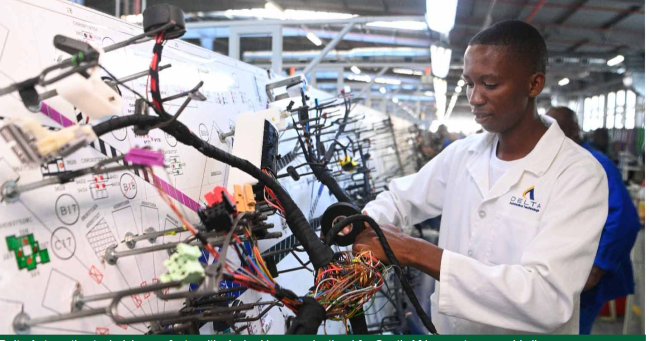
The financing will support economic reforms, protect vulnerable households and expand opportunities for women and young people amid a prolonged downturn in the diamond market.
The African Development Bank (AfDB) Group has approved a $503.75 million loan to Botswana to cushion the impact of the global energy shock, strengthen economic competitiveness and support private sector-led growth and job creation.
The financing, equivalent to 6.62 billion Botswana pula, is one of the bank’s largest operations in the southern African country and is designed to support households facing rising living costs while helping the government implement structural reforms.
The approval was announced in Pretoria on October 23, 2026, under the Economic Competitiveness and Transformation Support Program (ECTSP), which will focus on fiscal reforms, private sector development, support for micro, small and medium-sized enterprises (MSMEs), and employment opportunities, particularly for women and young people.
According to the AfDB, the programme aims to increase non-mining tax revenue to 11.8 per cent of gross domestic product (GDP) in the 2027/28 fiscal year, raise private investment to 30 per cent by 2028 and expand support for businesses capable of driving economic diversification.
The intervention comes as Botswana grapples with the combined effects of a prolonged downturn in the global diamond market and rising energy costs associated with the conflict in the Middle East.
Diamonds account for approximately 30 per cent of Botswana’s GDP and nearly 80 per cent of its exports, making the country particularly vulnerable to fluctuations in global demand for the precious stones.
The downturn contributed to economic contractions of 2.8 per cent in 2024 and 0.7 per cent in 2025, weakening government revenue and increasing pressure on public finances.
The AfDB said the new financing would support the government’s efforts to manage these economic challenges while protecting vulnerable citizens from the consequences of higher prices.
“Botswana has clearly defined its priorities in National Development Plan 12 and Botswana’s Transformation Programme. Our role is to help finance the adjustment, while protecting those least able to bear its costs,” Moono Mupotola, the bank’s Deputy Director General for Southern Africa and Country Manager, said.
The programme also seeks to address longstanding structural challenges, including high unemployment, limited economic diversification and the need to improve the business environment.
The country’s overall unemployment rate stands at 21 per cent, while youth unemployment is 28.9 per cent. An estimated 37 per cent of young people are not in education, employment or training, highlighting the scale of the challenge facing the government.
The AfDB noted that payment arrears to suppliers of medicines and medical equipment contributed to a public health emergency in August 2025, underscoring the importance of strengthening public financial management and ensuring that essential services receive adequate funding.
Abdoulaye Coulibaly, the bank’s Director for Governance and Economic Reforms, said the programme would be driven by measurable targets and implementation rather than policy commitments alone.
“These are time-bound, measurable reforms, each supported by technical assistance to ensure delivery. Adoption alone is not our goal; implementation is,” he said.
Relief For Households And Vulnerable Citizens
A major component of the programme is support for measures already introduced by the Botswana government to reduce the immediate impact of higher energy prices on households and businesses.
On April 6, 2026, the President directed the suspension of fuel, road and security-of-supply levies for six months.
The measure is designed to limit the increase in fuel prices for motorists to approximately 0.58 pula per litre and is expected to reduce inflation by 1.6 percentage points.
By moderating fuel costs, the government hopes to ease pressure on transport fares and the cost of food and other essential goods across the country.
The programme also supports supplementary monthly payments for three months to old-age pensioners, disability grant recipients, destitute cash beneficiaries and home-based care patients.
The assistance is expected to reach approximately 279,000 older people and other vulnerable beneficiaries, providing temporary relief to households with limited capacity to absorb sudden increases in the cost of living.
The AfDB said protecting these groups was central to the programme’s immediate objectives, even as the government pursues longer-term economic reforms.
Energy Access And Security Of Supply
Beyond short-term relief, the programme seeks to strengthen Botswana’s energy infrastructure and reduce vulnerabilities associated with fuel supply and electricity access.
A fully costed National Electrification Action Plan will support implementation of Mission 300’s National Energy Compact for Botswana, which aims to increase household electricity access from 79.5 per cent in the 2025/26 fiscal year to universal access by 2030.
Achieving that target will require additional electricity generation capacity and greater investment in the energy sector.
The programme will therefore support at least one competitive renewable energy auction, through which private developers will be invited to invest in new solar and wind power projects.
The approach is intended to mobilise private capital, expand electricity supply and accelerate the transition towards a more diversified energy mix.
Botswana will also expand the Francistown fuel depot, increasing its storage capacity from 38 million litres to 98 million litres.
The expansion is expected to strengthen the country’s security of fuel supply and improve its capacity to manage disruptions in international energy markets.
Land Reforms To Help Small Businesses
The AfDB-backed reforms also target land administration, which can influence access to credit, investment and business expansion.
The programme aims to provide secure land titles to an additional 4,300 families within one year, increasing the national total from 19,682 to approximately 24,000.
Secure land ownership can enable eligible property holders to use their assets as collateral when seeking financing, potentially improving access to credit for households and entrepreneurs.
The initiative is expected to complement measures aimed at expanding the contribution of small businesses to economic growth.
By the 2027/28 fiscal year, the programme targets support for 3,292 active MSMEs and the creation of 3,935 direct jobs.
Women-owned businesses are expected to account for 93 per cent of the supported enterprises, while the proportion of newly created jobs going to young people is projected to increase from 15 per cent to 20 per cent.
These targets reflect the programme’s emphasis on broadening participation in the economy and ensuring that the benefits of reform extend beyond established businesses and traditional economic sectors.
E-Procurement And Public Financial Management
Another component of the programme is the full implementation of electronic public procurement, a reform expected to reduce government procurement costs by between five and 15 per cent.
The savings could create additional fiscal space for essential public services at a time when weaker diamond revenues and higher energy costs are putting pressure on government finances.
Improved procurement processes are also expected to strengthen transparency, competition and efficiency in public spending.
The reforms form part of broader efforts to unlock Botswana’s Economic Transformation Programme, which contains a pipeline of 186 projects valued at 514 billion pula.
The government’s long-term ambition is to create 512,000 jobs by 2036 through investment, economic diversification and expansion of productive sectors.
Achieving that target will require sustained private sector participation, effective implementation of planned projects and an enabling business environment.
Two-Year Programme With Additional Financing
The approved operation represents the first phase of a two-year programme covering the 2026/27 and 2027/28 fiscal years.
It will be co-financed by the OPEC Fund, which is providing an additional $170 million.
The latest financing builds on earlier AfDB support to Botswana in 2025, when measures aimed at improving tax administration and the business regulatory environment produced reported gains.
According to the bank, value-added tax collections increased by 15.5 per cent to 14.397 billion pula, while Botswana’s business regulatory environment score reached 4.8 out of six, exceeding the target of 4.7.
The new programme is expected to build on those gains by strengthening domestic revenue mobilisation, encouraging private investment and expanding opportunities for businesses outside the diamond industry.
For Botswana, the challenge is to translate the financing and reform commitments into measurable improvements in household welfare, employment and economic resilience.
While temporary relief measures are intended to cushion the immediate impact of rising energy costs, the longer-term success of the programme will depend on whether the reforms generate sustainable economic activity, create jobs and reduce the country’s dependence on diamonds.
The AfDB said its support would be accompanied by technical assistance and measurable targets, with implementation identified as the central test of the programme’s effectiveness.