PublicSphere Live
Politics
Onanuga Accuses Peter Obi of Hypocrisy Over Public Funds, Cites Panama Papers
However, Onanuga challenged the former governor’s position, referring to the Panama Papers leak, which exposed offshore financial arrangements and business interests linked to individuals across several countries.
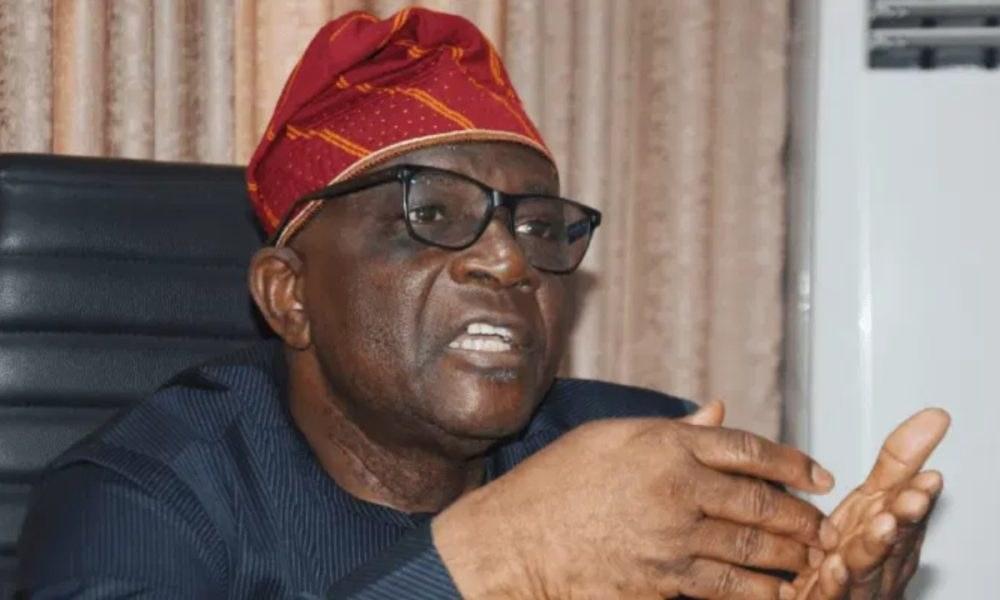
President Bola Tinubu’s Special Adviser on Information and Strategy, Bayo Onanuga, has accused the presidential candidate of the Nigeria Democratic Congress (NDC), Peter Obi, of making public statements that contradict his past actions.
Onanuga levelled the accusation while reacting to Obi’s remarks on the management of public funds, in which the former Anambra State governor argued that Nigeria would be significantly wealthier if its leaders had kept public money in banks.
Obi had suggested that the country could have accumulated substantial wealth if public resources had been prudently managed and preserved rather than wasted.
However, Onanuga challenged the former governor’s position, referring to the Panama Papers leak, which exposed offshore financial arrangements and business interests linked to individuals across several countries.
In a post reacting to Obi’s remarks, Onanuga accused the NDC presidential candidate of preaching principles he allegedly failed to practise.
“Peter Obi likes to say things he doesn’t actually do. Remember the Panama Papers?” Onanuga wrote.
He further alleged that Obi had undeclared offshore assets and business holdings while serving as governor of Anambra State, claiming that the details were contained in reports associated with the global leak.
“And here, Saint Peter is giving his opinion, fooling his followers,” the presidential adviser added, using the expression “Saint Peter” sarcastically to question Obi’s public image.
The comments have brought renewed attention to the debate over accountability, transparency and the management of public resources, issues that are likely to feature prominently in political discussions ahead of the 2027 general elections.
Panama Papers Controversy
The Panama Papers were a major international investigation based on leaked documents from the Panamanian law firm Mossack Fonseca. Published in 2016 by the International Consortium of Investigative Journalists and its media partners, the investigation examined offshore companies and financial arrangements involving politicians, businesspeople and other prominent individuals worldwide.
The disclosures generated international debate about financial transparency, tax practices and the use of offshore entities.
Onanuga invoked the leak to challenge Obi’s comments about the preservation of public wealth. However, his allegations in the latest exchange remain attributed to him and should not, without further supporting evidence, be treated as an independent finding of wrongdoing.
The controversy also raises questions about the distinction between holding offshore business interests and unlawfully concealing assets, as the legal and financial implications depend on the circumstances, disclosure requirements and applicable laws.
Public Wealth And Political Accountability
Obi’s remarks about public money reflect a recurring theme in his public interventions on governance: the need for responsible financial management, prudent spending and the protection of national resources.
The former governor has frequently made public accountability and the efficient use of government funds central to his political messaging.
Onanuga’s response, however, shifts the debate towards the personal financial history of political leaders and whether their past conduct aligns with the principles they advocate.
The exchange underscores how political disagreements in the build-up to the 2027 elections are increasingly being framed around questions of credibility, integrity and the records of individual candidates.
Neither the accusation nor the counterargument, on its own, resolves the broader question of how effectively public resources have been managed in Nigeria. Such an assessment requires evidence concerning government revenue, expenditure, savings, investment and the outcomes of public spending.
As political activities gather momentum ahead of the next general elections, statements by public officials and opposition figures are likely to attract further scrutiny, particularly when they concern transparency and the stewardship of public funds.
Onanuga’s remarks add another dimension to the political exchanges between the Tinubu administration and Obi, whose supporters have continued to emphasise accountability and economic reforms as important considerations in the national debate.