PublicSphere Live
Politics
Obi: Tinubu Has Failed Nigerians, Promises New Era of Productivity Under NDC
In his address, Obi lamented that Nigeria, despite its vast natural resources and economic potential, had become a global symbol of poverty, claiming that more than 140 million Nigerians were multidimensionally poor.
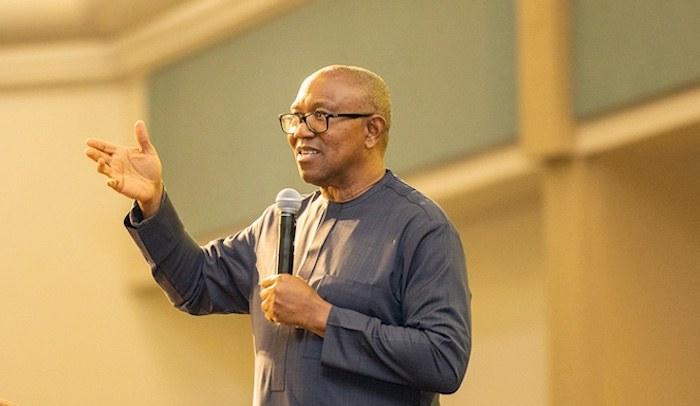
The presidential candidate of the Nigeria Democratic Congress (NDC), Peter Obi, has accused President Bola Tinubu of worsening poverty, insecurity and corruption, declaring that a productive and prosperous Nigeria remains possible under a new political leadership.
Obi made the declaration on Monday, October 26, during the inauguration of the NDC Campaign Council in Abuja, where he presented his vision for rebuilding the country and urged Nigerians to join the party in its quest for political and economic transformation.
The former Anambra State governor, who is seeking the presidency alongside his running mate, Rabiu Musa Kwankwaso, said Nigeria had the human and material resources required to overcome its present challenges but lacked the effective leadership needed to translate its enormous potential into improved living conditions for citizens.
In his address, Obi lamented that Nigeria, despite its vast natural resources and economic potential, had become a global symbol of poverty, claiming that more than 140 million Nigerians were multidimensionally poor.
He attributed the country's worsening economic and security conditions to what he described as failures of governance under the All Progressives Congress (APC)-led administration of President Tinubu.
According to him, the removal of fuel subsidy and increased government borrowing have not produced a corresponding improvement in national productivity or the welfare of ordinary Nigerians.
Obi also cited Nigeria's debt burden, which he put at more than ₦165 trillion, arguing that the country had yet to achieve the economic gains needed to justify the sacrifices imposed on citizens by the government's policies.
He accused the Tinubu administration of presiding over widespread corruption, unemployment, inequality and insecurity, insisting that Nigerians continued to endure avoidable hardship despite the country's considerable resources.
The NDC presidential candidate further alleged that approximately 16 million Nigerians had been pushed into extreme poverty in the current year, although he did not provide supporting data for the figure in his address.
Obi Questions Tinubu's Capacity
Obi's criticism came days after Tinubu launched his re-election campaign in Kaduna, where, according to the opposition politician, the President blamed previous administrations and opposition leaders for the hunger and poverty confronting Nigerians.
The NDC candidate argued that the President should accept responsibility for the country's current challenges rather than shift the blame to previous governments or political opponents.
He questioned Tinubu's competence, capacity, character and commitment to resolving the nation's difficulties, maintaining that the administration had failed to deliver the improvements Nigerians expected.
Obi also accused the President of presiding over a period of declining public confidence, worsening economic hardship and weakening national cohesion.
Under the Tinubu administration, he said, Nigeria had become more divided and insecure, with citizens increasingly exposed to threats from terrorism and other forms of violent crime.
He maintained that addressing these challenges would require a leadership committed to accountability, responsible public spending, institutional integrity and policies capable of stimulating productive economic activities.
The former governor argued that Nigeria's economic recovery should not be measured solely by government announcements or policy changes but by their actual impact on households, businesses and public services.
He called for a shift from an economy in which citizens bear the burden of adjustment without corresponding benefits to one in which reforms generate jobs, improve living standards and expand opportunities.
Electricity Reform A Priority
Obi identified electricity supply as one of the critical areas requiring urgent intervention, arguing that unreliable power had continued to undermine economic development and the delivery of essential services.
He said Nigeria's electricity challenges had constrained businesses, weakened industrial productivity and increased the cost of living for households that depend on alternative sources of power.
According to him, unreliable electricity also affects hospitals, schools and other public institutions, limiting their ability to provide effective services.
He promised that an NDC administration would pursue an electricity reform programme focused on reliability, affordability, investment and accountability.
The proposed programme, he said, would involve working with relevant federal and state institutions, regulators, electricity operators and private investors to address persistent weaknesses in power generation, transmission and distribution.
Obi's position places electricity reform at the centre of his broader economic vision, which emphasises improved productivity, a more supportive business environment and stronger public institutions.
For Nigerian manufacturers and small businesses, dependable electricity remains a major concern because the high cost of generating power independently increases operating expenses and reduces competitiveness.
Obi's proposed reforms would therefore seek to address the structural problems affecting the power sector and create conditions in which businesses can operate more efficiently.
However, the success of such a programme would depend on the details of its implementation, including financing arrangements, regulatory reforms, infrastructure investment and measures to ensure that improved service delivery does not make electricity unaffordable to consumers.
Warns Of Declining Institutional Integrity
Beyond the economy and security, Obi raised concerns about what he described as a crisis of values and institutional integrity in Nigeria.
He alleged that the credibility of government budgets and the integrity of laws had been undermined, warning that the consequences of corruption could weaken the foundations of the Nigerian state.
He further accused the APC-led administration of allowing corruption to become more pervasive since 2023, claiming that its effects had spread across public institutions and national life.
The allegations form part of the opposition candidate's broader argument that Nigeria's difficulties cannot be resolved through economic policies alone without corresponding improvements in governance and accountability.
Obi maintained that public institutions must operate transparently, laws must be respected and public officials must be held accountable for their decisions and use of public resources.
He argued that corruption deprives citizens of essential services, diverts resources from development projects and weakens public confidence in government.
For him, rebuilding Nigeria requires more than a change of political leadership. It also demands a change in the way public office is understood and exercised, with government officials treating public resources as a trust rather than personal property.
The Tinubu administration has pursued economic reforms since assuming office in May 2023, including fuel subsidy removal and foreign-exchange reforms. While the government has defended these measures as necessary for long-term economic stability, the policies have also attracted criticism over their effects on household purchasing power and the cost of doing business.
Obi's intervention adds to the political debate over whether the reforms are delivering sufficient benefits to Nigerians and what alternative policies opposition parties would adopt.
Obi, Kwankwaso Seek National Rebuilding
The NDC presidential candidate called on party members and Nigerians across political, ethnic and religious lines to support what he described as a national crusade to rebuild the country.
He said his partnership with Kwankwaso was anchored on the objective of creating a nation united by fairness, justice, equity, productivity, inclusion and development.
Obi urged committed members of the NDC and other Nigerians to participate in the effort to establish a government that prioritises the security and welfare of citizens.
He said the party envisioned a country where good governance would be firmly established, public officials would be accountable and citizens would have confidence in the institutions responsible for protecting their rights.
The vision, he explained, includes building a law-abiding society populated by healthy, skilled and educated citizens, with every child having access to education and acquiring basic literacy.
He also declared that no Nigerian should be forced to live in a camp for internally displaced persons, stressing the need for a country in which citizens could live safely in their communities without fear of violence or displacement.
The statement places security, education, human welfare and institutional accountability among the priorities Obi says an NDC government would pursue.
His call for national rebuilding also reflects the challenge facing opposition parties as they seek to persuade voters that they can offer credible alternatives to the policies and political leadership of the ruling APC.
For the NDC, the task will involve translating its promises into clear policy proposals capable of addressing unemployment, poverty, insecurity, electricity shortages and the difficulties confronting businesses and households.
'A New And Productive Nigeria Is Possible'
Reaffirming his optimism about the country's future, Obi insisted that Nigeria's present difficulties should not be regarded as permanent.
He argued that the country's resources, human capital and economic potential could support a different development path if government became more accountable and focused on productive investment.
He said Nigerians wanted a country where good governance was visible in everyday life, public services worked effectively and national resources were used to improve the welfare of citizens.
The former governor called for a society in which children could attend school, businesses could grow, institutions could function independently and corruption would no longer undermine national development.
He also emphasised inclusion, saying the country's development should benefit citizens across different regions and social backgrounds rather than leave millions struggling with poverty and insecurity.
Obi's declaration that Nigeria would be fine was intended to reinforce his message of hope amid widespread concerns over the country's economic and security conditions.
The inauguration of the NDC Campaign Council marks another stage in the party's preparations for the 2027 general election, as political parties intensify efforts to present their candidates, programmes and governing philosophies to Nigerians.
With Obi and Kwankwaso positioning themselves as advocates of a new political direction, the party will face the challenge of convincing voters that its proposals can produce measurable improvements in living standards and national development.
For Nigerians confronting rising living costs, unreliable electricity, insecurity and limited economic opportunities, the central question will be whether the competing political promises translate into practical solutions.
Obi concluded his message with a declaration that encapsulated the party's campaign vision: “A New Nigeria is our vision. A New Nigeria is our mission.”
He expressed confidence that the country could overcome its current difficulties and emerge as a more productive, inclusive and prosperous nation under a leadership committed to fairness, justice, security and good governance.