PublicSphere Live
Politics
Government of National Unity After the 2027 Elections: Constitutional Reality, Political Merit and the Risks of Power-Sharing
These provisions establish a constitutional expectation of inclusion. They do not, however, create a compulsory coalition government or require the sharing of executive power among presidential candidates after an election.
The central question is whether Nigeria’s 1999 Constitution provides for a Government of National Unity after a presidential election, and whether Professor Udenta O. Udenta’s proposal for an 18-month unity government offers a credible solution to the country’s electoral tensions, declining public trust and potential post-election crisis.
The proposal raises an important distinction between what the Constitution requires, what political parties may voluntarily negotiate and what the country might consider desirable for national stability. A Government of National Unity may be politically attractive under certain circumstances, but its desirability does not automatically make it a constitutional requirement or justify altering the outcome of an election.
The merit of Udenta’s proposal must therefore be examined against the provisions of the 1999 Constitution, Nigeria’s experience with political power-sharing, the importance of electoral mandates and the practical challenges of implementing a temporary national government.
The Constitutional Position: No Express Provision For A Government Of National Unity
The short answer is no. The 1999 Constitution of the Federal Republic of Nigeria, as amended, contains no express provision establishing a Government of National Unity following a presidential election. It does not require the winner of an election to appoint representatives of defeated political parties to the Federal Executive Council, nor does it prescribe an 18-month transitional unity government before the commencement or completion of a president’s constitutionally defined tenure.
However, this conclusion requires an important qualification. The absence of an express provision for a Government of National Unity does not mean that political cooperation, inclusive governance or the appointment of opposition politicians to ministerial positions is prohibited. The Constitution contains provisions that encourage national unity, equitable representation and participation in government, which may provide a basis for an inclusive administration operating within the existing constitutional framework.
Section 14(3) stipulates that the composition of the Government of the Federation and its agencies must reflect Nigeria’s federal character and promote national unity, while preventing the predominance of persons from a few states or ethnic or sectional groups. Section 14(2)(c) also affirms the principle that citizens’ participation in government must be ensured in accordance with the Constitution.
These provisions establish a constitutional expectation of inclusion. They do not, however, create a compulsory coalition government or require the sharing of executive power among presidential candidates after an election.
Section 147 provides for the appointment of federal ministers by the President, subject to Senate confirmation and the applicable constitutional requirements, including federal character. This gives a president room to build an inclusive cabinet, but it does not oblige the president to distribute ministerial appointments among rival parties according to their performance in an election.
The distinction is fundamental to the debate surrounding the proposal by Professor Udenta O. Udenta, the founding National Secretary of the Alliance for Democracy, for an 18-month Government of National Unity after the 2027 general elections.
His argument deserves serious consideration because national stability is indispensable to democratic development. Nevertheless, a proposal aimed at preventing a political crisis must itself respect the constitutional order it seeks to protect.
What The Constitution Says About The Presidential Mandate
Sections 130 to 135 of the Constitution establish the office of the President, prescribe the requirements for election and define the tenure of the office.
Section 134 sets out the conditions under which a presidential candidate is deemed duly elected. Where more than two candidates contest the election, the applicable constitutional requirements include obtaining the highest number of votes and the prescribed geographical spread. The Constitution also provides for a further election in circumstances where no candidate satisfies the requirements.
Section 135 establishes a four-year presidential tenure, subject to the constitutional provisions governing when the office becomes vacant or a president otherwise ceases to hold office.
These provisions mean that the outcome of a presidential election is not merely an invitation to political negotiations. It determines who is entitled to assume the presidency under the Constitution.
If a candidate wins in accordance with the law, the mandate belongs to that candidate for the constitutionally prescribed term. The winner is not constitutionally required to surrender part of that mandate to defeated candidates simply because their supporters are dissatisfied or because political tensions may arise.
Equally, the defeated candidates retain their constitutional rights. They may challenge an election through the established legal process, criticise government policies, organise their parties, participate in legislative business and mobilise citizens peacefully.
Consequently, an 18-month Government of National Unity cannot simply be imposed as an alternative to the four-year presidential tenure. Nor can a political agreement override the constitutional provisions governing the presidency.
If Udenta's proposal means establishing a coalition cabinet within the elected president's administration, it may be politically feasible, subject to the Constitution. If it means creating a separate transitional executive that suspends, displaces or substantially alters the authority of the elected President, the constitutional and legal obstacles would be formidable.
The crucial issue, therefore, is not whether national unity is desirable. It is how national unity can be pursued without undermining the electoral mandate.
Does The Absence Of A Constitutional Provision Invalidate Udenta's Proposal?
The argument that there is no constitutional provision for a Government of National Unity is legally sound, but it would be an overstatement to conclude that every form of unity government or political power-sharing arrangement is therefore impermissible.
Constitutions do not necessarily prescribe every political arrangement that parties may voluntarily adopt. A president can consult opposition leaders, appoint qualified opposition politicians as ministers where legally permissible, negotiate legislative cooperation and establish platforms for national dialogue without creating a new constitutional system.
The problem arises when a voluntary political arrangement is presented as a legal obligation, or when it attempts to supersede constitutional institutions and the authority conferred by an election.
Udenta's proposal should therefore be judged on two separate grounds: its constitutional feasibility and its political usefulness.
On the first, a compulsory 18-month unity government has no express constitutional foundation. On the second, a structured mechanism for dialogue, national reconciliation and cross-party cooperation could be valuable, particularly in a country where electoral disputes frequently deepen existing political divisions.
This distinction allows Nigerians to appreciate the intention behind the proposal without accepting that an election winner must surrender part of the mandate obtained from voters.
The 2023 Election And The Question Of Public Trust
The proposal comes against the background of continuing debates about electoral credibility and the ability of political institutions to command public confidence.
The 2023 presidential election demonstrated both the resilience and the vulnerabilities of Nigeria's democratic system. The election produced a declared winner, but disputes over the process, the transmission and collation of results, and the conduct of electoral authorities generated controversy that continued into post-election litigation and political debate.
The argument advanced by critics of the electoral process is that the declaration of a winner does not automatically resolve questions about public confidence. A country may have a constitutionally recognised president while significant sections of the electorate remain dissatisfied with the process through which that president emerged.
That concern deserves attention. However, the appropriate remedy for an election dispute must be distinguished from the remedy for a political disagreement.
Where there is evidence of electoral malpractice, the law provides procedures for challenging results before the appropriate tribunals and courts. Where the results have been upheld through the applicable legal process, political parties must respect the constitutional order, even while retaining the right to criticise the election and advocate reforms.
A Government of National Unity cannot substitute for an independent electoral commission, transparent result management, credible voter registration, effective election observation or impartial judicial determination of electoral disputes.
Indeed, if a unity government becomes the expected reward for rejecting an election outcome, it could unintentionally encourage political actors to use threats of instability as bargaining instruments. Such an arrangement could weaken rather than strengthen the incentive to participate in elections peacefully.
Conversely, if political leaders voluntarily agree to work together after a credible election, the arrangement could help reduce tensions and promote a common national agenda.
The lesson is that political reconciliation should reinforce electoral legitimacy, not replace it.
The Merit In Udenta's Proposal
Despite the constitutional reservations, Udenta raises a legitimate question: what happens to Nigeria after the results of the 2027 elections are announced?
His proposed Sovereign Commission for Democratic Sustainability and National Stability would bring together the sitting president, president-elect, certified presidential candidates, national chairmen of political parties, organised labour, university lecturers, journalists and civil society organisations.
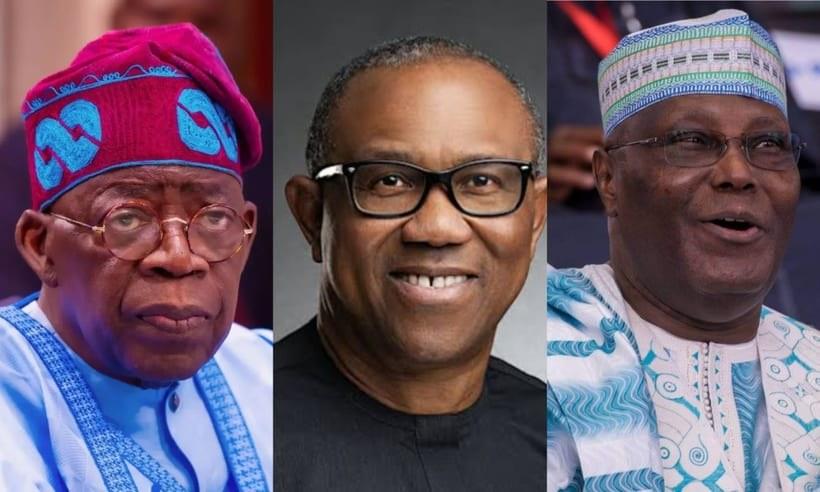
According to the report, the initiative has attracted support from individuals associated with President Bola Tinubu, former Vice President Atiku Abubakar, Peter Obi and Governor Seyi Makinde.
The proposed commission is intended to create a practical platform for dialogue rather than another committee that produces communiqués without meaningful implementation.
This is arguably the strongest aspect of the proposal. Nigeria needs a credible mechanism through which political leaders can agree on minimum standards of democratic conduct, peaceful dispute resolution, national security and institutional reform.
The commission could encourage candidates to sign a pre-election commitment to respect lawful electoral procedures, accept outcomes established through the constitutional process and pursue grievances peacefully. It could also establish channels for communication between rival camps to prevent rumours, inflammatory rhetoric and misinformation from escalating into violence.
Furthermore, involving labour unions, professional bodies, journalists and civil society would help ensure that post-election dialogue is not confined to political elites. The interests of ordinary Nigerians, including workers, traders, farmers, students and unemployed young people, must be represented in discussions about national stability.
The strongest argument for Udenta's proposal, therefore, is not that Nigeria needs an 18-month government that temporarily dilutes the electoral mandate. It is that Nigeria needs a credible, inclusive and sustained framework for democratic cooperation that operates before, during and after elections.
Why An 18-Month Unity Government Could Create Problems
The difficulty lies in the proposed duration and the possible interpretation of the term Government of National Unity.
Why 18 months? What constitutional event would occur at the end of that period? Would the president retain full executive authority? Would opposition parties receive ministerial positions according to votes obtained? Would the president be expected to suspend important campaign commitments until the arrangement expires?
These questions are not minor details. They go to the heart of presidential authority and democratic accountability.
Under Section 135, the Constitution prescribes a four-year presidential tenure, subject to its other provisions. It does not create an 18-month transitional period during which the president must govern jointly with defeated presidential candidates.
If a president-elect is required to form a special coalition government for the first 18 months, it could produce uncertainty about who is responsible for policy decisions. The president might be held accountable for decisions that were actually the product of coalition negotiations, while coalition partners could blame the president for policies they opposed.
There is also the danger of political opportunism. Parties that campaigned vigorously against one another could enter government primarily to secure appointments, contracts or influence rather than to advance an agreed national programme.
A unity government could become an elite bargain that rewards political power-brokers while ordinary citizens remain excluded from meaningful participation.
More importantly, a defeated candidate who joins the government would not necessarily represent every voter who supported that candidate. Voters who chose an opposition party because of its policies might regard its participation in the ruling administration as a betrayal of their mandate.
Democracy requires not only cooperation but also a credible opposition capable of scrutinising government decisions, exposing wrongdoing and offering alternative policies. A unity government that weakens opposition oversight could undermine the accountability it claims to promote.
The Better Alternative: A National Democratic Stability Accord
Rather than making an 18-month unity government the centrepiece of the proposal, Nigeria could establish a National Democratic Stability Accord supported by a permanent or appropriately constituted multiparty dialogue mechanism.
Such an arrangement would preserve the constitutional powers of the elected president while creating a framework for cooperation among political parties and other stakeholders.
First, presidential candidates and political parties should be encouraged to sign a binding political commitment, to the extent legally enforceable, to reject electoral violence, avoid incitement, respect lawful dispute-resolution procedures and refrain from mobilising supporters against democratic institutions.
Second, INEC should be encouraged to publish clear procedures for results management, provide timely and accessible information, improve transparency in the collation process and communicate effectively with the electorate. Political dialogue cannot compensate for weaknesses in electoral administration.
Third, the proposed commission should have a clearly defined mandate, transparent membership, a realistic budget, measurable objectives and publicly available progress reports. Its work should not duplicate INEC, the courts, the National Assembly or other existing constitutional institutions.
Fourth, its agenda should extend beyond political appointments. It should address electoral reform, political violence, insecurity, economic hardship, unemployment, constitutional compliance and public trust in state institutions.
Finally, the government that emerges from the election should be encouraged to pursue an inclusive national programme. It may consult opposition parties on matters of national importance and appoint qualified individuals in accordance with the Constitution. But these measures should remain compatible with the president's electoral mandate and the right of opposition parties to operate independently.
If stakeholders conclude that a formal Government of National Unity requires changes to the constitutional framework, the proper route would be a transparent constitutional reform process, with the necessary legislative and state-level approvals, rather than an informal political agreement that purports to override existing provisions.
Conclusion: Unity Must Not Come At The Expense Of Democracy
Professor Udenta's proposal deserves consideration because Nigeria cannot afford another cycle of electoral distrust, political hostility and avoidable instability. His emphasis on dialogue among political parties, labour, professional bodies and civil society reflects a valid recognition that democracy requires more than announcing election results.
Nevertheless, the argument that Nigeria needs an 18-month Government of National Unity does not follow automatically from the existence of electoral mistrust. Nor does the Constitution establish such a government as a compulsory feature of the presidential system.
The more defensible position is that Nigeria needs a government of national inclusion, not necessarily a Government of National Unity in the sense of compulsory executive power-sharing.
National inclusion can be pursued through federal character, equitable representation, responsible leadership, consultation, legislative cooperation and respect for the rights of political opponents. These objectives are consistent with the constitutional framework without requiring the suspension or dilution of an electoral mandate.
The real test of national unity will not be how many opposition politicians receive ministerial appointments or how many party leaders sit around a conference table. It will be whether the electoral process commands public confidence, whether institutions act impartially, whether the government respects dissent and whether citizens experience tangible improvements in security, economic opportunity and social welfare.
If the 2027 elections produce a credible result, the winner should be allowed to govern for the constitutionally prescribed term while remaining accountable to the people. If the election is disputed, the appropriate legal remedies must be available and effective. And whether the result is disputed or accepted, political leaders should have a standing platform for dialogue and peaceful cooperation.
Udenta's proposal therefore has merit as a call for national reconciliation and democratic stability. Its weakness lies in treating an 18-month unity government as the necessary instrument for achieving those objectives.
Nigeria does not need to choose between constitutional democracy and national unity. It needs to build national unity through constitutional democracy.