PublicSphere Live
Politics
Sunday Igboho Slams Makinde Over Alleged Mockery of Tinubu, Says Insult Will Not Be Tolerated
Igboho, in a video that went viral on Sunday, described Makinde's stage-jumping demonstration as childish and disrespectful, insisting that political disagreements should not be used as an excuse to ridicule the President.
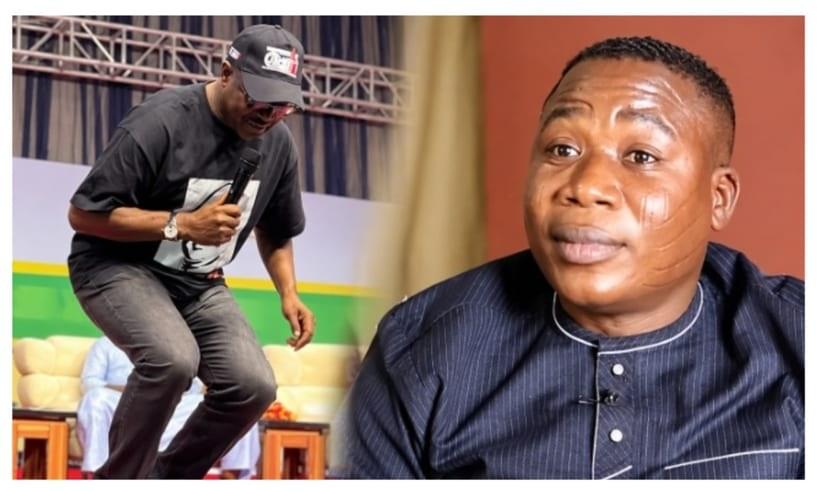
Yoruba Nation activist, Sunday Adeyemo, popularly known as Sunday Igboho, has criticised Oyo State Governor Seyi Makinde over his recent physical display at a political gathering, accusing him of disrespecting President Bola Ahmed Tinubu.
Igboho, in a video that went viral on Sunday, described Makinde's stage-jumping demonstration as childish and disrespectful, insisting that political disagreements should not be used as an excuse to ridicule the President.
The activist's comments have added another dimension to the political controversy surrounding Makinde's demonstration at a South-West town hall meeting in Akure, the Ondo State capital, where the governor sought to draw attention to his physical stamina ahead of the 2027 presidential election.
Makinde, who is seeking the presidency on the platform of the Allied Peoples Movement (APM), had jumped down from the stage during the event on Thursday, reportedly as part of an argument that presidential candidates should be judged by their energy and capacity rather than their age.
Although the governor did not specifically mention Tinubu during the demonstration, his remarks and actions were widely interpreted by some observers as an indirect reference to the President.
Reacting to the incident, Igboho accused Makinde of using the display to mock Tinubu, whom he described as an elderly person deserving of respect.
In the viral video, the activist said Makinde had behaved in a manner he considered inappropriate for a sitting governor and a presidential aspirant.
“He was jumping around like a frog and a mad man, insulting Tinubu, saying Tinubu can't jump like him as if he doesn't have a father,” Igboho said.
He further warned that he would respond to anyone who insulted the President, declaring that he would not remain silent if Tinubu was subjected to what he regarded as disrespectful treatment.
“If you insult Tinubu, I will insult you back,” the activist stated.
Igboho also cautioned against mocking elderly people, arguing that respect for age should remain an important consideration in public conduct and political engagement.
He described Makinde's action as a disgrace, warning that anyone who wished to live long should avoid ridiculing an elderly person.
The activist's intervention has brought attention to the growing exchanges surrounding political personalities as parties and prospective candidates prepare for the 2027 general elections.
Makinde's Stamina Demonstration Sparks Controversy
The controversy originated at the South-West town hall meeting in Akure, where Makinde used a physical demonstration to make a point about the qualities he believes Nigerians should consider when choosing their next president.
At the gathering, the governor jumped down from the stage, drawing attention to his physical agility and challenging other presidential candidates to demonstrate comparable energy.
Makinde argued that the 2027 presidential contest should not be determined primarily by age, but by the capacity of candidates to perform the demanding responsibilities of the nation's highest political office.
“If they can do that, vote for them,” he said, challenging other contenders to replicate the demonstration.
His position appeared to frame physical stamina as one of the issues Nigerians should consider when assessing presidential candidates, although the ability to jump from a stage is not, by itself, a comprehensive measure of a candidate's capacity to govern.
Makinde did not expressly name Tinubu during the demonstration. Nevertheless, the episode attracted attention because the President is among the leading political figures whose age and public appearances have featured in political discussions ahead of the next election.
Igboho's reaction reflects one interpretation of the governor's actions, but the available account does not establish that Makinde explicitly directed an insult at Tinubu.
2027 PRESIDENTIAL RACE AND PERSONAL POLITICAL EXCHANGES
The disagreement comes as political activities intensify ahead of the 2027 general elections, with parties and prospective candidates seeking to establish their credentials and distinguish themselves from their opponents.
Makinde's presidential ambition on the APM platform places him within the broader competition for the presidency, while Tinubu is seeking another term in office on the platform of the All Progressives Congress (APC).
As the contest approaches, public statements, campaign appearances and demonstrations by political figures are likely to attract increased scrutiny from supporters, opponents and the electorate.
The episode also highlights how gestures intended to communicate a candidate's personal attributes can acquire broader political significance, particularly when they are interpreted as indirect references to prominent opponents.
For Igboho, the central issue is respect for Tinubu and the treatment of an older political leader. His warning that he would respond to anyone who insulted the President signals his opposition to what he considers unacceptable attacks against Tinubu.
However, political disagreements over age, stamina and leadership also raise questions about the standards by which presidential candidates should be assessed.
Beyond physical energy, the responsibilities of the presidency include policy formulation, economic management, national security, diplomacy, institutional leadership and the ability to respond to the needs of citizens.
These considerations require voters to examine candidates' records, policy proposals, experience and capacity to address the country's challenges rather than relying exclusively on campaign performances or personal exchanges.
POLITICAL TENSIONS AND THE NEED FOR ISSUE-BASED DEBATE
The disagreement between Igboho and Makinde illustrates the potential for campaign rhetoric and symbolic gestures to become subjects of wider political controversy.
While candidates may seek to demonstrate their strengths through public appearances, opponents and other political actors may interpret such actions differently, particularly in a highly competitive election season.
The controversy also underscores the distinction between criticism of a political leader and a direct personal insult. Makinde's reported comments centred on physical stamina and the qualities expected of presidential candidates, while Igboho interpreted the demonstration as disrespectful to Tinubu.
That distinction is important in understanding the dispute, given that the governor did not explicitly mention the President during the reported demonstration.
As the 2027 election approaches, the ability of political actors to debate leadership qualities without allowing disagreements to degenerate into personal hostility will remain an important test of the political environment.
For voters, the more consequential question is whether candidates can translate campaign claims about strength, energy and leadership into credible programmes capable of addressing unemployment, insecurity, inflation, poverty and other pressing national concerns.
Igboho's intervention has therefore widened the debate surrounding Makinde's stage-jumping demonstration, shifting attention from the governor's intended message about physical stamina to the question of respect for the President.
Whether the episode develops into a sustained political confrontation remains to be seen. For now, it has added another talking point to the emerging exchanges among political figures as preparations for the 2027 presidential election gather momentum.
Make the headline more legally cautiousLead with Igboho’s strongest allegation