PublicSphere Live
Politics
2027 Elections: Why Tinubu, Opposition Parties Must Put Ideas Before Vendetta
As President Bola Tinubu kicks off the APC’s 2027 presidential campaign in Kaduna, Nigeria’s political parties must embrace issue-based campaigns, reject personal attacks and protect peace, national unity and democratic stability.
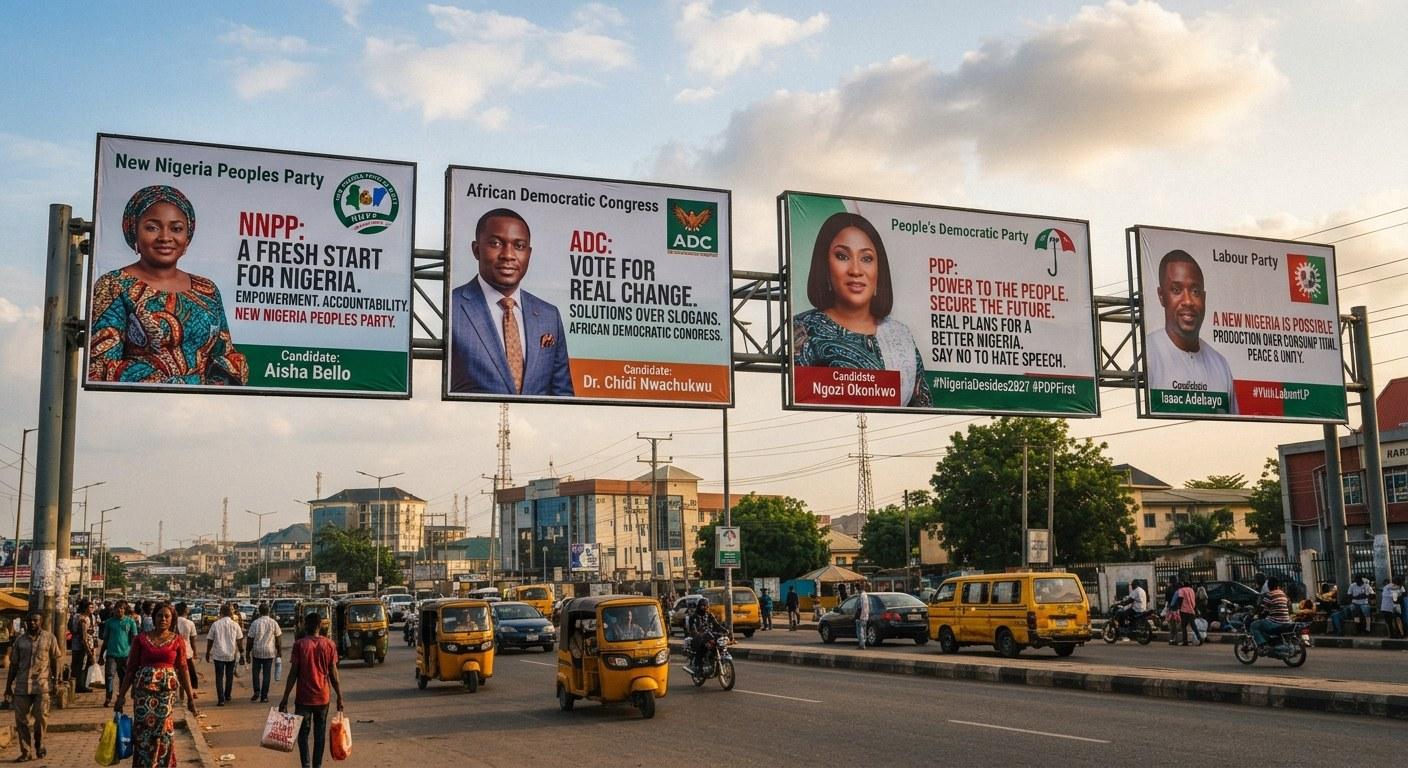
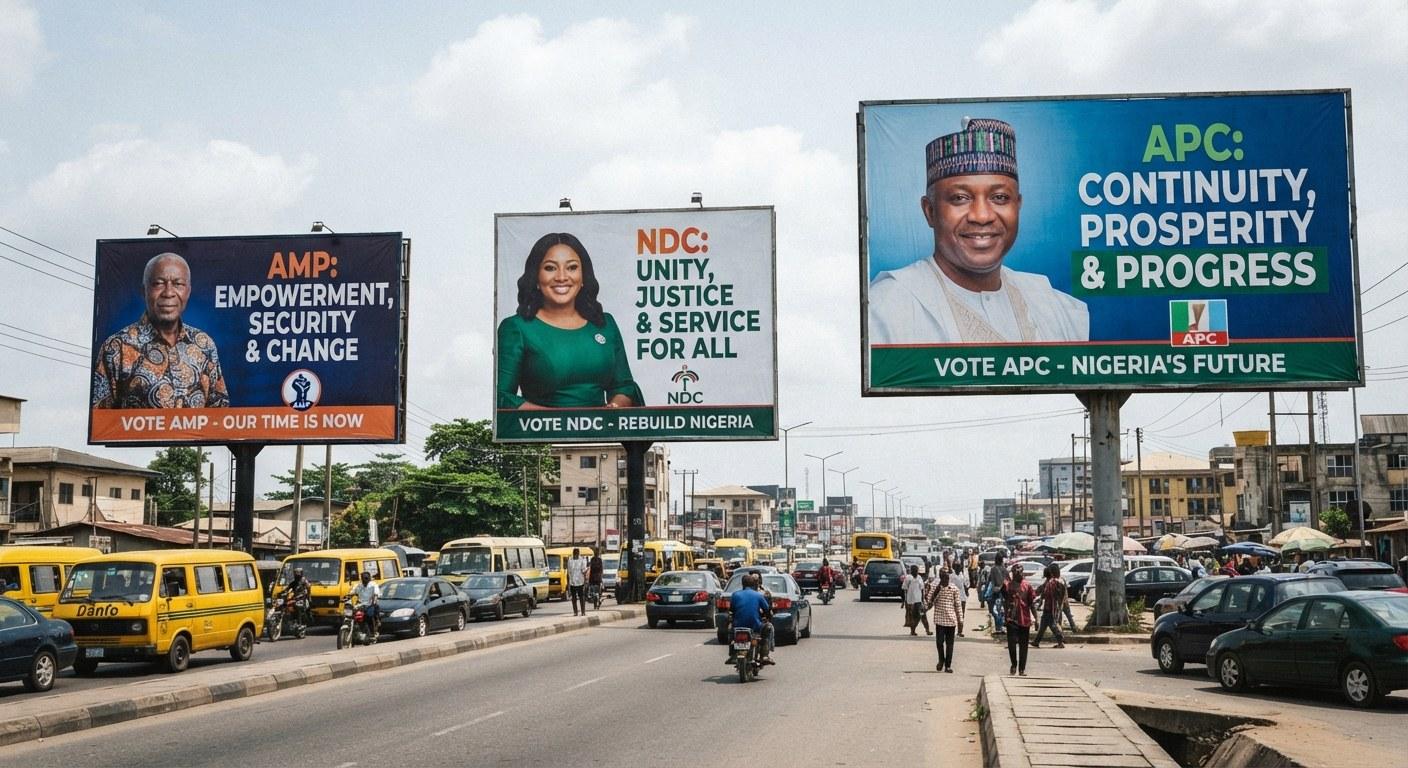
With political parties preparing to intensify their campaigns ahead of the 2027 general election, the challenge before Nigeria’s political class is to persuade voters with credible ideas and workable solutions rather than insults, vendettas and inflammatory rhetoric that could threaten national cohesion.
Nigeria is once again approaching a defining moment in its democratic journey. With President Bola Ahmed Tinubu leading the All Progressives Congress (APC) into its presidential campaign season with a rally in Kaduna last Saturday, the political atmosphere is beginning to acquire the familiar intensity of an election year. Other political parties are preparing to take their messages to the electorate, setting the stage for what promises to be a fiercely contested battle for the presidency and other elective offices in 2027.
But beyond the rallies, political declarations, defections, campaign slogans and competing claims of popularity lies a more consequential question: can Nigeria conduct a competitive election in which political parties vigorously defend their records, expose weaknesses in their opponents’ policies and persuade voters without turning the contest into a theatre of personal hatred?
That question deserves urgent attention.
Elections are indispensable to democracy, but the manner in which politicians pursue electoral victory can either strengthen or undermine the democratic foundations of a country. A campaign should be an opportunity for citizens to interrogate competing visions of government, examine the performance of those in power and decide which political party or candidate offers the most credible pathway to a better future.
It should not become an occasion for settling personal scores, humiliating opponents, inciting supporters or presenting political disagreement as a battle between enemies who cannot coexist.
The APC’s Kaduna rally therefore represents more than the beginning of another round of electoral mobilisation. It is also a reminder to the ruling party, the opposition and their supporters that the 2027 contest must be conducted with restraint, responsibility and a clear understanding that Nigeria is bigger than any political party or presidential ambition.
As other parties prepare to launch their national campaigns, the country needs a political conversation driven by ideas rather than vendetta, public accountability rather than character assassination, and persuasion rather than provocation.
From Campaign Rallies To The Battle For Public Trust
President Tinubu’s decision to commence the APC’s presidential campaign activities in Kaduna places the ruling party at the centre of an increasingly competitive political environment. For the president and his party, the campaign provides an opportunity to explain the administration’s policies, defend its achievements and persuade Nigerians that its economic and governance agenda deserves another mandate.
For opposition parties, the approaching campaign season offers the opportunity to challenge those claims, draw attention to the difficulties confronting households and businesses, and present alternative approaches to Nigeria’s economic and political challenges.
Neither responsibility should be regarded as illegitimate. Indeed, a healthy democracy depends on the ability of the governing party to defend its record and the opposition to scrutinise it.
However, the credibility of these competing arguments will depend significantly on how they are presented.
The ruling party cannot expect Nigerians to accept its achievements merely because its campaign machinery declares them successful. It must explain how its policies have affected the cost of living, employment, household purchasing power, public infrastructure, security and the prospects of young people seeking opportunities in a difficult economy.
Similarly, opposition parties cannot build a convincing case for electoral change simply by portraying the president and his supporters as incapable, malicious or undeserving of public respect. They must demonstrate what they would do differently, how their proposals would be financed, what institutional changes they would introduce and how Nigerians could measure their performance if entrusted with power.
The difference between a campaign that strengthens democracy and one that weakens it lies substantially in this distinction.
One invites voters to think. The other encourages them to hate.
Nigeria needs the former.
The Temptation To Turn Politics Into Personal War
Nigerian politics has long been characterised by intense rivalries, shifting alliances, accusations of betrayal and the struggle for control of political structures. As the 2027 election approaches, these familiar dynamics risk overshadowing the substantive issues that should dominate public debate.
Political parties are already positioning themselves, prominent politicians are calculating their next moves, and supporters are interpreting every rally, defection, endorsement and public statement as evidence of which side is gaining ground.
Such manoeuvres are normal features of competitive politics. The danger emerges when political competition becomes so personalised that disagreement over policy is replaced by hostility towards individuals.
When politicians resort to insults, ridicule, unsubstantiated allegations and language designed to provoke anger, they may generate temporary excitement among their supporters. But they also diminish the quality of public debate and make it harder for citizens to distinguish verifiable facts from partisan propaganda.
The problem becomes more serious when political leaders encourage their followers to regard opponents as enemies of the nation rather than fellow citizens with different political convictions.
A politician who loses an election does not cease to be a Nigerian. A party that opposes the government is not automatically working against the country. Likewise, a citizen who supports the president is entitled to that choice without being subjected to abuse by those who favour an alternative candidate.
Democracy is built on the recognition that people can disagree profoundly and still share a common national identity.
The phrase politics without bitterness must therefore become more than a convenient slogan repeated at campaign events. It should guide the conduct of candidates, campaign officials, party spokespersons, political influencers and supporters throughout the election season.
There is nothing wrong with robust criticism. Where a government has failed to deliver on its promises, opposition parties should say so clearly and substantiate their claims. Where an opposition proposal appears unrealistic, the ruling party should explain why it believes the proposal would fail.
But criticism must remain directed at decisions, policies, performance and public conduct. It should not degenerate into threats, dehumanisation or the deliberate spread of falsehoods.
The distinction matters because political language can influence behaviour far beyond the rally ground or television studio where it originates.
Economic Hardship And The Responsibility Of Political Leaders
The economic circumstances of ordinary Nigerians make the need for responsible campaigning particularly urgent.
Across the country, households are concerned about food prices, transport costs, housing, school fees, healthcare, employment and the difficulty of maintaining a reasonable standard of living. Small businesses must contend with operating costs, while many young Nigerians continue to search for sustainable livelihoods and opportunities to fulfil their ambitions.
These concerns will inevitably shape the 2027 election.
For millions of voters, the central question will not simply be which politician can attract the largest crowd or deliver the most entertaining speech. It will be which candidate can offer credible answers to the problems confronting their families and communities.
The Tinubu administration has a responsibility to explain its economic choices and demonstrate the benefits Nigerians can reasonably expect from its policies. Its opponents, in turn, have a responsibility to articulate alternatives that are practical, measurable and capable of implementation.
Neither side should assume that emotional mobilisation can permanently substitute for credible answers.
A government cannot dismiss legitimate complaints about hardship as the product of opposition propaganda. Equally, an opposition party should not exploit the suffering of citizens by promising instant solutions to structural problems without explaining the difficult decisions involved.
Campaigns should help Nigerians understand the choices before them, including the likely costs, benefits, risks and time frames associated with competing policy proposals.
This is where political communication becomes a public service rather than a contest in theatrical performance.
Candidates should explain how they intend to create jobs, improve agricultural productivity, strengthen local industries, expand access to education and healthcare, improve electricity supply and tackle insecurity. They should also tell voters how they intend to fund their programmes, identify implementation priorities and ensure that public resources are not wasted.
Nigeria does not lack campaign promises. What voters need is a clearer understanding of which promises are achievable, how they will be delivered and who will be held accountable when deadlines are missed.
A campaign organised around these questions would give citizens a stronger basis for making informed choices than one dominated by personal attacks.
Why A Peaceful Election Matters To Every Nigerian
Peaceful elections are not merely desirable democratic rituals. They are essential to the protection of lives, livelihoods, national stability and the legitimacy of government.
Nigeria is a country of enormous diversity, with different ethnic communities, religious traditions, languages, regional interests and political loyalties. That diversity is a national asset, but it also places a responsibility on political leaders to ensure that electoral competition does not deepen divisions or turn existing grievances into communal hostility.
The country has experienced the consequences of political violence, disputed electoral outcomes and conflicts in which ordinary citizens have paid a devastating price. Families have lost loved ones, businesses have been destroyed, communities have been displaced and public confidence in political institutions has suffered.
Such consequences should never be treated as acceptable costs of winning an election.
A candidate may secure a political victory, but if the process leaves communities divided, citizens traumatised and institutions weakened, the wider country loses.
There is also an economic dimension to electoral peace. Investors, entrepreneurs, traders and workers depend on a reasonably stable environment in which businesses can operate, goods can move and people can pursue their livelihoods without fear of politically motivated violence.
Election-related unrest can disrupt markets, discourage investment, interrupt education and divert public resources from development priorities to emergency security measures.
For a country seeking to expand industrial production, attract investment, create jobs and improve living standards, political instability would be an unnecessary burden.
Peaceful campaigning, therefore, is not a favour that politicians extend to the electorate. It is a responsibility they owe the people whose votes they seek.
Candidates and party leaders must communicate clearly that violence, intimidation, destruction of property and attacks on political opponents will not be tolerated, regardless of which side is responsible.
They must also understand that a peaceful election requires more than the absence of physical confrontation. It requires respect for the rights of citizens to attend political gatherings, support their preferred candidates, express dissenting opinions and participate in the democratic process without intimidation.
A credible election should allow voters to make their choices freely, without threats from political actors or fear of retaliation from opposing supporters.
Social Media, Misinformation And The Danger Of Inflammatory Campaigns
The 2027 election will unfold in a media environment in which political messages can travel across the country within seconds. Social media platforms have expanded opportunities for political participation, enabling citizens to question public officials, circulate information and engage candidates directly.
However, these platforms can also amplify misinformation, fabricated quotations, manipulated videos and allegations designed to damage reputations or provoke hostility.
A false claim circulated by an influential political account can quickly become a rallying point for thousands of supporters before the truth has an opportunity to catch up. In an already polarised environment, such content can deepen suspicion and encourage people to judge political opponents on the basis of fabricated information.
Political parties must take responsibility for the conduct of their communication teams and the networks of supporters who promote their messages. They should not secretly encourage online attacks while publicly preaching peace.
Journalists, broadcasters and digital publishers also have a critical role to play. Reporting campaign statements accurately, verifying allegations and distinguishing established facts from partisan claims are essential responsibilities in an election period.
The media must resist the temptation to elevate sensational insults above substantive policy discussions simply because controversy attracts attention.
Citizens, too, must exercise judgment. Sharing an inflammatory message without checking its authenticity can contribute to a climate of hostility, even when the person circulating it has no intention of encouraging violence.
Political disagreements should be resolved through argument, evidence and lawful democratic processes, not digital mob attacks or campaigns of intimidation.
INEC, Security Agencies And The Burden Of Public Confidence
While political parties bear substantial responsibility for the tone of the election, the conduct of the 2027 process will also depend on the effectiveness and credibility of the institutions charged with managing it.
The Independent National Electoral Commission (INEC) must demonstrate preparedness, transparency and impartiality in carrying out its responsibilities. Voter registration, the publication of election guidelines, accreditation arrangements, the management of polling units and the declaration of results must inspire public confidence.
Where electoral procedures are unclear or poorly communicated, suspicion can flourish. Where complaints arise, citizens and political parties should have accessible and credible mechanisms for seeking clarification and redress.
The commission must communicate consistently, enforce the rules fairly and demonstrate that no political party enjoys preferential treatment.
Security agencies also have a duty to protect voters, electoral officials, candidates and campaign venues without becoming instruments of partisan advantage. Their conduct must be guided by professionalism, restraint and respect for the law.
Political parties, meanwhile, must prepare their supporters to accept that disputes should be pursued through established legal channels. Where there is credible evidence of electoral malpractice, the appropriate response is to document it, present it to the relevant authorities and seek lawful remedies.
Peace must not be used as an excuse to silence legitimate complaints, just as allegations of irregularities must not become a pretext for violence.
The objective is an election in which citizens can participate freely, the rules are applied fairly and disagreements are addressed without placing lives at risk.
The Opposition Must Offer More Than An Anti-Tinubu Campaign
As opposition parties prepare to launch their national campaigns, they face an important test of political maturity.
It is legitimate for opposition candidates to challenge President Tinubu's policies, question his administration's record and argue that another party would govern more effectively. Such scrutiny is a fundamental component of democracy.
But the opposition must go beyond presenting the election as a referendum on the president's personality.
If opposition parties believe that the current administration has failed Nigerians, they should identify the specific policies they consider unsuccessful, explain the consequences and demonstrate how their proposed alternatives would improve the situation.
They should be prepared to discuss economic management, security, education, healthcare, infrastructure, corruption and institutional reform in sufficient detail to enable voters to compare competing programmes.
Opposition leaders should also demonstrate how they intend to manage the complexity of governing a country as large and diverse as Nigeria. Criticising a government is not the same as proving readiness to replace it.
At the same time, the APC must recognise that its incumbency brings heightened responsibility. It has the opportunity to explain its record, acknowledge shortcomings and make a credible case for continuity. It should not treat every criticism as an act of hostility or every opposition rally as a threat to national stability.
The ruling party and its challengers have different political objectives, but they share a responsibility to preserve the democratic environment in which those objectives can be pursued.
Neither side should be allowed to define patriotism exclusively in terms of loyalty to its candidate.
Voters Must Be The Judges, Not The Victims, Of Campaign Politics
Ultimately, the purpose of a democratic election is to give citizens the power to choose their leaders. Political parties exist to present alternatives, while voters decide which alternatives best reflect their interests and aspirations.
This principle must remain central as the 2027 campaigns gather momentum.
Nigerians should not be treated as crowds to be assembled, applauded or manipulated. They are citizens entitled to demand answers, compare records and reject promises they consider unconvincing.
The size of a rally does not automatically establish the depth of public support. A packed stadium cannot substitute for a credible economic programme, just as a poorly attended event alone cannot conclusively determine a candidate's electoral prospects.
The more meaningful measure of a campaign is whether it helps voters understand the choices before them.
Political parties should create opportunities for substantive debates, publish clear manifestoes and encourage candidates to answer difficult questions. They should make their proposals accessible to ordinary citizens, including people in rural communities who may not have regular access to television, newspapers or reliable internet services.
Young voters, women, persons with disabilities and economically disadvantaged citizens must have meaningful opportunities to participate in political discussions rather than being mobilised merely as symbols of electoral strength.
The electorate, for its part, should evaluate candidates on competence, integrity, policy consistency and the credibility of their promises.
Nigeria's future should not be determined by which party can generate the loudest insults, but by which candidates can present the most convincing answers to the country's challenges.
2027 Must Be A Contest Of Ideas, Not Vendetta
The commencement of the APC's presidential campaign activities in Kaduna provides a timely opportunity for all political parties to reflect on the kind of election they intend to offer Nigeria.
As other parties prepare their campaigns, the country needs a new commitment to political engagement that is firm in its arguments but restrained in its language, vigorous in its criticism but respectful of human dignity.
There is no requirement that political opponents must agree with one another. Democracy thrives on disagreement, competition and the exposure of weaknesses in public policy. What it cannot afford is a situation in which the pursuit of power becomes an excuse to undermine the safety, dignity and rights of fellow citizens.
The 2027 election should be about how to reduce poverty, expand economic opportunities, strengthen institutions, improve security and build a country in which citizens can live with greater confidence in their future.
It should also be about accountability: what the current administration has achieved, what it has failed to achieve, what its challengers propose to do differently and how voters can assess those claims.
If politicians have grievances against one another, the campaign trail should not become a platform for settling them. If allegations of wrongdoing arise, they should be supported by evidence and addressed through lawful processes. If candidates disagree over policy, they should explain their positions and allow citizens to judge the merits of their arguments.
The task before Nigeria's political leaders is not to eliminate competition but to civilise it.
President Tinubu and the APC, opposition presidential candidates and their respective parties, as well as the politicians who will contest governorship, legislative and other elections, must recognise that electoral victory is meaningful only within a political order that protects the country and its people.
They must also remember that campaign rhetoric has consequences. Words spoken by influential leaders can calm tensions or inflame them; they can encourage tolerance or legitimise hostility. Political responsibility therefore begins long before voters enter polling stations.
Nigeria has too much at stake to allow personal rivalries to overshadow the national interest. Its citizens deserve a campaign that respects their intelligence, acknowledges their difficulties and offers credible pathways towards a better future.
The message to every political party is clear: campaign vigorously, challenge your opponents, defend your record and persuade the electorate. But do not hit below the belt.
Let the contest be about ideas, policies, competence and accountability. Let politicians compete for votes without treating fellow Nigerians as enemies. And let every candidate understand that no ambition, however legitimate, is worth the destruction of the peace upon which the nation's future depends.
When the campaigns end and the votes are counted, Nigerians will still have to live together, work together and build their common future.
That is why the 2027 election must be peaceful. It is not simply about who wins the presidency or which party controls the government. It is about whether Nigeria can emerge from another intense political contest with its democracy strengthened, its citizens safe and its national unity intact.