PublicSphere Live
Blue Economy
NIMASA, ITF Sign Landmark MoU To Prioritise Seafarers’ Mental Health, Wellbeing
Partnership, first of its kind in Africa, targets stress, anxiety, depression among maritime workers
The Nigerian Maritime Administration and Safety Agency (NIMASA) and the International Transport Workers’ Federation (ITF) have formalised a strategic partnership to promote the mental health and overall wellbeing of Nigerian seafarers and cadets, in a move expected to strengthen workers’ welfare and improve safety in the maritime industry.
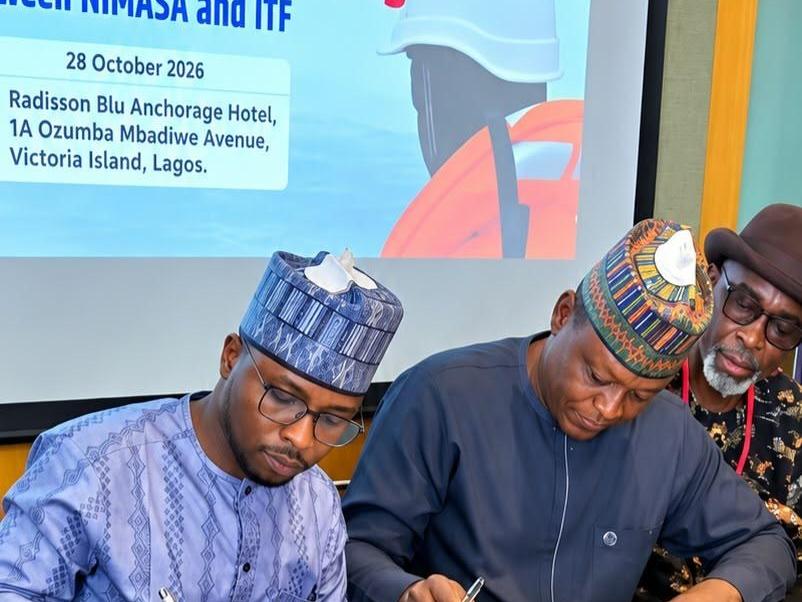
The partnership was formalised through the endorsement of a Memorandum of Understanding (MoU) designed to institutionalise mental health awareness, stress management, capacity building and psychological support for maritime workers, particularly those whose jobs expose them to prolonged periods at sea and separation from their families.
The ITF described the agreement as the first of its kind between the federation and any country in Africa, placing Nigeria at the forefront of efforts to integrate seafarers’ psychological wellbeing into maritime labour administration and professional training on the continent.
The MoU was endorsed at the conclusion of a three-day Seafarers’ and Cadets’ Wellbeing Awareness and Train the Trainers Programme organised by NIMASA in collaboration with the ITF.
The programme, held under the theme, “Stress: Understanding, Early Management and Coping,” brought together maritime administrators, training institutions, labour unions and other industry stakeholders to examine the psychological challenges associated with working at sea and develop practical approaches to identifying and managing them.
The initiative reflects growing recognition that maritime safety depends not only on the technical competence of seafarers, the seaworthiness of vessels and compliance with operational regulations, but also on the physical and psychological condition of the people responsible for operating ships and safeguarding lives and cargo.
Speaking at the event, the Director-General of NIMASA, Dr Dayo Mobereola, said the partnership would support capacity building and facilitate the integration of seafarers’ wellbeing into maritime training curricula.
Mobereola, who was represented by the Executive Director, Maritime Labour and Cabotage Services, Mr Jibril Abba, said the agency was committed to making psychological wellbeing a permanent component of preparations for a career at sea.
Abba also endorsed the MoU on behalf of NIMASA.
According to the Director-General, seafarers’ mental and emotional wellbeing is fundamental to safe shipping, making it necessary for maritime institutions and employers to move beyond conventional approaches to occupational safety and give greater attention to the psychological demands of life at sea.
“Seafarers’ wellbeing is essential to safe shipping and NIMASA is committed to protecting maritime workers’ welfare,” he said.
He explained that the programme would equip maritime training institutions, agency officers and union partners with the knowledge and practical skills required to recognise the early signs of psychological distress, manage stress and provide psychological first aid where necessary.
The collaboration is expected to strengthen the capacity of personnel working with seafarers and cadets, ensuring that mental health concerns are identified early rather than being ignored until they affect an individual's health, professional performance or safety.
Growing Concern Over Depression, Anxiety At Sea
Highlighting the importance of the initiative, Mobereola drew attention to the psychological pressures confronting seafarers, including stress, anxiety, depression and burnout.
He cited a 2019 study commissioned by the ITF in collaboration with Yale University, which found that one in four seafarers surveyed showed signs of depression, while approximately one in six exhibited signs of anxiety.
The findings underline the need for more systematic mental health interventions in an industry where workers frequently operate in demanding environments, maintain irregular schedules and spend extended periods away from familiar support systems.
Unlike many land-based occupations, seafaring can involve long stretches of isolation, restricted opportunities for social interaction, demanding workloads, unpredictable weather conditions and the pressure of maintaining operational efficiency in environments where errors can have serious consequences.
For some workers, separation from spouses, children and other relatives can compound the strain, particularly when voyages extend beyond anticipated periods or communication with loved ones is limited.
The pressures may also be intensified by fatigue, disrupted sleep patterns, uncertainty about employment and the responsibility of working aboard vessels where crew members must depend on one another for their safety.
When such challenges are left unaddressed, they can affect concentration, judgement, interpersonal relationships and the ability to respond effectively to emergencies.
The NIMASA-ITF partnership therefore seeks to encourage a more proactive approach to mental health, equipping relevant personnel to recognise warning signs and provide appropriate support before psychological difficulties escalate.
The training-of-trainers component is particularly significant because it could help extend the programme beyond the immediate participants, allowing trained personnel to share their knowledge with cadets, serving seafarers, maritime instructors and other workers across the sector.
By incorporating wellbeing education into formal maritime training, the partners aim to ensure that those preparing for careers at sea understand not only the technical demands of their profession but also the importance of recognising stress, developing coping strategies and seeking help when necessary.
ITF: Nigeria Leads The Way In Africa
The ITF Africa Regional Secretary, Mr Safiyanu Dauda Mohammed, described the MoU as a major milestone in efforts to improve seafarers’ welfare across Africa.
Mohammed, who signed the agreement on behalf of the federation, said Nigeria had become the first African country to enter into such an arrangement with the ITF.
“It is very exciting for me because it is the first in Africa, and we are starting with Nigeria,” he said.
He stressed that seafarers remained critical to the maritime sector and that their contribution to shipping and international trade made it imperative for governments, regulators, employers and labour organisations to prioritise their welfare.
According to him, addressing anxiety, depression and other psychological challenges among seafarers is essential to ensuring that maritime workers can perform their duties effectively and safely.
“Seafarers are very critical workers in the maritime sector. So it is very important to prioritise their wellbeing and welfare, to mitigate their anxiety and depression,” Mohammed said.
The ITF's endorsement of the agreement also signals a recognition that seafarer welfare requires sustained institutional cooperation rather than isolated awareness campaigns.
While training can help workers and their supervisors identify psychological distress, the long-term effectiveness of the initiative will depend on how consistently the programme is implemented, how widely its benefits are extended and whether seafarers can access appropriate support when they need it.
The agreement provides a framework for cooperation between the Nigerian maritime regulator and the international labour federation, with the potential to strengthen the place of mental health within broader discussions on decent work, occupational safety and maritime labour standards.
Maritime Union Welcomes Development
The President-General of the Maritime Workers Union of Nigeria, Comrade Francis Bunu, welcomed the partnership, describing it as a significant development for Nigerian seafarers.
Bunu said the mental fitness of seafarers was essential to their ability to discharge their responsibilities effectively, particularly given the difficult circumstances in which many maritime workers perform their duties.
“We need seafarers to be mentally sound while doing their job and that is why today is a very significant day for the seafarer in Nigeria,” he said.
The union's support highlights the importance of organised labour in ensuring that the wellbeing agenda translates into practical improvements in the working lives of maritime personnel.
For workers' representatives, the agreement presents an opportunity to reinforce advocacy for better working conditions, greater awareness of mental health challenges and improved access to support mechanisms for crew members.
It also raises the importance of creating working environments in which seafarers feel able to report psychological difficulties without fear of stigma or the assumption that seeking assistance is evidence of professional weakness.
Such concerns are particularly relevant in occupations where workers are expected to demonstrate resilience, discipline and the ability to perform under pressure.
Industry stakeholders increasingly recognise, however, that resilience should not be confused with the absence of psychological distress. Rather, workers need the knowledge, support and professional resources to manage demanding circumstances without compromising their health or safety.
Training, Curriculum Integration To Drive Implementation
The proposed integration of wellbeing education into maritime training curricula is one of the key elements of the partnership.
By making mental health awareness part of professional preparation, NIMASA and the ITF intend to encourage early recognition of psychological difficulties among cadets and serving maritime personnel.
The approach could help familiarise trainees with the pressures they may encounter at sea before they begin full professional service, while equipping instructors and other relevant personnel to identify signs of distress among those under their supervision.
Psychological first aid, one of the areas highlighted by NIMASA, can help trained individuals provide initial, appropriate support to people experiencing distress. It does not replace professional mental healthcare, but it can form part of a broader system for identifying problems, offering immediate assistance and referring affected individuals to qualified professionals when necessary.
For the programme to deliver lasting benefits, its implementation will need to extend beyond the classroom to the practical conditions under which seafarers work.
This includes encouraging appropriate reporting channels, improving access to professional assistance, raising awareness among employers and vessel operators, and ensuring that mental health considerations form part of routine discussions about crew welfare.
It will also be important to establish ways of evaluating the programme's impact, including the number of personnel trained, the extent of curriculum integration and the availability of support services for seafarers experiencing psychological difficulties.
The MoU offers an institutional basis for pursuing these objectives, although the extent of the improvements will depend on the implementation measures adopted by the parties.
Stakeholders Seek Stronger Seafarer Protection
Other stakeholders present at the event included the National President of the Nigerian Merchant Navy Officers and Water Transport Senior Staff Association, Chief Engineer Bob Joseph Yousou; the ITF Wellbeing Coordinator, Dr Asif Altaf; and the ITF Inspector, Mr Hamani Amadou, alongside other representatives of the maritime industry.
Their participation reflected the multi-stakeholder character of the initiative, which requires cooperation among regulators, labour organisations, training institutions and professionals responsible for the welfare of maritime workers.
The partnership also provides an opportunity to place seafarers' wellbeing more firmly within Nigeria's wider maritime development agenda.
As the country seeks to strengthen its maritime sector and improve the contribution of shipping to economic activity, the condition of the workforce remains an important consideration. Ships require skilled personnel capable of making sound decisions, responding to emergencies and maintaining high operational standards under difficult conditions.
Investment in training, therefore, must be accompanied by attention to the human factors that influence professional performance.
The mental health of seafarers is not simply an individual concern; it has implications for crew coordination, workplace safety, operational reliability and the protection of lives and cargo.
The NIMASA-ITF agreement represents a step towards recognising these connections through a more structured approach to education, awareness and capacity development.
Its significance will ultimately be measured by whether the commitments made at the event lead to sustained improvements in the support available to Nigerian seafarers and cadets.
For workers who spend weeks or months navigating difficult conditions far from their families, the introduction of a more deliberate wellbeing framework could represent an important change in how their professional needs are understood and addressed.
The central message emerging from the programme is that safe shipping requires more than competent vessels and qualified crews. It also requires workers who are physically healthy, psychologically supported and adequately prepared to cope with the demands of life at sea.
Through the MoU, NIMASA and the ITF have committed themselves to advancing that objective, with Nigeria taking the first step in what the federation describes as a pioneering initiative for Africa.
A healthy seafarer, the partners recognise, is a safer seafarer.