PublicSphere Live
International Finance
Afreximbank Integrates PAPSS Gateway to Enable Local Currency Payments for Online Learning
Move to ease access to trade finance training, expand professional development and reduce dependence on foreign currency payments across Africa
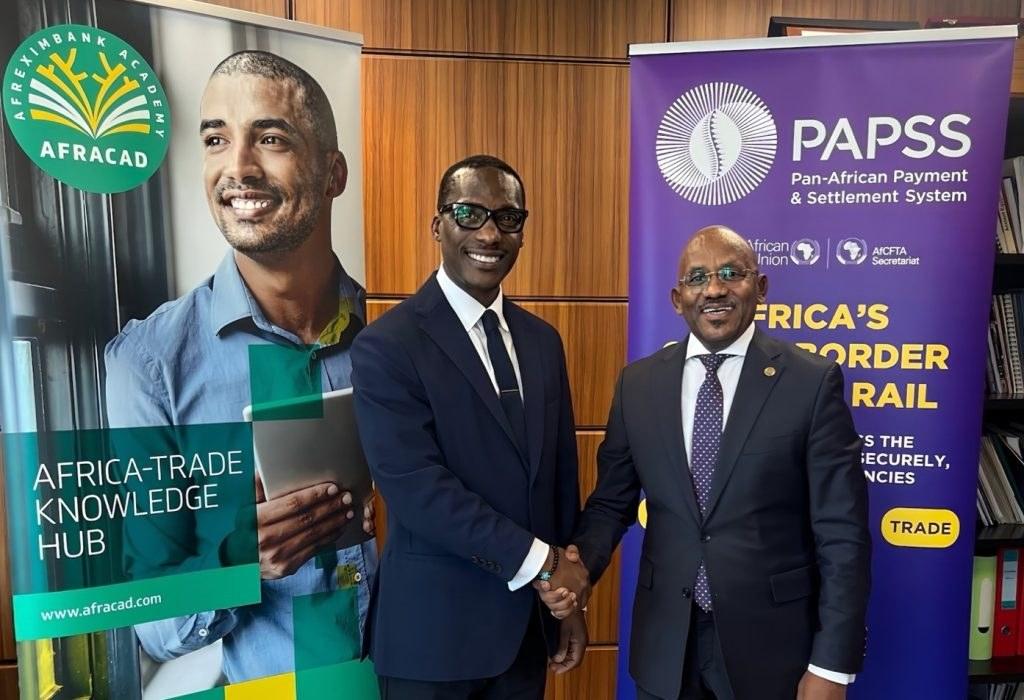
The African Export-Import Bank (Afreximbank) has completed the technical integration of the Pan-African Payment and Settlement System (PAPSS) Payment Gateway into the digital learning platform of its capacity development arm, Afreximbank Academy (AFRACAD), in a move aimed at making trade-related education more accessible to professionals and businesses across Africa.
The integration will enable eligible learners in participating African markets to pay for selected educational programmes in their local currencies through financial institutions connected to the PAPSS network, potentially reducing the difficulties associated with obtaining foreign exchange and using international payment channels.
The development represents an expansion of the practical applications of Africa's home-grown payment infrastructure, extending its use beyond conventional commercial transactions to include digital education, professional training and capacity development.
For many African professionals, entrepreneurs and small businesses, access to specialised training can be constrained not only by programme fees but also by the difficulties involved in making international payments, particularly when courses are priced or settled in foreign currencies.
By incorporating PAPSS into its online learning platform, AFRACAD is seeking to remove some of these financial and administrative barriers, allowing more prospective participants to access knowledge and skills relevant to regional and international trade.
Afreximbank said the initiative would support its broader objective of strengthening Africa's trade capacity by connecting accessible learning opportunities with payment systems designed to facilitate transactions across African borders.
Stephen Kauma, Group Managing Director of Afreximbank, said access to relevant knowledge was essential to transforming the continent's trade potential into sustainable economic opportunities.
“Access to relevant knowledge is essential to transforming Africa’s trade potential into sustainable economic opportunities. However, access to learning can be constrained when prospective participants are unable to make payments easily or are required to use scarce foreign currency,” Kauma said.
He explained that enabling learners to pay for AFRACAD programmes in their local currencies through PAPSS would help improve access to trade-related learning while demonstrating the practical value of African payment infrastructure.
“By enabling learners to pay for AFRACAD content using their local currencies through PAPSS, we are making trade-related learning more accessible while demonstrating the practical value of African payment infrastructure,” he added.
Local Currency Payments To Lower Barriers
The integration is expected to benefit professionals and organisations that need specialised knowledge to compete in increasingly interconnected African and international markets.
Under the arrangement, eligible learners will be able to initiate payments in their local currencies through participating financial institutions, subject to the availability of the service in their respective markets and the programmes covered by the new payment option.
The initiative is particularly relevant to businesses and individuals operating in economies where access to foreign currency can be limited or where international payment channels present additional costs, delays or administrative complications.
Small and medium-sized enterprises (SMEs), exporters, bankers, trade finance specialists, policymakers and young professionals are among the groups that could benefit from the expanded payment options.
For SMEs, access to training in export development, trade finance and cross-border commerce can be an important factor in determining whether they are able to take advantage of emerging opportunities under the African Continental Free Trade Area (AfCFTA).
However, the cost and accessibility of such training can influence participation, especially among smaller businesses that operate with limited financial resources and cannot easily absorb additional foreign exchange expenses.
The PAPSS integration is designed to make payment more convenient for eligible learners by allowing them to use local currency through participating institutions rather than relying exclusively on conventional international payment arrangements.
Nevertheless, the actual reach of the initiative will depend on the availability of the service across participating countries, the involvement of banks and payment service providers, and the programmes for which the payment option is enabled.
The integration complements AFRACAD's existing payment methods rather than replacing them entirely.
PAPSS Extends Its Role In African Economic Integration
Established to facilitate cross-border payments in local currencies, PAPSS connects participating central banks, commercial banks, payment service providers and other financial institutions to support transactions across African markets.
The system is intended to address some of the challenges associated with cross-border payments on a continent where businesses and individuals have traditionally relied heavily on international banking arrangements and third-party currencies to conduct transactions between African countries.
Such dependence can increase transaction costs and expose businesses to foreign exchange constraints, while also complicating payments between enterprises operating in different African jurisdictions.
By facilitating payments in local currencies, PAPSS seeks to support greater efficiency in intra-African commerce and contribute to the wider objectives of regional economic integration.
Its integration into AFRACAD's learning platform illustrates how the same infrastructure can be applied to services beyond the direct exchange of goods and conventional business payments.
In this instance, the payment system is being used to facilitate access to professional knowledge and development programmes that can help African businesses and institutions strengthen their capacity to participate in regional and international trade.
Jean Bosco Sebabi, Deputy Chief Executive Officer of PAPSS, said the system was established to promote faster, more efficient and accessible cross-border payments in support of Africa's trade and economic integration.
“PAPSS was established to facilitate faster, more efficient and accessible cross-border payments across Africa, in support of the continent’s trade and economic integration,” Sebabi said.
He noted that the platform also complemented initiatives across the Afreximbank Group aimed at promoting intra-African trade and strengthening the continent's economic capabilities.
“Beyond serving financial institutions and businesses, PAPSS also complements Afreximbank Group initiatives that contribute to our shared mandate of promoting and facilitating intra-African trade. Our collaboration with AFRACAD demonstrates how African payment infrastructure can support the Bank’s broader objectives by making trade-related knowledge and capacity development more accessible across the continent,” he said.
The partnership reflects a shared approach by the two institutions to linking financial infrastructure with the knowledge and skills required to expand economic participation.
AFRACAD Targets Businesses, Financial Institutions
Afreximbank Academy provides learning and capacity development programmes for a broad range of participants, including corporate organisations, SMEs, sovereign institutions, government parastatals, financial institutions, educational institutions and Afreximbank staff.
Its courses cover areas such as trade finance, AfCFTA implementation, export development, factoring, compliance and leadership.
These subjects are relevant to businesses seeking to enter new markets, financial institutions supporting trade transactions, public-sector organisations responsible for trade policy, and professionals working to improve the competitiveness of African enterprises.
Trade finance, for instance, is important in helping businesses manage the risks and financial requirements associated with importing and exporting goods. Export development programmes can help enterprises understand how to prepare for international markets, while training on AfCFTA can improve awareness of the opportunities and requirements associated with continental trade.
Factoring, compliance and leadership programmes also address operational and institutional capabilities that businesses and financial organisations need to grow and operate effectively.
By integrating PAPSS into its learning platform, AFRACAD is seeking to broaden access to these programmes, particularly for prospective participants who might otherwise face difficulties making payments.
The new option could also make it easier for organisations to enrol staff in professional development programmes, although the extent of such benefits will depend on programme eligibility, payment availability and the arrangements adopted by participating institutions.
For the Academy, the integration offers an opportunity to expand its potential audience by making the payment process more responsive to the financial realities of different African markets.
AfCFTA And The Need For Trade Skills
The development comes amid continuing efforts to deepen economic integration across Africa through the AfCFTA, which seeks to create a more integrated continental market for goods and services.
The success of such an ambitious undertaking depends not only on trade agreements and the removal of barriers but also on the ability of businesses, financial institutions and public-sector organisations to understand and implement the rules, procedures and commercial practices required to operate across borders.
Many SMEs need guidance on export procedures, trade documentation, financing, market access and regulatory compliance before they can participate effectively in cross-border commerce.
Financial institutions also require expertise to structure trade transactions, assess risks and provide services that support businesses operating across different jurisdictions.
Public-sector officials, meanwhile, need relevant knowledge to implement trade policies, improve institutional coordination and support the development of competitive domestic industries.
Against this background, accessible professional training can play a significant role in translating continental trade ambitions into practical opportunities for businesses and workers.
However, access to learning remains only one part of the broader challenge. Businesses also need reliable infrastructure, affordable finance, predictable regulations, efficient customs procedures and access to markets if they are to benefit fully from continental integration.
The AFRACAD-PAPSS arrangement addresses one specific barrier by seeking to simplify payments for eligible learning programmes. Its wider economic impact will depend on whether more businesses and professionals use the opportunity to acquire skills and apply them in their operations.
Rollout To Depend On Participating Financial Institutions
Afreximbank said the payment option would be rolled out progressively in line with the reach of the PAPSS network and the participation of banks and payment service providers.
This means that the availability of local currency payments may differ across markets as the relevant financial institutions and payment arrangements become operational.
Prospective learners will therefore need to establish whether the option is available in their countries and whether their preferred programmes qualify for payment through the gateway.
The phased implementation also highlights the importance of cooperation between payment infrastructure providers, financial institutions and digital service operators in ensuring that technological integration translates into practical benefits for end users.
While the technical integration has been completed, the pace and breadth of adoption will ultimately determine how far the initiative can expand access to AFRACAD's programmes.
The development nevertheless points to a broader opportunity for African financial infrastructure to support services that contribute to human capital development, beyond facilitating payments for goods and commercial transactions.
As digital learning becomes increasingly important for professional development, integrating locally accessible payment options could help reduce some of the barriers faced by individuals and organisations seeking specialised training.
For Afreximbank and PAPSS, the initiative brings together two elements considered important to Africa's economic transformation: payment systems that facilitate cross-border economic activity and professional knowledge that enables businesses and institutions to participate more effectively in that activity.
If widely adopted, the arrangement could help strengthen the relationship between financial inclusion, skills development and intra-African trade, while reinforcing the role of African-built financial infrastructure in supporting the continent's broader development objectives.