PublicSphere Live
Editorial
2027: Let Campaigns Be About Ideas, Not Bloodshed
The message to political leaders, party officials, supporters, security agencies and ordinary citizens must therefore be clear: campaign without bitterness, disagree without hatred, compete without violence and pursue political ambitions without destroying the lives and livelihoods of fellow ...
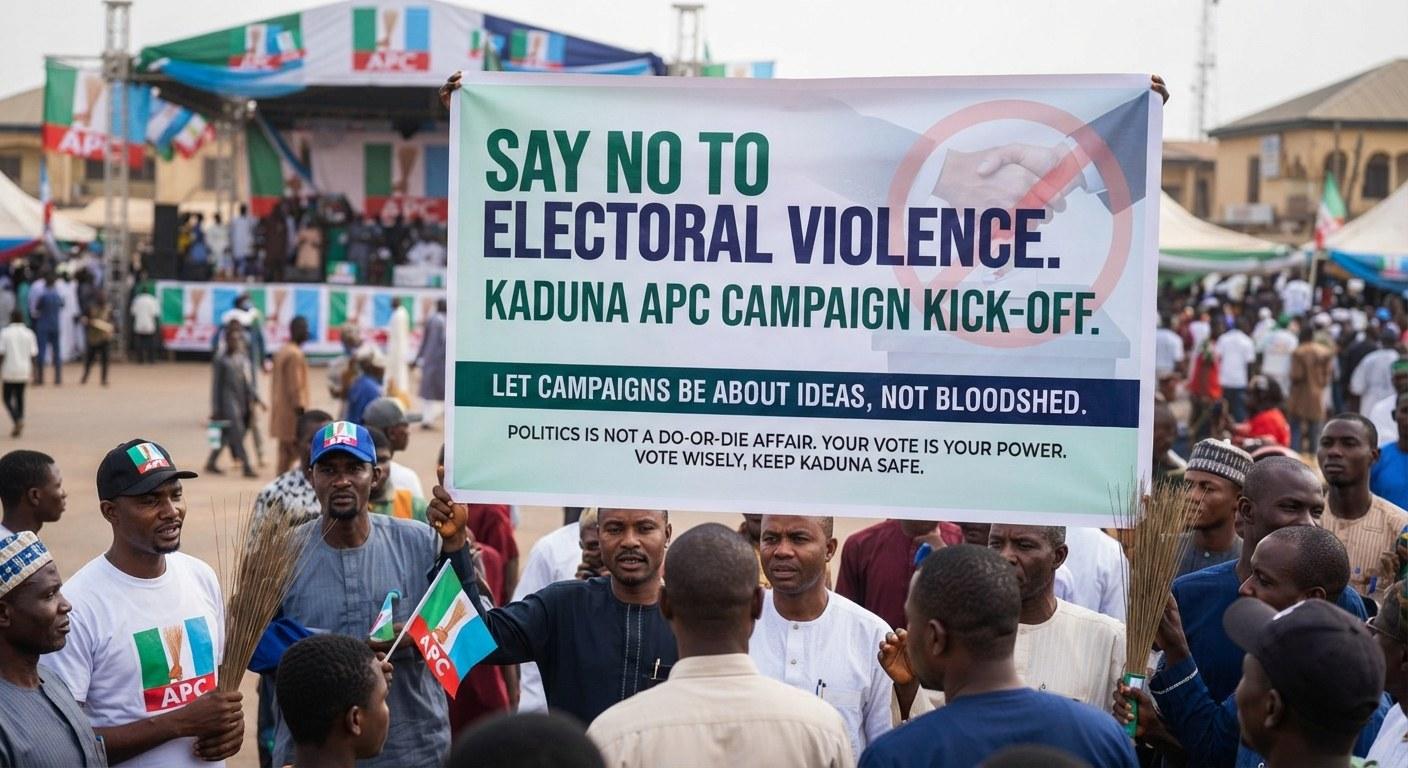
As Nigeria’s political parties begin to intensify activities ahead of the 2027 general election, the country faces an important test of its democratic maturity: whether political competition can be conducted vigorously without degenerating into violence, intimidation, destruction of property and the needless loss of human lives.
Saturday’s political engagements in Kaduna and Jos bring this responsibility into sharp focus. President Bola Ahmed Tinubu is scheduled to kick-start his re-election campaign in Kaduna, while former Anambra State Governor Peter Obi and former Kano State Governor Rabiu Kwankwaso are expected to hold a town hall meeting in Jos. Although the events represent different political platforms and approaches to public engagement, they share one fundamental obligation: to advance democratic participation without threatening the peace and security of Nigerians.
These activities should be welcomed as expressions of the democratic right to campaign, assemble, debate and persuade. However, the value of such engagements must not be measured solely by the number of supporters who turn out, the size of the crowds, the enthusiasm of party faithful or the political prominence of the personalities involved. Their real significance should also be judged by the extent to which they encourage peaceful participation, deepen public understanding of national issues and demonstrate respect for political differences.
Nigeria has reached a stage in its democratic journey where political campaigns must become contests of ideas rather than confrontations between rival groups. The country has too many economic, social and security challenges to allow partisan rivalry to become another source of suffering for its citizens.
The message to political leaders, party officials, supporters, security agencies and ordinary citizens must therefore be clear: campaign without bitterness, disagree without hatred, compete without violence and pursue political ambitions without destroying the lives and livelihoods of fellow Nigerians.
Democracy Must Not Become A Battlefield
Elections are intended to provide citizens with the opportunity to choose their leaders through a recognised constitutional process. They are not supposed to turn communities into battlegrounds or transform political opponents into enemies who must be eliminated.
Yet Nigeria’s political history contains painful reminders of the consequences of allowing political competition to escape the boundaries of peaceful engagement. Violence associated with political activities has, at different times, resulted in deaths, injuries, damaged homes, destroyed businesses, disrupted transportation and the displacement of innocent people. Even where the immediate victims are party supporters, the consequences extend far beyond party lines.
A shopkeeper whose business is destroyed during a political clash may have no involvement in the dispute. A commercial driver caught in a confrontation may simply be trying to earn a living. A student prevented from reaching school, a trader forced to close a shop or a family trapped in a neighbourhood gripped by violence may have no interest in the political rivalry that has suddenly disrupted their lives.
These are the people who pay a price for political irresponsibility without having participated in the decisions that produced the crisis.
It is therefore unacceptable for anyone to justify killing, assault, arson, vandalism or the destruction of public facilities in the name of political loyalty. No candidate, party or political ambition is worth the blood of a Nigerian. No campaign rally should become a funeral procession, and no town hall meeting should end with families searching hospitals and police stations for missing relatives.
The democratic process must protect human life rather than place it at risk.
Kaduna And Jos Must Send A Message Of Peace
The significance of Saturday’s engagements extends beyond the immediate activities of the parties involved. Kaduna and Jos are important centres of political, commercial and social life, and the conduct of political supporters in both cities can help reinforce the principle that peaceful participation is possible even amid intense competition.
For the organisers of President Tinubu’s campaign engagement in Kaduna, the responsibility is to ensure that the event communicates political confidence without encouraging hostility towards rival parties. Supporters should be free to express their enthusiasm, display party symbols, listen to their leaders and advocate their preferred candidate without threatening those who hold different views.
The same responsibility rests on the organisers and participants at the Obi-Kwankwaso town hall meeting in Jos. A town hall format offers an opportunity for discussion, engagement with citizens and the presentation of political ideas. It should encourage thoughtful exchanges on governance, the economy, employment, security, education and other issues that shape the lives of Nigerians.
Neither event should be judged by the ability of its participants to intimidate opponents or demonstrate superiority through confrontation. Political strength is not established by the capacity to disrupt another party’s activities. It is demonstrated by the ability to communicate a message, persuade undecided citizens and respect the right of others to make their own choices.
The two engagements should also remind Nigerians that political diversity is not a threat to national unity. Citizens may support different candidates because they have different assessments of public policies, leadership records, economic priorities and the future they desire for their families. Such differences are normal in a democracy and should be treated as legitimate.
A supporter of Tinubu is no less Nigerian than a supporter of Obi or Kwankwaso. Equally, a citizen who supports another candidate, belongs to a different party or has not decided whom to support retains the same constitutional rights and dignity.
The ballot is meant to accommodate these differences peacefully. Violence has no legitimate place in resolving them.
Political Leaders Must Set The Tone
The responsibility for peaceful campaigns begins with political leaders. Their public statements, private instructions, choice of language and response to provocative incidents can either calm supporters or deepen tensions.
Presidential candidates, governors, party chairpersons, campaign directors and other influential figures must recognise the power of their words. When leaders describe opponents as enemies, portray political competition as a struggle in which the other side must be crushed, or tolerate threats against rival supporters, they risk creating an atmosphere in which aggressive behaviour becomes acceptable.
Leaders should instead make it clear that political disagreement does not cancel the humanity of an opponent. They must instruct their supporters to avoid inflammatory language, refrain from spreading false information and reject any attempt to use thugs or other unlawful groups to disrupt rival activities.
Such instructions must go beyond campaign speeches. Party organisations should have practical arrangements for preventing clashes, resolving disagreements and reporting threats before they escalate. Where members are implicated in violence, party loyalty should not become a shield against accountability.
President Tinubu, Obi, Kwankwaso and other political leaders have an opportunity to demonstrate that democratic ambition and national responsibility can coexist. Their supporters may compete for political influence, but their leaders should share an unequivocal commitment to preserving the peace of the country they seek to govern.
A peaceful campaign is not a concession to political opponents. It is a service to the nation.