PublicSphere Live
Analysis
Ekwueme’s Six-Zonal Presidency Vision Remains Unfinished, Says Okoli
As Nigeria approaches 2027 elections, former aide urges leaders to embrace equitable power-sharing, restructuring and national integration
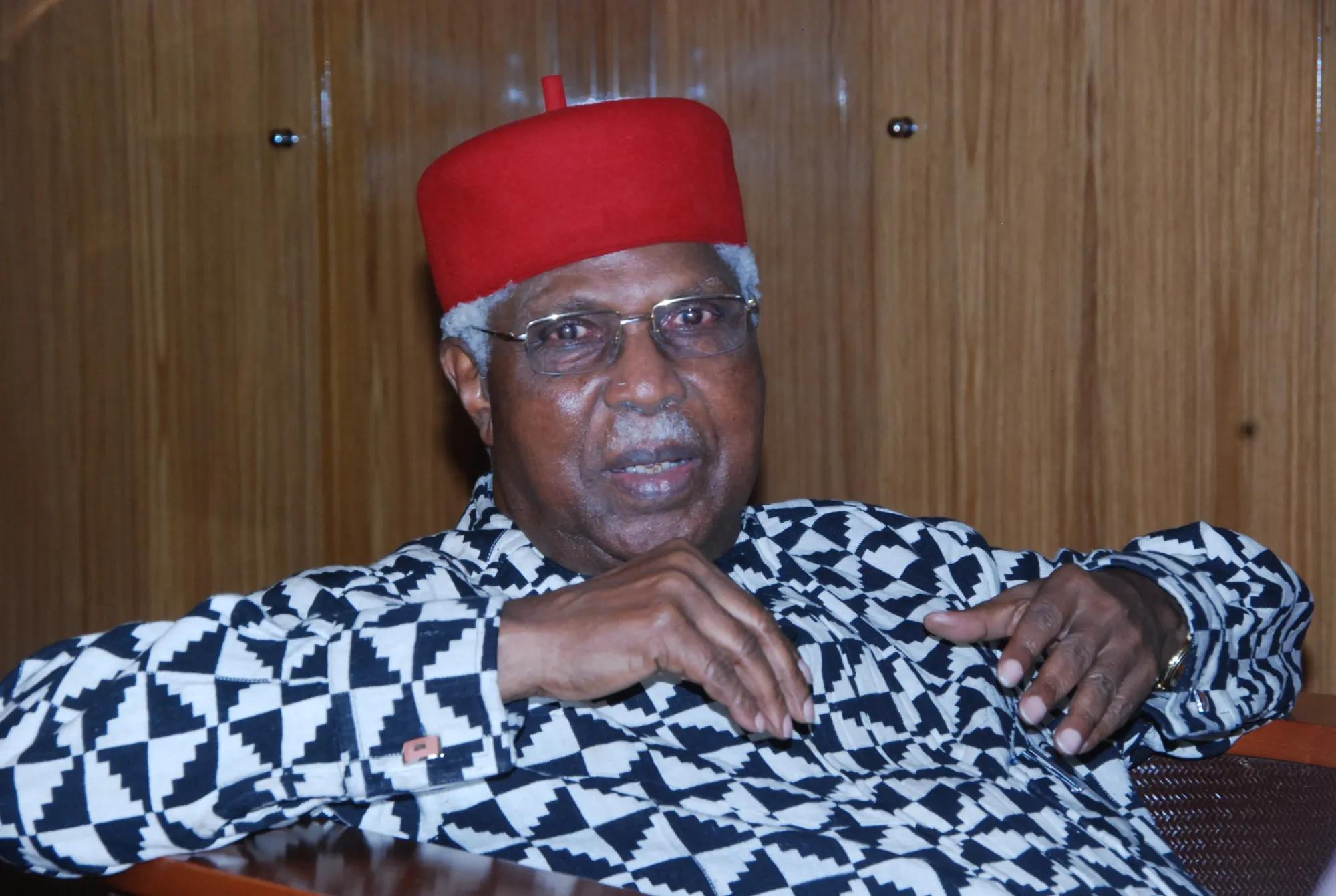
As Nigeria prepares for another general election amid growing political competition, concerns about national security and persistent debates over marginalisation, Chief Handel Okoli, a former special assistant to former Vice-President Alex Ekwueme, has called on political leaders to revisit the late statesman’s vision of a more equitable federation anchored on the six geopolitical zones.
Okoli said Ekwueme’s advocacy for restructuring, constitutionalism, the rule of law and equitable access to political power remained relevant to Nigeria’s search for national unity, arguing that the country had yet to fully embrace the principles required to guarantee every region a genuine sense of belonging.
In a tribute marking what would have been Ekwueme’s 94th birthday on October 21, 2026, Okoli maintained that the late vice-president’s political philosophy offered important lessons for contemporary leaders, particularly as political parties and aspirants position themselves for the 2027 general elections.
He argued that Nigeria’s prevailing practice of rotating the presidency between the North and South did not adequately reflect the more inclusive framework Ekwueme advocated through his six-geopolitical-zone proposal.
According to him, reducing the country’s political arrangement to two broad regional blocs risks overlooking the distinct interests and aspirations of the North-West, North-East, North-Central, South-West, South-East and South-South geopolitical zones.
Okoli said Ekwueme’s vision was not simply about distributing political offices but about establishing a credible framework through which all parts of the federation could participate in national leadership without fear of permanent exclusion or domination.
He called for a more deliberate engagement with the late statesman’s ideas, insisting that meaningful national integration required more than ceremonial tributes and political declarations.
Ekwueme’s Legacy And Nigeria’s National Question
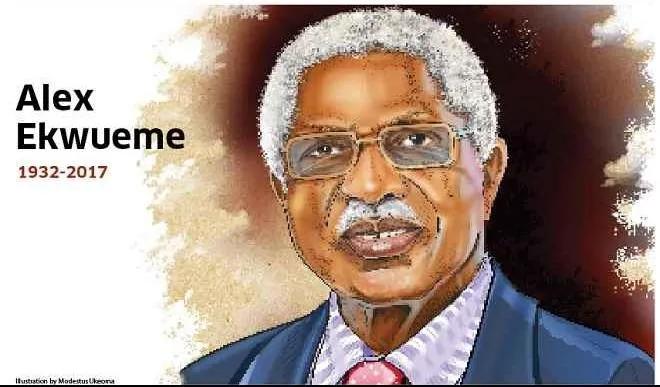
Ekwueme, who was born on October 21, 1932, and died on November 19, 2017, served as vice-president of Nigeria under President Shehu Shagari between 1979 and 1983.
He was widely recognised for his intellectual background, commitment to democratic governance and advocacy for a political system that could accommodate Nigeria’s ethnic, religious and regional diversity.
Okoli identified among his principal legacies the promotion of a strong multiparty democracy, constitutional government, the rule of law, federal restructuring and a fairer distribution of political offices.
He also highlighted Ekwueme’s commitment to philanthropy and public service, describing his approach to national integration as one of the most enduring aspects of his political philosophy.
According to Okoli, Ekwueme understood that Nigeria’s stability depended substantially on addressing fears of political domination, exclusion and marginalisation among its constituent communities.
He argued that the late vice-president’s ideas remained particularly important in a country where disputes over political representation, access to public resources and the distribution of federal institutions continued to influence public debate.
Okoli also criticised the failure of successive administrations to resolve fundamental questions about the structure of the Nigerian federation.
He cited the National Conference report submitted to former President Muhammadu Buhari by his predecessor, Goodluck Jonathan, arguing that the failure to build upon the conference’s recommendations represented a missed opportunity to address longstanding national concerns.
For Okoli, the central lesson of Ekwueme’s political career is that national unity cannot be sustained by rhetoric alone but must be supported by institutional arrangements that inspire confidence among citizens and communities.
Post-Civil War Reconciliation And The Return To Democracy
Okoli traced Ekwueme’s political significance to the period following the Nigerian Civil War, which ended in 1970, when national reconciliation, reconstruction and the restoration of confidence among Nigeria’s diverse peoples became pressing concerns.
As the country prepared to return to civilian government in 1979, political parties faced the challenge of building broad coalitions in a federation still grappling with the consequences of conflict and mutual suspicion.
Ekwueme emerged as the running mate to Shagari on the platform of the National Party of Nigeria, an arrangement that, according to Okoli, reflected the importance of accommodating different interests in the pursuit of national leadership.
He noted that the presence of Igbo politicians in the vice-presidential calculations of several major parties during the 1978 political realignments demonstrated an awareness of the need to reassure the Igbo population of its place in the Nigerian project after the war.
The development, he argued, raised a fundamental question that remains relevant today: whether a diverse country can achieve lasting reconciliation without ensuring that its major ethnic and regional groups have a fair opportunity to participate in national leadership.
Okoli, however, acknowledged that political arrangements intended to promote inclusion must be examined within their historical context and should not be mistaken for a complete solution to Nigeria’s challenges.
He also referred to claims that apprehensions surrounding Ekwueme’s possible emergence as president under the Shagari administration formed part of the considerations surrounding the December 1983 military coup.
Such claims, he noted in his account, required careful examination against the available historical record, even as they illustrated the difficulty Nigeria has experienced in separating political competition from anxieties about the regional or ethnic identities of those seeking power.
The broader lesson, he maintained, is that political ambition should not become a source of existential fear among the country’s constituent groups.
Military Rule And The Search For A Fairer Federation
The December 1983 coup that terminated the Second Republic brought Ekwueme’s tenure as vice-president to an abrupt end and was followed by his detention and imprisonment under the military authorities.
Okoli said the period marked another stage in Ekwueme’s reflection on Nigeria’s political structure and the institutional reforms required to strengthen national cohesion.
He argued that subsequent military administrations introduced changes to the country’s political and administrative arrangements without adequately resolving the underlying questions of fairness, representation and public confidence.
The creation of states and local government areas, the delineation of constituencies and the conduct of population censuses became contentious issues because of their implications for political representation and the allocation of national resources.
According to Okoli, the consequences of these disputes were particularly significant for the present-day South-East, whose concerns about representation and its position within the federation have remained part of the national conversation.
He stressed, however, that the argument was not necessarily that every administrative change introduced under military rule was designed to disadvantage a particular region.
Rather, he said, institutional changes that lack transparency and fail to command the confidence of the people can deepen existing grievances, regardless of the intentions behind them.
The annulment of the June 12, 1993 presidential election under the military transition programme further damaged public confidence in the political process and reinforced demands for a more credible constitutional order.
Against this background, Okoli said, Ekwueme became increasingly engaged in efforts to rethink Nigeria’s political structure and develop arrangements that could reduce the intensity of competition for national power.
His concern, he argued, extended beyond who would occupy the presidency to the more fundamental question of how to organise the federation so that political competition would not be perceived as a struggle for survival among ethnic and regional groups.
Constitutional Conference And The Restructuring Debate
Okoli identified Ekwueme’s participation in the 1994/95 Constitutional Conference as a defining moment in his effort to influence Nigeria’s constitutional development.
Working alongside prominent political figures, including Chief Emeka Odumegwu-Ojukwu, Ekwueme contributed to discussions about the structure of the Nigerian state and the institutional foundations required for a more equitable federation.
He served on the Committee on the Structure and Framework of the Constitution, where his contributions earned recognition, including an award from The Punch newspaper as its Most Distinguished Delegate.
Okoli said the recognition illustrated Ekwueme’s ability to influence public affairs through intellectual engagement, preparation and reasoned argument rather than reliance on political office or public spectacle.
He maintained that Ekwueme’s approach to restructuring was informed by the belief that the national question could not be resolved through slogans or temporary political bargains.
Instead, it required a sustained examination of how power was distributed, how resources were allocated and how the various constituent parts of the country could participate meaningfully in national affairs.
The six-geopolitical-zone proposal emerged as an important element of this broader vision.
Under the framework, the six zones would serve as reference points for promoting equitable participation in national leadership and reducing the perception that the highest political office was accessible only to favoured regions.
Okoli argued that the proposal was intended to build confidence across the federation by assuring each zone that its political aspirations would receive fair consideration.
He said the idea should therefore be understood as more than a mechanism for sharing political positions. It represented an attempt to reduce the desperation surrounding presidential elections by making the political system more inclusive and predictable.
Six-Zone Rotation Versus North-South Zoning
A central argument in Okoli’s tribute is that the established practice of balancing presidential power between the North and South falls short of Ekwueme’s six-zonal vision.
He argued that neither the North nor the South constitutes a single, homogeneous political entity, noting that each broad region contains three geopolitical zones with distinct historical experiences, political interests and expectations.
Consequently, a North-South arrangement may achieve a measure of broad regional balance without necessarily ensuring that each of the six zones enjoys a credible opportunity to produce a president.
Okoli maintained that the six-zone framework was intended to prevent one level of regional balancing from concealing inequalities at another level.
He said the difference was particularly important in assessing whether political arrangements genuinely promoted national integration or merely shifted the competition for power between two large blocs.
The former presidential aide also faulted what he described as the tendency of politicians to embrace zoning when it advances their immediate interests but reinterpret or abandon it when consistency would require compromise.
Such an approach, he argued, undermines the credibility of political agreements and weakens the principle of fairness that zoning is supposed to promote.
However, the six geopolitical zones have not been constitutionally established as the exclusive units for presidential rotation. Zoning has largely operated through political party arrangements and understandings rather than a constitutionally guaranteed sequence binding the country’s political parties.
This distinction is important because political agreements can change with party interests, leadership calculations and shifting electoral circumstances.
Okoli argued that Nigeria should give serious consideration to whether a more credible and consistently applied framework for equitable regional participation could help reduce recurring disputes over access to national leadership.
He nevertheless acknowledged that presidential rotation alone would not resolve every grievance associated with marginalisation, infrastructure, fiscal federalism or the distribution of public resources.
Other issues, including the allocation of federal institutions, public investment, the quality of governance and the independence of constitutional institutions, would also require attention.
The central argument, therefore, is that equitable access to the presidency should form part of a broader constitutional reform agenda rather than become a substitute for it.
What Ekwueme’s Vision Means For The 2027 Elections
With political parties and presidential aspirants preparing for the 2027 general elections, Okoli’s call raises questions about the place of zoning, regional representation and national integration in the selection of candidates.
The debate is particularly significant because the presidency remains the most powerful elected office in Nigeria, making the process through which candidates emerge a major factor in perceptions of political inclusion.
Where political groups believe that access to national leadership is permanently closed to them, electoral competition can become more intense and distrust of the political system can deepen.
Conversely, transparent and credible arrangements for political participation may help strengthen confidence that the federation belongs to all Nigerians, irrespective of ethnicity, religion or geographical location.
Yet the adoption of a six-zone rotation arrangement would require difficult political negotiations. Parties would have to determine how to reconcile the principle with candidate selection, electoral competitiveness, constitutional requirements and the freedom of voters to choose their preferred leaders.
There would also be questions about whether rotation should operate through a voluntary inter-party agreement, party constitutions or a more formal constitutional arrangement.
Any proposal would need to be carefully designed to ensure that the pursuit of geographical equity did not undermine democratic accountability, competence or the electorate’s ability to assess candidates on their records and policy programmes.
These considerations do not necessarily diminish Ekwueme’s vision. Rather, they underline the need to translate its underlying principles into arrangements that can command broad public acceptance.
For Okoli, the continuing debate over zoning demonstrates that the questions Ekwueme sought to address have not disappeared.
He urged political leaders to look beyond the immediate calculations of electoral advantage and consider what arrangements would make the federation more stable, inclusive and confident in its future.
Beyond Tributes To Practical Reforms
As Nigerians reflect on Ekwueme’s life and political contributions, Okoli said the country must move beyond commemorative statements to a more serious engagement with the late statesman’s ideas.
He argued that egalitarianism does not mean that every region must possess identical population figures, resources or political influence. Rather, it requires that differences should not become instruments of permanent exclusion or domination.
A genuinely inclusive federation, in this sense, would recognise the country’s diversity while guaranteeing fairness, dignity and equal citizenship.
It would also require political leaders willing to place the long-term stability of the country above the short-term advantages of their parties, regions or individual ambitions.
Ekwueme’s legacy, Okoli maintained, should challenge contemporary leaders to consider whether Nigeria has built institutions that command public confidence and a political culture that accommodates legitimate aspirations without making any section of the country feel permanently excluded.
Ultimately, the debate over six-zone rotation is part of a wider national conversation about the relationship between constitutional design, democratic choice and national unity.
Whether Nigeria adopts Ekwueme’s proposal in its original form or develops alternative mechanisms for equitable representation, the fundamental challenge remains the same: to build a country in which all citizens can participate in national life without fear of domination or discrimination.
Okoli said the most meaningful tribute to Ekwueme would be a renewed commitment to the principles of fairness, constitutionalism, national integration and shared responsibility that informed his public life.
For a country approaching another election cycle amid persistent political and security concerns, the late vice-president’s ideas offer a reminder that national unity is not achieved simply by keeping a country together geographically. It must also be sustained through institutions and political arrangements that persuade its people that they have a fair stake in its future.