PublicSphere Live
Analysis
ECOWAS-AES RAPPROCHEMENT: Can West Africa Rebuild Regional Unity After the Sahelian Breakaway?
Reached at the first ministerial meeting of the ECOWAS-AES Dialogue on Cooperation in Dakar, Senegal, the agreement signals a recognition by both sides that political disagreements cannot erase the geographical realities, economic interdependence and shared security challenges connecting their...
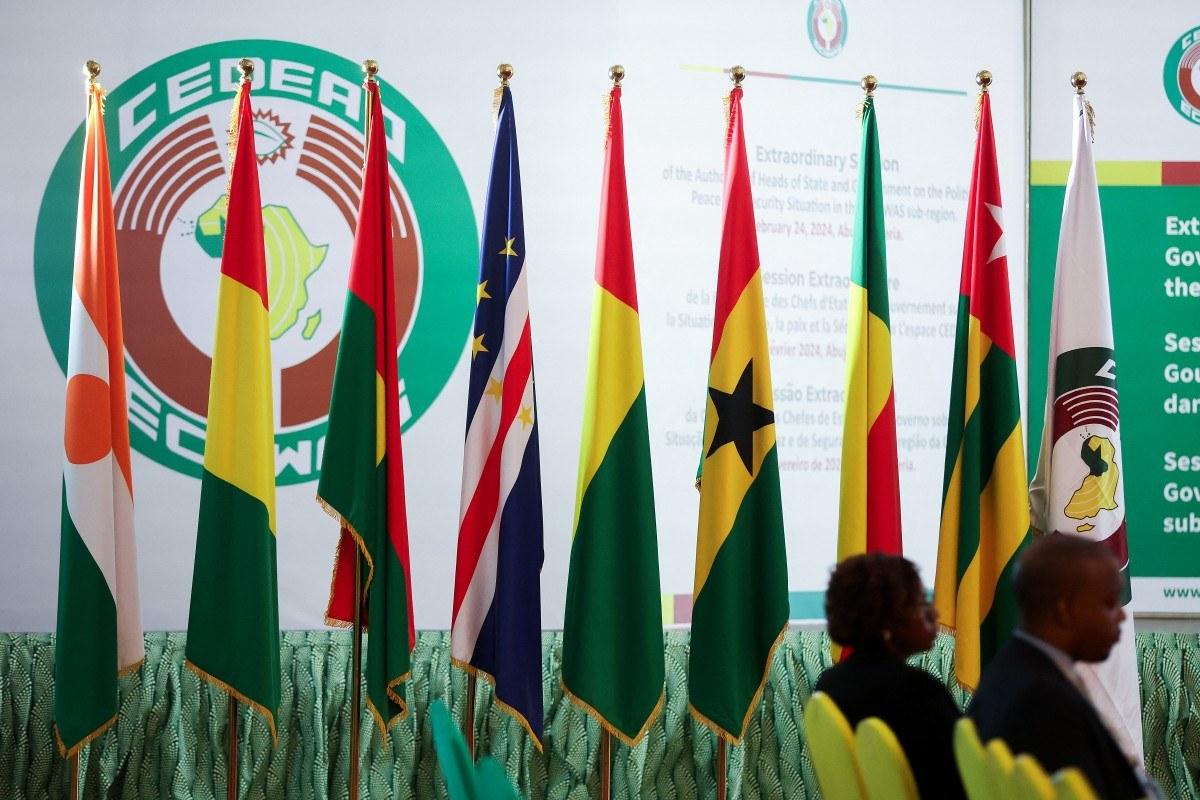
The decision by ECOWAS and the Confederation of Sahel States to establish joint working groups offers a fresh opportunity to protect trade, strengthen security cooperation and prevent political divisions from deepening across West Africa. But translating diplomatic goodwill into a durable agreement will require both sides to confront the mistrust, sovereignty concerns and competing political interests that produced the historic rupture.
The decision by the Economic Community of West African States (ECOWAS) and the Confederation of Sahel States (AES) to establish joint working groups represents an important diplomatic opening in a region increasingly confronted by the consequences of political fragmentation, deteriorating security and economic uncertainty.
Reached at the first ministerial meeting of the ECOWAS-AES Dialogue on Cooperation in Dakar, Senegal, the agreement signals a recognition by both sides that political disagreements cannot erase the geographical realities, economic interdependence and shared security challenges connecting their countries.
Although Burkina Faso, Mali and Niger have withdrawn from ECOWAS, their departure has not detached them from the commercial networks, transport corridors, family relationships and security concerns that bind them to the wider West African region. Their continued dependence on access to coastal markets, seaports and regional supply chains makes practical cooperation indispensable, while the coastal countries themselves have strong reasons to prevent the Sahelian crisis from becoming a permanent barrier to regional commerce and collective security.
The Dakar initiative therefore raises a fundamental question about the future of West African integration: can countries that have fallen out politically still cooperate effectively on issues affecting the daily lives and economic survival of their citizens?
The answer will depend less on the diplomatic language contained in communiqués than on whether the proposed working groups can produce practical arrangements that protect people, businesses and communities on both sides of the political divide.
The Political Rupture That Tested West African Unity
The withdrawal of Burkina Faso, Mali and Niger from ECOWAS was the culmination of a prolonged deterioration in relations between the regional organisation and the military-led governments of the three countries.
Their disagreements with ECOWAS revolved around military takeovers, sanctions, the timetable for restoring constitutional government and the regional bloc's insistence on democratic political transitions. The governments in Ouagadougou, Bamako and Niamey increasingly portrayed the organisation's approach as an infringement on their sovereignty and an extension of external political influence.
ECOWAS, on the other hand, faced the challenge of preserving its credibility as a regional institution committed to constitutional order and the rejection of military seizures of power. Its response to coups has long been central to its political identity, even as critics have questioned the consistency and effectiveness of its interventions.
The tensions intensified after the three countries announced in January 2024 their intention to leave the organisation. They subsequently strengthened their separate regional arrangement, initially established as the Alliance of Sahel States, which evolved into the Confederation of Sahel States in July 2024.
Their withdrawal from ECOWAS took effect on January 29, 2025, creating an unprecedented challenge for an organisation built around the principle that West African countries should work together through common political, economic and security institutions.
The breakaway also exposed a limitation in regional integration: membership in a common organisation does not automatically guarantee political consensus, particularly when governments believe that their national interests and security priorities are being subordinated to regional demands.
Yet the departure of the three Sahelian countries has not removed the need for cooperation. If anything, it has made the establishment of workable relations more urgent.
The Dakar meeting reflects this reality. By agreeing to establish joint working groups, ECOWAS and AES appear to be acknowledging that the preservation of essential regional relationships must be separated, at least in part, from the disagreements surrounding political legitimacy and constitutional government.
That distinction could prove decisive in determining whether the two regional formations become permanent rivals or develop a practical relationship that accommodates their differences.
Trade: The Economic Cost Of Regional Fragmentation
One of the strongest arguments for the ECOWAS-AES dialogue is the economic interdependence between the Sahelian states and their coastal neighbours.
Burkina Faso, Mali and Niger are landlocked countries whose economies depend significantly on transport corridors connecting them to seaports and international markets. These routes are not merely geographical conveniences; they are essential channels for imports, exports, industrial supplies, agricultural products and consumer goods.
For Mali, access to ports in neighbouring coastal countries is particularly important for the movement of fuel, manufactured goods and other imported commodities. Burkina Faso also relies on regional transport networks to move merchandise and agricultural products, while Niger's economic connections extend across several neighbouring states.
Nigeria, Benin, Togo, Ghana, Côte d'Ivoire and Senegal occupy important positions within the wider network of regional commerce, although the importance of individual corridors differs according to destination, commodity and prevailing transport conditions.
Any deterioration in cross-border relations can increase uncertainty for traders and transport operators, even when formal restrictions are not imposed. Delays at borders, inconsistent documentation requirements, additional inspections, higher insurance premiums and uncertainty over transit rules can raise costs across entire supply chains.
These costs ultimately reach consumers through higher prices, particularly for imported food, fuel, medicines, construction materials and other essential products.
Small businesses are especially vulnerable. Unlike large corporations, which may be able to diversify suppliers or negotiate alternative transport arrangements, small traders often operate on narrow margins and depend on established routes, familiar customs procedures and predictable delivery schedules.
The proposed working groups could therefore make their most immediate contribution by negotiating practical arrangements that protect the movement of goods across borders.
Such arrangements could include the recognition of customs documentation, clearer transit procedures, cooperation between border agencies, mechanisms for resolving disputes and assurances that goods travelling through neighbouring territories will not be subjected to arbitrary delays.
The parties could also examine how to maintain transport links and protect traders against the disruptions that often accompany political disagreements.
However, the success of such measures will depend on implementation. An agreement that promises open channels of communication but leaves traders facing unpredictable border procedures will offer little economic relief.
For the countries concerned, the priority should be to ensure that political differences do not become an additional tax on commerce.
The Human Dimension Of Regional Integration
The implications of the ECOWAS-AES disagreement extend beyond governments, customs authorities and major trading companies.
West Africa's borders divide territories that have long been connected by ethnic, linguistic, religious and family relationships. Communities on opposite sides of national frontiers frequently share markets, cultural traditions, marriage ties and economic activities.
For many residents of border communities, cross-border movement is an ordinary part of life rather than an exercise in international diplomacy.
Farmers may depend on buyers across a national frontier. Traders may purchase goods in one country and sell them in another. Families may maintain homes, businesses and social relationships across neighbouring territories.
Restrictions or uncertainty affecting movement can therefore disrupt livelihoods and undermine relationships that have endured for generations.
The economic effects may be particularly severe for women engaged in informal cross-border trade, who often operate with limited capital and have little capacity to absorb additional transport costs, delays or unexpected charges.
A cooperation agreement that overlooks these realities risks concentrating on the interests of governments while neglecting the citizens who bear the immediate consequences of political disputes.
This is why the language of the Dakar communiqué concerning good-neighbourliness, sovereignty, dignity and the welfare of West African populations is significant. Those principles must translate into arrangements that make border crossings more predictable, reduce unnecessary harassment and preserve legitimate movement.
The parties should also consider mechanisms through which traders, transport operators, border communities and business associations can communicate practical concerns to the working groups.
Such participation would help ensure that the eventual framework reflects conditions on the ground rather than diplomatic assumptions about how regional commerce operates.
Security Cooperation: A Shared Challenge That Cannot Be Ignored
The security implications of the ECOWAS-AES divide may be even more consequential than its economic costs.
Burkina Faso, Mali and Niger occupy the heart of the central Sahel, where militant groups linked to extremist organisations have expanded their activities over many years. Violence, displacement, attacks on communities and pressure on state institutions have created a persistent crisis with consequences extending beyond the three countries.
The spread of insecurity towards coastal West Africa has heightened concern among governments in the Gulf of Guinea, including Nigeria, Benin, Togo, Ghana and Côte d'Ivoire.
The danger is that political estrangement could weaken the exchange of intelligence, coordination of border operations and communication between security agencies at a time when armed groups exploit gaps between jurisdictions.
Militant organisations do not recognise diplomatic boundaries in the same way governments do. They can exploit difficult terrain, poorly monitored crossings, local grievances and differences in national security responses to move personnel, supplies and resources.
When neighbouring governments cannot communicate effectively, the resulting gaps may create opportunities for criminal networks and armed groups.
Yet restoring security cooperation will require more than a declaration of common purpose. The ECOWAS and AES countries have pursued different political and security approaches, and mutual distrust may complicate the sharing of sensitive intelligence.
The working groups will therefore need to identify areas in which cooperation can proceed without requiring either side to abandon its political position.
Possible areas include intelligence exchange on clearly defined threats, communication between border commanders, cooperation against arms trafficking and organised crime, the sharing of information about suspicious cross-border movements, and arrangements for handling incidents involving civilians and security personnel near frontiers.
Humanitarian coordination is another important area. Displacement, food insecurity and violence can create cross-border emergencies that require neighbouring governments to communicate regardless of their wider political differences.
For Nigeria, the outcome matters because insecurity in the Sahel can affect the wider regional security environment. The country's extensive borders, commercial connections and exposure to extremist violence make it difficult to treat developments in the central Sahel as an isolated problem.
However, security cooperation must also take account of civilian protection, human rights and the grievances that armed groups may exploit. Military operations alone cannot resolve every dimension of the crisis.
A durable regional approach would combine intelligence and law-enforcement cooperation with efforts to protect vulnerable communities, restore public confidence and address the conditions that enable violent groups to recruit and operate.
Sovereignty Versus Regional Responsibility
One of the central challenges facing the dialogue is the tension between national sovereignty and collective regional responsibility.
The AES governments have made sovereignty a major element of their political message, arguing for greater independence in determining their domestic and international priorities. Their leaders have also sought to establish a regional identity distinct from the political arrangements they believe failed to address their security concerns.
ECOWAS, meanwhile, must protect its institutional relevance and its established commitments to constitutional government, regional stability and economic integration.
Neither side can simply ignore the principles that underpin its position without risking political costs at home.
For the AES governments, appearing to retreat under pressure from ECOWAS could undermine the sovereignty narrative that helped justify their break with the organisation. For ECOWAS, an arrangement perceived as abandoning its constitutional principles could weaken its authority in future disputes involving military takeovers or contested political transitions.
This creates a delicate negotiating environment.
The most realistic path forward may be to distinguish cooperation on shared practical interests from the unresolved political questions surrounding the three countries' withdrawals.
ECOWAS and AES could, for example, agree on customs procedures, transit arrangements, public-health coordination and selected security mechanisms without making their cooperation conditional on immediate agreement over constitutional governance.
Such an approach would not eliminate their political differences. It would instead establish that disagreement does not have to prevent cooperation where the welfare of citizens is at stake.
The distinction is important because regional diplomacy often fails when parties insist that progress in every area must await a comprehensive political settlement.
A more flexible arrangement could allow confidence to develop gradually through small but verifiable achievements.
Nevertheless, flexibility should not be confused with the abandonment of principle. The challenge is to preserve space for practical engagement while allowing both sides to maintain their stated political positions.
What The Working Groups Must Deliver
The establishment of joint working groups is a useful first step, but it is not itself a cooperation agreement.
The Dakar communiqué indicates that the groups will examine areas of common interest and submit their findings to ministers before a subsequent session. However, the announcement did not specify the groups' detailed mandates, identify which policy areas would receive priority or provide a timetable for concluding negotiations.
These omissions leave substantial work ahead.
For the initiative to produce meaningful results, the parties will need to agree on clear terms of reference, define responsibilities and establish measurable objectives.
Trade and transit arrangements should be among the immediate priorities because disruptions in these areas can impose direct costs on businesses and consumers. The negotiators could identify the most heavily used transport corridors, document recurring bottlenecks and propose procedures for preventing avoidable delays.
Security cooperation will require a different but equally focused process, including safeguards for sensitive information, clear channels of communication and procedures for dealing with cross-border incidents.
The parties could also establish a mechanism for resolving disagreements over the interpretation or implementation of any eventual agreement. Without such a mechanism, even a well-designed framework could become vulnerable to disputes between national authorities.
Transparency will be equally important. Traders, businesses and border communities need to understand what arrangements have been agreed, when they take effect and which authorities are responsible for implementing them.
The governments should also consider regular progress reports and periodic reviews to assess whether the arrangements are improving trade flows, reducing administrative obstacles and strengthening security coordination.
Above all, the working groups must be empowered to negotiate concrete measures rather than produce another set of broad declarations.
Regional cooperation will be judged by what changes at border posts, on transport routes and in communities affected by insecurity.
Nigeria's Stake In The Outcome
Nigeria has a particularly important interest in the success of the ECOWAS-AES dialogue.
As West Africa's largest economy by population and one of its most influential political and security actors, Nigeria has a substantial stake in preserving regional markets, maintaining transport links and preventing instability from spreading across national borders.
Its economic relationship with neighbouring countries includes formal trade, informal commerce, agricultural exchange, fuel distribution and the movement of people.
A prolonged breakdown in cooperation between ECOWAS and AES could complicate Nigeria's relations with Niger in particular, given their shared border and the longstanding social and commercial connections linking communities on both sides.
It could also affect the wider regional environment in which Nigerian businesses seek customers, suppliers and investment opportunities.
Nigeria must therefore support practical cooperation without losing sight of the broader questions concerning regional governance and constitutional order.
Its approach should encourage dialogue, respect for legitimate national interests and the protection of ordinary citizens from the consequences of diplomatic confrontation.
This does not mean that Nigeria should assume responsibility for resolving every disagreement between ECOWAS and AES. Rather, it should use its regional influence to support arrangements that reduce insecurity, protect commerce and preserve opportunities for future reconciliation.
Nigeria also has an interest in ensuring that regional institutions remain capable of addressing common challenges even when political consensus is incomplete.
The Dakar initiative offers an opportunity to demonstrate that regional leadership is not measured solely by the ability to impose sanctions or issue declarations, but also by the capacity to build workable arrangements that protect shared interests.
Will Dialogue Lead To Reconciliation?
It would be premature to interpret the Dakar meeting as a step towards the immediate return of Burkina Faso, Mali and Niger to ECOWAS.
The communiqué does not announce any reversal of their withdrawals, nor does it establish a process for restoring their membership.
The immediate objective is more limited: to create a structured channel through which the two regional formations can negotiate cooperation despite their political differences.
That objective is nevertheless important.
The alternative to dialogue is a situation in which neighbouring governments increasingly operate through separate institutions, potentially weakening coordination and making it more difficult to address problems that cross national borders.
Over time, such fragmentation could create competing administrative procedures, overlapping security arrangements and uncertainty for businesses operating across the region.
It could also weaken the broader ambition of African integration, which depends on countries finding ways to cooperate across political and geographical divisions.
The African Continental Free Trade Area offers a wider framework for expanding commerce across the continent, but its ambitions are more difficult to realise when neighbouring states struggle to maintain predictable trade and transit arrangements.
The ECOWAS-AES dialogue could therefore contribute to continental integration even without an immediate restoration of the previous regional political arrangement.
However, the negotiations will face obstacles. Differences over sovereignty, the future of military-led governments, external partnerships and the appropriate response to insecurity may continue to generate tension.
Changes in political leadership or security conditions could also affect the willingness of governments to honour commitments made by their predecessors.
The most promising route is consequently one based on gradual progress, reciprocal commitments and verifiable implementation.
If the working groups can deliver improvements in trade, transit and selected security arrangements, they may create the trust required for cooperation in more politically sensitive areas.
If they fail to move beyond diplomatic language, the initiative could become another missed opportunity in a region where the costs of disunity are increasingly difficult to ignore.
A Test Of Pragmatism For West Africa
The significance of the Dakar meeting lies in its recognition that political separation does not eliminate economic interdependence or shared security responsibilities.
ECOWAS and AES may disagree over the political direction of the region, but they remain connected by geography, commerce, migration, culture and the movement of threats across their borders.
The establishment of joint working groups creates an opportunity to manage those connections more effectively without requiring an immediate settlement of every political dispute.
The challenge now is to transform goodwill into enforceable and practical arrangements.
For ECOWAS, this means demonstrating that its commitment to regional integration can accommodate structured engagement with countries outside its membership. For AES, it means showing that the pursuit of sovereignty can coexist with cooperation that benefits neighbouring states and protects its own citizens.
For both sides, the ultimate test will be whether their negotiations improve the lives of the people whose livelihoods depend on regional stability.
A trader delayed at a border, a farmer unable to reach a market, a transport operator facing unpredictable transit costs or a community threatened by cross-border violence will not be satisfied by diplomatic expressions of fraternity alone.
They need institutions that communicate, agreements that are implemented and governments prepared to resolve disputes before they become crises.
The Dakar initiative has opened a door. Whether it becomes a turning point in West African relations will depend on the political courage to keep that door open and the practical determination to make cooperation work.
West Africa does not have to choose between acknowledging political differences and protecting shared interests. Its governments can disagree over the direction of their institutions while still working together to secure borders, facilitate commerce and preserve the social relationships that have connected their peoples for generations.
In the end, the measure of this dialogue will not be whether ECOWAS and AES immediately reunite under one political structure, but whether they can prevent their differences from becoming a permanent obstacle to regional peace, prosperity and integration.