PublicSphere Live
Politics
2027: Momodu Says Atiku’s National Experience Sets Him Apart From Tinubu, Obi
ADC chieftain cites former vice-president’s eight years in office, long political journey as he questions Tinubu administration’s economic record
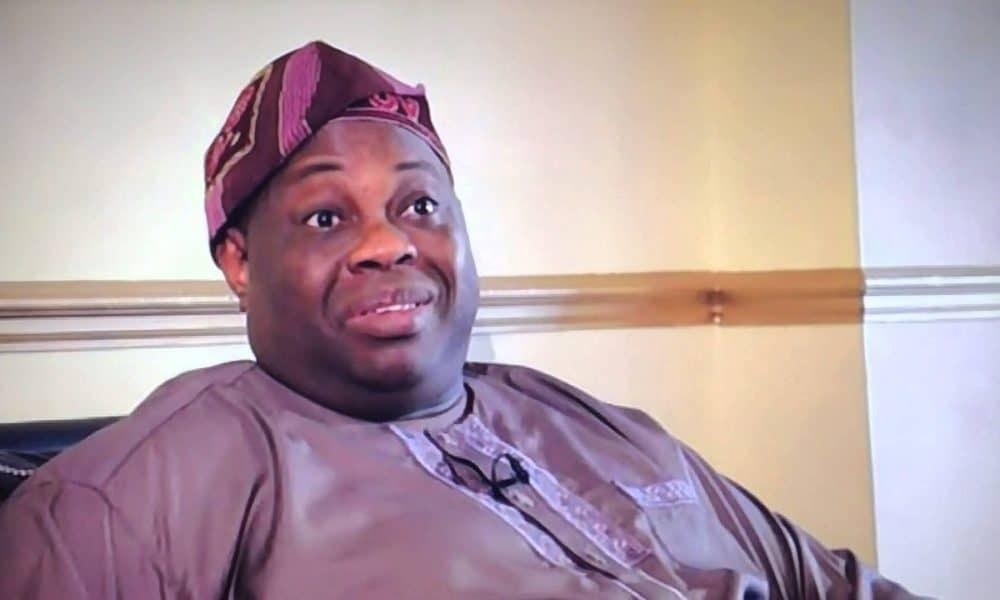
A chieftain of the African Democratic Congress (ADC), Dele Momodu, has renewed the debate over experience, leadership and economic performance ahead of Nigeria’s 2027 presidential election, describing former Vice-President Atiku Abubakar’s years in national government as a defining factor in comparing him with President Bola Tinubu and former Anambra State Governor Peter Obi.
Momodu, a publisher and political commentator, argued that Atiku’s involvement in national politics since the early 1990s, his role in the formation of the Peoples Democratic Party (PDP) and his eight-year tenure as vice-president gave him a level of exposure to federal governance that distinguished his political record from those of the other two prominent figures.
He made the remarks on Wednesday during an interview with Eagle 102.5 FM in Ilese-Ijebu, Ogun State, according to a report by DAILY POST.
The comments come as political parties and prospective candidates position themselves for the 2027 general election, with questions about economic management, leadership experience, national unity and the credibility of political alternatives expected to feature prominently in public debate.
Momodu’s intervention places Atiku’s experience at the centre of the emerging political conversation, while drawing a distinction between governing at the federal level and managing a state.
“If you look at the antecedents of the three major candidates, between Atiku Abubakar and Peter Obi, you will see that Atiku is the most experienced. He has managed our country at the highest level,” Momodu said.
His assessment was accompanied by criticism of Tinubu’s economic record, particularly the administration’s failure, in his view, to deliver the level of prosperity Nigerians expected.
However, the argument over experience is unlikely to be settled by years in public office alone. As the 2027 contest approaches, the records, policy proposals and achievements of the leading political figures are likely to come under closer scrutiny, with voters weighing previous experience against the economic and social challenges confronting the country.
Atiku’s Political Journey Dates Back To The Third Republic
Momodu traced Atiku’s political roots to the 1992 presidential primary of the Social Democratic Party (SDP), when the former vice-president contested against the late business magnate and politician, Moshood Kashimawo Olawale Abiola.
According to Momodu, Atiku subsequently stepped aside in Abiola’s favour and accepted the political outcome without creating a crisis, even though he was not selected as Abiola’s running mate.
He presented the episode as evidence of Atiku’s familiarity with democratic competition and the compromises that political contests sometimes demand.
“He is the only one who started from around 1992, contested the SDP primary against Abiola and stepped down with uncommon equanimity. He did not make any noise,” Momodu said.
The 1992 primary formed part of the political developments preceding the June 12, 1993 presidential election, which Abiola was widely acknowledged to have won before the military government of General Ibrahim Babangida annulled the poll.
Atiku’s subsequent political career included his participation in the formation of the PDP, which emerged as one of Nigeria’s dominant political parties following the return to civilian rule in 1999.
He became vice-president under President Olusegun Obasanjo and served two consecutive terms between 1999 and 2007. The period placed him at the centre of the federal executive during a formative phase of Nigeria’s Fourth Republic.
For Momodu, that experience is important because national governance involves challenges that extend beyond the administration of a single state, including fiscal policy, federal revenue allocation, economic coordination and relations among the different tiers of government.
Atiku’s supporters have frequently pointed to his years in the presidency as evidence of his familiarity with federal institutions and national economic management. His critics, however, may argue that experience in government should be assessed alongside the results achieved during that period and the relevance of past policies to present-day challenges.
The distinction is significant as Nigerians consider what they expect from the next president: a leader familiar with the workings of government, a reformer capable of changing existing practices, or a combination of institutional experience and demonstrable policy results.
Obi’s Governorship Record And National Ambitions
In comparing Atiku with Obi, Momodu acknowledged the former Anambra governor’s record in state administration but maintained that the experience acquired in leading a state differed from that of participating in the management of the federal government.
“Peter Obi has tried his best in Anambra, while Atiku’s best is at the level of vice president controlling the economy of Nigeria. The difference is clear. He has matured in experience and exposure,” he said.
Obi governed Anambra State from 2006 to 2014, apart from periods of interruption arising from political and legal disputes over his tenure. His administration became a significant part of his political identity, particularly in discussions about public spending, fiscal discipline and the management of state resources. <Cite refs={["turn692063search26"]}/>
His subsequent entry into national presidential politics broadened his political profile beyond the South-East. His participation in the 2023 presidential election, when he contested on the Labour Party platform, brought him into the centre of national discussions about political participation, governance and demands for change.
The comparison raised by Momodu therefore touches on two different measures of leadership experience: the management of a state government and participation in the federal executive.
Although the responsibilities of a vice-president can include significant involvement in national policy, the president remains the head of government and exercises constitutional executive authority. Consequently, Atiku’s tenure as vice-president is an important part of his record, but it does not automatically establish that every aspect of his preferred economic or governance approach would produce better results under present circumstances.
The question for voters will be how each contender translates his experience into a credible programme for addressing Nigeria’s current problems.
Momodu Questions Tinubu’s Lagos-Based Governance Approach
Momodu also criticised Tinubu’s record, arguing that the president’s experience before assuming national office was concentrated largely in Lagos State, where he served as governor from 1999 to 2007.
According to him, governing Nigeria requires an appreciation of the country’s political, economic and social complexities that cannot be acquired solely through experience in one state.
“What I'm trying to say is that Tinubu's experience was limited to Lagos, and that is why when he became president, he thought Nigeria was Lagos. And he has found out now that Nigeria is not Lagos,” Momodu said.
The statement reflects his argument that the conditions and administrative realities of Lagos cannot simply be replicated across Nigeria, a country with substantial differences in economic activity, population distribution, infrastructure, security challenges and internally generated revenue among its states.
Tinubu’s political supporters, however, have long pointed to his years in Lagos as evidence of his experience in public administration and political organisation. His presidency has also required decisions affecting the entire federation, including national economic policy and relations with state governments.
The debate is therefore not simply about whether Lagos differs from the rest of Nigeria, but about how a leader’s previous experience informs decisions at the national level.
For the president, the central test remains the effects of government policies on households, businesses, workers and investors. For the opposition, the challenge is to demonstrate that its proposed alternatives would produce more favourable and sustainable outcomes.
Economic Hardship At The Centre Of The 2027 Debate
Momodu’s criticism of Tinubu was particularly pointed on the question of economic prosperity, arguing that Nigerians had yet to experience the improvement in living conditions that they expected.
“Well, we are yet to see that prosperity, and if yesterday would determine today and tomorrow, it is obvious that Tinubu should retire now and let someone else do it,” he said.
The comment reflects a broader political question likely to shape the 2027 election: whether the administration’s economic policies are delivering sufficient benefits to justify continued public support.
For many households, the assessment of economic performance is shaped by everyday realities, including food prices, transport costs, housing, school fees, electricity expenses and the purchasing power of wages. Businesses, meanwhile, must contend with production costs, access to credit, energy expenses and the uncertainty surrounding consumer demand.
These pressures make economic management a critical issue for all presidential contenders. Voters will have to consider not only the explanations offered by the government for its policies but also the pace and distribution of any resulting benefits.
The opposition, for its part, will face questions about the practical details of its alternatives. It will need to explain how it intends to increase productivity, improve employment opportunities, strengthen public services and create conditions in which households can better withstand economic shocks.
For Atiku, his years in the federal government provide an established record on which supporters can base arguments about his familiarity with national economic policy. Yet that same record will also invite questions about what was achieved during his time in office and how his proposed approach would differ from previous administrations.
The same scrutiny applies to Tinubu’s experience in Lagos and at the national level, as well as Obi’s record in Anambra and his proposals for the wider federation.
Experience, Performance And The Question Of Trust
Momodu’s intervention highlights one of the recurring themes in Nigerian presidential politics: the relationship between experience and the capacity to govern effectively.
Experience can offer a prospective president familiarity with public institutions, an understanding of how government decisions are implemented and relationships that may assist in building political consensus. It can also provide lessons from previous successes and failures.
But experience alone does not settle questions about policy priorities, accountability, integrity, economic outcomes or the ability to respond to changing circumstances. A candidate’s record must be considered alongside the specific problems the country faces and the proposals presented to address them.
Nigeria’s political history provides ample reason for voters to examine both credentials and outcomes. Holding high office offers opportunities to influence public policy, but it also creates responsibilities against which a leader’s performance can be judged.
In Atiku’s case, his tenure as vice-president and his long participation in national politics constitute a substantial part of his public record. For Tinubu, his governorship of Lagos and subsequent presidency provide two different levels of administrative experience. Obi’s record in Anambra and his subsequent national political engagement form the basis of his own claims about leadership.
The competing records will inevitably be interpreted differently by supporters and opponents. What matters for public debate is that claims about achievement and failure are examined against verifiable evidence rather than accepted solely because they come from political allies.
Momodu’s position is also relevant because he is speaking as an ADC chieftain during preparations for the 2027 election. His assessment reflects his political affiliation and perspective, rather than an independent evaluation of all three politicians.
His comments nevertheless draw attention to questions that the election campaign will have to confront: what constitutes meaningful governing experience, how past performance should be measured and what Nigerians should reasonably expect from those seeking the presidency.
The Road To 2027
With the next presidential election approaching, the debate over leadership qualifications is expected to intensify as political parties organise, aspirants articulate their programmes and competing political interests seek to consolidate support.
Momodu has made his position clear: he believes Atiku’s national political experience distinguishes him from Tinubu and Obi, while he has questioned whether the current administration has delivered the prosperity Nigerians were promised.
The other side of that debate will be determined by the candidates’ records, policy commitments and ability to explain how they intend to address the country’s challenges.
For Nigerians confronting the daily demands of making ends meet, the decisive issue will extend beyond the number of years a candidate has spent in politics. It will concern the quality of leadership offered, the credibility of the proposed solutions and whether government can deliver measurable improvements in people’s lives.
As the 2027 contest takes shape, Momodu’s remarks have added another dimension to the emerging political debate over experience and economic performance. The task before the electorate will be to assess the claims of the competing political camps carefully and demand evidence, clear commitments and accountability from every candidate seeking the nation’s highest office.