PublicSphere Live
Business
FG Disagrees With World Bank Over ₦7.7tn Interest Payments, Says Debt Position Improving
In its statement, the Ministry of Finance identified three major reasons it considered the 124 per cent ratio misleading.
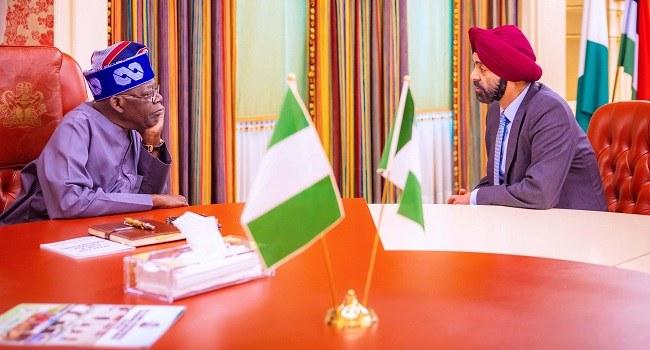
Government says revenue growth is outpacing interest costs, insists 124% debt-to-revenue ratio is misleading
The Federal Government has disagreed with the World Bank’s assessment of Nigeria’s debt burden, dismissing concerns that ₦7.7 trillion spent on interest payments in the first half of 2026 threatens the country’s debt sustainability.
The Federal Ministry of Finance said the assessment, which placed Nigeria’s debt servicing-to-revenue ratio at 124 per cent during the period, was misleading because it relied on incomplete revenue figures and included debt obligations the Federal Government services on behalf of state governments.
The ministry, in a statement issued on Sunday and shared on X by the Minister of Finance and Coordinating Minister of the Economy, Taiwo Oyedele, argued that Nigeria’s fiscal position had improved under the current administration’s economic reforms, with government revenue growing considerably faster than interest expenses.
The disagreement follows the World Bank’s October 2026 Nigeria Development Update, which highlighted the pressure of debt servicing on government revenue and raised questions about the country’s ability to sustain its fiscal obligations without undermining spending on critical sectors.
While acknowledging the figures cited in the report, the ministry maintained that assessing the country’s debt position using first-half revenue and interest payments alone could produce a distorted picture of the government’s overall financial position.
It argued that a proper assessment must compare debt obligations with revenue generated by the same level of government, account for all relevant income and consider the seasonal pattern of tax collections.
FG Questions World Bank’s Calculation
In its statement, the Ministry of Finance identified three major reasons it considered the 124 per cent ratio misleading.
First, it said the interest payment figure included obligations arising from debts serviced by the Federal Government on behalf of other tiers of government, including external loans contracted by state governments.
According to the ministry, comparing such obligations exclusively with federal revenue exaggerates the burden attributable to the Federal Government because the debt and revenue figures do not cover the same level of government.
“The interest figure includes debt the Federal Government services on behalf of other tiers of government, including external loans to states,” the ministry stated.
It added that a meaningful assessment of debt sustainability required consistency between the obligations being measured and the revenue used to determine the government’s capacity to meet them.
The ministry’s second objection concerned the revenue data used in calculating the ratio. It argued that the reported figures excluded independent revenue already earned by government agencies and enterprises but not yet remitted to the Treasury.
According to the ministry, relying on revenue already reflected in Treasury accounts without accounting for other income earned by public institutions could understate the government’s actual revenue position.
The third issue concerned the timing of revenue collection. The ministry explained that certain statutory tax payments were predominantly collected in the second half of the year, meaning first-half revenue figures did not necessarily provide a complete picture of the government’s earnings for the full financial year.
It argued that the timing of these receipts was important when evaluating the relationship between revenue and debt obligations, particularly where the assessment was being used to draw conclusions about the sustainability of public borrowing.
Revenue Grows By 72 Per Cent
To support its position, the Federal Government presented comparative figures showing that revenue growth had significantly outpaced the increase in interest payments between the first half of 2025 and the corresponding period of 2026.
According to the ministry, federal revenue increased by 72 per cent, rising from ₦3.6 trillion in the first half of 2025 to ₦6.2 trillion in the first half of 2026.
Over the same period, interest payments rose by 38 per cent, from ₦5.6 trillion to ₦7.7 trillion.
The government said the figures demonstrated that the growth in revenue was almost twice the rate of increase in interest expenses, indicating an improvement in its capacity to meet debt obligations.
The ministry also noted that the interest-to-revenue ratio declined from 156 per cent in the first half of 2025 to 124 per cent in the first half of 2026, representing a reduction of 32 percentage points.
It further stated that the gap between interest payments and revenue narrowed from ₦2 trillion in the first half of 2025 to ₦1.5 trillion in the first half of 2026.
The government described these developments as evidence that its economic and fiscal reforms were producing results rather than signalling an impending fiscal crisis.
“This is a clear sign of the progress delivered by the current administration’s reforms,” the ministry said.
It added that revenue was growing almost twice as fast as interest costs, arguing that the trend should be considered when evaluating the government’s fiscal performance.
However, the figures also show that interest payments remained higher than the federal revenue figure cited by the ministry for the first six months of 2026, underscoring the continued pressure that debt costs place on public finances during the period.
FG Cites Full-Year Debt Projections
The ministry also challenged the use of half-year figures as the principal basis for assessing Nigeria’s debt sustainability, arguing that the country’s overall fiscal position should be evaluated over a complete financial year.
It said the World Bank’s own projections provided a more appropriate basis for understanding the relationship between debt obligations and revenue.
According to the ministry, the World Bank’s October 2026 Nigeria Development Update projected Nigeria’s full-year debt service, covering both interest and principal repayments, at 46 per cent of revenue in 2026.
The ministry described this projection as a more relevant benchmark for evaluating the country’s capacity to meet its debt obligations.
“Debt sustainability is assessed on a full-year basis, not over six months,” it stated.
“The same World Bank report projects Nigeria’s full-year 2026 debt service, covering both interest and principal, at 46% of revenue.”
It argued that drawing conclusions about the sustainability of the country’s debt from first-half figures without considering the full-year revenue outlook could lead to inaccurate interpretations of the government’s financial position.
Nevertheless, the distinction between interest payments and total debt service remains important. Interest represents the cost of borrowing, while total debt service also includes principal repayments falling due within the period. The two measures provide different perspectives on the government’s fiscal obligations.
The government’s argument is that the full-year outlook, rather than the first-half interest-to-revenue ratio alone, should guide assessments of debt sustainability.
Government Defends Borrowing Framework
Beyond disputing the World Bank’s interpretation of the figures, the Federal Ministry of Finance defended the legal and institutional framework governing government borrowing.
It maintained that every naira borrowed by the Federal Government fell within the limits approved by the National Assembly under the 2026 Appropriation Act and the government’s approved borrowing plan.
The ministry also said borrowing activities were conducted in accordance with the Fiscal Responsibility Act 2007 and the Debt Management Office (Establishment) Act 2003.
According to the statement, the government’s borrowing information was published regularly by the Debt Management Office, which is responsible for managing Nigeria’s public debt.
The ministry’s position is that compliance with the approved borrowing framework, alongside stronger revenue generation, provides an important basis for assessing the country’s fiscal outlook.
However, adherence to statutory borrowing limits and the existence of an approved borrowing plan do not, by themselves, settle questions about debt sustainability. The ability to meet repayment obligations without placing excessive pressure on public expenditure remains a central consideration in evaluating the effectiveness of fiscal management.
For Nigeria, the challenge is to ensure that borrowing supports productive investment and economic growth while preventing debt servicing costs from crowding out spending on infrastructure, healthcare, education, security and other essential public services.
Debt Costs Remain A Fiscal Challenge
The disagreement between the Federal Government and the World Bank highlights the competing interpretations of Nigeria’s public finance figures at a time when revenue mobilisation and debt management remain critical policy issues.
The government is emphasising improvements in revenue collection and the slower pace of growth in interest expenses relative to earnings. Its argument is that the decline in the first-half interest-to-revenue ratio demonstrates progress and that the full-year outlook provides a more balanced picture.
The World Bank’s concern, as reflected in the figures cited in the ministry’s response, centres on the substantial share of revenue absorbed by debt-related obligations during the first six months of the year.
Even with the government’s explanation, the reported ₦7.7 trillion in interest payments represents a substantial financial commitment. The fact that the amount exceeded the ₦6.2 trillion in federal revenue cited for the same period illustrates why debt servicing continues to attract attention from economists, investors and development institutions.
The extent to which the government can sustain improvements in revenue generation will therefore be crucial to determining whether the current trend translates into lasting fiscal relief.
Higher revenue can reduce the pressure of debt obligations relative to government earnings, but the durability of that improvement will depend on the consistency of collections, the expansion of the tax base, effective remittance of public-sector revenues and the management of recurrent expenditure.
The quality of government spending will also matter. Where borrowed funds support productive infrastructure, industrial development and other investments capable of expanding economic activity, they may strengthen future revenue generation. Conversely, persistent borrowing to finance expenditure that does not improve the economy’s productive capacity could leave future administrations with substantial repayment obligations and limited fiscal flexibility.
FG Urges Caution In Interpreting Data
The Ministry of Finance said it welcomed informed scrutiny of the nation’s public finances but urged analysts, commentators and other stakeholders to examine the underlying data carefully before drawing conclusions about Nigeria’s debt position.
It called for comparisons that take account of the level of government involved, the completeness of revenue figures and the timing of tax collections.
The ministry also encouraged stakeholders to seek clarification where published figures were unclear, arguing that the interpretation of fiscal data should reflect the broader context in which the figures were generated.
The response signals the Federal Government’s determination to defend its economic reforms against assessments it considers incomplete or misleading, particularly where such assessments could shape perceptions of Nigeria’s fiscal stability.
Ultimately, the debate will be settled not only by the interpretation of first-half figures but also by the performance of government revenue over the remainder of 2026, the cost of servicing existing debt and the country’s ability to meet its obligations without undermining economic growth.
For now, the government insists that the improvement in revenue relative to interest costs demonstrates progress. The continuing challenge will be to translate that improvement into a more sustainable fiscal position in which debt obligations consume a smaller share of public resources and leave sufficient funds for development priorities.