PublicSphere Live
Analysis
Why Tinubu Is Turning To Kaduna: The Political, Strategic And National Significance of His Expected Campaign Launch
Kaduna is one of northern Nigeria’s most consequential political centres, a state whose demographic diversity, historical influence, economic importance and position within the politics of the North make it a notable location for any presidential campaign seeking to establish a national presence.
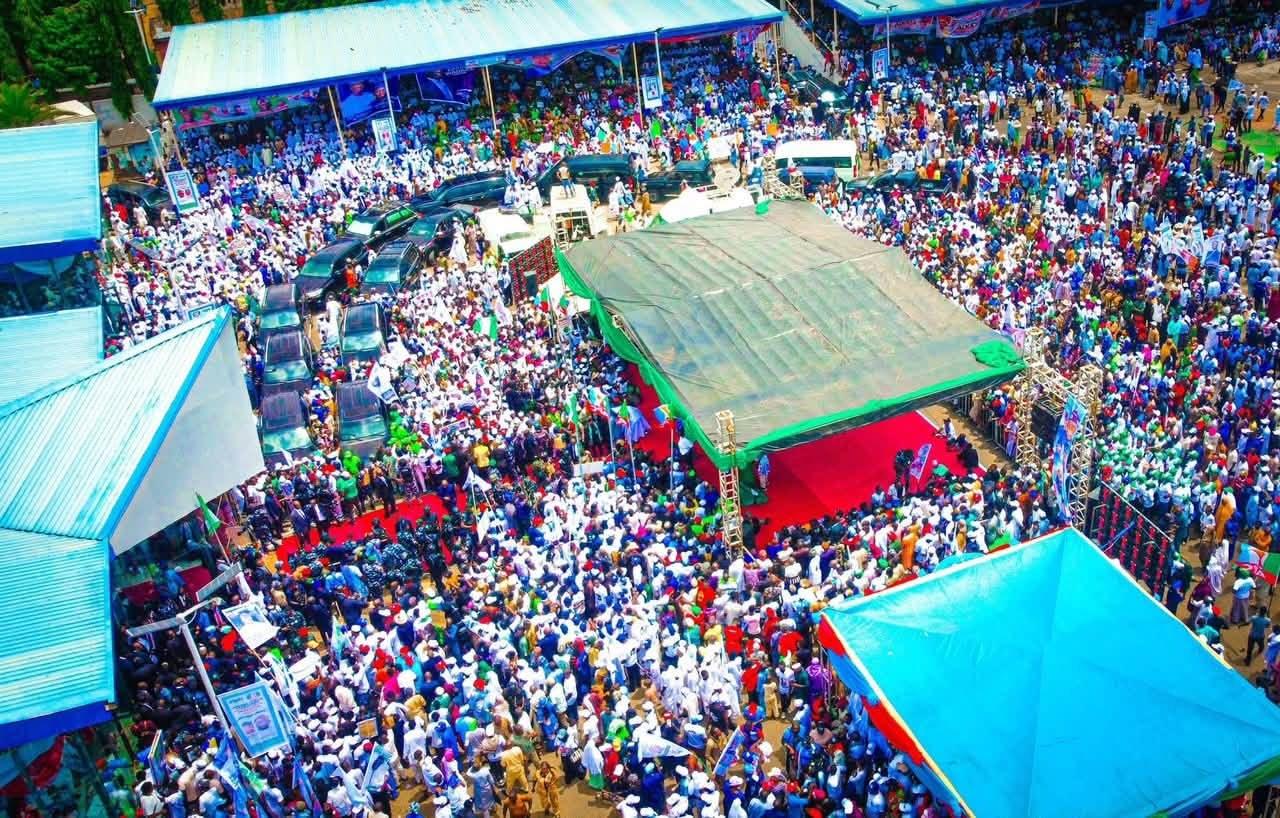
President Bola Ahmed Tinubu’s expected visit to Kaduna to kick-start his campaign activities ahead of the 2027 general election carries political significance that extends beyond the ceremonial launch of an electioneering season. Kaduna is one of northern Nigeria’s most consequential political centres, a state whose demographic diversity, historical influence, economic importance and position within the politics of the North make it a notable location for any presidential campaign seeking to establish a national presence.
If Kaduna is indeed selected as the starting point for Tinubu’s campaign, the decision can be examined through several interconnected considerations: the importance of consolidating support in northern Nigeria, the need to communicate the objectives and achievements of his administration, the strategic role of political alliances, the challenge of addressing public concerns over economic reforms and insecurity, and the wider effort to present the 2027 election as a contest about Nigeria’s future rather than simply a referendum on the incumbent president.
The distinction between what is officially confirmed and what can reasonably be inferred is important. Until the Presidency or the ruling All Progressives Congress (APC) confirms the details of the event, the precise reasons for selecting Kaduna remain a matter of political analysis rather than established fact. Nevertheless, the state's political history and strategic position provide a useful framework for understanding the possible calculations behind such a decision.
Kaduna As A Gateway To The North-West
The first and perhaps most obvious reason for choosing Kaduna is its strategic position in the North-West, a geopolitical zone that occupies an important place in Nigeria’s electoral arithmetic. The region has a large electorate, extensive political networks and a history of influencing presidential contests through its voting patterns, party structures and alliances among influential political leaders.
According to reports published in October 2026, Senator Abdulaziz Yari, Director-General of the APC Presidential Campaign Council, announced that Tinubu’s re-election campaign would be formally flagged off in Kaduna on October 24. Yari said the campaign council would be inaugurated at the State House on October 14 before the presidential campaign moved to other locations, including Rivers State and Maiduguri, Borno State.
The selection of Kaduna therefore suggests that the APC intends to begin its presidential campaign with a strong emphasis on the North-West, rather than limiting the opening event to Lagos, the President’s traditional political base, or Abuja, the seat of government.
The North-West is not merely important because of its population; it is also a region where political loyalties, religious considerations, economic grievances, local leadership structures and perceptions of federal governance intersect in complicated ways. A campaign launched in Kaduna offers Tinubu and his party an opportunity to address these issues before taking their message to other parts of the country.
The APC’s North-West leadership had already begun mobilisation efforts in July 2026, with plans to engage stakeholders across the seven states of the region, strengthen grassroots structures and consolidate support for the President.
The Kaduna rally can consequently be interpreted as the public expression of a broader political strategy whose implementation began before the formal presidential campaign launch.
The Need To Improve On The 2023 Presidential Performance
A second reason is the opportunity to address the electoral challenge presented by Kaduna in the 2023 presidential election.
Although Tinubu emerged as the winner of the national election, Kaduna State did not give him the highest number of votes. The results reported by Channels Television showed that Atiku Abubakar of the Peoples Democratic Party received 554,360 votes, against Tinubu’s 399,293, while Peter Obi of the Labour Party obtained 294,494 votes.
These figures are significant because they demonstrate that the APC cannot simply assume that its control of the federal government or its position in Kaduna State automatically translates into presidential electoral dominance there.
The state presents a more complicated picture. Its electorate is politically diverse, and voting preferences can differ considerably between urban centres, rural communities, Southern Kaduna and other parts of the state. The presidential election also involves considerations that do not necessarily determine the outcome of governorship or legislative contests.
The APC won the Kaduna governorship election in 2023, but the presidential result revealed that support for the party at the state level did not translate into equivalent support for Tinubu in the presidential contest. That distinction makes Kaduna an important location for the President to engage voters directly and explain why he believes his administration deserves another term.
The campaign will also have to contend with the possibility that some voters who supported opposition candidates in 2023 may remain dissatisfied with the economic and security conditions affecting their lives.
A rally can generate publicity, but it cannot by itself resolve these concerns. Its political value will depend on whether the President and his party can move beyond expressions of solidarity to demonstrate an understanding of the reasons voters chose differently in the previous election.
Kaduna is therefore both a symbolic starting point and a reminder that presidential support must be earned across different constituencies, rather than presumed from party control.
The Symbolism of Kaduna In Northern Politics
Kaduna possesses a historical significance that extends beyond its contemporary electoral value. As the former capital of the Northern Region, it has long served as an important administrative, commercial and political centre, attracting politicians, traditional institutions, business interests and communities from different parts of northern Nigeria.
Its reputation as a meeting point for diverse communities makes it a particularly relevant venue for a presidential candidate seeking to project a national identity.
A campaign launch in Kaduna allows Tinubu to communicate that his re-election bid is not exclusively a southern political project, despite his origins in the South-West and the geographical base of his political career.
This symbolism matters in a federation where regional representation, the distribution of political power and the relationship between northern and southern political establishments have remained important considerations in presidential politics.
The APC leadership in Kaduna has itself presented the choice of the state as a gesture of political recognition for the North. In remarks reported on October 12, the party's state publicity secretary, Mohamed Sani Haruna, argued that northern Nigeria had benefited from Tinubu's political alliances and should consider his record of supporting northern presidential aspirants. That position represents the party's argument, rather than an established consensus among northern voters.
The President may therefore use the occasion to emphasise national inclusion, political cooperation and the importance of alliances across regional boundaries.
However, Kaduna's diversity also means that such a message must be carefully framed. The city and the wider state cannot be treated as a single political constituency with identical interests. A message that resonates with one group may not necessarily address the concerns of another.
The wider significance of the rally will lie in whether the President can use Kaduna's historical identity to promote a genuinely inclusive national message, rather than simply invoke the North as a convenient electoral bloc.
Consolidating Relationships with Northern Political Leaders
Another possible objective is to strengthen the relationships between Tinubu and the political figures whose influence is important to the APC's organisation in northern Nigeria.
Presidential elections require more than the popularity of the candidate. They also depend on the ability of political parties to coordinate state governors, lawmakers, local government officials, party executives, traditional and community leaders, youth organisations and other mobilisation structures.
Kaduna provides a convenient meeting point for many of these interests, particularly those operating across the North-West.
The presence of senior APC figures at the campaign launch would offer an opportunity to demonstrate party unity and establish a common public message ahead of the election. It would also give party leaders an occasion to reaffirm their commitment to the presidential campaign and demonstrate that the contest is being approached as a coordinated national undertaking.
Nevertheless, public appearances should not be mistaken for proof that every internal disagreement has been resolved. Political alliances are often shaped by negotiations over representation, appointments, resources, campaign responsibilities and the interests of individual states.
The campaign leadership will have to ensure that the enthusiasm displayed at the Kaduna rally is translated into sustained organisational work, including voter registration awareness where relevant, effective communication, lawful mobilisation and cooperation among party structures.
The decision to begin in Kaduna can therefore be read as an effort to establish a visible political coalition at the outset, while providing an opportunity for the APC to assess the strength and cohesion of its northern organisation.
The Economy: The Central Test of The President's Message
Perhaps the most consequential issue Tinubu will have to address is the economy.
Since assuming office in May 2023, his administration has pursued major economic changes, including the removal of the petrol subsidy and reforms to the foreign-exchange system. The government has defended these measures as necessary to reduce fiscal distortions, improve economic efficiency and create conditions for more sustainable growth.
However, the immediate and continuing effects of economic adjustment on households have made the reforms a major subject of public debate. Food prices, transport costs, household purchasing power, employment opportunities and the cost of running businesses remain central concerns for many Nigerians.
For a presidential campaign beginning in Kaduna, the economic argument will require more than a repetition of the government's policy objectives. Voters will want to understand how the reforms have affected their daily lives, what benefits have materialised, what difficulties remain and what the administration proposes to do differently during a second term.
The President may seek to argue that the most difficult phase of economic adjustment is giving way to improved stability, investment and growth. But such a claim will be judged against the experiences of ordinary households, traders, farmers, manufacturers, civil servants and young people searching for employment.
A credible campaign message must distinguish between improvements in macroeconomic indicators and improvements in living standards. Both matter, but they are not interchangeable.
The Kaduna rally could therefore provide a platform for the President to explain the relationship between the reforms, government revenue, public investment and social protection, while setting out measurable objectives for reducing hardship.
Equally, the opposition will be entitled to question the pace and distribution of the claimed benefits. The electoral debate should be determined by evidence about economic outcomes, not solely by the government's intentions or its critics' accusations.
Insecurity And the Demand For Safer Communities
Security is another issue that could give the Kaduna campaign particular significance.
Parts of Kaduna State and the wider North-West have experienced serious security challenges, including banditry, kidnappings and attacks on rural communities. These problems affect livelihoods, agricultural production, mobility, education and the confidence of residents in the ability of public institutions to protect them.
For communities affected by violence, the success of a presidential administration cannot be measured only by economic growth figures or infrastructure projects. The ability of families to travel safely, farmers to cultivate their land, children to attend school and businesses to operate without persistent fear is fundamental to public confidence.
Tinubu's visit would provide an opportunity to explain the federal government's security strategy, the coordination between federal and state authorities, and the steps being taken to protect vulnerable communities.
It would also expose the administration to questions about the effectiveness of existing measures and the need for sustained investment in intelligence, policing, justice, community engagement and the capacity of security agencies.
The President's challenge will be to show that security is being treated as a continuing responsibility rather than a campaign talking point. Residents will naturally want to know whether official assurances translate into measurable improvements in their communities.
The political significance of Kaduna is heightened by this issue because security concerns are not confined to one state. They are linked to broader questions about the authority of government, rural development, public trust and the ability of the Nigerian state to protect its citizens.
The Message To The Opposition
The campaign's choice of Kaduna may also carry a message to opposition parties seeking to build support across regional boundaries.
The 2023 presidential election demonstrated that the electorate is not permanently divided along a simple North-South political line. Different parties attracted support in different states, while voters made choices influenced by candidates, local political circumstances, economic concerns and competing national visions.
By beginning in Kaduna, Tinubu and the APC can demonstrate their intention to contest vigorously for support in the North-West and to present their campaign as a national undertaking.
But the opposition will also have an opportunity to challenge the ruling party's claims, particularly on economic hardship, insecurity, governance and the pace of reform. Its response will depend on the strength of its organisation, the clarity of its policy proposals and its ability to engage voters beyond criticism of the incumbent.
The Kaduna launch should therefore be understood as the beginning of a broader political argument, not a conclusive demonstration of public opinion.
A rally may show the mobilisation capacity of a party on a particular day, but attendance alone does not establish how the electorate will vote. Electoral preferences are ultimately expressed through ballots cast under the rules administered by the Independent National Electoral Commission.
Conclusion: A Campaign Launch That Must Be Followed By Substance
Tinubu's expected campaign launch in Kaduna on October 24 is significant because it brings together electoral strategy, northern political relationships, national symbolism and the substantive issues that will shape public debate before the 2027 presidential election.
The choice offers the President an opportunity to reinforce his party's organisation in the North-West, address the political lessons of the 2023 election and explain why he believes his administration deserves another term. It also places him before an electorate whose voting history demonstrates that party control at the state level does not automatically determine presidential preferences.
Yet the most important question is not simply why Tinubu is going to Kaduna, but what he intends to communicate there and how that message will be received by citizens whose concerns extend beyond political ceremonies.
If the rally concentrates mainly on endorsements, party solidarity and expressions of confidence, it may achieve its immediate organisational purpose without resolving the more difficult questions facing the administration. If, on the other hand, it provides a substantive account of economic policy, security, employment, infrastructure and the practical steps required to improve living conditions, it could establish a clearer basis for public scrutiny of the President's second-term agenda.
Ultimately, the Kaduna campaign launch will be judged not only by the size of the crowd or the number of political dignitaries in attendance, but by the quality of the issues raised, the credibility of the commitments made and the administration's record in addressing the concerns of Nigerians.
The rally is an opportunity for Tinubu to present his case. It is equally an opportunity for the electorate to assess that case critically, compare it with the alternatives and demand that every campaign promise be measured against the realities of governance.