 PublicSphere Live
Analysis
State Police: Moghalu’s Submission and The Test of Nigeria’s Federalism
Speaking at the second Annual Distinguished Parliamentarian Lecture organised by the House of Representatives Press Corps in Abuja, Moghalu placed the state-police debate within two broad imperatives: the urgent need to improve community security and the equally important need to strengthen Nigeria's federal structure. His presentation was notable because it did not portray state police as a miraculous solution to insecurity. Instead, it acknowledged that decentralisation would succeed only if the country could resolve difficult questions of funding, professionalism, accountability, political interference and the division of responsibilities between federal and state authorities
By Chris Uba
The renewed debate over state police in Nigeria has entered a more consequential phase, moving beyond the familiar argument about whether policing should be decentralised to the much harder question of how such a system can be designed without creating a new instrument of political oppression. This is what makes the recent submission by Nnadubem Moghalu, Secretary of the Presidential Working Group on the National Policing Bill and Senior Special Assistant to President Bola Tinubu on Planning and Research, particularly significant.
Speaking at the second Annual Distinguished Parliamentarian Lecture organised by the House of Representatives Press Corps in Abuja, Moghalu placed the state-police debate within two broad imperatives: the urgent need to improve community security and the equally important need to strengthen Nigeria's federal structure. His presentation was notable because it did not portray state police as a miraculous solution to insecurity. Instead, it acknowledged that decentralisation would succeed only if the country could resolve difficult questions of funding, professionalism, accountability, political interference and the division of responsibilities between federal and state authorities.
That approach deserves serious attention because Nigeria's security crisis has exposed one of the fundamental weaknesses of the country's present policing architecture. The Nigeria Police Force is expected to serve a vast and highly diverse country through a largely centralised structure, even though the nature of criminality differs substantially from one part of the country to another. The security challenges confronting a commercial metropolis are not necessarily the same as those confronting an isolated rural community, a farming settlement, a border town or a major transport corridor.
Moghalu's observation that policing a densely populated commercial district requires different knowledge from policing a rural transport corridor therefore goes to the heart of the argument. Effective policing is not merely about the number of officers available. It is also about intelligence, familiarity with communities, rapid response, trust and the ability to understand the peculiar character of crime in a particular environment.
The Centralisation Problem
One of the most important aspects of Moghalu's submission is the recognition that Nigeria's policing problem is partly a problem of scale. He put the country's police strength at about 380,000 officers serving a population of more than 200 million, producing a ratio of approximately one police officer to 650 citizens, compared with a cited international benchmark of one officer to 400 citizens.
The figures illustrate why the ordinary Nigerian can sometimes experience the police as distant rather than immediate. In a country where citizens should be able to report an emergency and expect an effective response without first searching for a politically connected person, the policing system must be sufficiently close to the population it serves.
Moghalu's statement that every citizen should be able to seek police assistance without first having to find somebody influential to make a call is therefore more than a comment about police availability. It is a statement about citizenship itself. A functioning state should not make access to basic security dependent on personal connections.
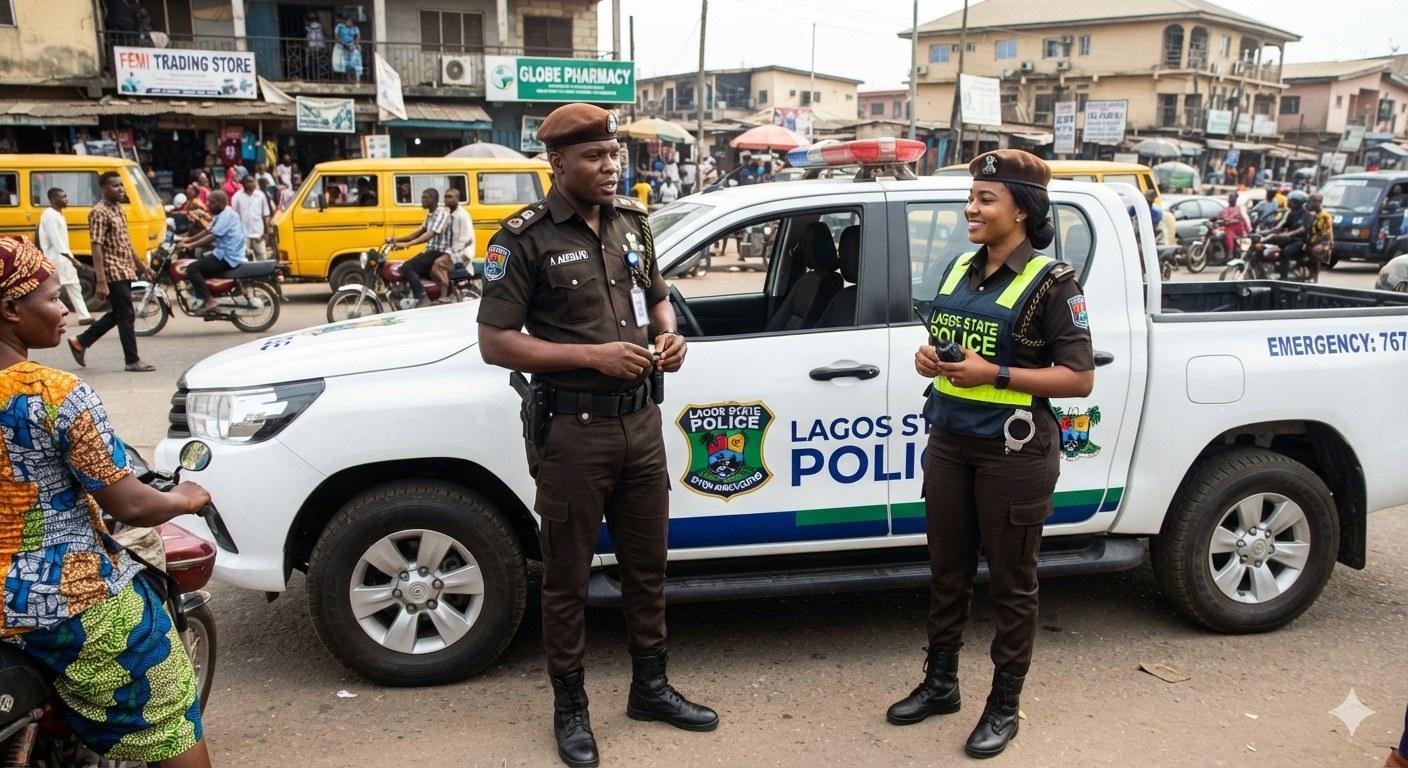
This is where state police could potentially change the relationship between citizens and law enforcement. A properly constituted state police service could theoretically recruit officers who understand local languages, communities, geography and patterns of criminality. It could allow states to develop security responses that are more closely aligned with their particular circumstances.
But the word "properly" is critical.
State Police Must Not Become Governors' Police
The greatest weakness in the argument for state police is also the strongest argument against implementing it carelessly.
Nigeria's governors already wield considerable political influence within their states. Giving them direct control over armed police formations without adequate constitutional and institutional safeguards could create a dangerous concentration of power.
Moghalu did not evade this problem. He expressly acknowledged the possibility that a governor could pressure state police officers to treat a political opponent as an "enemy of state". He also raised the danger of local majorities using state police against minorities.
This may be the most important part of his submission.
The debate should therefore not be reduced to the simplistic proposition that those supporting state police are progressive while those expressing reservations are opposed to reform. Both positions can be legitimate. Nigeria needs more effective policing, but it equally needs to protect citizens from the misuse of state power.
The answer lies in the architecture of the institution.
Moghalu's assertion that institutions must be designed to work even when people who are not trusted hold power is particularly instructive. The durability of any constitutional reform should never depend on the character of the incumbent governor or president. Nigeria's laws must work when good people are in office, but they must be strong enough to restrain bad actors when they eventually occupy positions of authority.
That is the real test of state police.
The Federal Police Must Not Disappear
Another important element of the proposed model is the continuation of the federal police alongside state police.
This is essential because not every crime is local. Terrorism, organised kidnapping, human trafficking, cybercrime, arms trafficking, cross-border crime and other forms of organised criminality frequently extend beyond state boundaries. A state police service cannot be expected to deal effectively with criminal networks whose operations span several states or cross international borders.
Moghalu therefore envisages a dual system in which state police can concentrate more closely on community-level security while the federal police retains responsibility for crimes and threats that transcend state boundaries.
This division, however, will have to be extraordinarily clear.
If the jurisdictional boundaries between the two forces are vague, Nigeria could create a policing system in which federal and state agencies compete for authority, intelligence and resources. Criminal suspects could exploit jurisdictional confusion, while police commanders could blame one another when security operations fail.
The National Policing Bill will consequently be at least as important as the constitutional amendment itself. Moghalu made this distinction clearly, explaining that the constitutional amendment would create the legal foundation for a dual policing model, while the National Policing Bill would establish the operational framework through which that model could function.
This is a crucial distinction. Amending the Constitution does not automatically produce trained officers, police stations, communications systems, forensic laboratories, intelligence databases or functioning command structures.
The Money Question
Funding may ultimately determine whether state police becomes a genuine security reform or another expensive institutional experiment.
It is relatively easy for state governments to declare support for state police when discussing security in principle. It is considerably more difficult to establish and sustain a professional police organisation capable of paying salaries, providing housing, training personnel, maintaining vehicles, purchasing communications equipment, supporting forensic investigation and providing adequate welfare.
Nigeria must therefore resist the temptation to create state police without establishing a credible financing mechanism.
The disparity between states is an obvious problem. Some states possess significantly stronger internally generated revenues and economic bases than others. If policing becomes entirely dependent on the financial capacity of individual states, Nigerians could end up with sophisticated state police services in relatively wealthy states and poorly equipped forces in poorer ones.
That would create another layer of inequality in a country already struggling with uneven development.
The solution may therefore require a carefully constructed funding arrangement involving state resources, federal support and transparent national standards. But whatever formula is adopted must avoid turning federal funding into another mechanism for political control.
State Police and Economic Development
The argument for state police should also be understood from an economic perspective.
Insecurity does not merely threaten lives. It destroys economic activity.
Farmers abandon fields when rural roads become unsafe. Transport operators increase prices when routes become dangerous. Businesses close when kidnapping or violent crime becomes persistent. Investors reconsider locations where employees and assets cannot be adequately protected. Communities lose productive hours and opportunities when citizens are forced to live under constant fear.
Consequently, a more responsive policing system could have implications far beyond crime reduction.
If farmers can travel safely to their farms, agricultural output can improve. If commercial districts are better protected, businesses can operate for longer hours. If transport corridors become safer, movement of goods becomes more predictable. If communities trust law enforcement, citizens are more likely to provide intelligence that helps prevent crimes.
The economic value of effective policing is therefore often underestimated.
But that benefit will emerge only if state police becomes professional rather than political.
The Human Rights Question
There is another danger that Nigeria cannot afford to ignore: decentralising police powers without decentralising accountability.
The history of policing in Nigeria contains enough evidence to show that excessive power without effective oversight can result in abuse. A new policing structure must therefore include independent mechanisms through which citizens can complain against officers, challenge unlawful arrests, report brutality and seek redre
Recruitment must also be based on professional standards rather than political patronage. Training must include investigation, evidence preservation, human rights, conflict management, intelligence gathering and community relations.
The country must avoid creating a situation where state police officers become primarily loyal to governors or ruling parties rather than to the Constitution and the law.
This is why Moghalu's warning about institutional safeguards is arguably more important than the announcement that four states — Edo, Oyo, Osun and Rivers — had already approved the constitutional amendment. At least 24 of the 36 state Houses of Assembly must approve the constitutional alteration before it can proceed.
The four approvals are therefore important, but they are only the beginning.
State Police as A Test Of Federalism
At its deepest level, the state-police debate is about what kind of federation Nigeria wants to be.
Nigeria operates a federal system, yet policing has remained heavily centralised. The proposed reform therefore represents more than an administrative adjustment. It is part of a wider conversation about whether states should possess greater responsibility for matters directly affecting their populations.
If implemented properly, state police could strengthen federalism by making state governments more responsible for the security consequences of their decisions. Governors would no longer be able to complain only about the limitations of federal policing while retaining little direct institutional responsibility for law enforcement.
But greater responsibility must come with greater accountability.
A governor who controls a state police service should be answerable to the people, the legislature and the law for how that service operates. State assemblies must therefore become stronger oversight institutions, rather than merely approving whatever the executive proposes.
The judiciary must also remain accessible to citizens who allege abuse, while civil society and the media must be able to scrutinise police conduct without intimidation.
The Real Question Is Not Whether, But How
Moghalu's submission has helped move the state-police discussion to a more mature level. Nigeria has spent years debating whether state police is desirable. The country is now approaching the point where the more difficult question must be answered: what exactly should state police look like?
That question cannot be answered hurriedly.
The constitutional amendment is only the doorway. Behind it lies the much larger task of building institutions that can recruit properly, train properly, investigate properly, prosecute properly and protect citizens properly.
Nigeria should therefore resist both extremes: the romantic belief that state police will automatically solve insecurity and the equally simplistic fear that state police must inevitably become instruments of governors.
Neither proposition is necessarily true.
State police can improve community security if it is professionally organised, adequately funded, constitutionally protected and subjected to strong oversight. It can also become dangerous if political leaders are permitted to manipulate recruitment, deployment, investigation and prosecution for partisan purposes.
Moghalu's submission is valuable precisely because it recognises both possibilities.
The ultimate success of the reform will not be measured by how quickly Nigeria establishes 36 state police services. It will be measured by whether an ordinary Nigerian can call the police and receive help without knowing a politician; whether a farmer can travel to his farm without fear; whether a business can operate without paying for private security simply to survive; whether a political opponent can criticise a governor without fearing arrest; and whether a minority community can trust that the police will protect it even when the local political majority does not.
That is the standard against which state police should be judged.
Nigeria does not merely need more police. It needs better policing, closer policing and accountable policing. The submission by Moghalu makes clear that the proposed reform is finally moving from political rhetoric towards institutional design. The opportunity is significant, but so is the danger. If Nigeria gets the architecture right, state police could become one of the most consequential reforms of the Fourth Republic, bringing security closer to the people and giving practical meaning to federalism. If it gets the architecture wrong, the country could simply decentralise the weaknesses, abuses and inefficiencies that have plagued its centralised policing system.
The challenge, therefore, is no longer simply to create state police. The challenge is to create a state-policing system strong enough to protect Nigerians and independent enough to resist those who may wish to use it against them.