PublicSphere Live
Business
Manufacturers Association of Nigeria Elects Ifeanyi Okoye As 12th President
Pharmaceutical industrialist succeeds Francis Meshioye after four-year tenure, bringing decades of manufacturing experience and association leadership to the position
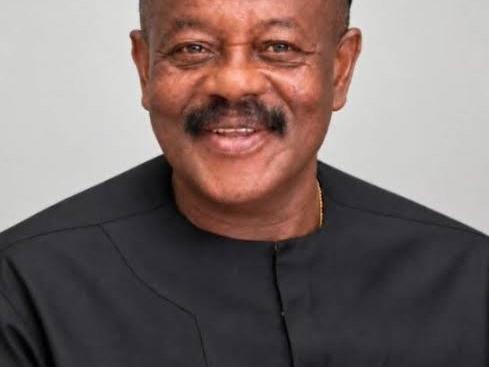
The Manufacturers Association of Nigeria (MAN) has elected the Chief Executive Officer of Juhel Nigeria Limited, Dr. Ifeanyi Eric Okoye, OFR, mni, as its 12th president, ushering in a new leadership era for the country’s organised manufacturing sector at a time when industrial operators continue to contend with production costs, energy challenges, foreign exchange pressures and the need to strengthen local production.
Okoye’s election took place at the association’s 54th Annual General Meeting held on Wednesday, October 7, 2026, at the Lagos Oriental Hotel, Lagos, where he emerged as the successor to Otunba Francis Meshioye, OFR, who completed his four-year tenure as president.
The new MAN president is an established pharmaceutical entrepreneur whose career spans industrial pharmacy, indigenous manufacturing, corporate management and participation in national policy and regulatory institutions.
As chief executive officer of Juhel Nigeria Limited, a wholly indigenous pharmaceutical manufacturing company headquartered in Enugu, Enugu State, Okoye has spent decades building a business that operates in a sector considered important to Nigeria’s efforts to reduce dependence on imported medicines and pharmaceutical products.
His emergence at the helm of MAN places him at the head of an association representing manufacturers across different industries, including companies whose operations are directly affected by the availability and cost of raw materials, electricity, transportation, credit and foreign exchange.
The association’s leadership is expected to remain central to discussions on the operating environment for Nigerian industries, particularly as manufacturers seek policies that can encourage investment, improve capacity utilisation, expand production and create employment.
From Pharmacy To Industrial Manufacturing
Okoye’s professional journey began with a strong academic foundation in pharmacy and pharmaceutical technology, disciplines that provided the technical background for his eventual entry into industrial manufacturing.
He obtained a Bachelor’s degree in Pharmacy from the University of Ife, now Obafemi Awolowo University, before proceeding to the University of Nigeria, Nsukka, where he earned a Master of Science degree and a Doctor of Philosophy in Pharmaceutical Technology and Industrial Pharmacy.
According to the association’s announcement, he graduated as the best student in his class, an academic achievement that preceded his transition from professional pharmaceutical training to entrepreneurship and the development of a manufacturing enterprise.
In 1987, he established Juhel Nigeria Limited, beginning a business journey that would see the company develop its manufacturing operations over several decades.
The establishment of the company was significant within the broader context of Nigeria’s industrial development, where indigenous entrepreneurs have sought to build local production capacity in sectors traditionally characterised by substantial reliance on imported finished goods, equipment and intermediate inputs.
The pharmaceutical industry presents particular challenges for domestic manufacturers because production requires specialised facilities, quality-control systems, technical expertise, regulatory compliance and reliable access to essential inputs. Building a sustainable operation in such an environment requires more than the establishment of a company; it also demands continued investment in infrastructure, manufacturing processes and product development.
Juhel’s expansion over the years reflects the growth of Okoye’s business interests beyond the initial establishment of the company.
Juhel’s Expansion And Manufacturing Footprint
After its establishment in 1987, Juhel Nigeria Limited moved to its permanent site in Emene, Enugu, in December 1989, according to the information provided by MAN.
The company subsequently expanded its manufacturing facilities in 2001 to include the production of syrups and capsules, broadening its product-manufacturing capabilities.
In 2010, Juhel opened a major parenteral manufacturing facility in Awka, Anambra State, representing another phase in the development of its production infrastructure.
Parenteral medicines are pharmaceutical preparations administered through routes that bypass the digestive tract, including injections and intravenous delivery. Their manufacture requires specialised production environments, stringent quality controls and carefully managed processes to ensure that products meet applicable safety and quality requirements.
The development of facilities for such products illustrates the technical demands associated with pharmaceutical manufacturing and the importance of investment in specialised industrial capacity.
For Nigeria, the expansion of indigenous pharmaceutical production is relevant to efforts to improve the availability of locally manufactured medicines, develop industrial skills and reduce vulnerabilities associated with excessive dependence on external supply chains.
However, the wider industry continues to face questions concerning the cost and availability of active pharmaceutical ingredients, foreign exchange requirements, energy supply, financing and the competitiveness of locally manufactured products. These issues form part of the broader industrial policy environment within which the new MAN president will operate.
Although Okoye’s election does not, in itself, establish the direction of his administration, his experience in pharmaceutical manufacturing provides a business background from which to engage with the concerns of manufacturers across different sectors.
Experience With MAN And Industrial Policy
Okoye’s relationship with the Manufacturers Association of Nigeria predates his election as president by several decades, having served the association in different leadership capacities at both regional and national levels.
He was chairman of MAN’s Enugu, Anambra and Ebonyi States Branches from 1998 to 2005, a period during which he gained experience in representing manufacturers and engaging with issues affecting businesses across the South-East.
He subsequently served as vice president of the association from 2006 to 2010, further extending his involvement in its leadership and institutional activities.
These positions provided opportunities for participation in the association’s engagement with industrial policy, business regulation and the operating conditions confronting manufacturing companies.
His progression from branch leadership to the national executive reflects a long-standing association with MAN rather than an entry into its affairs following his emergence as president.
The experience is particularly relevant to the association’s representative role, which involves articulating manufacturers’ concerns to government institutions and other stakeholders while advocating measures intended to improve the competitiveness of domestic industry.
Manufacturers operate under widely differing circumstances, depending on the nature of their products, their dependence on imported inputs, the energy intensity of their operations and their access to markets. Representing these varied interests requires engagement across the industrial spectrum, even where individual sectors have distinct regulatory and commercial priorities.
As president, Okoye will therefore be associated with an institution whose responsibilities extend beyond the interests of his own pharmaceutical business to the wider concerns of Nigeria’s manufacturing community.
National Honours and Professional Affiliations
Beyond his business and association responsibilities, Okoye has participated in professional and public institutions concerned with pharmacy, management, policy and industrial standards.
He is a Fellow of the Pharmaceutical Society of Nigeria and an alumnus of Harvard Business School in Boston, United States.
He is also a member of the National Institute, having attended the National Institute for Policy and Strategic Studies in Kuru, Plateau State. The designation mni is associated with successful completion of the institute’s senior executive programme.
In 2012, he received the national honour of Officer of the Order of the Federal Republic (OFR), recognising his place among recipients of one of Nigeria’s national honours.
His involvement in public-sector committees and regulatory institutions has also formed part of his professional record.
Between 2013 and 2015, he served on the Ministerial Committee on the Establishment of World-Class Hospitals and Diagnostic Centres.
He was also a member of the Governing Council of the Standards Organisation of Nigeria from 2009 to 2022, participating in the work of an institution responsible for standards development and related quality-assurance functions.
Standards and product quality are especially important to manufacturing because they influence consumer protection, market access and the ability of domestic products to compete with imported alternatives. In pharmaceuticals, quality assurance is indispensable to the safety and reliability of medicines.
His experience in these areas adds a public-policy dimension to a career otherwise strongly associated with entrepreneurship and industrial production.
The Task Before The New Man President
Okoye assumes the MAN presidency at a time when the performance of Nigeria’s manufacturing sector remains closely connected to wider economic questions, including inflation, exchange-rate movements, interest rates, electricity supply, logistics and the purchasing power of consumers.
For many manufacturers, the cost of production is influenced by several factors operating simultaneously. Companies that depend on imported machinery, spare parts, chemicals or other inputs are exposed to foreign exchange movements, while those operating energy-intensive plants must contend with electricity costs and the expense of alternative power sources.
Transportation and distribution costs also influence the prices of finished products, while high borrowing costs can make it more difficult for companies to finance expansion, modernise equipment or maintain adequate working capital.
These pressures affect firms differently, but they collectively shape the environment in which domestic manufacturers compete with imported goods and attempt to sustain production.
The association’s advocacy role therefore places a premium on sustained engagement with the Federal Government, state governments, financial institutions, regulators and other economic stakeholders.
Issues likely to remain important to manufacturers include access to affordable long-term financing, predictable industrial policies, infrastructure development, reliable energy, the availability of raw materials, efficient ports and customs procedures, and measures to improve the competitiveness of locally produced goods.
The challenge is not merely to secure favourable policy announcements but to promote an environment in which investments can be sustained, production facilities can operate more efficiently and businesses can plan with greater certainty.
The pharmaceutical industry, from which Okoye emerges, also illustrates the relationship between manufacturing and national economic resilience. A strong domestic production base can help reduce exposure to international supply disruptions, although the extent of that benefit depends on local access to the inputs and technology required for production.
The same broad industrial questions apply to other sectors represented by MAN, including food and beverages, chemicals, building materials, consumer goods and other manufacturing activities.
Building On The Association’s Leadership Legacy
Okoye succeeds Meshioye, whose four-year tenure has now ended, and inherits the responsibility of sustaining the association’s engagement with government and the private sector on behalf of its members.
The transition also provides an opportunity for the association to assess its priorities in the light of changing economic conditions and the needs of manufacturers operating in different parts of the country.
For the new president, the task will involve balancing the immediate concerns of companies struggling with production expenses against longer-term objectives such as industrial expansion, technology adoption, workforce development and stronger domestic supply chains.
His decades of involvement in MAN may provide institutional continuity, while his background in pharmaceutical manufacturing offers direct experience of the practical demands of operating an indigenous industrial enterprise.
Nevertheless, the wider impact of his presidency will depend on the policies and programmes pursued by the association, the effectiveness of its engagement with government and the extent to which the concerns of member companies translate into measurable improvements in the business environment.
MAN’s role is particularly important because manufacturing is linked to employment, investment, technology transfer and the development of supporting industries. Stronger domestic production can also expand opportunities for small and medium-sized businesses supplying packaging, transportation, maintenance and other services to larger factories.
At the same time, sustainable industrial growth requires consistent investment, stable policy frameworks and the development of local supply chains capable of supporting production at competitive costs.
Okoye’s election therefore comes with expectations associated with both his individual record and the institutional responsibilities of the office he now occupies.
With experience spanning the establishment and expansion of Juhel Nigeria Limited, leadership positions within MAN, professional pharmaceutical practice and service on public-sector committees, the new president brings a combination of industrial and institutional experience to the association.
His tenure will unfold against the continuing effort to strengthen Nigeria’s productive capacity and establish manufacturing as a more dependable contributor to economic growth.
The Manufacturers Association of Nigeria announced his election following its 54th Annual General Meeting, with Director-General Segun Ajayi-Kadir, mni, issuing the statement confirming the leadership change.