PublicSphere Live
Business
FG’s 30-Day Petrol Price Relief: What Nigerians Stand To Gain, The Costs And The Questions That Remain
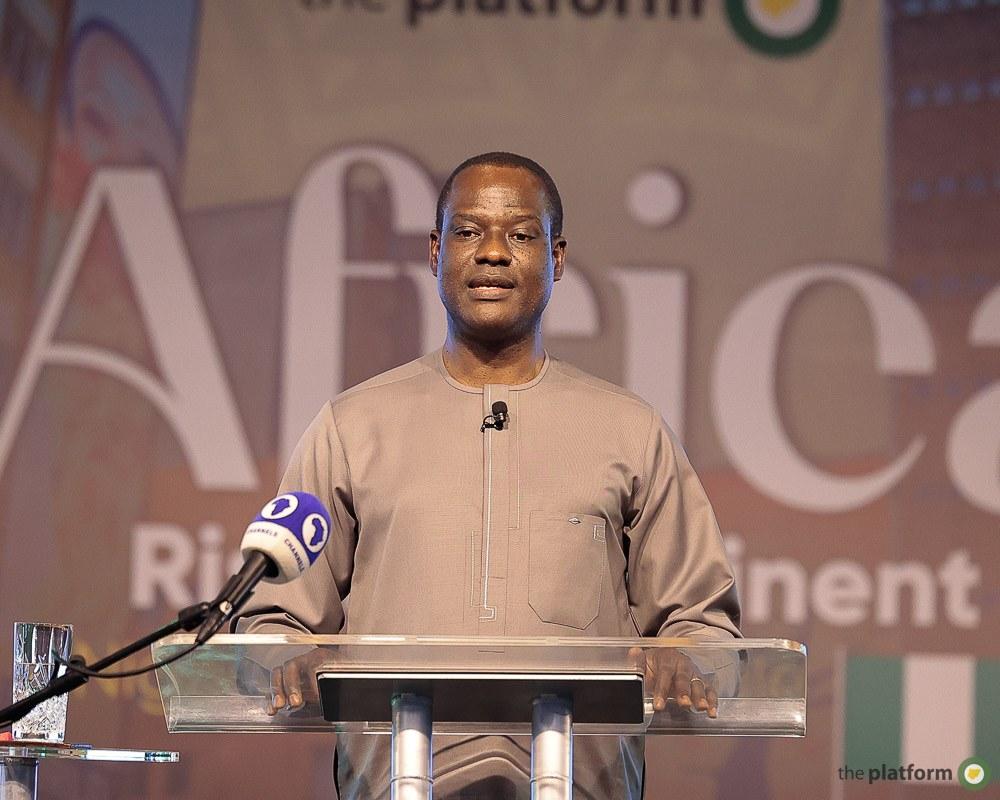
Announced by the Minister of Finance and Coordinating Minister of the Economy, Taiwo Oyedele, on Thursday, October 8, 2026, the arrangement provides for NNPC Retail to forgo its retail profit margin and sell petrol at cost for an initial period of 30 days, with public transport operators receiving priority
Economic analysis | October 9, 2026
The Federal Government’s decision to introduce a 30-day petrol discount through the Nigerian National Petroleum Company Limited (NNPC) represents a significant attempt to cushion Nigerian households and businesses against the renewed pressure of rising fuel prices, but the ultimate value of the intervention will depend on how much consumers actually save, how effectively public transport operators benefit and whether the temporary measure can moderate transportation costs without creating fresh distortions in the downstream petroleum market.
Announced by the Minister of Finance and Coordinating Minister of the Economy, Taiwo Oyedele, on Thursday, October 8, 2026, the arrangement provides for NNPC Retail to forgo its retail profit margin and sell petrol at cost for an initial period of 30 days, with public transport operators receiving priority. The government insists that the initiative is not a return to the controversial petrol subsidy regime abolished in 2023, but a temporary intervention intended to reduce the immediate burden of fuel-price volatility on vulnerable Nigerians.
The announcement comes at a particularly sensitive time for the Nigerian economy, in which petrol prices influence not only the cost of commuting but also the distribution of food, the operation of small businesses, the provision of essential services and the overall cost of living.
For millions of Nigerians whose incomes have struggled to keep pace with rising expenses, even a modest reduction in the cost of fuel could provide some relief. However, the distinction between announcing a discount and delivering a measurable reduction in the prices paid by consumers is crucial to understanding the policy and its likely consequences.
Why The Government Is Intervening Now
Petrol occupies an unusually important position in Nigeria's economic structure because the country's transportation system, distribution networks and substantial portion of small-scale commercial activity depend heavily on petroleum products.
When petrol prices rise, the consequences extend well beyond motorists visiting filling stations. Commercial buses and taxis face higher operating costs, transporters charge more to move agricultural produce, traders spend more on logistics, and manufacturers and service providers using petrol-powered generators encounter increased production expenses.
These costs are frequently passed down the supply chain, eventually reaching consumers through higher food prices, more expensive goods and increased service charges.
The impact is particularly severe on low-income households, which devote a substantial proportion of their earnings to transportation and essential commodities. Workers may spend more travelling to their workplaces, traders face shrinking margins, and families may have to reduce expenditure on nutrition, education and healthcare to accommodate higher living costs.
The Federal Government's intervention therefore reflects an acknowledgement that fuel-price increases can transmit inflationary pressure throughout the economy, making it difficult for households to benefit from improvements in other economic indicators.
The Presidency has linked the intervention to global crude-oil price shocks and volatility, explaining that NNPC Retail will temporarily abandon its petrol retail profit margin to cushion vulnerable householdsThe immediate policy objective is to provide some relief without reversing the broader reform that transferred petrol pricing away from the former blanket subsidy arrangement.
How The 30-Day Discount Will Work
The most important feature of the new arrangement is that NNPC Retail will forgo its retail profit margin and sell petrol at its landing cost rather than add its usual retail margin to the product's cost.
According to the Presidency, if NNPC's landing cost is ₦1,300 per litre, it will sell the product at that price during the intervention, particularly to support commercial vehicles and public transport operators.
This distinction matters because the government has not announced a uniform cash payment to motorists or a fixed percentage reduction applicable to every litre purchased. Instead, the relief is expected to arise from the removal of NNPC Retail's profit margin for the specified period.
The actual saving will therefore depend on the cost at which NNPC obtains the petrol and the retail margin it would otherwise have charged. Consumers should not assume that the announcement automatically translates into a particular reduction of ₦50, ₦100 or any other fixed amount per litre, because the government has not established such a universal discount in the information released so far.
Equally important is the question of implementation. The authorities need to explain how the priority accorded to public transport operators will work in practice, whether participating operators will receive access to designated outlets or preferential purchasing arrangements, and how ordinary private motorists will benefit.
Without clear guidelines, the policy could generate confusion at filling stations, particularly if consumers expect the same prices at every NNPC outlet while regional supply and distribution costs remain different.
The government must also publish the commencement and expiry dates, the applicable pricing formula and the conditions under which the programme could be extended beyond its initial 30 days.
The ₦1,350 Petrol Cost Ceiling: A Separate But Related Measure
Another major component of the government's response is its proposal to negotiate a ceiling of ₦1,350 per litre on petrol's ex-gantry or landing cost.
This proposal must be distinguished from the 30-day retail discount because the two interventions address different aspects of the fuel-pricing problem.
The temporary discount concerns NNPC Retail's decision to surrender its retail profit margin, while the proposed ceiling seeks to moderate the volatility of the underlying cost of petrol.
Under the proposed arrangement, refiners and importers would absorb the difference when their costs rise above the agreed ceiling and recover the shortfall later when crude-oil prices or foreign-exchange conditions become more favourable. The benchmark is expected to be reviewed monthly, with the government promising to publish the relevant figures.
For consumers, the intended benefit is greater price predictability. Transport operators and businesses could plan their expenses more confidently if petrol prices became less vulnerable to sudden increases in international oil prices or movements in the naira's exchange rate.
However, the mechanism raises important questions about commercial sustainability. Refiners and importers will need a credible framework for recovering losses incurred when costs exceed the ceiling. They will also require transparent rules defining how those losses are calculated, verified and subsequently recovered.
If recovery arrangements are unclear or payments are delayed, some operators could reduce supply, postpone imports or become reluctant to participate. Such a response could undermine the very price stability the government seeks to achieve.
Moreover, the proposed ₦1,350 ceiling should not be mistaken for a confirmed nationwide pump price of ₦1,350. It applies to the ex-gantry or landing-cost benchmark, and additional distribution and retail costs may affect the final price motorists pay.
Reported NNPC pump prices immediately before the announcement stood at ₦1,355 per litre in Lagos and Rivers states and ₦1,370 in Abuja, illustrating why the distinction between an underlying cost benchmark and a retail price is important.
Will The Discount Reduce Transport Fares and Food Prices?
The success of the initiative will ultimately be judged not by the announcement itself but by its effect on household expenditure.
Giving public transport operators priority is a potentially sensible approach because buses, taxis and other commercial vehicles provide a direct link between petrol prices and the daily cost of living.
If transporters purchase fuel more cheaply, their operating costs should fall, creating an opportunity to reduce fares or at least prevent further increases. Lower transport costs could also benefit traders and distributors who move agricultural produce and manufactured goods from farms, factories and warehouses to markets.
Yet cheaper petrol at the filling station does not automatically guarantee cheaper transportation.
Transport fares are influenced by several factors, including vehicle maintenance, spare parts, road conditions, financing costs, traffic congestion, insurance, taxes and the availability of passengers. Operators may therefore experience lower fuel expenses without immediately reducing fares.
Some may retain the savings to compensate for previous losses or higher costs elsewhere in their businesses. Others may face little direct benefit if they cannot access participating NNPC outlets or if the programme's implementation is inconsistent.
The government should consequently establish a monitoring mechanism involving transport unions, relevant regulators, consumer organisations and state governments to assess whether fuel savings are translating into lower fares.
A useful measure of success would be to track transport fares on selected urban and intercity routes before, during and after the 30-day period. Similar monitoring could examine the cost of moving food from major producing areas to urban markets.
Such evidence would help determine whether the policy is delivering meaningful relief or merely reducing one component of transporters' operating expenses.
The Cost of Relief and The Subsidy Question
The administration of President Bola Tinubu has been emphatic that the intervention does not represent a return to the blanket petrol subsidy abolished on May 29, 2023.
Its argument is that NNPC Retail is surrendering its profit margin rather than requiring the government to reimburse marketers for selling petrol below the prevailing cost of supply. The Presidency maintains that a general subsidy would impose longer-term fiscal and economic costs in exchange for temporary relief.
The distinction is economically significant. A blanket subsidy can expose public finances to substantial expenditure when fuel consumption, international oil prices or exchange-rate movements increase the cost of maintaining artificially low prices.
It can also benefit higher-income consumers who purchase more fuel, while creating incentives for smuggling and other forms of arbitrage when domestic prices diverge sharply from prices in neighbouring countries.
Nevertheless, describing the current measure as a margin concession does not eliminate the need for transparency about its economic cost. NNPC Retail is a commercial entity, and forgoing a profit margin has an opportunity cost even if the government does not make an explicit subsidy payment.
The authorities should disclose the size of the margin being surrendered, the volume of petrol covered by the programme and the financial implications for NNPC Retail. They should also explain whether any additional operational or distribution expenses will be absorbed by the company or passed on through other charges.
The government has also said it has granted a full waiver of taxes and duties on petrol, which Finance Minister Taiwo Oyedele valued at more than ₦3.3 trillion for the year through September 30, 2026.
That figure underlines the scale of the wider effort to ease fuel-related costs, but it should not be interpreted as the cost of the new 30-day discount alone. The tax and duty relief is a separate measure, and its benefits need to be assessed independently.
Other Measures in The Government's Package
The petrol discount forms part of a broader collection of measures intended to cushion households and businesses against energy-price shocks.
The government says it will increase funding for cash transfers to vulnerable households, expand subsidised credit for small businesses and consumers, accelerate the deployment of compressed natural gas vehicles and consider an excess-profit tax on operators found to be exploiting consumers.
It has also announced plans for a National Strategic Fuel Reserve, intended to enable the release of refined products when international disruptions or hoarding threaten domestic supply and price stability. Other proposals include reducing regulatory costs, improving traffic management and making logistics more efficient.
These measures address different parts of the problem and could prove more valuable collectively than a petrol discount operating in isolation.
For example, expanding compressed natural gas (CNG) transport can reduce dependence on petrol, while a strategic reserve could help cushion temporary supply disruptions. Direct assistance to vulnerable households may also reach people who receive little benefit from discounts at filling stations.
However, each initiative requires measurable targets, reliable funding, implementation timelines and public reporting. A strategic reserve cannot stabilise prices unless adequate stocks are available and release procedures are credible, while cash transfers will have limited impact if eligible households cannot access them promptly.
The government must also guard against unintended consequences. Any excess-profit tax, for instance, needs a clear legal basis and transparent criteria so that it discourages abusive pricing without punishing legitimate investment or discouraging additional fuel supply.
The Day-31 Question: What Happens After The Discount?
The greatest weakness of a 30-day intervention is its limited duration.
If the measure succeeds in reducing prices at NNPC stations and lowering transport expenses, consumers will naturally want to know whether those benefits will continue after the initial period. If the discount expires while petrol prices remain elevated, households could face renewed pressure just as they begin adjusting their budgets to the temporary relief.
The government has described the arrangement as an initial 30-day window, leaving open the question of what happens at the end of that period. It should therefore clarify the criteria for deciding whether the measure will be extended, modified or discontinued.
More importantly, temporary support must be accompanied by policies that improve the resilience of Nigeria's energy and transport systems.
Domestic refining, predictable crude supply, competitive distribution, a stable foreign-exchange environment and investment in alternative fuels all have a role to play. Forward sales of crude oil to domestic refiners, another measure announced by the government, could help provide greater certainty over input costs, provided the terms are transparent and commercially workable.
The administration must also recognise that consumers do not experience petrol prices in isolation. They experience the combined effect of fuel costs, food inflation, rent, electricity, healthcare and transportation on their purchasing power.
A temporary discount can ease one pressure point, but it cannot by itself reverse the accumulated effects of inflation or restore household incomes that have lost purchasing power.
Conclusion: A Useful Intervention That Must Prove Its Value
The Federal Government's 30-day petrol discount through NNPC Retail is a potentially useful short-term intervention, particularly because it targets the retail margin and gives priority to public transport operators whose fuel expenses influence the cost of commuting for millions of Nigerians.
Its value, however, will depend on implementation, transparency and measurable results. Nigerians need to know the actual savings per litre, how the priority arrangements will operate, whether transport fares will fall and how the government will evaluate the programme when the 30 days expire.
The proposed ₦1,350 landing-cost ceiling, forward crude sales, expanded cash transfers, CNG deployment and strategic fuel reserves could complement the discount, but they must be supported by clear rules and credible implementation.
Ultimately, the government should neither dismiss the immediate need for relief nor assume that a temporary concession is sufficient to resolve a deeper cost-of-living problem. The appropriate test is whether the intervention produces tangible savings for ordinary Nigerians while maintaining reliable fuel supplies and avoiding unsustainable fiscal commitments.
For a household struggling to pay transport fares, a small reduction can matter. For a trader moving food across several states, lower logistics costs can preserve a thin profit margin. And for a commercial driver, cheaper fuel can provide breathing room in a difficult operating environment.
But the public interest demands more than a promising announcement: it demands evidence that the savings reach consumers, clear accountability for the cost of the intervention and a credible plan for the period after the discount ends.