PublicSphere Live
Aviation
Aircraft Crash: NAF Won’t Leave Any Stone Unturned in Investigation – Air Chief Assures
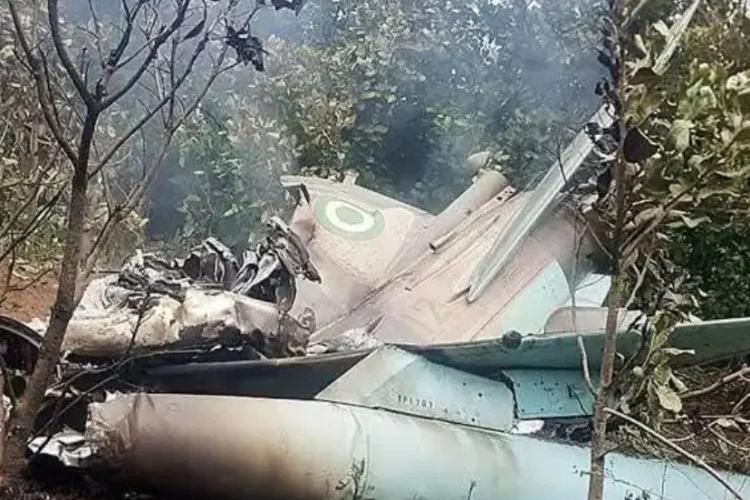
Aneke gave the assurance on Thursday when he visited the scene of the crash in Igbokoda, Ilaje Local Government Area of Ondo State, where an NAF ATR-42 aircraft went down on Monday during a routine mission from Benin to Lagos.
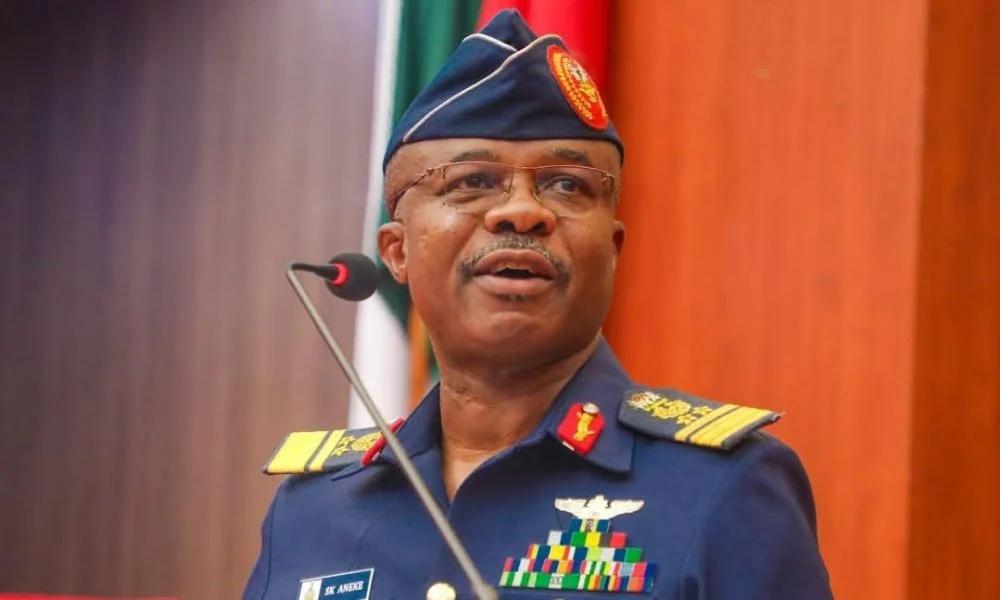
The Chief of the Air Staff, Air Marshal Sunday Kelvin Aneke, has assured Nigerians and the families of the personnel who died in the Nigerian Air Force aircraft crash at Igbokoda, Ondo State, that the service will leave no stone unturned in its investigation to establish exactly what caused the tragedy.
Aneke gave the assurance on Thursday when he visited the scene of the crash in Igbokoda, Ilaje Local Government Area of Ondo State, where an NAF ATR-42 aircraft went down on Monday during a routine mission from Benin to Lagos.
The Air Chief, who described the crash as a major loss to the Nigerian Air Force and the affected families, cautioned against speculation over the cause of the accident, insisting that investigators must be allowed to examine all available evidence before reaching any conclusion.
According to him, the personnel who died in the accident were highly trained professionals whose loss represented a painful moment for the Air Force and the nation.
“They are highly trained professional officers. Whatever happened here will be properly investigated. We must sit down to get what happened. This is not the time to speculate what happened. We must get to the root of this,” Aneke said.
His statement came as search and recovery operations continued at the difficult crash site, where much of the aircraft remained submerged in a swampy environment, complicating efforts by the military, emergency agencies, divers and local responders to recover the wreckage.
The crash, which occurred on October 5, has generated widespread grief across the country and prompted President Bola Ahmed Tinubu to declare three days of national mourning in honour of the deceased Air Force personnel.
President Tinubu also directed the Nigerian Air Force to immediately commence a thorough investigation into the accident, with the specific objective of determining its cause and preventing future occurrences.
Air Chief Visits Crash Site
Aneke's visit to Igbokoda provided the opportunity for the Air Force leadership to assess first-hand the difficult conditions under which recovery teams have been operating since the crash.
The location of the accident has presented considerable logistical challenges because the aircraft came down in a swamp close to waterways, making access difficult for conventional rescue equipment.
Military personnel, divers, emergency responders and members of the local community have been involved in the search and recovery operation, while additional equipment has been deployed to improve access to the crash area.
The difficulty of the terrain has meant that recovery efforts have had to combine military resources with assistance from government authorities and local communities.
Reports indicate that the main body of the aircraft had not yet been recovered as of Thursday, with sections of the wreckage and personal effects of victims recovered from the area. The swampy terrain and submerged portions of the crash site have made the operation particularly demanding.
The Nigerian Navy has also deployed sonar equipment through its Hydrographic Department to assist in locating the submerged aircraft.
The use of sonar, alongside divers, boats and other equipment, is intended to provide investigators and recovery teams with a clearer picture of the underwater environment and help locate the aircraft's main fuselage and other components.
NAF Constitutes Investigation Process
The Nigerian Air Force has activated its established aircraft accident investigation process to determine the circumstances surrounding the crash.
According to the NAF, the investigation is being conducted under the direction of the Chief of the Air Staff, with investigators expected to examine all relevant circumstances surrounding the accident before an official conclusion is reached.
The investigation is particularly important because the precise cause of the crash remains unknown.
Several issues could potentially become relevant to the inquiry, including the aircraft's mechanical condition, maintenance history, flight operations, weather conditions, crew actions, communications with air traffic controllers and the circumstances immediately preceding the loss of contact with the aircraft.
Investigators would also be expected to examine recovered aircraft components and other physical evidence from the crash site.
However, the Air Force has cautioned against drawing conclusions before the investigation is completed.
That position is consistent with standard aviation accident-investigation practice, where investigators are expected to work from evidence rather than preliminary reports, eyewitness accounts or speculation.
Confusion Over Number of People on Board
The accident initially generated confusion over the number of people aboard the aircraft.
Early reports indicated that 32 people were on board, comprising passengers and crew. Subsequent information from the Nigerian Air Force established that 25 people were aboard the aircraft.
The NAF has since explained that the discrepancy arose partly from a misunderstanding of civil and military aviation terminology used in communicating information about the flight.
The Air Force subsequently confirmed that all 25 people aboard the aircraft died in the crash.
The clarification has become important because the circumstances of the accident have attracted intense public attention, with information circulating through social media and other platforms before official authorities had completed the process of establishing the facts.
The NAF has therefore continued to emphasise the importance of relying on verified information as the investigation and recovery operation proceed.
Families Assured of NAF Support
Beyond the investigation itself, Aneke used his visit to assure the families of the deceased that the Nigerian Air Force would not abandon them.
The Air Chief said the service would remain responsible for supporting the families and ensuring that the dependants of the deceased personnel were not left to face the consequences of the tragedy alone.
“I assure the families that they will not be left alone. Air Force will be responsible to the families and make sure that children and families are taken care of,” he said.
That assurance is particularly significant because the crash involved personnel serving in an organisation whose officers and airmen routinely undertake high-risk assignments in different parts of the country.
For their families, the tragedy represents not only the sudden loss of loved ones but also the disappearance of breadwinners, parents, spouses and members of extended families.
The Air Chief acknowledged the magnitude of the loss, describing it as a very painful moment for the service and the relatives of the victims.
Tinubu Orders Thorough Investigation
President Tinubu's directive for a comprehensive investigation preceded the Air Chief's visit to the crash site.
In his statement following the incident, the President said he had been briefed by the Chief of the Air Staff and had directed the NAF to immediately investigate the cause of the crash in order to prevent future occurrences.
The President also commended the Nigerian Air Force for activating search-and-rescue operations after the accident and expressed condolences to the families of the deceased personnel.
The Federal Government subsequently declared three days of national mourning and directed that national flags be flown at half-mast across the country.
The declaration reflected the national significance attached to the loss of the military personnel, particularly at a time when the Nigerian Armed Forces remain heavily involved in operations aimed at confronting insecurity across the country.
Crash Raises Questions About Aviation Safety
While the immediate priority remains the recovery operation and determination of the cause of the accident, the tragedy has inevitably revived wider discussions about military aviation safety in Nigeria.
Questions have been raised about aircraft maintenance, operational procedures, crew safety, airworthiness and the broader aviation safety architecture within the country's military.
However, the NAF has pushed back against premature suggestions that the aircraft was simply an old or unserviceable machine.
According to a military source cited in reports, the aircraft was acquired around 2010 and was properly maintained, although the service has stressed that the ongoing investigation remains the appropriate mechanism for establishing whether mechanical, operational or other factors played a role in the accident.
This distinction is important because the age of an aircraft alone does not establish that it is unsafe. Airworthiness depends on a combination of design, maintenance, inspection, component condition, operational history and compliance with prescribed safety procedures.
Consequently, the investigation will need to establish facts rather than rely on assumptions about the aircraft.
Civil, Military Aviation Authorities Move Closer
One significant development arising from the tragedy is a renewed push for closer cooperation between Nigeria's civil and military aviation authorities.
The Minister of Aviation and Aerospace Development, Festus Keyamo, met with Aneke following the accident, with both sides agreeing to strengthen cooperation between the Nigeria Civil Aviation Authority and the Nigerian Air Force in areas including airworthiness, certification, training and technical capacity.
The proposed framework is intended to promote greater exchange of expertise between the civil and military aviation sectors.
Keyamo noted that aviation safety should transcend the traditional separation between military and civilian operations, while Aneke welcomed the initiative and said both sectors had a common responsibility to advance aviation safety in Nigeria.
The development could become one of the important long-term outcomes of the Igbokoda tragedy if the proposed cooperation produces stronger technical standards, improved training and more systematic safety practices.
The Search For Answers
For now, however, the central task remains the recovery of the aircraft and the establishment of what happened in the moments leading to the crash.
Air traffic controllers reportedly lost contact with the aircraft after it departed Benin for Lagos, before the aircraft was later located in the Igbokoda area.
The crash occurred close to a naval facility, and local residents and fishermen were among those who assisted in the initial response.
The difficult terrain has since turned the recovery operation into a complex undertaking involving the Air Force, Navy, emergency agencies, security personnel, technical specialists and local communities.
For investigators, recovering the main body of the aircraft could prove particularly important because wreckage examination may provide vital evidence about the aircraft's final moments.
Investigators will also need to establish the sequence of events from the time the aircraft departed Benin until contact was lost.
The objective will ultimately be to answer the fundamental questions: What happened? Why did it happen? Could it have been prevented? And what measures are necessary to ensure that it does not happen again?
‘We Must Get To The Root’
Those questions explain the significance of Aneke's promise that the NAF will not leave any stone unturned.
The Air Chief's warning against speculation is also significant because several theories have already emerged around the crash, ranging from mechanical and operational issues to other unverified possibilities.
At this stage, none of those theories should be treated as established fact.
The proper place for such questions is the investigation, where technical evidence, operational records and recovered wreckage can be examined systematically.
The Air Force therefore faces a dual responsibility: to provide support to the bereaved families and to produce a credible account of the circumstances surrounding the accident.
For the families, answers may provide some measure of closure. For the Nigerian Air Force, the findings could provide critical lessons for improving the safety of its aviation operations.
The Igbokoda crash has already cost the nation the lives of 25 highly trained personnel. The least that can be expected from the tragedy is that every available piece of evidence will be examined and that whatever lessons emerge will translate into concrete measures capable of protecting the lives of other men and women serving Nigeria in the air.
As recovery teams continue their difficult work in the Igbokoda swamps, attention will remain fixed on the investigation and the eventual findings.
For Aneke, the message is clear: the NAF must get to the root of the tragedy, establish the facts and learn the lessons necessary to prevent a recurrence.