PublicSphere Live
Politics
2027: Over 1,000 Islamic Clerics Ask Tinubu to Withdraw from Presidential Race
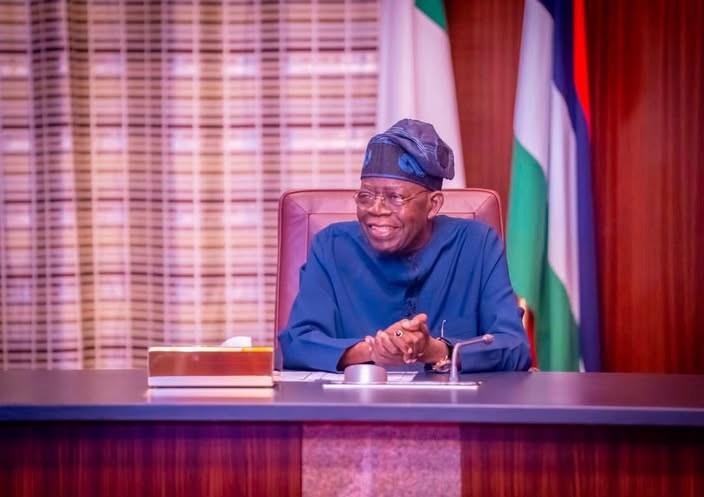
More than 1,000 Islamic clerics have called on President Bola Ahmed Tinubu to withdraw from the 2027 presidential race, citing worsening economic hardship, insecurity, unemployment and the continued migration of skilled Nigerians from the country.
More than 1,000 Islamic clerics have called on President Bola Ahmed Tinubu to withdraw from the 2027 presidential race, citing worsening economic hardship, insecurity, unemployment and the continued migration of skilled Nigerians from the country.
The clerics made the demand in a communique issued after a national conference held in Kano State on Sunday, where they assessed the state of the nation under the Tinubu administration and examined the implications of the 2027 general elections.
The conference, titled “An Assessment of the State of the Nation under President Tinubu and the 2027 General Elections,” was organised under the umbrella of Ko Da Naka…For the Struggle to Promote Good Governance and Community Development, in collaboration with the AFAQ Educational Foundation.
The development comes at a politically sensitive period, with political parties and aspirants intensifying preparations for the 2027 elections and competing efforts underway to mobilise support across the country, particularly in the North, which remains a crucial battleground in any presidential contest.
In their communique, the clerics expressed deep concern about the direction of the Nigerian economy and argued that several of the administration's major economic reforms had placed additional pressure on households and businesses.
They specifically faulted the removal of the petrol subsidy, changes to the naira exchange-rate regime, increases in electricity tariffs and tax reforms, contending that the policies had aggravated the cost of living without providing sufficient relief for ordinary Nigerians.
“It is unfortunate that the government has continued to insist on pursuing these policies, which are increasing hardship among the people, rather than reviewing and correcting them,” the clerics said in the communique. (The Guardian Nigeria)
The religious leaders further accused the government of placing excessive emphasis on revenue generation at a time when Nigerians were confronting rising living costs and unemployment.
According to them, the government's economic priorities must be reassessed if the administration is genuinely interested in improving the living conditions of citizens and securing public confidence ahead of the 2027 elections.
The clerics therefore called on Tinubu to reverse what they described as harmful economic policies and provide immediate relief to Nigerians facing economic difficulties.
They warned that failure to change course should have political consequences at the ballot box.
The communique stated that it would be inappropriate for Nigerians to re-elect the administration in 2027 if the government refused to reconsider policies that the clerics believed had intensified hardship.
The group went further by asking Tinubu to reconsider his presidential ambition altogether.
“Alternatively, the President should refrain from contesting the 2027 election. If he refuses to do so, it is incumbent upon citizens to reject his candidacy and allow those whom they believe can provide better leadership,” the communique stated. (The Guardian Nigeria)
Insecurity Also a Major Concern
Beyond economic hardship, the clerics raised serious concerns about insecurity, particularly the persistence of killings, kidnappings, banditry and terrorism in different parts of the country.
They called for urgent action by the Federal Government to address insecurity, with particular attention to the North-West, where several communities have continued to experience attacks and disruptions caused by armed groups.
The clerics argued that economic development could not be sustained in an environment in which citizens remained vulnerable to attacks and communities were unable to conduct their economic and social activities safely.
They also expressed concern about what they described as the continuing exodus of Nigeria's skilled professionals.
The conference identified doctors, teachers, engineers and other professionals among those leaving the country in search of better opportunities abroad.
The clerics attributed the trend to unemployment, poor remuneration, inadequate facilities, difficult working conditions and the wider economic challenges confronting the country.
They urged the government to improve salaries and working conditions and create incentives that could encourage qualified Nigerians abroad to return and contribute to national development. (The Guardian Nigeria)
Call For Independent Religious Voice
An important dimension of the conference was its appeal to Islamic scholars to maintain independence from political interests and speak honestly about the condition of the country.
The clerics urged religious scholars to speak truth to power, defend justice and resist attempts to use religious institutions or leaders as political instruments.
They said religious leaders should be prepared to commend good governance when it occurs and condemn wrongdoing regardless of the political party, ethnicity or religion of those in power.
They also urged Nigerians to place national interest above partisan, ethnic and regional considerations when making decisions during the 2027 elections.
According to the clerics, voters should assess candidates on the basis of experience, integrity, competence and policy proposals rather than simply supporting candidates because of their political parties, ethnic backgrounds or regional affiliations.
They said the 2027 election should provide Nigerians with an opportunity to choose leaders capable of addressing hardship, insecurity, unemployment, injustice and underdevelopment while creating the conditions for greater prosperity.
A Significant Political Message from The North
The demand is politically significant because of the size of the gathering and the location in which it occurred.
Northern Nigeria remains central to the arithmetic of presidential elections, and any organised expression of dissatisfaction from a sizeable group of Islamic scholars is likely to attract considerable political attention.
However, the position of the Kano clerics should not automatically be interpreted as representing the position of all Muslim scholars or Islamic organisations in Northern Nigeria.
Indeed, there have been contrasting positions within the northern Islamic establishment.
Recent reports indicate that the Qadiriyya Sufi sect and the Jama'atu Izalatil Bid'ah Wa Iqamatis Sunnah, commonly known as JIBWIS, have expressed support for Tinubu and Vice President Kashim Shettima ahead of the 2027 election. (Streamline)
The contrasting positions underscore the increasingly complex political landscape ahead of 2027, with religious, political and community leaders adopting different positions on the performance of the administration and the question of Tinubu's re-election.
There has also previously been controversy over claims of northern Islamic scholars endorsing Tinubu. In August, Islamic cleric Sheikh Abdurrahman Abubakar Azzamfari disputed reports that 500 northern Islamic scholars had endorsed the President, saying the claim did not represent the agreement of those who attended the meeting in Jigawa State. (Punch Newspapers)
The latest development therefore adds another layer to an already fluid debate over the President's prospects in the North.
For the Tinubu administration, the central challenge may be less about the immediate political statement of the clerics and more about the grievances underlying their intervention.
The issues they identified—cost of living, insecurity, unemployment, migration of professionals and the impact of economic reforms—are matters that directly affect millions of households and therefore have the potential to shape voter behaviour.
The administration has consistently defended its reforms as necessary measures to correct longstanding structural weaknesses in the Nigerian economy. The removal of the petrol subsidy and changes to the foreign-exchange regime, in particular, have been presented as part of a broader attempt to rebuild government finances, attract investment and place the economy on a more sustainable footing.
The political difficulty, however, is that economic reforms are ultimately judged not only by their long-term objectives but also by their immediate impact on citizens.
As the 2027 election approaches, the ability of the government to translate its reforms into tangible improvements in household welfare, employment, security and economic opportunity could become a crucial factor in determining public support.
The Kano declaration has consequently introduced a fresh political warning for the ruling All Progressives Congress, even though it does not by itself establish the position of the wider northern electorate.
With the 2027 contest gradually taking shape, the debate is likely to move increasingly beyond political alliances and personalities to the more fundamental question of whether Nigerians believe the incumbent administration has delivered enough improvement in their daily lives to deserve another term.
For Tinubu and the APC, the latest call from the Islamic clerics represents another reminder that the political battle ahead will be fought not merely through party structures and elite alliances, but also through the perceptions of ordinary Nigerians whose economic experiences will ultimately influence their choices at the ballot box.