PublicSphere Live
Analysis
Politics of Bitterness: Nigeria Must Not Normalise Intimidation, Violence and Political Exclusion
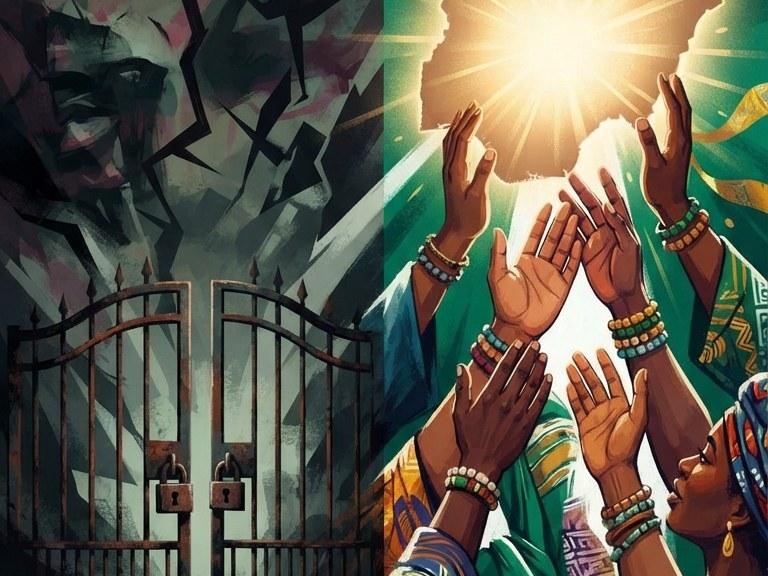
The reported attack on Peter Obi’s convoy, the obstruction of his movements and his allegation that he was prevented from greeting national football players expose a troubling erosion of democratic civility. As 2027 approaches, Nigeria must reject political hostility before it becomes an enduring national affliction.
Democracy Under The Shadow Of Intolerance
Nigeria’s political landscape is increasingly being overshadowed by a disturbing disposition in which political differences are treated not as legitimate expressions of democratic plurality, but as grounds for hostility, intimidation and exclusion. The growing frequency of reported confrontations involving political actors, their supporters and public institutions raises fundamental questions about the country’s democratic maturity and the capacity of its political leadership to preserve an atmosphere of tolerance.
The recent account by Peter Obi, presidential candidate of the Nigeria Democratic Congress (NDC), concerning his alleged inability to greet members of Nigeria’s Under-17 women’s football team at an airport, presents another troubling dimension of this phenomenon.
Obi said he arrived at the airport at 7 a.m. on Monday, November 9, to board a flight to Enugu when he encountered the young footballers, who had just returned and were preparing to leave the airport. He said he asked his Protocol Officer, Jackie Wayas, to find out whether he could welcome the team.
According to him, officials of the Nigeria Football Federation (NFF) refused his request, allegedly warning that they would lose their jobs if he approached the players.
Obi recalled a similar experience in Uyo on March 25, 2025, during a World Cup qualifying match, when he said he was prevented from greeting the players after the match despite having been warmly received by the governor.
These are allegations that warrant clarification from the NFF. The federation should explain what transpired, whether any restriction was imposed, and, if so, the reasons behind it. National sporting institutions must not be permitted to become instruments of partisan exclusion.
Yet, beyond the immediate circumstances of Obi’s account, the larger issue is the alarming possibility that political identity is increasingly determining how Nigerians are treated in public spaces, sporting events and civic engagements.
No democracy can flourish when its citizens are made to feel that their political affiliations determine their entitlement to dignity, access and freedom of movement.
When Political Differences Become Personal Hostility
Political disagreement is an indispensable feature of democracy. Indeed, a society in which everyone subscribes to the same political philosophy would hardly qualify as a vibrant democratic community.
Democracy thrives on competing ideas, divergent perspectives, alternative policy prescriptions and the freedom to challenge those in authority. The existence of opposition parties is not a defect in the political system; it is one of its defining strengths.
The danger arises when disagreement degenerates into resentment, and resentment becomes a justification for intimidation.
Nigeria appears increasingly vulnerable to this troubling transition. Political opponents are sometimes portrayed as enemies whose presence must be resisted, whose supporters must be silenced and whose movements must be obstructed.
This is a profoundly dangerous departure from democratic culture.
The right to campaign, organise, assemble, travel and engage citizens belongs to every political actor who operates within the law. Such rights do not depend on whether the individual enjoys the approval of the incumbent government, a powerful political party, a state governor or a local political constituency.
A democracy cannot selectively recognise constitutional freedoms based on political convenience.
The troubling implication of the reported incidents involving Obi is that political intolerance may be moving beyond verbal exchanges and social media hostilities into physical confrontation, obstruction and institutional exclusion.
That possibility should alarm every Nigerian, regardless of political affiliation.
Reported Attacks And The Escalation Of Political Hostility
The airport incident is particularly troubling when considered against the background of other reported confrontations involving Obi and his political supporters in recent months.
In September 2026, Obi’s convoy reportedly encountered a blockade mounted by youths along the Makurdi-Gboko Federal Highway in Benue State. The incident occurred during his visit to the state for political engagements and to commiserate with victims of the devastating attacks in Yelewata.
The confrontation disrupted movement and reportedly created tension around the convoy. Police subsequently arrested suspects in connection with the incident, while the Benue State Government denied involvement and suggested that the matter might have arisen from internal political disagreements.
Whatever the ultimate findings of the investigation, the obstruction of a political figure’s lawful movement by a crowd is unacceptable. Political disagreements must not be converted into an excuse for mob action.
More recently, on November 4, Obi’s convoy was reportedly attacked in Calabar, Cross River State, during his political engagements ahead of the 2027 elections.
Reports indicated that suspected attackers armed with machetes and sticks damaged vehicles in the convoy. The Cross River State Police Command subsequently announced the arrest of a suspect and said investigations were continuing to identify others allegedly involved.
The state government denied allegations that APC supporters were responsible, attributing the incident to internal opposition-party grievances. Governor Bassey Otu, however, condemned the attack and called for those responsible to be brought to justice.
These distinctions are important. Allegations of political sponsorship must be established through credible investigation, not speculation or partisan accusation. No political party should be condemned for an act without evidence, just as no perpetrator should escape accountability because of political connections.
But the central concern remains: political violence is intolerable, irrespective of who perpetrates it or who becomes its victim.
The reported attacks in Delta, Cross River and Benue, alongside other incidents of political obstruction and intimidation, reinforce the need for urgent national reflection. Reports of violence involving political actors and supporters must not be dismissed as routine campaign disturbances.
Every incident deserves serious investigation, transparent findings and appropriate prosecution where criminal responsibility is established.
The Dangerous Normalisation Of Thuggery
One of the greatest threats to Nigeria’s democracy is the gradual normalisation of political thuggery.
When political violence is repeatedly condemned in public but rarely punished in practice, society begins to absorb a dangerous message: that intimidation is an acceptable instrument of political competition.
The consequences extend far beyond the immediate victims.
Political violence discourages participation, frightens prospective supporters, undermines public confidence and creates an atmosphere in which citizens may begin to calculate the personal risks of expressing their political preferences.
This is especially dangerous in a country approaching a consequential electoral cycle.
The 2027 general election should be an opportunity for Nigerians to debate competing visions of national development, interrogate public policies and assess the performance of political leaders. It should not become a contest in which access to communities, campaign venues and public spaces is determined by the strength of political muscle.
No aspiring president, governor, legislator or councillor should require the permission of political opponents to engage citizens.
The ballot paper, not the machete; persuasion, not intimidation; and public debate, not mob action, must determine the direction of Nigeria’s political future.
A society that tolerates the intimidation of political opponents is gradually surrendering the democratic rights of its own citizens.
Public Institutions Must Remain Above Partisan Politics
The allegation involving the NFF raises an additional concern about the neutrality of public institutions.
National sporting teams belong to Nigeria, not to any political party, administration or individual officeholder. Their achievements are a source of collective pride, transcending ethnic, religious, regional and partisan boundaries.
The young footballers who represent the country deserve to be celebrated by Nigerians across the political spectrum.
If Obi’s account is accurate, it would be unfortunate for officials of a national sporting institution to feel compelled to deny a political figure the opportunity to greet the players because of perceived political consequences.
Public institutions must operate according to established rules, professional standards and legitimate security considerations—not partisan apprehensions.
The NFF should provide a clear account of the incident. If there were genuine security or protocol restrictions, these should be explained transparently. If political considerations influenced the decision, the federation should acknowledge the problem and take steps to prevent its recurrence.
The distinction matters because institutions that succumb to political pressure risk losing public confidence.
The same principle applies to the police, civil service, electoral authorities, educational institutions and other public bodies. Their responsibilities are to the Nigerian state and its citizens, not to the political fortunes of particular individuals.
A football team should never become a political trophy, just as a public institution should never become a partisan possession.
THE POLITICAL LEADERSHIP MUST SET THE TONE
The responsibility for reversing this dangerous trend rests substantially with Nigeria’s political leadership.
Political leaders possess enormous influence over the behaviour of their supporters. Their language, public conduct and response to incidents of intolerance can either reinforce democratic restraint or embolden those who believe violence is an acceptable expression of political loyalty.
It is therefore imperative that leaders across party lines exercise restraint in their rhetoric and conduct.
The temptation to demonise opponents, portray political competition as an existential struggle or encourage supporters to regard rival parties as enemies must be resisted.
A political leader who consistently presents opponents as dangerous adversaries should not be surprised when some supporters begin to interpret hostility as a licence for confrontation.
This does not mean that political leaders must abandon criticism or avoid robust debate. They should challenge one another vigorously on policy, governance, accountability and performance. They should expose failures, interrogate questionable decisions and offer alternative solutions.
But criticism must remain within the boundaries of democratic civility.
The difference between disagreement and hatred is fundamental. The difference between political mobilisation and intimidation is equally consequential.
Nigeria needs leaders who understand that the legitimacy of political authority derives from the consent of citizens, not the capacity to frighten opponents into silence.
The Right To Disagree Must Be Protected
The essence of democracy is the freedom to choose differently.
A Nigerian who supports President Bola Tinubu has the same democratic entitlement as one who supports Peter Obi, Atiku Abubakar or any other political candidate. A supporter of a governing party is not inherently superior to an opposition supporter, nor does political affiliation confer a monopoly over patriotism.
The country belongs equally to all its citizens.
This principle must be firmly established in the public consciousness, especially as political activities intensify ahead of the 2027 elections.
The politics of bitterness is particularly destructive because it converts ordinary political disagreements into personal antagonisms. Neighbours become adversaries, friendships deteriorate, families become divided and communities are drawn into needless conflicts.
The tragedy is that politicians who compete for public office often eventually reconcile, negotiate or cooperate when circumstances demand it, while their supporters remain trapped in the bitterness generated during political contests.
The Nigerian electorate must therefore develop the maturity to distinguish political disagreement from personal hostility.
One can disagree profoundly with Obi’s political philosophy without wishing him harm. One can support Tinubu’s administration without believing that opposition politicians should be denied access to public spaces. One can criticise Atiku’s policies without obstructing his campaign.
Political tolerance does not require ideological agreement. It requires the recognition that those with whom we disagree possess the same fundamental rights.
Security Agencies Must Act Without Fear Or Favour
The increasing reports of political intimidation also place a significant responsibility on Nigeria’s security agencies.
The police and other relevant authorities must guarantee the safety of all political actors and their supporters, irrespective of party affiliation or electoral standing.
This responsibility cannot be discharged through selective enforcement or politically influenced security arrangements.
Where a convoy is attacked, investigators must identify the perpetrators. Where a road is unlawfully blocked, the authorities must determine who organised the obstruction and whether criminal offences were committed. Where threats are made against political supporters, the authorities must respond promptly.
Investigations must be impartial, professional and transparent.
The arrest of suspects should not be treated as proof of guilt, nor should political allegations substitute for evidence. Those accused of offences must enjoy due process, while victims must be assured that their complaints will be taken seriously.
The authorities should also investigate credible allegations of political sponsorship where evidence points in that direction.
The message must be unmistakable: no individual, party or political organisation is above the law.
The Independent National Electoral Commission (INEC), political parties and civil society organisations should equally intensify efforts to promote peaceful campaigns, political dialogue and respect for electoral rights.
Political parties must discipline members who engage in violence and demonstrate that peaceful participation is not merely a campaign slogan but a binding organisational principle.
The Electorate Must Reject The Politics Of Revenge
The Nigerian electorate also has a crucial responsibility in preventing the degeneration of political competition.
Citizens must refuse to become instruments of political vengeance. They must resist attempts to mobilise them against individuals because of their political preferences.
The most effective response to an unpopular candidate is not violence but the ballot.
The most legitimate expression of political dissatisfaction is not the destruction of property but the exercise of democratic choice.
If Nigerians are dissatisfied with a government, they should communicate that dissatisfaction through lawful protest, public debate and voting. If they disagree with an opposition candidate, they should challenge that candidate’s ideas, scrutinise his record and present competing arguments.
There is no justification for resorting to physical aggression.
The electorate must also demand accountability from politicians who encourage or tolerate violence. Political supporters should not automatically defend wrongdoing simply because the perpetrators belong to their preferred party.
Such blind loyalty undermines the moral authority of democratic participation.
A truly democratic citizen is one who can support a political candidate while retaining the capacity to criticise that candidate when necessary.
2027 Must Be About Ideas, Not Intimidation
The approaching 2027 elections provide Nigeria with an opportunity to demonstrate that political competition can be conducted peacefully and responsibly.
The country faces formidable challenges, including economic hardship, insecurity, unemployment, infrastructure deficits and the need to strengthen public institutions.
These are the issues that should dominate the national conversation.
Nigerians deserve to hear how presidential candidates intend to improve living standards, create employment, strengthen education, expand healthcare, secure communities and promote industrial development.
They deserve detailed policy proposals, credible commitments and honest explanations of how competing programmes will be financed and implemented.
Instead, the country risks being distracted by political hostility, personal attacks, intimidation and the destructive impulse to silence opponents.
This would be a disservice to a population confronting enormous socioeconomic difficulties.
The election must be a contest of ideas, competence, character, integrity and demonstrated capacity to govern.
No political party should fear the presence of another. No candidate should be prevented from addressing citizens because of the identity of his supporters. No Nigerian should be threatened for attending a political gathering or expressing an opinion.
The freedom to campaign peacefully is fundamental to the credibility of the electoral process.
Nigeria Must Choose Democratic Civility
The troubling incidents involving Obi should serve as a warning to the entire political establishment.
The issue is not whether Obi is right on every political question, whether his policies are preferable to those of his opponents or whether his supporters are more numerous than those of other candidates.
Those are questions for democratic debate and electoral determination.
The fundamental question is whether Nigeria will preserve a political environment in which every citizen can participate without fear.
The alleged prevention of a political figure from greeting national football players, if established, would represent an unfortunate intrusion of partisan considerations into a shared national institution. The reported attacks and obstructions involving political convoys and supporters are equally unacceptable and demand credible investigation.
Nigeria must not allow political bitterness to become an accepted feature of national life.
The country has endured too many divisions, too much distrust and too many avoidable confrontations. Its democratic future depends on the willingness of political leaders, institutions and citizens to reject the temptation of vengeance.
A political opponent is not an enemy of the nation. A supporter of another party is not a threat to one’s personal dignity. An election is not a declaration of war.
The ultimate test of democracy is not merely whether citizens can vote, but whether they can freely express their preferences, support their candidates and disagree with others without fear of intimidation.
Nigeria must protect that freedom with determination.
The 2027 elections should be remembered for the quality of public debate, the peaceful participation of citizens and the credibility of the electoral process—not for attacks, threats, roadblocks or political exclusion.
The country must rediscover the virtues of restraint, tolerance, mutual respect and responsible political engagement.
The politics of bitterness must end. Nigeria’s democratic future cannot be built upon hostility, intimidation or fear. It must be built upon the freedom to disagree, the courage to tolerate opposing views and the collective determination to place the national interest above partisan resentment.
That is the Nigeria worth defending—and the Nigeria that every political leader, irrespective of party affiliation, should be prepared to build.