PublicSphere Live
Politics
Bala Mohammed’s ‘Don’t Call Them Useless’ Moment: A Lesson in Political Decency and the Challenges of Nigeria’s Opposition
Bauchi Governor Bala Mohammed’s interruption of an APM senatorial candidate at a campaign rally underscores the importance of political civility, credible opposition and constructive criticism as Nigeria approaches the 2027 elections.
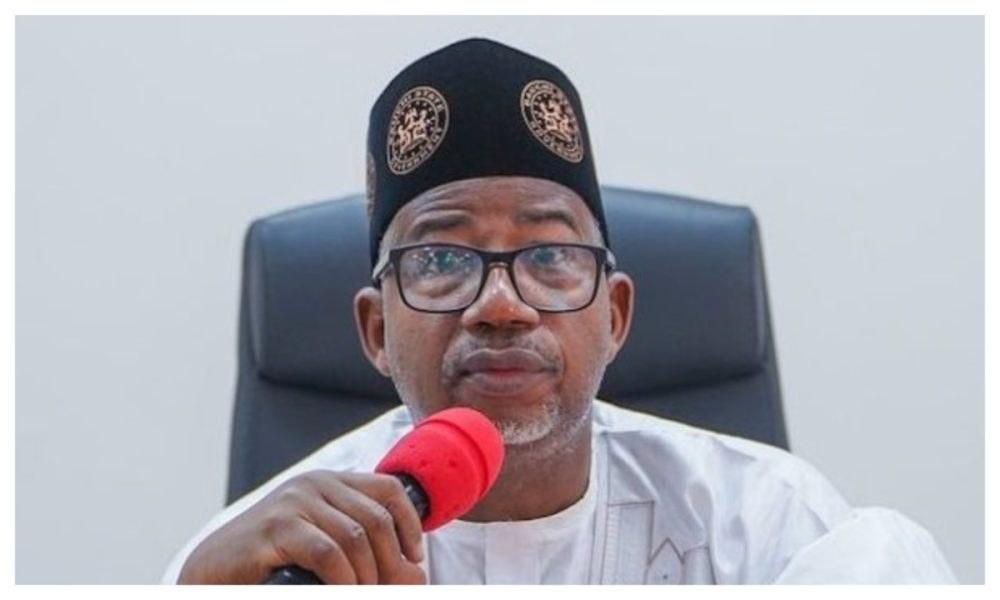
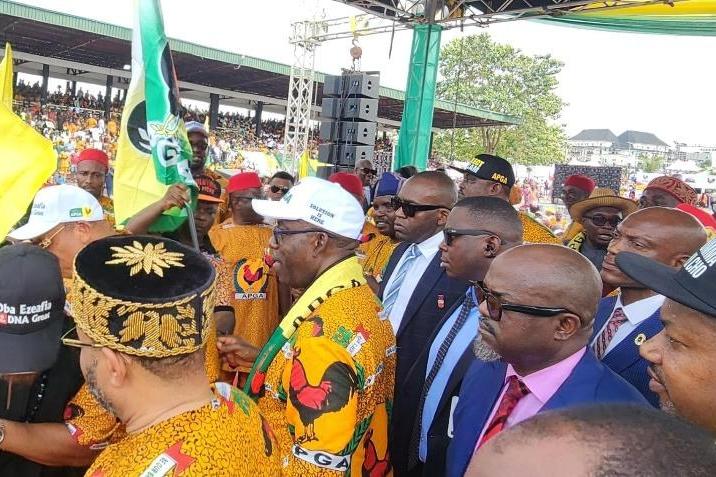
The Nigerian political landscape is increasingly characterised by fierce exchanges, mutual suspicion and rhetoric that often reduces governance debates to personal attacks. Against this background, an apparently spontaneous intervention by Bauchi State Governor, Bala Mohammed, at the campaign flag-off of the Allied Peoples Movement (APM) in Bauchi on Saturday deserves more than passing attention.
The governor’s interruption of a senatorial candidate who described the Federal Government under President Bola Tinubu as “useless” was a moment of mild drama, but it also raised important questions about political communication, opposition responsibility, the quality of electoral campaigns and the standards expected of those seeking public office.
“Don’t call them useless,” Mohammed reportedly cautioned the candidate, who had urged Nigerians to remove the Tinubu administration and “flush out these useless people”.
The intervention was striking, particularly because Mohammed himself was campaigning against the ruling All Progressives Congress (APC) and advocating a change of leadership at the federal level.
His reaction suggested that, while opposition politicians have every right to challenge the government, there should be limits to the language employed in doing so.
At a time when Nigeria is experiencing economic pressures, political tensions and widespread public dissatisfaction, the distinction between vigorous criticism and reckless verbal attacks has become increasingly important.
The Importance Of Political Decency
The governor’s intervention provides an opportunity to examine the place of civility in democratic politics.
Political campaigns are naturally competitive. Candidates seek to persuade voters that their opponents have failed and that their own programmes offer better prospects. In a functioning democracy, criticism of government policies, performance and leadership decisions is not only legitimate but essential.
However, describing an entire government as useless does little to advance meaningful political debate.
Such language may excite supporters, attract headlines and generate applause at rallies, but it does not necessarily help voters understand the alternatives being proposed.
The more important questions are whether the government has fulfilled its promises, whether its policies are delivering results, whether public resources are being managed responsibly and whether citizens are better off than they were before.
These are questions that demand evidence, analysis and concrete proposals.
Mohammed’s intervention therefore carries significance beyond the immediate exchange. It demonstrates that politicians can oppose a government without necessarily endorsing every form of verbal aggression against it.
This is particularly relevant in a country where political language sometimes degenerates into ethnic, religious and personal hostility.
Nigeria’s political history has repeatedly demonstrated the dangers of inflammatory rhetoric. Political disagreements should not become a justification for hatred, intimidation or violence.
The governor’s position, at least in that moment, was a reminder that political decency should not be sacrificed on the altar of electoral ambition.
A Governor Campaigning Against His Own Political Interests?
There is, however, another dimension to Mohammed’s intervention that deserves consideration.
The governor is a prominent opposition figure and has been a vocal critic of the Tinubu administration. His decision to caution an opposition candidate at a campaign rally might therefore appear unusual.
But it also suggests an understanding that political opposition should be guided by principles rather than simply by hostility towards the ruling party.
The opposition’s responsibility is not merely to condemn the government. It must also demonstrate that it possesses the capacity to govern differently, more responsibly and more effectively.
If opposition politicians rely exclusively on insults, denunciations and emotional appeals, they risk weakening their own credibility.
Voters who are dissatisfied with the APC administration are not necessarily looking for politicians who can shout the loudest. They want leaders who can explain how they intend to address insecurity, unemployment, inflation, poverty, infrastructure deficits and the declining purchasing power of households.
The opposition must therefore distinguish itself through the quality of its ideas and the seriousness of its leadership.
Mohammed’s intervention may be interpreted as an attempt to establish that distinction.
Yet, political civility must be consistent. It cannot be demanded from opposition candidates while ruling-party officials are permitted to employ equally provocative language against their opponents.
The standard must apply across the political spectrum.
The Economic Hardship Question
While the language used by the APM senatorial candidate was questionable, the grievances expressed at the rally cannot simply be dismissed.
The Director-General of the APM National Campaign Council, Felix Hassan Hyat, accused the Tinubu administration of worsening hunger and poverty. He questioned when Nigerians should expect the promised improvement in their economic circumstances.
The APM chairman, Yusuf Mamman Dantalle, also expressed concern about the rising cost of petroleum products and the disparity between workers’ wages and the cost of living.
These complaints reflect the economic anxieties that have become central to Nigeria’s political conversations.
The removal of petrol subsidy, exchange-rate reforms and other economic measures introduced by the Tinubu administration have generated considerable debate about their immediate costs and long-term benefits.
Supporters of the reforms argue that they were necessary to correct structural weaknesses in the economy, reduce distortions and establish a more sustainable fiscal framework.
Critics, however, contend that the consequences have been disproportionately borne by ordinary Nigerians, particularly low-income households and workers whose earnings have not kept pace with the cost of living.
The government’s challenge is to demonstrate that its policies are translating into tangible improvements in the lives of citizens.
The opposition, on its part, must move beyond simply highlighting hardship to explain how its proposed alternatives would produce better outcomes.
A political party seeking power must be prepared to answer difficult questions about financing, implementation, economic stability and the sustainability of its promises.
The electorate deserves more than assurances that everything will improve after a change of government.
Makinde’s Reset Nigeria Agenda Under Scrutiny
Mohammed used the rally to endorse APM presidential candidate Seyi Makinde, describing him as a leader capable of promoting fairness, equity and inclusiveness.
He presented Makinde’s proposed Reset Nigeria Agenda as a product of consultation and professional expertise, expressing confidence that it could address the country’s governance challenges.
The governor also endorsed the proposed unity government, which he said would accommodate different interests and confront tribalism, religious intolerance and political exclusion.
These are attractive propositions in a country whose diversity has frequently been exploited for political advantage.
Nigeria’s federal structure was designed, among other things, to accommodate its diverse ethnic, religious and regional interests. The principle of federal character is intended to ensure that public institutions reflect the country’s pluralistic composition.
However, the implementation of this principle remains a subject of public debate.
Mohammed’s assertion that more than 100,000 positions would be available for appointments under a Makinde administration, with opportunities distributed fairly across ethnic and religious groups, raises an important question about the relationship between inclusion and competence.
His promise that appointments would combine federal character with merit is noteworthy.
The challenge is ensuring that these principles are not merely campaign slogans.
Federal character should not become an excuse for mediocrity, just as merit should not be manipulated to justify the exclusion of particular regions or communities.
The task before any prospective president is to establish a system that accommodates diversity while maintaining high standards of competence, integrity and accountability.
Makinde’s proposed unity government must therefore be judged by the details of its structure, the quality of its policies and its capacity to deliver results.
The Danger Of Political Exclusion
Mohammed’s appeal to Makinde to ensure that Bauchi and other North-East states receive adequate consideration in federal appointments, resource allocation and development projects is another significant aspect of the rally.
The governor warned against concentrating federal opportunities in Oyo State or any other region.
His declaration that opposition-led states should not be denied federal opportunities because of their political affiliations is particularly relevant.
In a federal democracy, national resources and opportunities should not be treated as rewards for political loyalty.
Citizens in states governed by opposition parties are equally entitled to federal infrastructure, development programmes and institutional support.
The same principle should apply to appointments and access to national institutions, subject to constitutional provisions and established requirements.
However, the governor’s emphasis on equitable distribution also highlights the continuing challenge of balancing regional expectations with national priorities.
Nigeria needs a federal system in which no region feels deliberately marginalised, but it also needs institutions that can make decisions based on objective development needs and national interest.
The ultimate measure of federal character should not be how many appointments each political bloc receives, but whether the system strengthens national unity and improves governance.
The Opposition’s Credibility Challenge
The APM rally also exposed a broader challenge facing Nigeria’s opposition parties ahead of the 2027 general elections.
Opposition politics requires more than dissatisfaction with the ruling party.
It requires organisation, ideological clarity, policy consistency and the ability to persuade voters that an alternative administration would perform better.
The APM chairman’s declaration that the party wants Nigerians to own the political process is a worthy aspiration.
Yet, the question remains how this aspiration would be translated into practical political participation.
Would Nigerians have greater influence over candidate selection? Would party structures become more democratic? Would elected representatives be more accountable to their constituents? Would governance be more transparent?
These questions matter because the credibility of opposition parties depends partly on whether they practise internally the democratic principles they promise to promote nationally.
The opposition must also demonstrate that it can build bridges across regional, ethnic and religious divides without resorting to political opportunism.
Mohammed’s endorsement of a unity government may offer one approach, but the concept requires greater clarity.
A unity government should not simply be an arrangement for distributing political offices among competing elites. It should be a framework for developing broad consensus around national priorities while preserving democratic competition and accountability.
2027 Must Be About Ideas, Not Insults
As Nigeria approaches the 2027 elections, the political atmosphere is likely to become increasingly charged.
The stakes are high for the APC, which will seek another mandate, and for opposition parties hoping to convince Nigerians that a change of leadership is necessary.
The temptation to exploit public anger through sensational language will undoubtedly grow.
But political leaders must recognise that words have consequences, particularly in a country where ethnic and religious identities frequently influence political mobilisation.
Campaigns should not become platforms for encouraging hostility or dehumanising opponents.
At the same time, civility must not be used to suppress legitimate criticism or shield the government from accountability.
A democracy requires robust debate. Opposition politicians must be free to expose failures, challenge policies and demand explanations from those in power.
The distinction is between criticising government performance and resorting to language that undermines the dignity of political engagement.
The Tinubu administration should be judged on its record. The APM and other opposition parties should be judged on the quality of their alternatives.
Ultimately, Nigerians should not have to choose between a government they consider ineffective and an opposition that offers little beyond verbal aggression.
They deserve a political environment in which candidates compete through ideas, competence, integrity and credible programmes.
Bala Mohammed’s “Don’t call them useless” moment may have been brief, but it offered a timely reminder that the pursuit of political power should not come at the expense of democratic responsibility.
The 2027 election should be a contest of ideas and performance, not a competition in insults.
Nigeria needs political leaders who can disagree without hatred, criticise without recklessness and campaign without inciting division.
That is the standard the electorate should demand from every party and every candidate seeking its mandate.