PublicSphere Live
Analysis
South-East Gas Pipeline: Tinubu’s $100m Industrialisation Gamble Could Transform Nigeria’s Manufacturing Heartland
With a proposed 400-kilometre gas distribution network spanning five states, the South-East Development Commission faces a defining test: converting the region’s entrepreneurial energy into cheaper industrial power, new factories, thousands of jobs and a competitive regional economy.
Nigeria’s South-East has never lacked entrepreneurial ambition. From the manufacturing workshops of Nnewi to the commercial powerhouse of Onitsha, the industrial clusters of Aba and the expanding business landscape of Enugu, the region has repeatedly demonstrated its capacity to create enterprises, develop markets and generate wealth, often under difficult economic conditions.
Yet, behind this celebrated commercial ingenuity lies a persistent contradiction: a region renowned for enterprise has struggled to translate its entrepreneurial strength into a sufficiently broad, modern and energy-secure industrial economy.
Unreliable electricity, high production costs, inadequate infrastructure, expensive credit and the difficulties of moving goods continue to constrain businesses that could otherwise manufacture at greater scale, employ more Nigerians and compete more effectively across African markets.
It is against this background that the Federal Government’s plan to establish a regional gas distribution network across the five South-East states deserves serious attention. With an initial investment requirement of approximately $100 million and a proposed pipeline extending about 400 kilometres, the project represents more than an infrastructure announcement. It is a potentially consequential attempt to address one of the structural weaknesses holding back industrial expansion in the region: access to reliable energy.
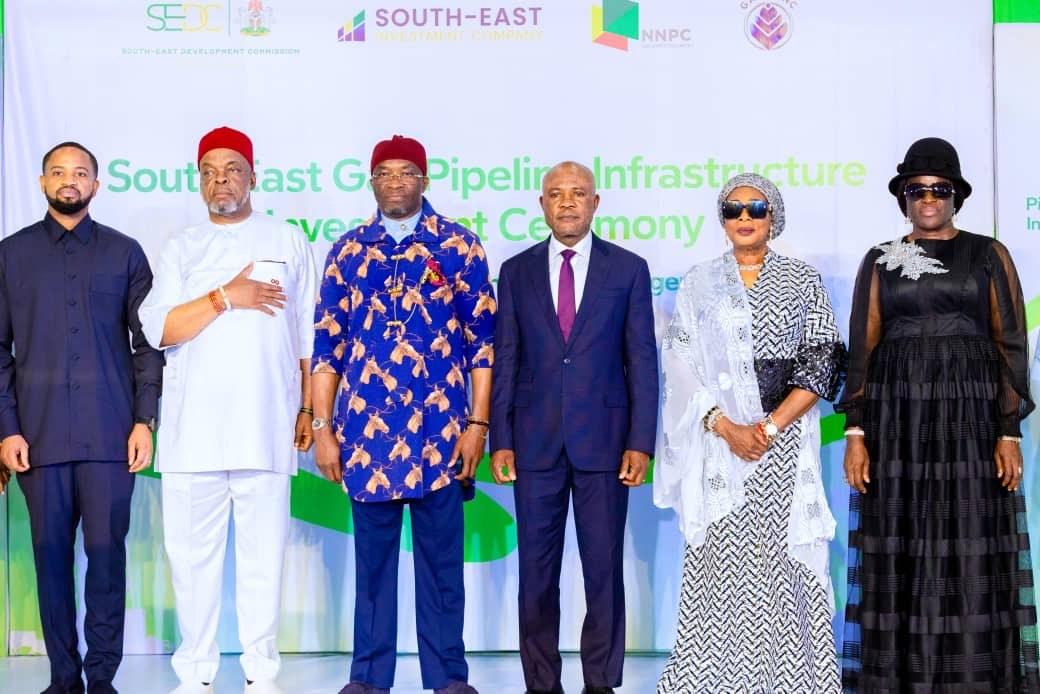
The investment agreement signed at the South-East Gas Infrastructure Investment and Project Development Ceremony at Hotel Presidential, Enugu, marks the beginning of a process that could reshape the region’s economic prospects. The initiative is being undertaken by the South-East Development Commission (SEDC), with the ambition of connecting gas resources to industrial and commercial centres in Abia, Anambra, Ebonyi, Enugu and Imo states.
President Bola Tinubu, represented at the event by Deputy Speaker of the House of Representatives, Benjamin Kalu, presented the project as a strategic investment capable of strengthening manufacturing, attracting private capital and creating employment.
His central argument was compelling: infrastructure must be judged by the economic activities it enables, not simply by the physical structures it produces.
But that is precisely where the real test begins. Nigeria has witnessed numerous ambitious infrastructure announcements whose economic promises were delayed by financing difficulties, administrative weaknesses, policy inconsistency and implementation failures. For the South-East gas project to become a genuine industrial turning point, it must overcome these familiar obstacles and demonstrate measurable benefits to businesses and ordinary citizens.
The opportunity is considerable. So, too, is the responsibility resting on the SEDC, the five state governments, federal institutions and the private investors expected to participate.
The 400-Kilometre Pipeline: Connecting Energy To Enterprise
The scale of the proposed network provides the first indication of its potential economic significance. According to the project organisers, approximately 150 potential customers have already been identified, with projected demand of 254 million standard cubic feet of gas per day.
These figures suggest that the initiative is being conceived around identifiable commercial demand rather than an infrastructure network searching for customers after construction. That is an important starting point for a project requiring substantial capital and long-term operational commitments.
However, the distinction between projected demand and actual consumption must not be overlooked. The 150 prospective customers will need to demonstrate that they can convert access to gas into commercially sustainable production. The project developers must establish how much demand is firm, how much depends on future factory expansion and how much will emerge only after new industrial facilities are developed.
This distinction matters because a pipeline's economic value depends on utilisation. Infrastructure that delivers gas consistently to functioning industries can generate revenue, stimulate production and support further investment. Infrastructure that is underutilised because customers cannot afford the fuel or lack the equipment to use it may struggle to recover its costs.
The SEDC must therefore align pipeline construction with the readiness of industrial customers, the availability of financing and the development of supporting infrastructure.
The proposed network could also help overcome a longstanding weakness in Nigeria's regional economic structure: the tendency for states to pursue industrial development independently, even where their markets, production chains and commercial interests are closely connected.
Gas infrastructure that crosses state boundaries offers an opportunity to develop a common industrial ecosystem in which businesses benefit from shared energy infrastructure, larger markets and more efficient supply chains.
That is the strategic importance of Tinubu's assertion that gas infrastructure should serve industries and markets rather than stop at political boundaries.
Why Gas Could Change The Manufacturing Equation
For manufacturers, energy is not simply another operating expense. It determines production schedules, machinery utilisation, product pricing, competitiveness and the capacity to expand.
Businesses dependent on expensive diesel generators frequently face a punishing combination of fuel costs, maintenance expenses, equipment replacement and uncertainty over energy availability. These costs are ultimately reflected in the prices consumers pay.
Where gas can be supplied reliably and competitively, industrial users may be able to reduce their dependence on diesel and other more expensive energy sources. Gas can power suitable industrial boilers, furnaces, generators and other equipment, depending on the requirements of each facility.
The benefits could extend to food processing, plastics, ceramics, metal fabrication, chemicals, textiles and other energy-intensive activities that offer opportunities for industrial expansion across the South-East.
Nevertheless, access to a pipeline does not automatically translate into affordable electricity or cheaper production. Manufacturers must invest in appropriate equipment, gas connections, safety systems and, where necessary, new power-generation facilities. Gas prices, transportation charges, supply contracts and the reliability of delivery will all influence the final cost.
Consequently, the success of the project will depend on whether delivered gas is commercially attractive compared with the alternatives available to businesses.
If the price is competitive and supply dependable, manufacturers could expand production, operate for longer hours, improve capacity utilisation and make more credible plans for investment. If prices are excessive or supply unreliable, the pipeline could fail to deliver its anticipated industrial benefits.
The Federal Government and SEDC must therefore focus not only on getting gas through the pipes but also on ensuring that businesses can afford to use it.
Aba, Nnewi And Onitsha: The Industrial Clusters To Watch
The proposed network could have its most immediate impact in existing manufacturing and commercial centres, particularly where established businesses already have the capacity to absorb additional energy supplies.
In Aba, Abia State, access to competitively priced gas could support manufacturing businesses producing garments, footwear, plastics, household goods and other consumer products. Many of these enterprises operate within supply chains that could benefit from more dependable energy and improved production efficiency.
The opportunity is to help businesses move beyond small-scale operations towards more mechanised production, consistent product quality and larger orders.
In Nnewi and Onitsha, Anambra State, industrial production, machinery, automotive components, trading and distribution provide a different but complementary foundation. More dependable energy could help existing manufacturers increase output while creating opportunities for suppliers, fabricators, logistics operators and other supporting businesses.
The gains would not necessarily be confined to large factories. Small and medium-sized enterprises could benefit indirectly when industrial customers expand their operations, purchase more locally produced inputs and generate additional demand for transport, maintenance, packaging and professional services.
Enugu, meanwhile, could strengthen its position as a centre for industrial investment, commercial services and regional coordination. Reliable energy infrastructure could make proposed industrial parks and manufacturing facilities more attractive to investors, provided land, transport, water, telecommunications and other essential services are also available.
In Ebonyi, agro-processing offers an important avenue for translating energy infrastructure into broader economic development. Rice milling, food preservation, processing and packaging could benefit from improved energy availability, helping farmers and processors capture more value from agricultural production.
Imo's gas resources, highlighted by the President as a potential source of supply for the wider regional economy, could provide a foundation for connecting energy production with downstream industrial demand.
But these opportunities will require careful technical and commercial planning. The government must publish a credible framework showing how the pipeline will connect supply sources to demand centres, how gas volumes will be allocated and how the five states will benefit from the investment.
The objective should be a network that reinforces the economic strengths of individual states while creating opportunities that none could achieve as effectively in isolation.
SEDC's First Major Test: Turning A Promise Into A Project
For the South-East Development Commission, the gas distribution initiative could become a defining measure of its institutional credibility.
Development commissions are often established amid high expectations, especially in regions where communities believe that inadequate infrastructure and limited public investment have constrained their economic progress. Their credibility, however, ultimately depends on the quality of their projects and the results they deliver.
Tinubu disclosed that the SEDC had committed $3 million to the project and established a framework for mobilising additional investments from state governments, institutions and private investors.
That commitment is significant as an indication of institutional participation. Yet, against an initial project requirement of approximately $100 million, it represents only a fraction of the financing needed.
The central challenge is therefore to assemble the remaining capital without creating unsustainable financial obligations or allowing the project to stall after its launch.
Private investors will need clear answers on ownership, governance, tariffs, gas supply agreements, construction risks, expected revenues and the framework for recovering their investments. Lenders will require confidence that the project can generate predictable cash flows over an extended period.
The SEDC must also establish a transparent procurement process, independent financial oversight, credible engineering supervision and publicly accessible implementation milestones.
A project of this magnitude should have clearly defined responsibilities, deadlines and performance indicators. Investors and citizens should be able to determine how much has been raised, how much has been spent, which sections have been completed and when industrial customers can realistically expect deliveries.
The President's insistence on commercial discipline and measurable outcomes is therefore particularly important.
The Commission should resist the temptation to measure success by the number of agreements signed, meetings held or ceremonies organised. Its true achievement will be demonstrated when the infrastructure is operational, industries are connected and the regional economy begins to experience tangible gains.
The Jobs Promise: From Pipeline Construction To Permanent Employment
One of the strongest arguments for the project is its potential to generate employment, both during construction and throughout the wider industrial economy.
Pipeline construction can create opportunities for engineers, technicians, construction workers, transport operators, surveyors, security personnel and local suppliers. Depending on the project's procurement arrangements, businesses across the region could participate in supplying materials, equipment and professional services.
However, construction employment is only the first layer of the opportunity. Many of those jobs will be temporary.
The more consequential gains would emerge if reliable energy encourages businesses to expand, existing factories to increase production and new industrial enterprises to establish operations.
A manufacturer that expands production may require additional machine operators, technicians, accountants, sales personnel, warehouse workers and distribution staff. Suppliers may hire more workers to meet increased demand, while transport and logistics businesses could expand to move larger volumes of goods.
These indirect effects can spread the benefits of industrial investment well beyond the communities immediately surrounding the pipeline.
But the jobs will not materialise automatically. They depend on the commercial viability of the businesses using the gas, the availability of investment capital, the skills of the workforce and the existence of markets for the products manufactured.
The five state governments should therefore complement the pipeline project with technical training, apprenticeship programmes and practical support for small and medium-sized enterprises.
Local content requirements, where appropriate and commercially feasible, could help ensure that construction and subsequent operations generate opportunities for South-East businesses and workers.
The SEDC should also publish employment targets that distinguish temporary construction jobs from permanent positions created by operating the network and expanding industrial activity.
That would help the public assess whether the project is delivering sustainable economic value rather than relying on broad promises about job creation.
Why The South-East Vision 2050 Matters
The gas project will have a greater chance of success if it becomes part of a coherent long-term economic strategy rather than an isolated infrastructure undertaking.
Tinubu cited the South-East Vision 2050 framework, supported by Vice-President Kashim Shettima and the region's governors, as a foundation for coordinated development. He also referred to his approval of the South-East Investment Company as part of efforts to mobilise private capital for strategic projects.
The significance of these initiatives lies in their potential to coordinate infrastructure, investment and industrial policy over a longer horizon.
A regional gas network should be linked to the development of industrial parks, transport corridors, export facilities, agricultural processing centres and skills-development programmes. Investors are more likely to establish factories where energy, logistics, labour and market access are available within a dependable operating environment.
The proposed South-East Investment Company could potentially support this effort by helping prepare bankable projects, attract investors and structure financing arrangements. However, its effectiveness will depend on sound governance, clear investment criteria and the ability to distinguish commercially viable projects from politically attractive but financially weak proposals.
Regional cooperation will also be essential. The five state governments must resist the temptation to compete for disproportionate shares of the project at the expense of its overall viability.
The distribution of infrastructure should reflect demonstrable demand, supply economics and long-term development potential, while ensuring that less-developed areas are not permanently excluded from future expansion.
A functioning common market requires more than a pipeline crossing five state boundaries. It requires policies that enable businesses to invest, trade, move goods and access markets with minimal administrative friction.
Environmental Responsibility And Community Trust
The economic argument for gas infrastructure must be accompanied by rigorous attention to environmental protection, public safety and community relations.
Pipeline projects require careful route selection, land-access arrangements, environmental assessments, construction monitoring and effective emergency-response systems. Communities along the proposed route need clear information about potential impacts, compensation arrangements and the channels available for resolving disputes.
The project must also address the risks associated with gas leaks, fire, sabotage and inadequate maintenance. These are not peripheral considerations; they are essential to the safety of workers, surrounding communities and the long-term viability of the investment.
Gas can serve as a useful transition fuel in certain industrial applications, particularly where it displaces more carbon-intensive fuels. However, methane leakage can undermine its climate benefits, making sound engineering, leak detection and maintenance indispensable.
The developers should also assess how the network fits into Nigeria's longer-term energy transition, including opportunities for efficiency improvements and the eventual integration of lower-carbon energy sources where commercially feasible.
Public trust will be strengthened when communities see the project as a shared economic opportunity rather than an external development imposed on them.
The Financing Question Cannot Be Ignored
The initial $100 million requirement is substantial, and the eventual cost of the entire network could depend on detailed engineering, route conditions, land acquisition, regulatory requirements and the facilities needed to connect industrial customers.
The government must clarify whether the announced amount covers the complete proposed 400-kilometre network or an initial phase of a larger programme. That distinction is essential for evaluating the total financing requirement and the timetable for delivering benefits.
The project will also require dependable gas supply arrangements. Physical infrastructure alone cannot guarantee uninterrupted deliveries if upstream production, processing, transportation or contractual obligations are inadequate.
Financing and supply planning must therefore proceed together. A pipeline without dependable gas is an expensive asset without its intended economic purpose, while a reliable supply that cannot reach industrial customers leaves productive potential unrealised.
The Federal Government should work with relevant gas suppliers, infrastructure operators, regulators, state authorities and private investors to establish a transparent commercial framework.
The investment agreement is an important first step, but the public needs subsequent evidence of financial closure, construction readiness and firm customer commitments.
Peter Mbah's Endorsement And The Politics Of Development
Enugu State Governor Peter Mbah's commendation of Tinubu for establishing the SEDC highlights the political significance of the project.
Mbah described the Commission as an institution whose time had come, arguing that the regional industrialisation aspiration had existed for decades before Tinubu established the body.
His endorsement reflects a broader reality: infrastructure that produces visible economic benefits can strengthen cooperation between federal and state governments, even where political considerations might otherwise encourage competition.
Nevertheless, the long-term value of the project should not depend on political endorsements or the personalities associated with its launch. Its performance must be assessed against objective standards that remain relevant regardless of changes in government.
The South-East's industrialisation is too important to become a short-term political talking point. Federal support, regional ownership and private-sector participation should be judged by their ability to sustain the project beyond the inauguration stage.
Conclusion: The Real Test Is What Happens After The Agreement
The proposed South-East gas distribution network offers a credible opportunity to connect the region's entrepreneurial strengths with the energy infrastructure required for large-scale industrial development.
If successfully implemented, the project could reduce some manufacturers' dependence on costly alternative fuels, support existing industrial clusters, improve the attractiveness of new investments and create opportunities for employment across the five states.
Its wider significance lies in the possibility of moving the South-East from a predominantly enterprise-driven commercial economy towards a more integrated manufacturing and value-addition hub.
But that transformation will require more than political commitment. It demands bankable financing, dependable gas supply, competitive tariffs, transparent procurement, technically sound construction, effective regulation and close cooperation among the federal government, SEDC, state governments and private investors.
The region also needs complementary investments in roads, electricity distribution, industrial skills and access to finance. Gas can address an important constraint, but it cannot independently resolve every obstacle confronting manufacturers.
Tinubu's declaration that the government is investing in the industries, businesses and jobs the pipeline will make possible captures the right ambition. The challenge is to turn that ambition into measurable outcomes.
The SEDC must now demonstrate that its $3 million commitment can help unlock the larger financing required, that the 150 prospective customers represent viable demand and that the proposed network can deliver gas at prices businesses can afford.
The five state governments must ensure that the infrastructure serves a genuinely regional economic strategy, while the private sector must be prepared to invest in productive capacity that converts energy into goods, services and employment.
Ultimately, the success of the South-East gas project will not be determined by the length of the pipeline, the size of the investment agreement or the prominence of the officials who signed it.
It will be determined by whether a manufacturer in Aba can produce more competitively, whether an industrial enterprise in Nnewi can expand, whether a processor in Ebonyi can add value to agricultural produce, whether new businesses emerge in Enugu and Imo, and whether more people secure productive, sustainable employment.
That is the difference between building infrastructure and building an industrial economy.
For the South-East, the $100 million initiative could mark the beginning of an important new chapter. The responsibility now rests with its promoters to ensure that the promise of gas becomes the reality of production, investment and shared prosperity.