PublicSphere Live
Energy
KPMG, WIEN Partner to Establish Nigeria’s First Energy Sector Gender Inclusion Benchmark
The initiative will track women’s representation, strengthen accountability, promote credible industry awards and expand access to board appointments and business opportunities across the oil, gas and power sectors.
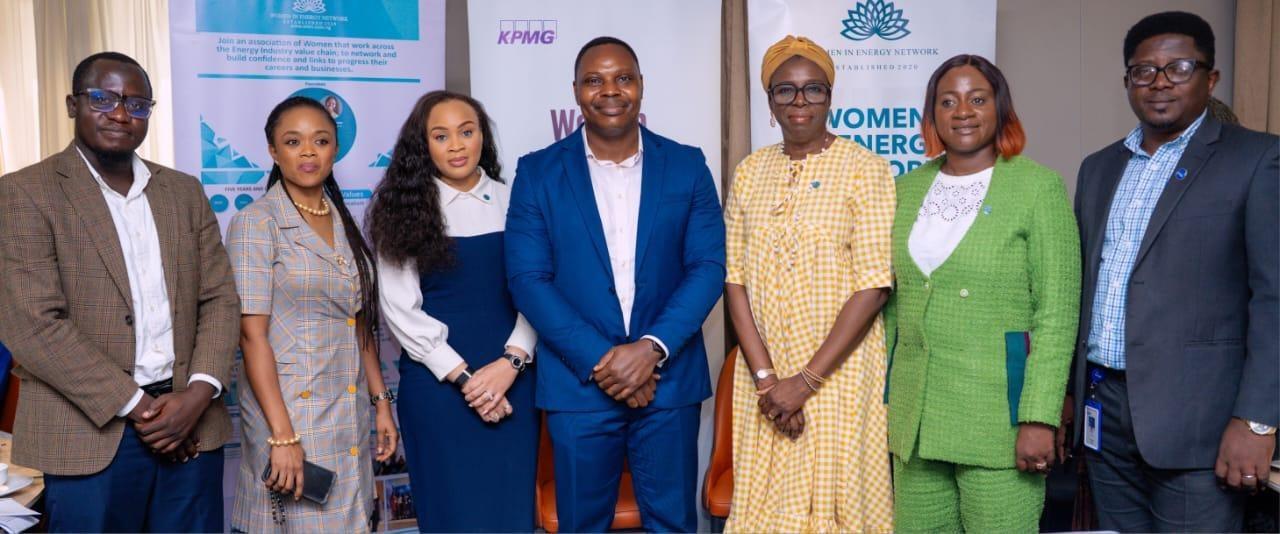

The Women in Energy Network (WIEN) has partnered with KPMG Advisory Services to establish Nigeria’s first industry benchmark and standards for measuring diversity, equity and inclusion (DEI) across the oil, gas and power sectors, in a move aimed at accelerating women’s participation in the country’s energy industry.
The partnership, formalised through a memorandum of understanding (MoU) signed on Tuesday, is expected to provide a structured framework for measuring women’s representation, assessing workplace inclusion and tracking progress towards greater gender diversity across the energy value chain.
Under the agreement, the two organisations will develop a DEI Benchmark Report, introduce independent due diligence procedures for WIEN’s industry awards and establish directories of qualified female board candidates and women-owned businesses.
The initiative represents an effort to move conversations about gender inclusion beyond general commitments towards measurable outcomes, stronger institutional accountability and improved access to leadership and commercial opportunities for women operating across the industry.
By introducing an evidence-based assessment of industry practices, WIEN and KPMG hope to provide energy companies and other stakeholders with the information required to evaluate their performance, identify gaps and implement policies that promote a more inclusive working environment.
Speaking at the signing ceremony, WIEN President, Mrs Eyono Fatai-Williams, said the collaboration would provide the evidence needed to inform policy decisions, encourage accountability and monitor progress in advancing diversity, equity and inclusion across Nigeria’s energy industry.
She explained that the proposed benchmark would establish a basis for periodic reporting, enabling stakeholders to assess the representation of women across different segments of the sector and identify areas requiring deliberate intervention.
According to her, the report would provide an evidence-based assessment of industry performance while highlighting opportunities for organisations to improve their policies, governance structures and workplace practices.
Fatai-Williams said the initiative was particularly important in a sector where women’s participation and advancement into senior leadership positions remained important issues for industry stakeholders.
She noted that reliable data would help organisations move beyond broad statements of support for gender equality and begin to evaluate whether their policies and practices were delivering measurable results.
The benchmark is expected to provide a reference point against which future developments in women’s participation can be assessed, giving companies a basis for examining their progress over time.
DEI Benchmark To Drive Accountability
A major component of the partnership is the development of the DEI Benchmark Report, which will assess gender representation and inclusion across the oil, gas and power sectors.
KPMG will work with WIEN to collect and validate the data required for the report, with the initial edition expected to establish a baseline for subsequent assessments.
The baseline will be important in determining the existing level of women’s representation and providing a foundation for measuring changes in recruitment, professional development, workplace inclusion and access to leadership opportunities.
For participating organisations, the report is expected to offer a framework for examining whether internal policies, decision-making processes and governance arrangements provide women with equitable opportunities to contribute, develop their careers and advance professionally.
The findings could also help organisations identify areas where targeted interventions are required, including the development of inclusive workplace policies, improved career progression pathways and broader access to leadership responsibilities.
Beyond individual companies, the benchmark is expected to provide industry stakeholders with a common reference point for discussing progress and identifying practices that could support greater participation by women.
Such an approach would also make it easier to distinguish between commitments to gender inclusion and demonstrable improvements in workplace representation and professional advancement.
Fatai-Williams said the objective was to encourage evidence-based decision-making and strengthen accountability for creating opportunities for women throughout the energy value chain.
The report is expected to be unveiled at WIEN’s gala night scheduled for November 11 at the Metropolitan Club, Victoria Island, Lagos.
Its presentation is anticipated to provide industry players with an initial assessment of gender representation and inclusion, while establishing a foundation for monitoring future progress.
KPMG To Strengthen Credibility Of Wien Industry Awards
Another key aspect of the agreement is the introduction of independent due diligence and vetting procedures for the WIEN Industry Awards.
Under the arrangement, KPMG will support the assessment of nominees through relevant background checks and integrity and reputational reviews.
The process is designed to strengthen confidence in the awards by ensuring that the professional achievements, standing and contributions of individuals and organisations recognised for their impact on the energy industry are appropriately assessed.
Fatai-Williams said the involvement of KPMG would help reinforce the credibility of the awards and improve confidence in the selection process.
Industry awards can play an important role in recognising excellence, encouraging professional development and highlighting individuals and organisations whose contributions advance the sector.
However, the credibility of such recognition depends on transparent processes, appropriate verification and confidence that recipients have been selected based on relevant criteria.
The proposed due diligence framework is therefore expected to provide an additional layer of assurance for WIEN’s awards, helping to strengthen the integrity of the recognition process.
It could also enhance the value of the awards to recipients, industry organisations and other stakeholders by reinforcing the importance of professional standards, integrity and demonstrable contributions to the sector.
The arrangement forms part of the broader partnership objective of improving accountability and establishing more robust processes for recognising excellence within Nigeria’s energy industry.
Directory To Open Doors To Boardrooms
Beyond measuring performance and strengthening industry recognition, the partnership will establish the WIEN Board-Ready Candidates Directory to improve the visibility of qualified women seeking board appointments.
The directory is intended to make experienced and suitably qualified female professionals more accessible to organisations searching for board members and other senior-level talent.
Fatai-Williams said the initiative would help address the challenge of visibility by providing a structured directory through which organisations could identify women with the appropriate qualifications and experience for board positions.
She explained that qualified women seeking appointments would be assessed against relevant criteria, helping organisations identify potential candidates whose professional backgrounds and capabilities align with their requirements.
The initiative is expected to support broader consideration of women in corporate governance and leadership selection, particularly in a sector where women have historically been underrepresented in many senior positions.
By improving access to information about qualified female professionals, the directory could help companies widen their pool of potential candidates when filling board vacancies.
It is also expected to support efforts to build a stronger pipeline of women for leadership responsibilities across the oil, gas, power and related industries.
The directory, however, is intended to improve visibility and accessibility rather than automatically guarantee appointments. Organisations will still need to assess candidates against their governance requirements, professional competencies and other relevant considerations.
The initiative reflects WIEN’s broader objective of ensuring that women with the requisite experience and capabilities have better opportunities to be considered for positions where they can contribute to strategic decision-making and organisational growth.
Women-Owned Businesses To Gain Greater Visibility
The agreement will also lead to the establishment of the WIEN Business Owners Directory, designed to improve the visibility of eligible women-owned enterprises seeking commercial opportunities across the energy value chain.
According to Fatai-Williams, the directory will assess participating businesses against agreed qualification criteria and relevant industry requirements.
The objective is to make capable women-owned businesses more accessible to organisations searching for suppliers, contractors, service providers and potential business partners.
The energy industry encompasses a broad range of commercial activities, including exploration and production, petroleum processing, logistics, equipment supply, engineering, maintenance, electricity generation and distribution, as well as renewable energy development.
Women-owned businesses operating in these areas could benefit from a structured platform that helps prospective clients identify their capabilities and assess their suitability for relevant opportunities.
The directory is expected to improve the visibility of such enterprises and facilitate connections with companies and institutions seeking qualified business partners.
Fatai-Williams said the initiative would help expand opportunities for women entrepreneurs by making their businesses easier to identify and assess.
The emphasis on qualification criteria is also intended to ensure that inclusion is accompanied by appropriate standards, allowing organisations to identify businesses that meet relevant professional and operational requirements.
For women-owned enterprises, greater visibility could support efforts to build commercial relationships, access new markets and participate more actively in the energy industry's supply chains.
The initiative also recognises that women's participation in the sector extends beyond employment and professional leadership to entrepreneurship, investment and the provision of goods and services.
By combining the business directory with the board-ready candidates directory, the partnership seeks to address two important dimensions of participation: women's access to corporate leadership and their ability to compete for commercial opportunities.
KPMG: Women Are Contributing Across The Energy Value Chain
Speaking on behalf of KPMG, the firm's Associate Director, Chukwuemeke Igabari, said the partnership would help ensure that women's contributions to the energy industry receive greater recognition and support.
He observed that although the sector had traditionally been male-dominated, women continued to make significant contributions across several areas, including logistics, upstream and downstream petroleum operations, electricity and renewable energy.
His remarks underscored the breadth of women's involvement in an industry often associated with technical and operational roles that have historically been occupied predominantly by men.
Women contribute across professional, commercial, administrative, technical and managerial functions, while their participation in entrepreneurship and business ownership also provides opportunities to support the industry's development.
Igabari said the proposed benchmark would help organisations evaluate whether their policies, processes and governance structures provided women with equitable opportunities to participate, develop professionally and advance into leadership positions.
He added that KPMG would work with WIEN to collect and validate the data required for the report.
The initial report is expected to establish a baseline against which future editions can measure progress, enabling organisations to assess changes in representation and inclusion over time.
The data-driven approach is intended to give companies a clearer understanding of their current position and help them determine where changes to policies, recruitment practices, professional development programmes and leadership pathways may be necessary.
For KPMG, the collaboration provides an opportunity to apply its advisory expertise to an industry-wide initiative focused on strengthening accountability and promoting more inclusive organisational practices.
A New Framework For Measurable Inclusion
The WIEN-KPMG partnership comes as the energy industry continues to navigate changes in technology, investment priorities, operational models and the transition towards cleaner sources of energy.
As these developments reshape the sector, access to a broad range of professional skills, leadership capabilities and entrepreneurial talent remains important to organisational performance and long-term growth.
The partnership seeks to strengthen the participation of women by addressing some of the institutional and information-related barriers that can limit access to leadership and business opportunities.
Its four principal interventions—the DEI Benchmark Report, independent award due diligence, the Board-Ready Candidates Directory and the Business Owners Directory—are designed to complement one another.
The benchmark will provide information on the industry's performance; the awards framework will strengthen confidence in professional recognition; the board directory will improve the visibility of qualified women; and the business directory will help connect eligible women-owned enterprises with commercial opportunities.
Together, the initiatives are intended to create a more structured approach to identifying gaps, recognising achievement and expanding access to opportunities.
The success of the partnership will depend partly on the quality and reliability of the data collected, the participation of energy companies and the extent to which organisations use the findings to improve their practices.
The publication of the initial benchmark will therefore be an important first step, providing a reference point for subsequent reporting and enabling stakeholders to evaluate whether commitments are translating into tangible improvements.
The November 11 unveiling of the report at WIEN’s gala night is expected to bring the initiative into sharper focus among industry participants and other stakeholders.
Ultimately, the partnership reflects a shared commitment by WIEN and KPMG to building a more inclusive and accountable energy industry in which women's professional capabilities, leadership potential and entrepreneurial contributions receive greater recognition.
By establishing common standards for measurement and creating practical platforms for identifying qualified women and women-owned businesses, the two organisations aim to help expand women's participation in the industry and strengthen the evidence base for future inclusion policies.
The initiative's long-term significance will lie not only in documenting existing representation but also in encouraging organisations to demonstrate measurable progress in providing women with opportunities to contribute to Nigeria's energy sector.