PublicSphere Live
News
Tinubu Seeks Senate Approval for $20.5bn, €1.05bn External Loans
The letter was read during plenary by the President of the Senate, Godswill Akpabio, who subsequently referred the request to the Senate Committee on Local and Foreign Debts for detailed examination.
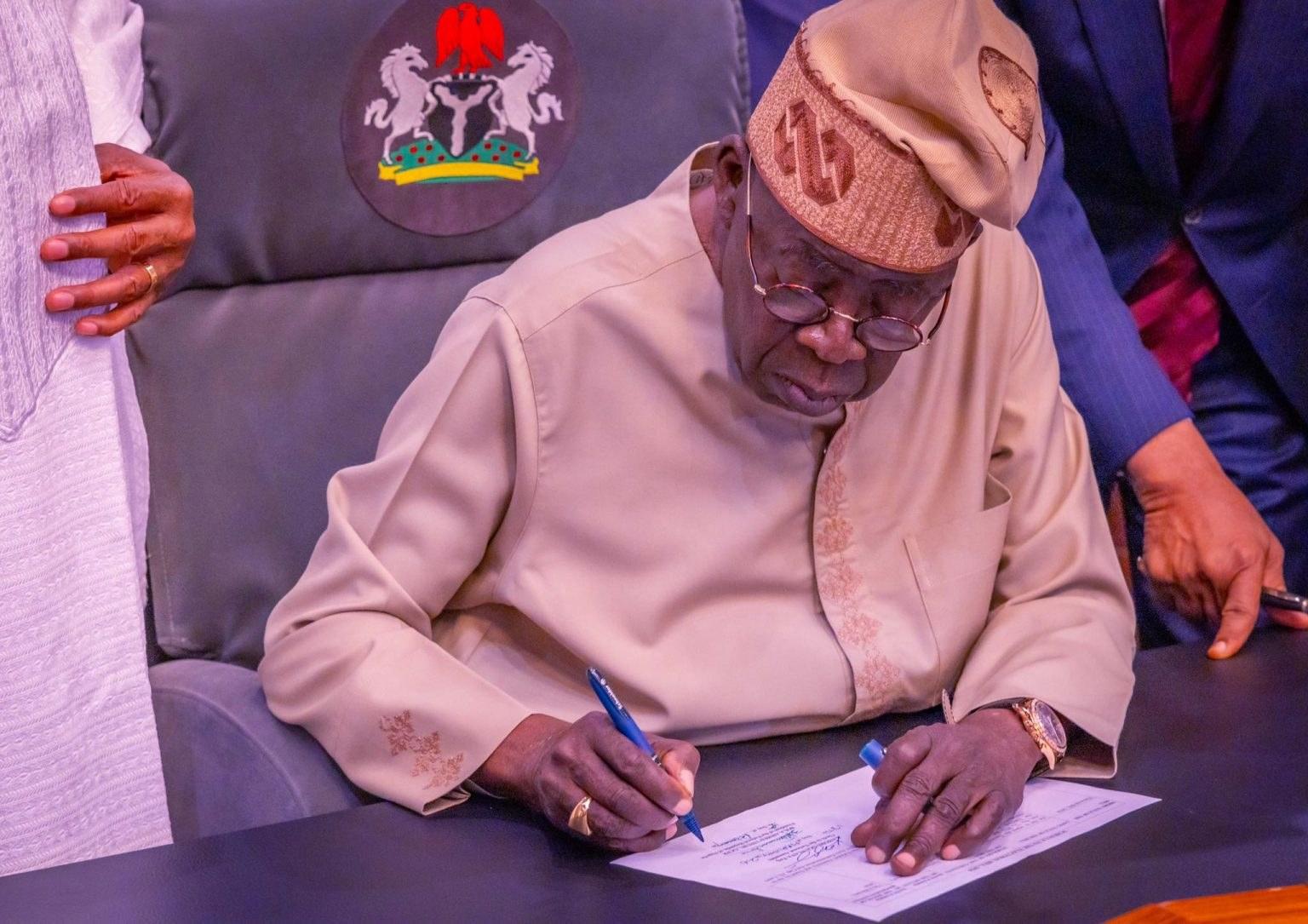
ABUJA — President Bola Tinubu has asked the Senate to approve fresh external borrowing of $20.5 billion and €1.05 billion, estimated at about N29.12 trillion, to finance projects under the Federal Government’s 2026–2027 supplementary borrowing plan.
The President’s request was conveyed in a letter to the Senate on Tuesday, October 27, 2026, seeking the National Assembly’s consideration and early approval of the proposed loans to facilitate the timely implementation of planned projects across critical sectors of the economy.
The letter was read during plenary by the President of the Senate, Godswill Akpabio, who subsequently referred the request to the Senate Committee on Local and Foreign Debts for detailed examination.
In the letter, Tinubu wrote: “I submit the attached Federal Government 2026–2027 Supplementary External Borrowing Plan for consideration and early approval of the National Assembly to ensure prompt implementation of our projects.”
According to Akpabio, the proposed borrowing is intended to address Nigeria’s infrastructure deficit, particularly in power, transportation, healthcare, education, agriculture and water supply, among other priority areas.
The President’s request comes amid the Federal Government’s efforts to mobilise additional resources for infrastructure development, improve public services and stimulate economic activities through targeted investments.
Infrastructure, Food Security Top Priorities
Akpabio told senators that the projects earmarked under the borrowing framework had undergone technical and economic assessments to determine their viability and potential contributions to national development.
He said the proposed investments were expected to support poverty reduction, skills development, entrepreneurship and national food security.
The emphasis on infrastructure reflects the government’s position that improved power supply, transportation networks, healthcare facilities, educational infrastructure and agricultural productivity are essential to expanding economic opportunities and strengthening Nigeria’s productive capacity.
Investments in the power sector, for instance, are expected to help address electricity supply constraints that continue to affect households, businesses and industrial operations. Improved transportation infrastructure could also reduce logistics costs, facilitate the movement of goods and strengthen connections between agricultural production centres and markets.
Similarly, additional investment in healthcare, education and water supply could improve access to essential services, while agricultural projects could contribute to food availability and the livelihoods of farmers.
However, the extent to which the proposed borrowing will deliver these benefits will depend on the projects eventually approved, the terms of the loans, implementation timelines and the effectiveness of monitoring and accountability mechanisms.
Senate Committee To Review Request
Following the presentation of the presidential letter, Akpabio referred the borrowing plan to the Senate Committee on Local and Foreign Debts, chaired by Senator Haruna Manu, for detailed scrutiny.
The committees on Appropriations and Finance are also expected to support the review.
The legislative examination is expected to establish the scope of the borrowing request and assess its relationship with earlier government financing plans.
Akpabio noted that some aspects of the borrowing framework had featured in previous borrowing plans approved for the 2025–2027 period.
He nevertheless stressed the need for the relevant committee to examine the latest request before the Senate takes further legislative action.
The review is an important stage in the approval process, as lawmakers will need to establish the projects covered by the proposed financing and determine how the new borrowing fits into the Federal Government’s broader fiscal framework.
The committee’s findings are expected to inform the Senate’s consideration of the request before any decision on approval.
Debt Sustainability In Focus
The proposed $20.5 billion and €1.05 billion loans are likely to intensify public scrutiny of Nigeria’s borrowing strategy, particularly against the background of competing demands on government revenue and the cost of servicing existing debts.
While external borrowing can provide funding for major infrastructure projects that may be difficult to finance entirely from annual budgetary allocations, it also creates future repayment obligations that must be managed through government revenue and other financing sources.
The economic impact of the proposed loans will therefore depend not only on the amount borrowed but also on the interest rates, repayment periods, grace periods and other conditions attached to the facilities.
The productive value of the projects financed will also be crucial. Investments that improve electricity generation and distribution, reduce transportation costs, increase agricultural output and strengthen industrial capacity could support economic growth and expand the government’s revenue base over time.
Conversely, delays in project execution, cost overruns, weak oversight or investments that fail to generate their expected economic benefits could increase the country’s debt burden without delivering commensurate returns.
For this reason, transparency in the selection of projects, disclosure of loan terms and regular reporting on the utilisation of borrowed funds will be central to assessing the long-term value of the proposed financing.
Implementation And Accountability
The President’s request places the National Assembly at the centre of the next stage of the borrowing process, with the relevant committees expected to examine the details before further legislative action.
Beyond the approval process, the implementation of the projects will determine whether the proposed borrowing translates into tangible improvements in the lives of Nigerians.
For citizens and businesses, the key indicators will include better electricity supply, improved roads and transport systems, access to quality healthcare and education, reliable water supply, stronger agricultural production and opportunities for employment and entrepreneurship.
The government will also face the challenge of ensuring that the benefits of the proposed investments are sufficiently broad to support poverty reduction and improve living standards.
As the Senate begins its review, attention will focus on the specific projects to be financed, the conditions attached to the external loans and the safeguards put in place to ensure that the funds are used for their intended purposes.
The proposed borrowing plan must still undergo legislative scrutiny. Its eventual approval and implementation will determine how the Federal Government intends to balance its infrastructure ambitions with the need to maintain fiscal discipline and sustainable debt management.