PublicSphere Live
Business
Tinubu’s 90-Day Economic Plan: A Welcome Promise, But Nigerians Need Results, Not Election Gimmicks
The National Economic Council must turn its latest economic blueprint into measurable relief for households, or risk deepening public distrust in government’s reform promises
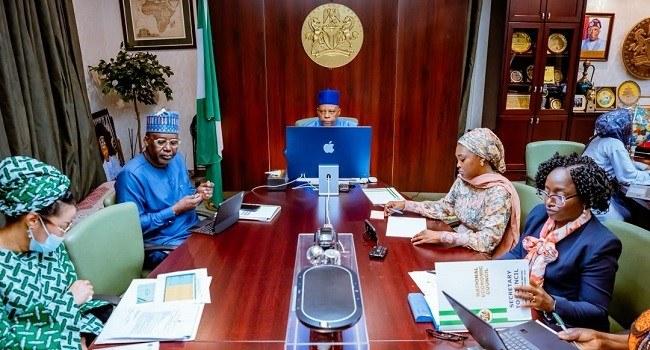
Nigeria’s economic recovery cannot be measured solely by official declarations, improved macroeconomic indicators or the optimism of policymakers gathered around conference tables. Its real test lies in the daily experiences of millions of Nigerians who struggle to feed their families, pay rent, transport themselves to work, finance their children’s education and access healthcare without sinking deeper into poverty. It is against this human reality that the National Economic Council’s endorsement of a 90-day economic action plan proposed by the Federal Ministry of Finance must be examined.
The plan, endorsed at the Council’s 161st meeting on October 22, 2026, under the chairmanship of Vice President Kashim Shettima, identifies five priority areas: food affordability, tax harmonisation, completion of high-impact projects, resolution of investment bottlenecks and regulated household support. It also proposes a national dashboard for tracking projects and monitoring the utilisation of proceeds from fuel subsidy removal, while setting out longer-term objectives that include reducing inflation and interest rates to single digits by 2027.
On paper, the initiative is timely and addresses some of the most pressing concerns confronting the Nigerian economy. Its emphasis on food prices, transportation, employment, investment and accountability recognises that economic reforms must eventually improve the material circumstances of ordinary citizens. The Vice President’s insistence that governments should judge the success of the National Compressed Natural Gas, CNG, Bus Initiative by affordability and accessibility rather than the number of vehicles deployed is particularly commendable.
Yet, commendable intentions are not the same as effective policies, and policy announcements are certainly not equivalent to results. The fundamental question is whether this 90-day programme will produce visible, verifiable improvements in the lives of Nigerians or become another government initiative whose publicity exceeds its impact.
With the 2027 general election approaching, the Federal Government and state governments must understand that citizens are increasingly interested in what policies deliver rather than what politicians promise. A programme designed to alleviate hardship must not be reduced to an instrument for political messaging, an opportunity for officials to take credit or a campaign-season demonstration of concern for the electorate. Nigerians need economic relief that is genuine, measurable and sustainable.
The Merits: A Necessary Shift Towards Household Welfare
One of the most encouraging features of the plan is its recognition that the benefits of economic reforms must reach households and businesses. This is an important acknowledgement of a problem that has accompanied Nigeria’s reform programme: the gap between the economic adjustments undertaken by government and the relief experienced by the population.
The removal of the petrol subsidy and the unification of foreign exchange arrangements were intended to address longstanding fiscal distortions, reduce opportunities for arbitrage, improve resource allocation and create conditions for investment and economic growth. However, the immediate consequences for many Nigerians included higher transportation costs, increased food distribution expenses, rising production costs and pressure on disposable incomes.
Even where reforms eventually improve government finances or encourage private investment, their political and social legitimacy depends substantially on how the costs and benefits are distributed. An economy cannot be declared healthy merely because certain financial indicators improve while large numbers of households remain unable to afford adequate food.
The proposed 90-day plan is therefore right to place food affordability at the centre of its priorities. Food occupies a substantial share of household expenditure, especially among low-income families. When prices of staple commodities rise faster than earnings, households are forced to reduce consumption, withdraw children from certain opportunities, postpone medical treatment or borrow to meet basic needs.
Consequently, an intervention that successfully reduces the cost of staple foods could provide immediate and meaningful relief. It could also help moderate pressure on household budgets and improve confidence in the government’s economic direction.
However, the Federal Government must go beyond identifying food affordability as a priority. It must explain precisely how it intends to achieve it. Will the programme address transport costs, agricultural inputs, storage facilities, insecurity, market concentration, import constraints or the financial difficulties confronting farmers? Will it improve access to fertilisers, seeds, irrigation equipment and affordable agricultural credit? Will it support local processing and reduce the losses that occur between farms and markets?
These questions matter because food inflation is not resolved through official appeals to traders or temporary price-control campaigns. Sustainable affordability requires improvements across the entire agricultural value chain, from production and storage to processing, transportation, distribution and retail.
The second merit is the plan’s emphasis on removing investment bottlenecks. Nigeria desperately needs investment that expands productive capacity, creates employment, increases domestic supply and reduces dependence on imported goods. Businesses cannot operate efficiently when they face unpredictable regulations, multiple taxation, expensive credit, unreliable electricity, inadequate roads and administrative delays.
A serious programme that identifies and eliminates these obstacles could improve the operating environment for manufacturers, farmers, transport operators, technology companies and small businesses. It could also encourage investors to commit capital to sectors capable of generating jobs and increasing domestic production.
But the quality of investment matters as much as its quantity. Government should prioritise investments that create productive employment, strengthen local supply chains, transfer skills, expand exports and improve the availability of essential goods. The mere announcement of investment commitments, without evidence of capital deployed, factories operating, jobs created and products reaching markets, would be an inadequate measure of success.
Tax harmonisation is another potentially important component. Nigerian businesses and individuals often complain about overlapping levies, inconsistent collection practices and uncertainty over their tax obligations. A coordinated system could reduce the cost of compliance, discourage arbitrary demands by government agencies and improve the predictability of the business environment.
For small businesses already struggling with expensive electricity, rent, transport and working capital, eliminating duplicative taxes could provide meaningful relief. It could also improve voluntary compliance by making the tax system more transparent and credible.
Nevertheless, tax harmonisation must not become a euphemism for increasing the overall tax burden or transferring the fiscal difficulties of government to citizens who are already under pressure. The objective should be to simplify taxation, widen compliance fairly, eliminate duplication and protect low-income earners and vulnerable businesses.
The commitment to complete high-impact projects is equally relevant. Nigeria has suffered from abandoned projects, delayed infrastructure, inflated costs and repeated budgetary commitments that do not always translate into completed assets. Concentrating on projects that can be finished quickly and that directly benefit citizens would be a more sensible use of limited public resources than spreading funds thinly across numerous new initiatives.
A completed rural road can connect farmers to markets. A functioning health centre can reduce the distance families travel for treatment. Reliable electricity can lower production costs. Efficient public transport can improve access to employment and education. Such outcomes are more valuable than impressive announcements about projects that remain unfinished.
Finally, the proposed national project dashboard offers an opportunity to strengthen public accountability. If properly designed, it could allow citizens to see the projects being funded, their approved budgets, amounts released, implementation timelines, contractors, physical progress and the outcomes expected from them.
Its proposed attention to the utilisation of fuel subsidy removal proceeds is particularly important. Nigerians deserve to know how savings or additional revenues associated with the subsidy policy are being accounted for and spent. Transparency in this area could help restore confidence in public finances and establish a clearer connection between economic sacrifices and public benefits.
The Demerits: A Plan That Risks Becoming Another Declaration
Despite these merits, the report leaves important questions unanswered. The most obvious weakness is the absence of sufficient publicly disclosed operational details.
The announcement identifies priorities but does not provide a comprehensive breakdown of expenditure, funding sources, implementation deadlines for individual interventions, measurable targets or the agencies responsible for delivering each result. Nor does it specify the baseline against which improvements will be measured.
Without such information, Nigerians cannot determine whether the programme is ambitious, adequately financed or realistically achievable within 90 days.
A government can announce a food affordability initiative, but how many households will benefit? How much should staple food prices fall, in which markets and by what date? How many kilometres of priority roads will be completed? How many buses will be operational, on which routes and at what fares? How many investment bottlenecks will be eliminated, and how many jobs will result?
These are not minor administrative questions. They distinguish a serious economic intervention from a political declaration.
A 90-day period can be sufficient to remove some administrative obstacles, begin targeted household support, publish audited project information, improve transport services on selected routes and accelerate projects nearing completion. It is not, by itself, a credible guarantee that Nigeria will resolve its structural food production challenges, significantly reduce the cost of living nationwide or achieve sustainable economic recovery.
The danger is that the deadline could encourage government officials to pursue easily publicised activities rather than the difficult structural changes required to improve living standards. Distributing a limited number of food packages may produce photographs and headlines, but it will not necessarily reduce the prices paid by millions of consumers. Commissioning a handful of buses will not transform public transportation if operating costs, maintenance, fuel supply and fare regulation remain unresolved.
The plan must therefore distinguish between emergency relief and structural reform. Both are necessary, but they have different timelines, funding requirements and performance indicators.
Another weakness is the risk of insufficient coordination between federal and state governments. The NEC comprises political and administrative leaders who have different budgets, priorities and implementation capacities. Endorsing a common plan does not automatically ensure that all states will implement it with equal urgency or integrity.
Some states may have better fiscal resources, administrative capacity and infrastructure than others. Others may struggle to fund counterpart contributions, maintain transport fleets or deliver social support programmes effectively. Without clear agreements on responsibilities and funding, the initiative could produce uneven results across the federation.
There is also a potential problem of political discretion in selecting beneficiaries, allocating buses, choosing projects and distributing household support. If the programme is not governed by transparent criteria, public resources could be directed towards politically favoured constituencies, leaving poorer communities and vulnerable households underserved.
Nigeria has seen too many interventions whose announced objectives were commendable but whose implementation was difficult for citizens to verify. The present plan must not reproduce that pattern.
Food Affordability Requires More Than Temporary Distribution
The government's emphasis on food affordability is perhaps the most urgent component of the initiative, but it is also the area in which the gap between promise and delivery could become most apparent.
Food prices are influenced by several interconnected factors, including insecurity in farming communities, the cost of fertilisers and other inputs, poor rural roads, expensive transportation, inadequate storage and processing facilities, exchange-rate movements and the cost of energy. Seasonal changes and disruptions to agricultural production can also affect supply.
A credible intervention must address these factors rather than assume that a general directive or temporary subsidy will automatically make food cheaper.
The Federal Government should work with state governments, farmers' associations, commodity traders, processors and transport operators to identify the principal causes of high food prices in different regions. The constraints affecting grain production in the North may differ from those affecting cassava, rice, vegetables, poultry and fish production elsewhere.
Support should be directed towards increasing the volume of food reaching markets at lower cost. This could include targeted access to agricultural inputs, improved security around farming communities and transport corridors, rehabilitation of strategic rural roads, expansion of storage and cold-chain facilities, and more effective access to affordable financing for small-scale farmers.
Government should also assess whether existing public warehouses, grain reserves and agricultural programmes are functioning effectively. Where food reserves are used to moderate shortages or support vulnerable households, their operations must be transparent and designed to avoid undermining local producers.
Most importantly, the government must not mistake low prices achieved by discouraging production for genuine affordability. Farmers must earn enough to remain in business, while consumers must be able to purchase food without sacrificing other essential needs. The policy challenge is to narrow the gap between farm-gate and retail prices by reducing avoidable costs, improving productivity and strengthening distribution.
Targeted support for vulnerable households may be necessary while these structural changes take effect. But it should complement, rather than replace, a credible programme for expanding food supply.
CNG Buses: The Passenger Must Come Before The Photograph
The Vice President's statement that the success of the CNG Bus Initiative should be measured by affordability and accessibility rather than fleet size is one of the strongest principles articulated in the report.
It recognises that public policy should be judged by the service received by citizens, not the number of vehicles purchased or displayed at official ceremonies.
However, this principle must be translated into enforceable arrangements. If public money finances the acquisition or conversion of buses to CNG or electric power, government should establish clear rules governing routes, fares, maintenance, operating hours and service coverage. Transport unions and private operators must be involved, but their participation should not weaken the public interest.
The joint financing framework proposed by NEC should disclose the contributions expected from federal and state governments, the terms under which operators receive support, and the mechanisms for preventing diversion or misuse of funds.
It must also account for the costs of refuelling infrastructure, electricity supply, spare parts, maintenance, insurance and vehicle replacement. A fleet that cannot be maintained or refuelled reliably will not provide sustainable transport relief.
Most importantly, savings generated by using alternative fuels must translate into lower fares or demonstrably better services. Where public support is provided to operators, the government should establish a transparent fare formula and a monitoring system that allows commuters to report overcharging and service failures.
The programme should begin with routes where large numbers of workers, traders, students and low-income households can benefit. Its performance should be assessed through the actual fares paid by passengers, journey times, service frequency, vehicle availability and the number of people served.
Electric and CNG vehicles may contribute to a more diversified transport system, but technology alone does not solve Nigeria's mobility problems. Safe roads, dependable public transport, effective traffic management and affordable fares remain indispensable.
Single-Digit Inflation And Interest Rates: An Ambition That Needs Credibility
The Finance Minister's stated objective of reducing headline inflation and interest rates to single digits by 2027 is significant, but it requires careful interpretation.
Inflation measures the rate at which prices rise; it does not measure whether the existing price level is affordable. Even if inflation falls sharply, the cost of food, rent, transport and other necessities may remain far above what many Nigerians can afford.
For example, a reduction in the rate of inflation means prices are rising more slowly on average. It does not necessarily mean that the prices of goods already purchased at much higher levels will return to their previous levels.
This distinction is crucial because citizens are concerned not only about the rate at which prices increase but also about the absolute amount they must pay and whether their incomes can cover it.
Consequently, the government should not celebrate declining inflation figures without showing how wages, employment, household purchasing power and the cost of essential goods are changing. Economic recovery should be judged by the relationship between prices and incomes, not by a single indicator.
Interest rates present a related challenge. Lower borrowing costs could help businesses expand, encourage investment and reduce the cost of financing productive activities. But the government cannot sustainably force interest rates down through declarations if inflation expectations, fiscal pressures, exchange-rate uncertainty and other underlying conditions remain unfavourable.
The objective should be to create the conditions for lower inflation and borrowing costs through credible fiscal management, improved food supply, greater policy predictability, responsible public borrowing and increased domestic production.
It is also important to recognise that monetary policy is not controlled solely by the Finance Ministry or NEC. The Central Bank of Nigeria has its own statutory responsibilities. Fiscal authorities must therefore work constructively with monetary authorities while respecting their institutional mandates.
The public should be given a clear explanation of the assumptions behind the 2027 target, the indicators that will be monitored and the measures that will be taken if progress falls short of expectations. Otherwise, a legitimate economic objective could become another promise against which government credibility is eventually judged.
The Dashboard Must Expose Failure, Not Just Display Success
The proposal for a national project dashboard is potentially one of the most important elements of the 90-day plan. Its effectiveness, however, will depend on whether it gives citizens access to meaningful information rather than simply presenting selected achievements.
The dashboard should list priority projects across federal and state governments, identify their locations and responsible agencies, state approved budgets and actual expenditure, provide commencement and completion dates, and disclose implementation progress against independently verifiable milestones.
For projects financed from revenue gains associated with fuel subsidy removal, the government should provide a clear reconciliation of the relevant funds, allocations, releases, expenditure and completed outputs. Citizens should be able to distinguish between money budgeted, money released, work completed and services actually delivered.
The platform should also disclose delays, cost variations, abandoned projects and reasons for non-performance. A dashboard that displays only successful projects would be a publicity platform, not an accountability mechanism.
Independent verification by auditors, civil society organisations, professional bodies, journalists and community representatives should form part of the process. Citizens should be able to submit complaints, report discrepancies and track whether the relevant authorities have responded.
The government should publish regular progress reports throughout the 90-day period, not wait until the deadline to issue a celebratory statement. Data should be presented in accessible language and broken down by state, local government area and relevant population groups where appropriate.
Where public officials or contractors fail to deliver, the government should explain the reasons and identify corrective action. Where money has been misused, established investigative and enforcement institutions should be allowed to act without political interference.
Transparency must be designed to reveal uncomfortable facts as well as favourable outcomes. Anything less would undermine the purpose of the initiative.
Regulated Household Support Must Reach The Right People
The fifth priority, regulated household support, could offer immediate relief to Nigerians most severely affected by the cost-of-living crisis. However, the report does not provide sufficient detail about the form, scale or eligibility criteria of the proposed support.
This is a serious gap because poorly designed welfare programmes can exclude deserving households, duplicate existing benefits or create opportunities for patronage.
The government should specify whether the intervention will involve direct cash transfers, food assistance, transport subsidies, healthcare support or a combination of these measures. Eligibility should be based on transparent, verifiable criteria that prioritise households with the greatest needs, including low-income workers, vulnerable older people, persons with disabilities and families facing severe food insecurity.
Beneficiary selection should not depend on party membership, political connections, participation in campaign activities or personal relationships with public officials. No Nigerian should have to demonstrate political loyalty to receive assistance financed with public funds.
The government should also publish the total amount allocated, the number of intended beneficiaries, the value of assistance per household, the payment schedule and the mechanism for resolving complaints. Privacy safeguards are essential, but they should not prevent the publication of aggregate information needed to establish whether public money is reaching its intended recipients.
A credible support programme should be designed to complement efforts to create employment and increase household income. Emergency transfers can help families survive difficult periods, but they cannot substitute for an economy that generates productive jobs and enables people to earn adequate incomes.
How To Ensure The Plan Is Not An Election Gimmick
The proximity of the 2027 elections makes public confidence especially important. Nigerians should not have to wonder whether a new economic programme is primarily intended to improve living standards or to improve the political fortunes of the administration.
The answer lies not in rejecting every government initiative announced before an election, but in demanding safeguards that separate public service delivery from partisan advantage.
First, the Federal Government should publish a detailed implementation document specifying the five priorities, their budgets, funding sources, responsible institutions, deadlines and measurable targets. The document should be publicly available and should remain accessible after the 90-day period.
Second, the government should establish a baseline against which performance can be assessed. Food prices in selected markets, transport fares on designated routes, project completion rates, investment approval delays and the number of households receiving verified support should be documented before interventions begin.
Third, NEC should publish monthly progress reports showing what has been achieved, what remains outstanding and why. Reports should include independent assessments rather than relying exclusively on the claims of ministries and state governments implementing the programme.
Fourth, the government should prohibit the use of the programme's resources for partisan campaigns. Publicly funded buses, food assistance, cash transfers and infrastructure should not be presented as personal gifts from politicians. Official communication should identify the public programme, the source of funding and the applicable eligibility rules.
Fifth, the National Assembly, state assemblies, auditors and civil society organisations should exercise their respective oversight responsibilities. Public hearings should be organised where appropriate, while procurement records and contract awards should be disclosed in accordance with applicable laws and legitimate security or privacy restrictions.
Sixth, the programme should contain a mechanism for receiving complaints from citizens and requiring timely responses from responsible agencies. A trader who pays an unauthorised levy, a commuter charged a fare above the approved rate or a community whose listed project has not commenced should have a clear channel for reporting the problem.
Finally, the government should commit itself to publishing an honest 90-day assessment, including failures and corrective measures. The programme should not disappear when the deadline expires. Successful interventions should be sustained, ineffective ones should be redesigned, and any misuse of funds should attract appropriate consequences.
These safeguards would help establish that the programme belongs to the Nigerian public rather than to any political party or administration.
What The Federal And State Governments Must Do Differently
The immediate priority should be to select a limited number of interventions capable of producing visible benefits within the 90-day period, while simultaneously laying the foundations for longer-term improvements.
For food affordability, the government should identify critical production and distribution bottlenecks and focus resources on measures that can increase supply and reduce avoidable costs. It should publish market-level price data and assess whether the cost of a representative basket of essential foods is declining in real terms for households.
For transportation, it should establish affordable routes with transparent fares, dependable service and adequate maintenance. The programme should prioritise heavily used commuter corridors and demonstrate that fuel savings and public financing actually benefit passengers.
For taxation, it should identify overlapping federal, state and local levies, publish the applicable rules and establish an accessible process for reporting unlawful collections. Harmonisation should simplify compliance without imposing additional hardship on low-income earners and small enterprises.
For investment, it should publish a list of bottlenecks being addressed, identify the agencies responsible and measure the time required to resolve each problem. Government should also track whether interventions translate into new productive capacity, actual investment and sustainable employment rather than merely recording expressions of interest.
For public infrastructure, the authorities should prioritise projects nearing completion or capable of delivering substantial benefits within a reasonable period. Each project should have a clearly defined scope, a credible completion schedule and a publicly accessible record of expenditure and progress.
For household support, the government should ensure that assistance is properly targeted, delivered on time and protected from political manipulation. The impact should be assessed through independent checks and feedback from beneficiaries.
These interventions should be accompanied by a longer-term strategy to strengthen electricity supply, agricultural productivity, public healthcare, vocational training and industrial development. Nigeria cannot permanently solve its cost-of-living crisis through emergency relief alone. It must create an economy in which the supply of essential goods expands, businesses become more productive and households earn incomes that can support a reasonable standard of living.
Conclusion: Nigerians Need A Better Life, Not Better-Crafted Promises
The National Economic Council's endorsement of the 90-day economic action plan is a potentially constructive development. Its focus on food affordability, taxation, infrastructure, investment, household support and accountability reflects several of the issues that should occupy the centre of Nigeria's economic policy.
Vice President Kashim Shettima is right to insist that government must judge public programmes by their effect on people's lives. The same standard should apply to the entire economic reform programme.
But the credibility of the new initiative will depend on whether it moves beyond broad commitments to concrete action. Nigerians have heard many promises of economic relief. What they need now is a programme whose implementation can be observed, whose expenditure can be scrutinised and whose results can be measured independently.
The 90-day deadline should therefore become a test of public accountability, not a countdown to another round of official celebrations. If food becomes more affordable, transport costs fall, tax harassment diminishes, projects are completed, businesses gain room to expand and vulnerable households receive effective support, the government will have demonstrated that economic reforms can deliver tangible public benefits.
If the programme produces mainly committees, press releases, launches and statistics without a corresponding improvement in household welfare, it will deepen the very distrust it is intended to address.
The government must also resist the temptation to claim victory simply because inflation falls or selected macroeconomic indicators improve. The true test of economic progress is whether a working family can buy enough food, pay for transportation, access healthcare, keep its children in school and save something for an uncertain future.
That is what prosperity should mean to ordinary Nigerians.
With the 2027 elections approaching, the Tinubu administration has an opportunity to demonstrate that public policy is not merely an instrument of political survival but a means of improving national welfare. It should seize that opportunity by making the 90-day plan transparent, properly funded, independently monitored and firmly insulated from partisan exploitation.
Nigerians do not need another campaign promise dressed in the language of economic reform. They need results that can be felt in their homes, seen in their markets and verified in their communities.
The ultimate measure of the 90-day plan will not be how convincingly government officials explain it, but how much better Nigerians are able to live when the 90 days are over.