PublicSphere Live
Politics
2027: Obi Targets Middle Belt Votes in Jos as Tinubu Moves to Consolidate North-West Support in Kaduna
NDC presidential ticket targets Middle Belt youths and voters as rival campaign activities highlight the strategic importance of Northern Nigeria ahead of 2027
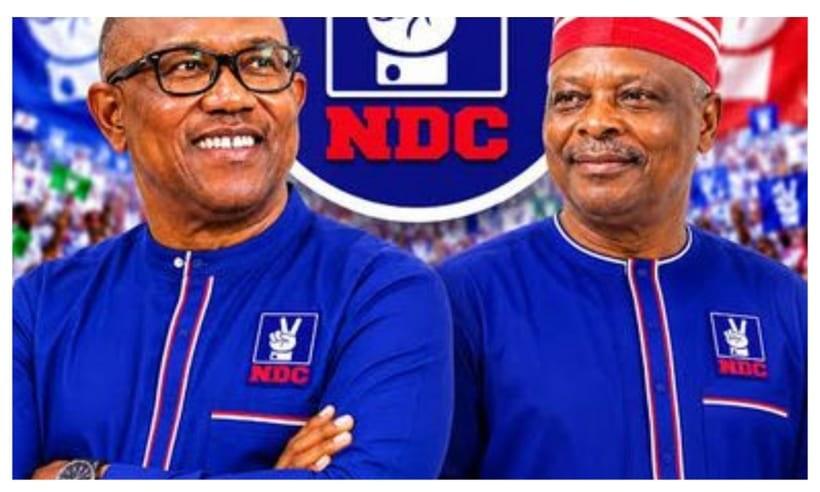
The presidential candidate of the Nigeria Democratic Congress (NDC), Peter Obi, and his running mate, Senator Rabiu Musa Kwankwaso, are expected in Jos, Plateau State, on Friday, October 23, 2026, for a Middle Belt town hall meeting, in a move that underscores the growing political importance of the region ahead of the 2027 general election.
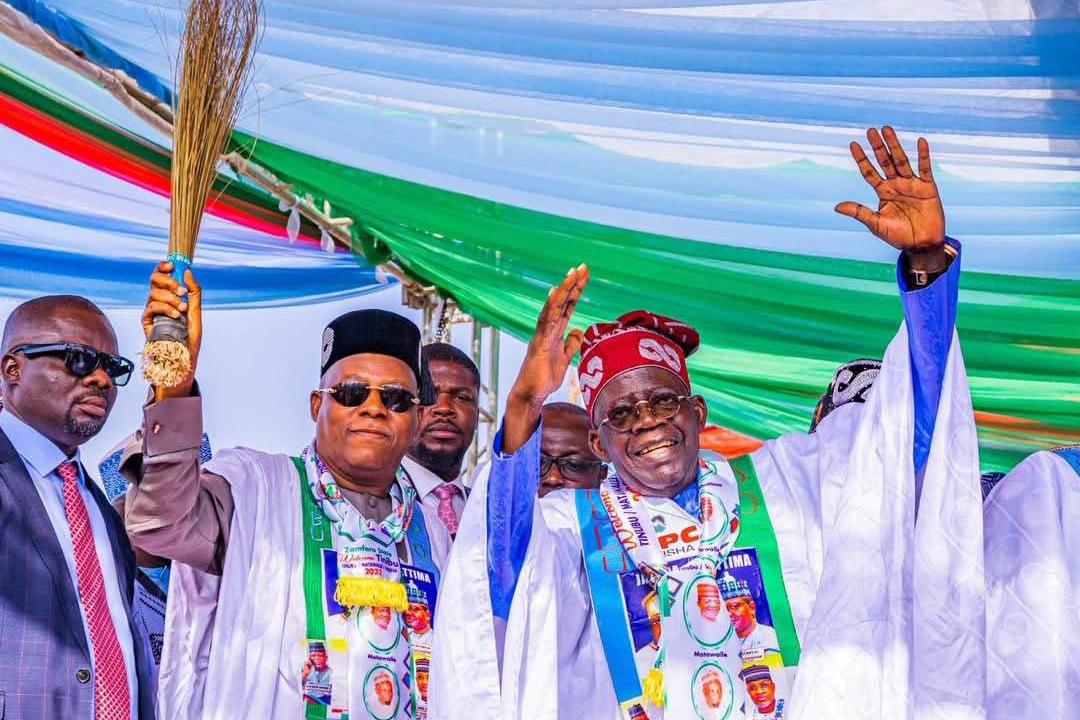
The planned engagement comes at almost the same time President Bola Tinubu is scheduled to kick-start his campaign activities in Kaduna, creating an interesting political coincidence that could bring the competing strategies of the major presidential contenders in Northern Nigeria into sharper focus.
While Obi and Kwankwaso are expected to engage youths, party faithful and other stakeholders in the Middle Belt, Tinubu's campaign activities in Kaduna will provide an opportunity for the president and his supporters to consolidate political support in a region whose voting strength and electoral influence could prove decisive in the next presidential contest.
Although the two events are separate political engagements, their timing highlights the importance of Northern Nigeria to the calculations of presidential candidates seeking to build nationwide electoral coalitions. It also raises questions about the political messages the competing camps intend to communicate to voters facing economic pressures, security concerns and demands for more accountable governance.
For the NDC presidential ticket, the choice of Jos is particularly significant because the Middle Belt occupies a distinctive position in Nigeria's political geography. The region's diversity, history of communal tensions, security challenges and demands for greater political inclusion make it an important constituency for candidates seeking to demonstrate that their programmes respond to the concerns of communities beyond the traditional centres of political power.
The town hall meeting is scheduled for 11:00 am at Gowon Hall, Crispan Hotel, Rayfield, Jos. It is being organised by the Middle Belt Youth Council, The Big-Tent, the Obidient Movement and the Kwankwasiyya Movement.
According to the organisers, the meeting will provide an opportunity for Obi and Kwankwaso to interact directly with young people, party supporters and other stakeholders from Plateau State and neighbouring parts of the Middle Belt, while explaining their plans for the region if elected in 2027.
In a statement made available to journalists, the organisers said the gathering would encourage political participation and create an avenue for discussions about the role of voters in Nigeria's democratic process.
They adopted the slogan, “Be There. Talk Your Mind. Our Vote Must Count Now,” emphasising the importance of citizens' voices and the need for voters to participate actively in determining the country's political future.
Why Jos Matters In The 2027 Presidential Race
The decision to hold the engagement in Jos goes beyond the convenience of selecting a venue for a political gathering. Plateau State occupies a strategic position in the North-Central geopolitical zone, while Jos has historically served as an important meeting point for political, religious, cultural and civic conversations involving communities across the wider Middle Belt.
For Obi and Kwankwaso, a successful outing in Jos could provide an opportunity to strengthen their appeal among younger voters, professionals, civil society groups and communities that want political parties to pay greater attention to security, economic opportunity, infrastructure and representation.
The Middle Belt is not a politically uniform constituency. Its communities differ in their party loyalties, religious affiliations, ethnic identities, economic interests and experiences of insecurity. Consequently, support cannot be assumed simply because a candidate visits the region or receives an enthusiastic reception at a public meeting.
Nevertheless, the zone's political importance makes it a valuable arena for candidates seeking to expand their appeal beyond their established strongholds.
The NDC ticket will therefore need to demonstrate that its interest in the Middle Belt extends beyond election-season mobilisation. A convincing engagement would require clear positions on rural insecurity, attacks on farming communities, displacement, agricultural productivity, unemployment, education, healthcare and the protection of citizens' constitutional rights.
Plateau State and several neighbouring communities have experienced recurring security challenges, including deadly attacks, communal violence and the displacement of residents. These concerns have frequently generated demands for more effective intelligence gathering, better-equipped security agencies, stronger early-warning systems and accountability for those responsible for violence.
For voters in affected communities, presidential campaign promises will be judged not merely by the language of national unity but by whether candidates can explain how they intend to protect lives, restore confidence and enable farmers and businesses to operate without persistent fear.
Obi and Kwankwaso could use the town hall to explain how their proposed administration would improve security coordination, strengthen local conflict-prevention mechanisms and support communities whose livelihoods have been disrupted by violence.
Such an approach would help distinguish substantive political engagement from rallies designed principally to demonstrate crowd size and party enthusiasm.
A Strategic Move To Engage Young Voters
The organisers' decision to place young people at the centre of the meeting also reflects the importance of youth participation in the 2027 election.
Young Nigerians face considerable economic challenges, including unemployment, underemployment, rising living costs and difficulties accessing affordable education, housing and business finance. Many are also increasingly vocal about governance, public accountability and the need for political leaders to provide measurable results.
Obi has developed a recognisable following among young Nigerians, particularly through the Obidient Movement, while Kwankwaso brings his own political network and a substantial support base associated with the Kwankwasiyya Movement.
The partnership offers the NDC ticket an opportunity to combine these networks in pursuit of a broader electoral coalition. However, translating enthusiasm into votes will require sustained organisation, effective communication and a credible programme that addresses the practical concerns of voters.
In the Middle Belt, this means going beyond appeals to political identity or generational frustration. Young people need to hear how a prospective government would create productive employment, expand access to skills and technology, support small businesses and improve the conditions under which agriculture and manufacturing can grow.
The slogan, “Be There. Talk Your Mind. Our Vote Must Count Now,” suggests that the organisers want participants to regard the meeting as more than a conventional campaign appearance.
If the format permits genuine questions and answers, the gathering could provide an opportunity for voters to challenge the candidates on policy details and demand explanations of how their promises would be funded and implemented.
That would be particularly valuable at a time when citizens are increasingly concerned about the distance between campaign promises and the realities of governance.
Tinubu's Kaduna Campaign Adds A Northern Dimension
President Tinubu's scheduled campaign kick-off in Kaduna around the same time introduces another dimension to the day's political activities.
Kaduna is an important political centre in Northern Nigeria, with connections to wider regional networks and a diverse electorate. It is also a state whose political significance extends beyond its immediate boundaries.
For Tinubu and the ruling All Progressives Congress (APC), campaign activities in Kaduna offer an opportunity to mobilise supporters, reinforce the party's political organisation and present the administration's record to voters as preparations for the 2027 election intensify.
The president's campaign will also provide an opportunity for the APC to explain its economic reforms, infrastructure investments, security policies and plans for improving living standards.
The political challenge for the ruling party is that voters will assess those arguments against their daily experiences. Questions about food prices, transport costs, fuel prices, employment, purchasing power and the security of lives and property will remain central to how many Nigerians evaluate the administration.
Supporters of the president may point to reforms and investments that they believe are laying the foundations for economic recovery. Critics, meanwhile, are likely to question the pace at which any benefits are reaching households and businesses.
The Kaduna engagement will therefore be an opportunity for the APC to make its case, but its effectiveness will depend on whether its message resonates with voters beyond the party's established support base.
The timing alongside the NDC gathering in Jos should not automatically be interpreted as evidence of a direct confrontation between the two camps. Rather, it illustrates how competing political organisations are turning their attention to constituencies whose support could help determine the outcome of the presidential election.
Middle Belt Votes And The Search For A National Coalition
Nigeria's presidential elections are shaped by the need to assemble support across the country's different geopolitical zones. No serious contender can afford to treat the Middle Belt as politically insignificant, particularly when competition is expected to be intense.
The North-Central zone includes Plateau, Benue, Kogi, Kwara, Nasarawa and Niger states, as well as the Federal Capital Territory in Abuja. Their electorates have different political histories and priorities, making the region a complex but important component of national electoral calculations.
For the NDC, the task will be to build a coalition capable of attracting voters who may have supported different parties in previous elections. That will require a message that acknowledges the diversity of the region instead of assuming that all its communities share the same political preferences.
The Obi-Kwankwaso partnership also faces the challenge of demonstrating that its joint ticket can reconcile different constituencies and provide a coherent national programme. Political alliances can attract attention, but their durability ultimately depends on organisational capacity, clarity of purpose and public confidence.
In Jos, the candidates will have an opportunity to explain how their administration would approach federalism, resource allocation, regional development, security and the inclusion of communities that believe their concerns have not received sufficient attention.
They will also need to explain how their economic proposals would benefit ordinary citizens, particularly small-scale farmers, traders, transport operators, artisans and young people seeking productive work.
The APC, for its part, will seek to preserve and expand its electoral coalition by presenting the president's policies as necessary steps towards long-term economic and national development.
Both camps will therefore be competing not only for political allegiance but also for the confidence of voters who want evidence that their choices can improve their material circumstances.
Beyond Rallies: The Test Of Credible Promises
The significance of Friday's political engagements will ultimately depend on what the candidates communicate and what voters take away from the encounters.
For the NDC town hall, success should not be measured solely by the number of people who attend Gowon Hall or the enthusiasm displayed by supporters. The more important question is whether Obi and Kwankwaso provide clear, practical and credible answers to the concerns raised by participants.
The same standard applies to Tinubu's campaign activities in Kaduna. A large crowd and an impressive display of party organisation may demonstrate mobilisation strength, but neither automatically translates into votes or proves that voters are satisfied with the government's performance.
Nigeria's democracy would benefit if campaign engagements became opportunities for detailed policy discussions rather than occasions for exchanging political attacks or repeating familiar slogans.
Candidates should explain their plans, identify priorities, outline funding arrangements and state how citizens would be able to measure progress. Voters, in turn, should insist on commitments that can be assessed against clear benchmarks.
For communities in Plateau and the wider Middle Belt, the immediate priorities include security, agricultural recovery, rural roads, access to education and healthcare, and economic opportunities capable of reducing poverty and discouraging criminal recruitment.
The region also needs sustained federal attention that continues beyond election periods. Communities affected by violence require not only security interventions but also reconstruction, compensation where appropriate, rehabilitation and support for displaced families seeking to rebuild their lives.
A presidential candidate who can explain how these objectives would be achieved, and how implementation would be monitored, would offer voters more than a temporary promise of political attention.
A Day Of Competing Political Messages
As Obi and Kwankwaso prepare to meet supporters and stakeholders in Jos, while Tinubu begins his campaign activities in Kaduna, the two engagements highlight the importance of Northern Nigeria in the emerging battle for the presidency.
For the NDC, Jos presents an opportunity to strengthen its presence in the Middle Belt, engage younger voters and demonstrate that its political message extends to communities with distinct security, economic and representation concerns.
For the APC, Kaduna offers a platform to mobilise its supporters and defend the president's record as the ruling party seeks another mandate.
The two events will take place against the background of growing public interest in the 2027 election and continuing debate over the direction of Nigeria's economy, the cost of living and the effectiveness of government policies.
Ultimately, neither the size of a crowd in Jos nor the strength of a political rally in Kaduna will independently determine the outcome of the election.
The decisive test will be whether candidates can persuade Nigerians that their programmes offer credible answers to the country's problems, whether political parties can organise effectively across the country, and whether the electoral process enables citizens to express their choices freely.
For the people of the Middle Belt, Friday's town hall will provide an opportunity to make their concerns heard. Whether those concerns translate into concrete political commitments will be a more important measure of the meeting than the spectacle surrounding it.