PublicSphere Live
Energy
Senate Rejects NMDPRA’s Petrol Import Figures, Cites Major Discrepancies With NNPC Records
Lawmakers question 2022 and 2023 PMS import data, describe differences as suspicious and summon NMDPRA, NNPC and NEITI for reconciliation
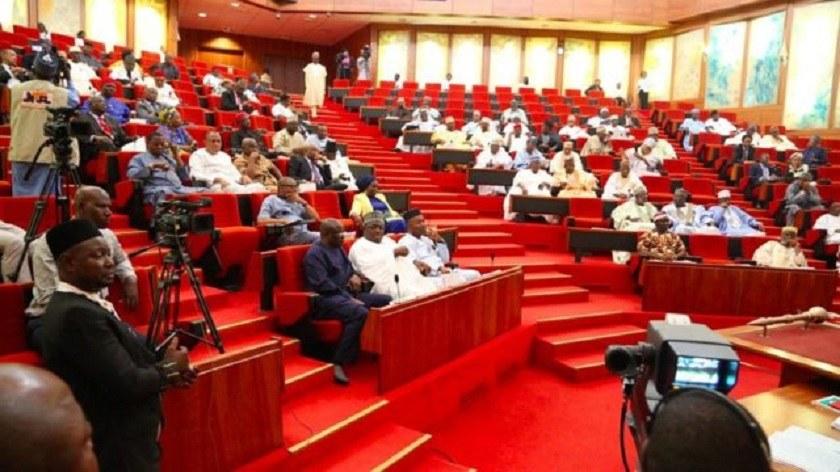
The Senate Committee on Public Accounts has rejected the Nigerian Midstream and Downstream Petroleum Regulatory Authority’s (NMDPRA) records of Premium Motor Spirit (PMS) imports for 2022 and 2023, following significant discrepancies between the figures supplied by the regulatory agency and those presented by the Nigerian National Petroleum Company (NNPC) Limited.
The committee described the differences as unacceptable and suspicious, raising concerns about the accuracy of official petroleum import records and the possibility that Nigerians may have been shortchanged through weaknesses in the documentation and monitoring of fuel imports.
Consequently, the committee has resolved to summon the heads of NMDPRA, NNPC and the Nigeria Extractive Industries Transparency Initiative (NEITI) to a joint meeting to reconcile the conflicting figures and determine the circumstances responsible for the discrepancies.
The disagreement emerged during a hearing on queries contained in the NEITI Oil and Gas Industry Audit Report covering the 2021 to 2023 period, which examined activities and transactions across Nigeria’s oil and gas industry.
The hearing provided lawmakers with an opportunity to scrutinise the records of agencies responsible for regulating the petroleum sector, particularly the volumes of petrol imported into the country during the period under review.
However, the conflicting figures presented by NMDPRA and NNPC raised questions that the committee said could not be dismissed as minor accounting differences.
Conflicting Figures Trigger Senate’s Rejection
Presenting NMDPRA’s position, Deputy Director Uzoamaka Ugwu-Ojobe, who represented the authority’s chief executive, told the committee that Nigeria imported 3.29 billion litres of petrol in 2022 and 6.02 billion litres in 2023.
The figures differed substantially from those presented by NNPC, which recorded petrol imports of 6.27 billion litres in 2022 and 3.88 billion litres in 2023.
The discrepancy is particularly significant because the two agencies are expected to maintain reliable records of petroleum products entering the Nigerian market.
According to the figures presented, NNPC’s 2022 import volume was almost twice the quantity reported by NMDPRA. In 2023, however, the regulatory authority recorded a substantially higher volume than the national oil company.
The figures therefore show not merely a difference in the total volumes reported by the two agencies but also a reversal in the pattern of imports from one year to the next.
For 2022, NNPC’s figure exceeded NMDPRA’s by 2.98 billion litres. In 2023, NMDPRA’s reported volume exceeded NNPC’s by 2.14 billion litres.
Taken together, the two agencies’ records produce a difference of 5.12 billion litres across the two years when the absolute annual discrepancies are added.
These differences formed the basis of the committee’s objection and its insistence that the agencies must provide a credible explanation.
Although Ugwu-Ojobe described the variations as slight and said reconciliation was ongoing, the lawmakers rejected the explanation, arguing that the scale of the differences required a more comprehensive investigation.
Ningi Questions Claim That Discrepancies Are Slight
Senator Abdul Ningi, representing Bauchi Central, challenged the suggestion that the differences could be regarded as minor.
He argued that a discrepancy exceeding 50 per cent could not reasonably be described as slight, describing the conflicting records as disturbing and suspicious.
His intervention reflected the committee’s concern that differences of this magnitude could undermine confidence in official petroleum statistics, particularly in a sector with significant implications for government revenue, public expenditure and the cost of living.
The senator’s objection was not simply about which agency had produced the correct figures. It was also about why two major public institutions involved in the petroleum industry could present such substantially different accounts of the same national fuel-import activities.
If the figures represent the same transactions and periods, the agencies should be able to establish the quantities imported, the dates of importation, the parties involved and the records supporting their respective totals.
The committee’s position is that an explanation based on ongoing reconciliation is insufficient unless it is supported by verifiable documentation.
Faduyile, Bassey Call For Investigation
Other lawmakers also expressed concern about the implications of the discrepancies.
Senator Dayo Faduyile, representing Ondo South, said the conflicting records raised concerns about possible foul play.
His position underscored the need to establish whether the differences resulted from administrative failures, incompatible reporting methods, incomplete records or other irregularities.
Senator Anietie Bassey, representing Akwa Ibom North East, called for a thorough investigation to ensure that Nigerians were not shortchanged.
The concerns raised by the senators point to a broader accountability question: how can the government accurately assess the country's petroleum supply, monitor import volumes and determine the financial implications of fuel transactions if the records maintained by its principal institutions do not agree?
Petrol-import data is important for understanding the country's supply position and the operations of the downstream petroleum market. Reliable figures are also necessary for reconciling transactions, evaluating regulatory compliance and examining any government obligations linked to petroleum imports.
Nevertheless, the discrepancies alone do not establish that fraud occurred. That determination would require evidence identifying the transactions involved, the reasons for the differences and whether any individual or institution breached the law or its regulatory obligations.
The committee's proposed investigation is expected to help establish those facts.
Dankwabo Rejects NMDPRA’s Defence
The committee chairman, Senator Hassan Dankwabo, representing Gombe North, described the regulatory authority's explanation as unacceptable.
He announced plans to summon the heads of NMDPRA, NNPC and NEITI for a joint meeting aimed at reconciling the conflicting figures and establishing whether the discrepancies could be explained by differences in reporting or whether further investigation into possible fraud would be necessary.
The decision to bring the three agencies together reflects the committee's determination to obtain a common, verifiable account rather than accept separate explanations that leave the central questions unresolved.
NMDPRA regulates Nigeria's midstream and downstream petroleum sectors, while NNPC is a major participant in the country's petroleum supply chain. NEITI, meanwhile, provides an independent transparency and accountability framework through its audits of the extractive industries.
Their respective records and supporting documents will therefore be important in determining how the disputed figures were compiled and why they differ.
The committee's intervention also places the responsibility on the agencies to demonstrate that their reporting systems can withstand public scrutiny.
Why The Discrepancies Matter To Nigerians
The Senate's concern goes beyond a disagreement over statistics. The accuracy of petroleum records has direct implications for public accountability in a country where petrol supply, import costs and pricing have significant consequences for households and businesses.
Petrol remains an important input in transportation, power generation for businesses and the distribution of goods and services. Consequently, any uncertainty surrounding official supply records can complicate efforts to evaluate the efficiency and transparency of the petroleum market.
Where the volumes recorded by the regulator differ sharply from those reported by a major industry participant, the public has a legitimate interest in knowing which figures are correct and how the discrepancy arose.
Reliable records are also essential to distinguish actual supply shortages from reporting problems and to assess the extent to which import volumes correspond with the needs of the domestic market.
However, the available figures do not, by themselves, establish that consumers paid for petrol that was never imported or that public funds were lost. Such conclusions would require additional evidence concerning the transactions, payments, product deliveries and any applicable government arrangements.
What the discrepancies establish is the need for a transparent reconciliation process capable of accounting for every material difference.
The investigation should therefore go beyond obtaining revised totals. The agencies should provide the underlying import records, including relevant shipment documentation, dates, quantities, supplier information and other records necessary to verify the volumes reported for each year.
Where differences arise from varying definitions, reporting periods or accounting procedures, the agencies should explain those distinctions clearly. Where errors are identified, corrected figures should be published, with the reasons for the corrections properly documented.
If evidence of deliberate manipulation or other wrongdoing emerges, the appropriate authorities would then need to determine responsibility and take action in accordance with the law.
Transparency And Accountability In The Petroleum Sector
The Senate committee's rejection of NMDPRA's figures highlights the importance of effective coordination among institutions responsible for regulating, participating in and auditing Nigeria's petroleum industry.
Official data should provide a consistent picture of the same transactions, even when agencies have different responsibilities or reporting systems. Where their records diverge, the differences should be identified and resolved through established procedures before they undermine public confidence.
NEITI's audit process is particularly relevant because transparency audits are intended to expose gaps in reporting and encourage institutions to account for discrepancies in the extractive industries.
The committee's decision to involve NEITI in the reconciliation process could help establish whether the disputed records reflect shortcomings in data collection, reporting practices or the underlying documentation.
The joint meeting will also test the willingness of the agencies to cooperate in resolving a matter that has attracted legislative scrutiny.
For NMDPRA, the immediate task will be to substantiate its figures and explain why they differ from NNPC's records. NNPC will similarly need to provide the documentation supporting its own reported volumes. NEITI's contribution will be important in clarifying the audit findings and the basis of the queries raised.
Ultimately, the objective should be to establish a single, defensible account of petrol imports for the two years under review.
Senate Seeks Answers, Not Just Revised Figures
The planned summons represents the next stage in the committee's examination of the NEITI audit queries. Its outcome will depend on whether the agencies can provide verifiable explanations for the differences and identify the precise source of the conflicting records.
The key questions remain: why did NMDPRA report 3.29 billion litres of petrol imports in 2022 when NNPC recorded 6.27 billion litres? Why did the pattern reverse in 2023, when NMDPRA reported 6.02 billion litres against NNPC's 3.88 billion litres? And what controls were in place to ensure that official petroleum-import statistics were accurate and consistent?
Until these questions are answered, the conflicting records will remain a significant accountability concern.
The Senate committee has made clear that it will not accept the differences as minor without satisfactory evidence. Its proposed joint meeting is intended to reconcile the figures or uncover evidence warranting a deeper investigation.
For Nigerians, the important outcome will not simply be an agreement between the agencies. It will be a transparent explanation of how the discrepancies occurred, the publication of reliable figures and, where necessary, appropriate action based on the findings.
The credibility of Nigeria's petroleum-sector statistics depends on public institutions being able to account for the figures they present. The Senate's intervention has placed that responsibility squarely before NMDPRA, NNPC and NEITI.