 PublicSphere Live
Arts
Ofala Festival: How Onitsha Celebrates Its Royal Heritage, History and Igbo Identity
Beyond the colourful robes, royal dances, traditional music and elaborate processions, Ofala represents a centuries-old institution through which the people of Onitsha preserve their identity, celebrate their history and reflect on the future of their community.
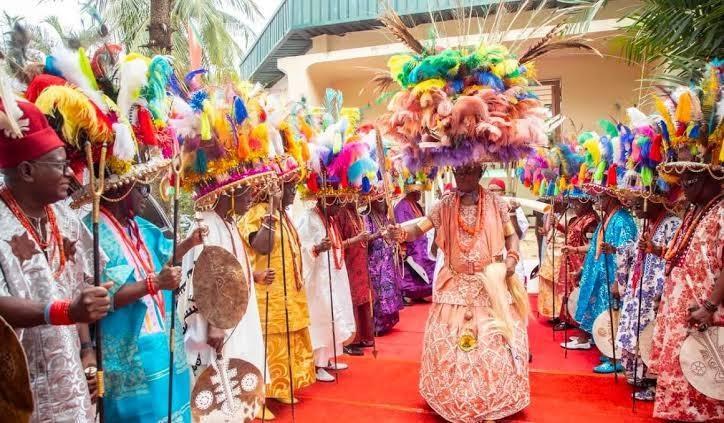
In Onitsha, a historic commercial city on the eastern bank of the River Niger in Anambra State, Nigeria, there is an annual cultural celebration during which history comes alive, royal authority is reaffirmed, ancestral traditions are honoured and the people renew their bonds with their monarch and one another.
Known as the Ofala Festival, the celebration is among the most prominent traditional festivals in southeastern Nigeria. It brings together the Obi of Onitsha, his chiefs, titled men and women, age-grade associations, indigenes living at home and abroad, as well as visitors who come to witness the splendour of Onitsha's royal heritage.
Beyond the colourful robes, royal dances, traditional music and elaborate processions, Ofala represents a centuries-old institution through which the people of Onitsha preserve their identity, celebrate their history and reflect on the future of their community.
The Historical Roots of Ofala
The origins of the Onitsha Ofala Festival are closely connected with the history of the Onitsha monarchy and the traditions surrounding the founding of the kingdom.
Historical accounts trace the festival to the era of Eze Chima, the ancestral figure associated with the establishment of the Onitsha kingdom following migration from the Benin area towards the River Niger. The National Institute for Cultural Orientation has described Ofala as a tradition dating back approximately 700 years, although the festival's precise historical beginnings are rooted partly in oral traditions passed down through generations.
The history of Onitsha is inseparable from its geographical position. Situated along the River Niger, the town developed into an important centre of trade, migration, cultural exchange and social interaction. Its commercial significance attracted people from different parts of Nigeria and beyond, helping to establish Onitsha as one of the country's best-known traditional and trading communities.
Yet, beneath the bustle of its markets and the growing demands of modern commerce, Onitsha has retained a strong attachment to its traditional institutions. The monarchy, headed by the Obi of Onitsha, remains an important symbol of the community's history, collective identity and customary values.
Ofala occupies a central place in this heritage.
Traditionally, the Obi was not expected to appear casually before the public in the manner of a modern political leader. His public appearance was governed by established customs and ceremonial obligations. The annual festival therefore provided an exceptional occasion for the monarch to emerge from seclusion and meet his subjects in a grand public celebration.
According to the traditional account of the festival, the Obi undergoes a period of spiritual retreat before the public ceremonies. During this period, he reflects on the fortunes of the kingdom and fulfils customary obligations associated with the welfare and prosperity of the people.
His emergence marks the culmination of this process and becomes a moment of collective celebration.
The festival has consequently survived as more than a ceremonial display. It is a living connection between the present-day people of Onitsha and the generations whose customs, beliefs and institutions helped shape the kingdom.
What Does Ofala Mean?
The meaning of Ofala is closely associated with royal authority, the land and the traditional institution represented by the Obi.
One explanation frequently given in descriptions of the festival interprets the name through the concepts of ofo, associated with authority or legitimacy, and ala, meaning land. This interpretation presents Ofala as a celebration of the authority and traditional responsibility embodied by the monarch.
However, the significance of the festival cannot be reduced to the literal interpretation of its name. Within Onitsha's customary system, Ofala is a complex institution involving spiritual observance, kingship, communal solidarity, public recognition and cultural continuity.
Southern Nigeria Traditional Rulers Council
The festival also carries a traditional association with the discovery of yam as a valuable and safe source of food. This account connects the celebration to the agricultural foundations of community life and the importance of a successful harvest.
Yam occupies an important place in the cultural traditions of many Igbo communities. Celebrations connected with the new yam harvest express gratitude, abundance, survival and hope for another productive agricultural season.
In Onitsha, the relationship between Ofala and the yam tradition gives the royal celebration an additional dimension: the wellbeing of the throne and the wellbeing of the people are understood as interconnected.
Thus, Ofala brings together kingship, thanksgiving, food culture and the continuity of community life in a single cultural institution.
The Royal Procession: When The Obi Meets His People
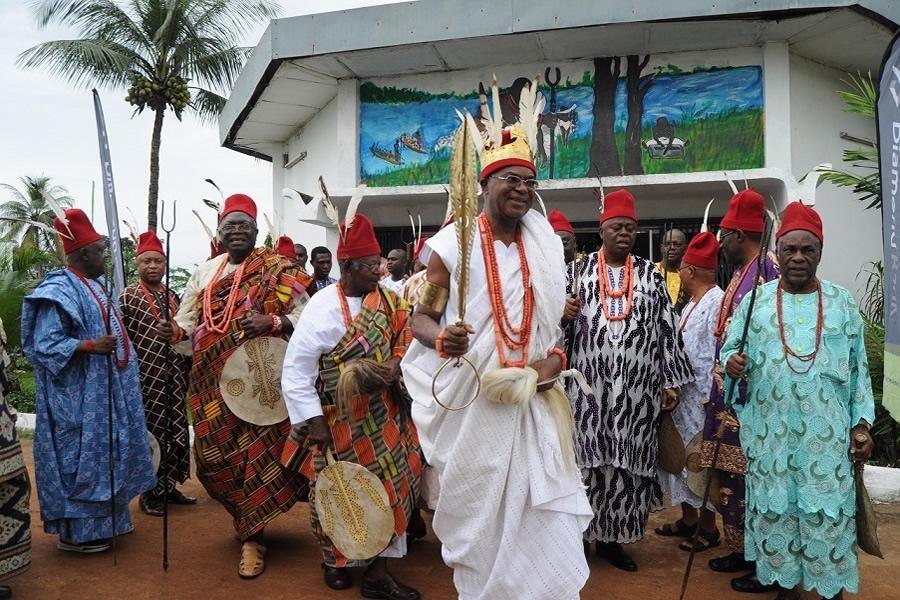
The most recognisable feature of Ofala is the public appearance of the Obi of Onitsha in his elaborate royal regalia.The principal celebrations traditionally take place over two days, known as Iru Ofala and Azu Ofala. Each has its own ceremonial character, but together they express the relationship between the monarch, the traditional institution and the wider community.
Iru Ofala is centred on the monarch. The Obi makes ceremonial appearances accompanied by traditional music and the sounds of royal drums. His appearance is greeted by the people, whose presence demonstrates their attachment to the throne and the customs it represents.
The monarch's regalia, including the distinctive royal crown and other traditional ornaments, is not merely decorative. It communicates status, continuity and the authority associated with the office of the Obi.The red-cap chiefs, known as the Ndichie, are also central to the occasion. Their ceremonial appearances and homage to the monarch reflect the established hierarchy of the traditional institution.
In this setting, the festival becomes a public expression of the relationship between the throne and its traditional custodians. It also provides an opportunity for chiefs, community representatives, guests and other stakeholders to pay their respects. One of the most captivating moments is the royal dance, performed to the rhythm of traditional music and accompanied by the cheers of spectators. The performance combines dignity with celebration, demonstrating how an ancient royal institution can remain culturally vibrant in a contemporary society.
Azu Ofala, the second principal day, places greater emphasis on the participation of the wider community. Age-grade associations and other cultural groups appear in colourful uniforms and traditional attire, displaying their organisation, creativity and collective identity.
Their participation transforms the festival from a royal ceremony into a broader celebration of the people of Onitsha.
The two days therefore complement each other: one emphasises the monarch and the traditions of the throne, while the other highlights the cultural vitality and collective participation of the community.
A Festival That Preserves Igbo Cultural Identity
One of the greatest contributions of Ofala is its role in preserving the cultural identity of Onitsha.
In an age when urbanisation, globalisation and digital communication are rapidly changing how people live and interact, traditional festivals provide opportunities for communities to maintain connections with their history.
For younger generations, Ofala offers a practical introduction to traditions that might otherwise be encountered only through stories, books or the recollections of older relatives.
The traditional music, ceremonial greetings, royal costumes, dances and public processions all communicate cultural knowledge. They demonstrate how a community has historically organised itself, expressed respect and celebrated collective achievements.
The festival also provides an opportunity for families whose members have moved to other Nigerian cities or foreign countries to return home and reconnect with their roots.
For many people of Onitsha descent, the celebration is an occasion to meet relatives, renew friendships and strengthen relationships that may have been weakened by distance and the pressures of modern life.
This homecoming dimension is particularly significant for a community whose history is strongly associated with commerce, travel and migration.
Ofala reminds participants that geographical distance does not necessarily sever cultural belonging. A person may live and work in Lagos, Abuja, London, New York or another part of the world and still identify deeply with the history and traditions of Onitsha.
The festival, in this sense, functions as a cultural meeting point for a dispersed community.
Its value also extends beyond Onitsha. Nigeria's cultural diversity is one of its greatest national assets, and festivals such as Ofala demonstrate how local traditions contribute to the country's wider cultural heritage. By preserving its distinctive customs, Onitsha enriches the mosaic of Nigerian identity.
The Significance Of The Obi And The Traditional Institution
Ofala provides an opportunity to appreciate the place of traditional institutions in Nigerian society.
The Obi of Onitsha is not an elected political officeholder. His position derives from the traditional monarchy and the customary processes through which the institution is maintained. His cultural responsibilities are therefore different from those of elected government officials.
Nevertheless, traditional rulers continue to occupy important positions in community life. They can serve as custodians of customary practices, symbols of collective identity and interlocutors in discussions about peace, social cohesion and development. Ofala gives public expression to these responsibilities.
The monarch's appearance before his subjects, the participation of the Ndichie and the presence of community groups all reinforce the continuing relevance of the traditional institution.
The festival also provides a symbolic opportunity for reflection on the responsibilities associated with leadership. Royal authority is celebrated within a framework of inherited obligations, communal expectations and concern for the welfare of the kingdom.
In this regard, Ofala can be understood as an occasion for renewing the relationship between the traditional institution and the people it represents.
Its contemporary importance lies not simply in the preservation of royal ceremony but also in the opportunity to connect inherited values with present-day questions about community welfare, social responsibility and development.
From An Ancient Ceremony To A Modern Cultural Economy
Although Ofala retains its traditional foundations, its scope has expanded over time. The contemporary festival has developed beyond its principal royal ceremonies to include cultural exhibitions, public lectures, youth activities, community health initiatives and other events designed to attract a wider audience.
The official festival programme has featured the Oreze international art exhibition, the Ofala Youth Carnival and medical, health and wellbeing outreach activities. These additions demonstrate how a traditional institution can broaden its public contribution without abandoning its historical identity.
This evolution creates opportunities for the local economy.Hotels, restaurants, transport operators, traders, tailors, photographers, artisans, entertainers and other service providers can benefit from the arrival of visitors and the demand generated by festival activities.
Traditional clothing and ornaments also offer opportunities for local designers and craftspeople to showcase their skills. Musicians, dancers and cultural performers gain platforms for presenting their work to audiences beyond their immediate communities.
For traders and hospitality businesses, the festival can provide an opportunity to reach customers who might not ordinarily visit Onitsha.
However, the scale of these benefits depends on effective organisation, adequate infrastructure, visitor safety, sanitation and a deliberate strategy for linking cultural tourism with local enterprise.
Ofala could achieve greater economic impact if organisers and public authorities worked together to develop cultural tourism packages, improve visitor information, support local creative businesses and encourage visitors to explore Onitsha's historical and commercial attractions.
The festival could also provide a platform for showcasing the city's traditional crafts, cuisine, music and history to international audiences.Such an approach would help transform cultural pride into sustainable economic opportunities for residents, particularly young people.
Ofala And The Global Promotion Of Nigerian Culture
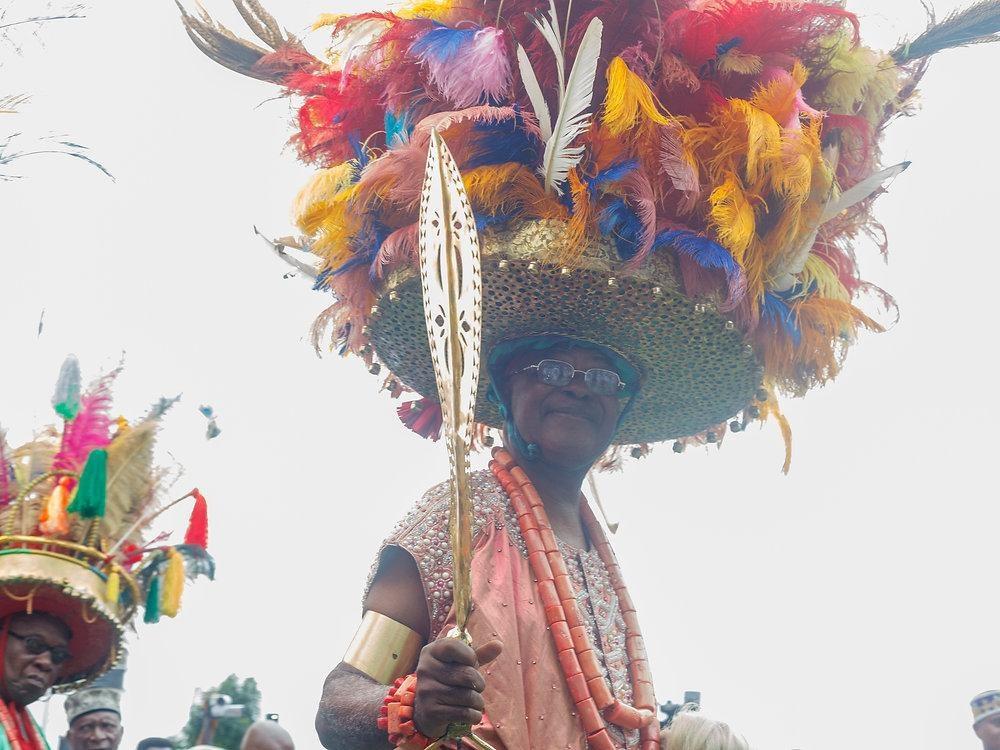
The growing international interest in cultural tourism presents an opportunity for Ofala to reach audiences beyond Nigeria.
Festivals are powerful instruments of cultural diplomacy because they allow visitors to experience a community's traditions directly rather than through second-hand descriptions.
Through Ofala, visitors can encounter the symbolism of Igbo royal institutions, the aesthetics of traditional clothing, the importance of age-grade associations and the communal character of cultural celebrations.
The festival can also challenge narrow perceptions of Nigeria by presenting a richer picture of its history, artistic achievements and social organisation.
For Nigerians living abroad, it offers a means of maintaining cultural connections and introducing younger generations to the traditions of their ancestral communities.
The possibility of promoting Ofala internationally also raises the question of cultural documentation and safeguarding. Oral histories, traditional songs, ceremonial practices, costume-making skills and the knowledge of community elders need to be carefully recorded and transmitted.
Nigeria's National Institute for Cultural Orientation has documented Ofala as an important cultural festival, while a UNESCO inventory document has also listed the Ofala Festival of Onitsha among Nigerian cultural practices. Such documentation is relevant to broader efforts to identify and safeguard the country's intangible cultural heritage.
International promotion, however, should not mean turning the festival into a performance stripped of its traditional meaning. Its cultural integrity depends on the participation and consent of the community that sustains it. The challenge is to make Ofala accessible to wider audiences while ensuring that its ceremonies, symbolism and customary obligations remain respected.
Ofala 2026: From Resilience To Progress
The 2026 Ofala Festival was scheduled for October 16 and 17 in Onitsha, with the theme “Igba Mbo, Iga N'Iru — Strive and Advance: From Resilience to Progress.” The organisers presented the theme as an expression of the community's determination to build on its historical resilience and advance its collective future.
The theme captures an important challenge facing traditional festivals in contemporary Nigeria: how to preserve the past while responding meaningfully to the demands of the present.
For Onitsha, progress involves more than maintaining the splendour of the annual celebration. It also involves passing cultural knowledge to younger generations, creating opportunities for local enterprise and ensuring that the festival contributes to the social and economic wellbeing of the community.
A tradition that survives across generations does so not simply because people remember it, but because they continue to find meaning in it. Ofala's endurance demonstrates that cultural institutions can adapt their public expression while retaining the customs that give them legitimacy.
The challenge for the community, its traditional leadership, government and private-sector partners is to ensure that this cultural inheritance becomes an instrument for education, tourism, social cohesion and sustainable development.
Preserving A Heritage For Future Generations
Ultimately, the Ofala Festival is a celebration of continuity. Its royal processions recall the history of the Onitsha monarchy. Its music and dances preserve artistic traditions. The participation of chiefs and age-grade associations demonstrates the enduring importance of communal organisation, while the gathering of indigenes and visitors reinforces the connections between history, identity and belonging.
Yet the true measure of the festival's success should extend beyond the number of people who attend or the grandeur of the ceremonies.
It should also be measured by the knowledge transmitted to children, the opportunities created for young cultural practitioners, the businesses supported and the extent to which the community remains connected to the values its traditions represent.
As modern influences continue to reshape Nigerian society, the preservation of cultural heritage requires deliberate effort. Families, schools, cultural institutions, traditional authorities, the media and government all have roles to play in ensuring that inherited knowledge is not lost.
Ofala offers a compelling example of how a community can celebrate its history while looking towards the future.
For the people of Onitsha, the festival is a reminder that their identity is anchored in a shared past but need not be confined to it. The traditions that brought generations together can also inspire new approaches to education, enterprise, tourism and community development.
When the royal drums sound and the Obi appears before his people, the celebration expresses more than the grandeur of a traditional throne. It renews a relationship between a community and its history.
That is the enduring significance of Ofala: a royal festival that belongs not only to the palace but also to the people, their collective memory and the generations yet to come.