PublicSphere Live
Business
No Return to Fuel Subsidy, Multiple Exchange Rates, Oyedele Assures Investors
Finance Minister says Tinubu administration remains committed to economic reforms amid 2027 election debate
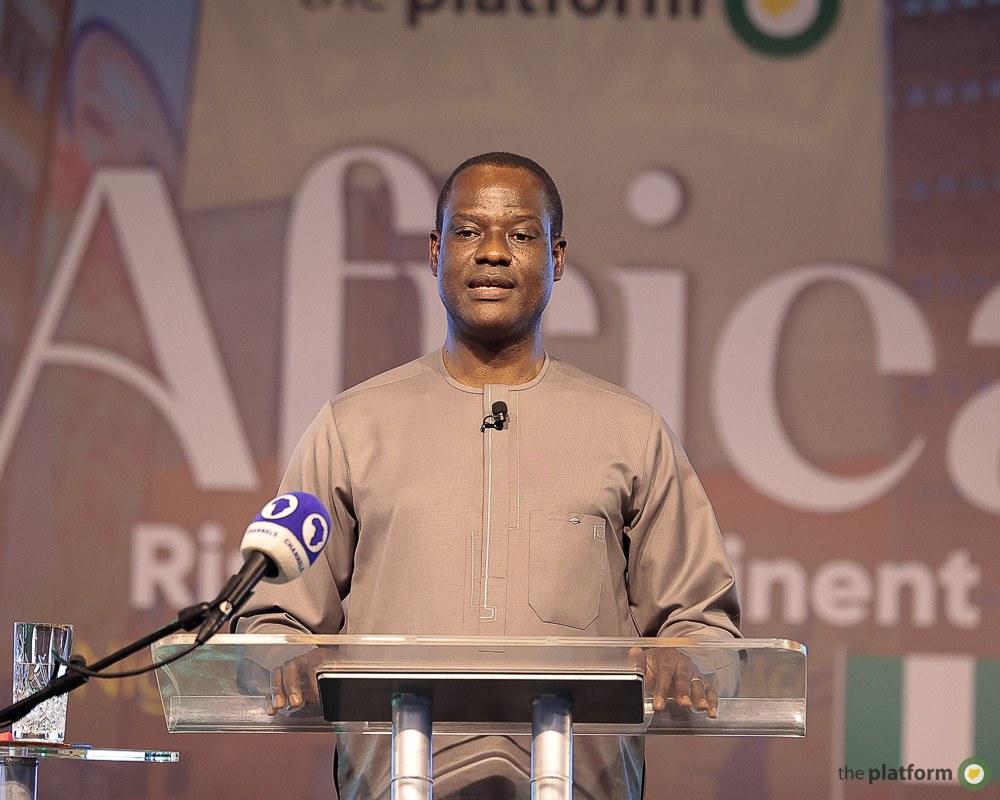
The Minister of Finance and Coordinating Minister of the Economy, Taiwo Oyedele, has reaffirmed the Federal Government’s commitment to sustaining the removal of petrol subsidy and maintaining a liberalised foreign exchange market, declaring that there are no plans to reverse the two major economic policies ahead of the 2027 general elections.
Oyedele said the government remained determined to continue with the reforms despite concerns about their economic and social consequences, particularly the pressure they have placed on household incomes, transportation costs, businesses and the general cost of living.
The minister gave the assurance on Saturday while responding to questions about the direction of Nigeria’s economic policies on the sidelines of the ongoing World Bank and International Monetary Fund meetings in Bangkok, Thailand.
According to him, the sustainability of the reforms has been a recurring subject during engagements with international financial institutions, credit rating agencies and investors, who have sought assurances that the government would not abandon its policies as political activities intensify ahead of the 2027 elections.
Oyedele said the administration had consistently communicated its determination to maintain the existing policy direction, dismissing speculation that the government might reintroduce petrol subsidies or return to a system of multiple exchange rates.
“And let me be clear as well, this was a recurring question almost through all our engagements, but also with the rating agencies, with the investors, and the multilateral institutions. Every time they ask, are you reversing your plans? Are you bringing back subsidies? Let me be clear, there will be no return to fuel subsidies or multiple exchange rates,” he said.
The statement represents a fresh attempt by the administration of President Bola Tinubu to reassure domestic and international economic stakeholders that its reform programme will not be abandoned in response to political pressure or the approaching electoral cycle.
Reforms Remain A Major Economic And Political Issue
The removal of petrol subsidy and the liberalisation of the foreign exchange market have remained among the most consequential economic decisions taken by the Tinubu administration since it assumed office in May 2023.
The government defended the removal of petrol subsidy as necessary to reduce the financial burden on public finances and redirect resources towards infrastructure, social investment and other development priorities.
For decades, successive Nigerian administrations had maintained some form of petrol subsidy to limit the amount consumers paid for fuel, although the policy became increasingly controversial because of its cost, implementation challenges and the burden it placed on government revenue.
President Tinubu announced the end of the subsidy regime during his inauguration, triggering an immediate increase in petrol prices and a corresponding rise in transportation and distribution costs.
The decision subsequently contributed to an increase in the financial pressures confronting households and businesses, particularly those whose operations depend heavily on petrol and diesel-powered transport, electricity generation and logistics.
The foreign exchange reform, meanwhile, was designed to reduce distortions in the currency market, improve price discovery and create a more transparent system for allocating foreign exchange.
Before the reforms, Nigeria operated multiple exchange rates through different official and preferential windows, alongside a parallel market in which the naira frequently traded at a different value.
The administration argued that the arrangement encouraged arbitrage, weakened confidence in the foreign exchange system and made it difficult for investors and businesses to determine the true value of the currency.
The move towards a more market-driven exchange rate was intended to narrow the gap between official and unofficial rates, improve transparency and strengthen the economy's ability to attract foreign investment.
However, the transition has also exposed businesses and consumers to exchange-rate volatility, with the cost of imported goods, industrial inputs, machinery and other essential items affected by movements in the naira.
Oyedele's latest remarks suggest that the government believes the long-term objectives of these reforms would be undermined if it returned to the previous arrangements.
Government Seeks To Reassure Investors
The minister's comments also reflect the importance the Federal Government attaches to maintaining investor confidence in the consistency of its economic policies.
For international investors, credit rating agencies and multilateral institutions, the credibility of an economic reform programme depends not only on the initial decisions taken by a government but also on its willingness to sustain them when they become politically difficult.
Frequent policy reversals can complicate investment decisions, weaken confidence in economic forecasts and increase uncertainty about the operating environment for businesses.
In Nigeria's case, the removal of petrol subsidy and the foreign exchange reforms have been closely watched by international financial institutions and market participants because of their implications for government revenue, inflation, external balances and the country's capacity to meet its financial obligations.
A return to broad-based petrol subsidies could increase government expenditure, depending on the structure and scale of the arrangement, while reintroducing multiple exchange rates could revive concerns about transparency, unequal access to foreign exchange and opportunities for arbitrage.
By ruling out both possibilities, Oyedele is seeking to communicate that the administration intends to preserve the policy framework introduced under Tinubu.
Nevertheless, sustaining investor confidence will require more than assurances about policy continuity. Investors will also assess the results of the reforms, including the stability of the foreign exchange market, the trajectory of inflation, the availability of foreign exchange for legitimate transactions and the capacity of businesses to operate profitably.
For the government, the challenge is therefore to demonstrate that maintaining the reforms can produce measurable economic improvements while addressing the hardship experienced by ordinary Nigerians.
Cost-Of-Living Crisis Fuels Political Debate
The minister's declaration comes amid renewed debate over the economic consequences of the government's policies as political parties and opposition figures position themselves ahead of the 2027 general elections.
Although the Federal Government has defended the reforms as necessary to correct structural weaknesses in the economy, opposition leaders have questioned their implementation, the speed of the adjustments and the adequacy of measures introduced to cushion their effects.
Former Vice-President Atiku Abubakar of the African Democratic Congress and Peter Obi of the Nigeria Democratic Congress have both criticised aspects of the administration's economic management and called for measures to reduce the cost-of-living crisis.
Their criticisms reflect a broader debate over how Nigeria can achieve fiscal stability, improve the value of its currency and attract investment without imposing excessive economic burdens on households and productive enterprises.
The central question is no longer simply whether subsidy should be removed or the foreign exchange market liberalised. It is also whether the benefits expected from the reforms are being translated into improvements in living standards, employment, purchasing power and the operating environment for businesses.
For millions of Nigerians, the immediate concern remains the price of petrol, food, transportation, electricity and other basic necessities.
The removal of petrol subsidy has increased the direct cost of fuel, while the effects of exchange-rate adjustments have influenced the prices of imported goods and production inputs. These pressures have affected household budgets and increased operating expenses for manufacturers, traders, transport operators and service providers.
Consequently, the government's commitment to sustaining the reforms is likely to remain a major issue in the political contest leading up to the 2027 elections.
Opposition parties are expected to continue examining whether alternative economic measures could deliver relief more quickly, while the administration will be under pressure to demonstrate that its policies can produce sustainable growth and improved living conditions.
Subsidy Debate: Fiscal Savings Versus Household Relief
The disagreement over petrol subsidy highlights the difficult balance between protecting public finances and providing immediate relief to citizens.
Supporters of subsidy removal argue that maintaining an expensive and poorly targeted system can divert public resources from infrastructure, healthcare, education, security and social protection. They also contend that the policy can create opportunities for smuggling and other forms of market distortion when domestic prices differ significantly from those in neighbouring countries.
From this perspective, retaining the subsidy indefinitely could constrain the government's ability to finance development priorities and respond to other economic challenges.
Critics, however, argue that the consequences of removing the subsidy cannot be assessed solely through the amount of money saved by the government. They maintain that the policy must also be evaluated in terms of its impact on poverty, household consumption, business costs and the purchasing power of workers.
They further argue that savings from subsidy removal should produce visible benefits for citizens through improved public services, targeted cash transfers, affordable transportation, support for small businesses and investments that lower the cost of domestic production.
These competing positions explain why the subsidy debate has persisted despite the government's insistence that it will not reverse its decision.
A key test for the administration will be its ability to show that fiscal savings and other economic gains are being used effectively to reduce the hardship associated with the reforms.
The government will also need to demonstrate that relief measures reach vulnerable households and that public expenditure is producing tangible benefits rather than merely improving headline fiscal indicators.
Foreign Exchange Reform And The Productive Economy
The foreign exchange question presents another challenge for policymakers.
A liberalised market is intended to allow the exchange rate to respond more transparently to the forces of supply and demand. In principle, this can improve the allocation of foreign exchange, discourage preferential access and give investors a clearer basis for assessing economic risks.
However, market liberalisation does not automatically guarantee currency stability.
The naira's performance also depends on the supply of foreign exchange from oil exports and other sources, foreign investment inflows, remittances, domestic demand for imports, capital movements and confidence in the broader economy.
For manufacturers and other productive businesses, exchange-rate stability is particularly important because sudden currency movements can make it difficult to plan production, price goods, service foreign-currency obligations and procure imported raw materials.
A more predictable foreign exchange market could help businesses make longer-term investment decisions, but sustained improvements will depend on stronger foreign exchange earnings, increased domestic production and policies that support export competitiveness.
The administration will therefore need to ensure that its commitment to liberalisation is accompanied by measures that expand productive capacity and strengthen the economy's ability to earn foreign exchange.
Improved agricultural output, industrial development, non-oil exports and a more efficient business environment could help reduce pressure on the currency over time.
The Test Ahead Of 2027
Oyedele's assurance sends a clear message that the Tinubu administration does not intend to make a return to petrol subsidy or multiple exchange rates part of its economic response to the approaching elections.
But policy continuity alone will not settle the debate over the reforms.
The administration will be judged by whether it can translate its economic strategy into lower inflation, stronger purchasing power, greater employment opportunities, improved infrastructure and a more predictable environment for businesses.
It will also have to explain how the government intends to protect vulnerable Nigerians while maintaining its commitment to fiscal discipline and market-oriented reforms.
For the opposition, the challenge will be to present credible alternatives that address the immediate cost-of-living crisis without creating new fiscal pressures or restoring the distortions associated with previous policy arrangements.
Ultimately, the 2027 election debate is likely to revolve around both the direction of economic policy and the results it delivers.
The government's position is that the reforms must be sustained to achieve their intended objectives. Its political opponents, meanwhile, are questioning whether the implementation has adequately balanced those long-term objectives with the immediate needs of citizens.
As the election approaches, the critical issue will be whether Nigerians begin to experience sufficient improvements in their daily lives to justify the economic adjustments they have endured.
For now, Oyedele's message to investors and international financial institutions is unequivocal: the government will not return to petrol subsidy or multiple exchange rates. The broader economic and political test will be whether the administration can make that commitment compatible with a meaningful improvement in the welfare of the Nigerian people.