PublicSphere Live
Politics
2027: ADC Spokesperson, Okonkwo, Accuses Tinubu of Being ‘Absentee President’
The ADC spokesperson made the allegations in a statement posted on his verified X handle on Saturday, as political activities and discussions surrounding the 2027 presidential election continue to gather momentum.
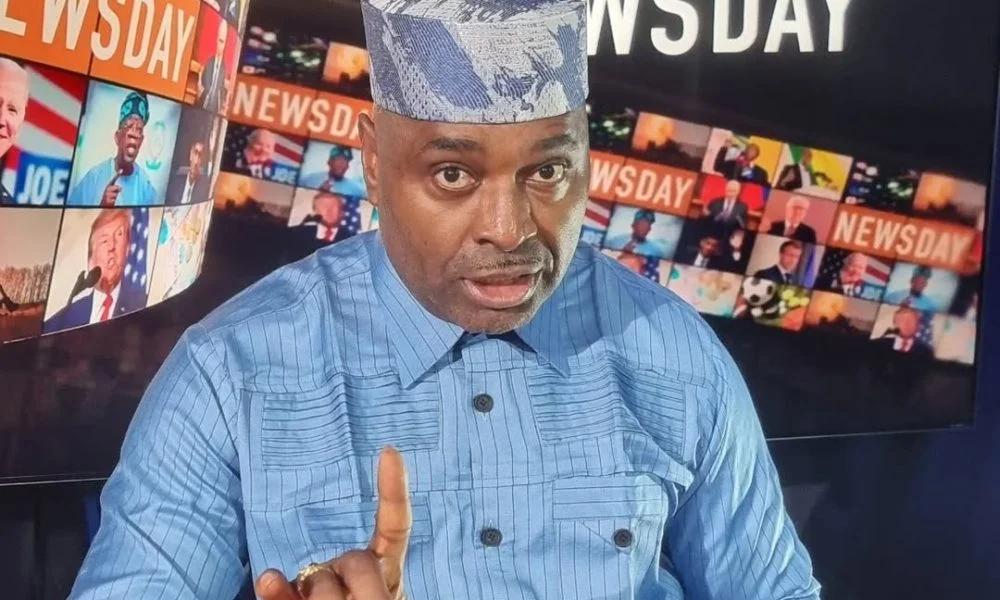
Kenneth Okonkwo, spokesperson for the presidential candidate of the African Democratic Congress (ADC), has criticised President Bola Tinubu over his engagement with Nigerians, describing him as an “absentee President” and questioning his suitability for re-election ahead of the 2027 general elections.
Okonkwo accused the President of failing to communicate his plans and policies directly to Nigerians, alleging that Tinubu had not granted regular interviews to independent media organisations or participated in a national debate with opposition presidential candidates.
The ADC spokesperson made the allegations in a statement posted on his verified X handle on Saturday, as political activities and discussions surrounding the 2027 presidential election continue to gather momentum.
He argued that Nigerians should have adequate opportunities to question the President about his background, policy choices, achievements and plans for the country before deciding whether to renew his mandate.
According to Okonkwo, Tinubu's alleged limited campaign coverage across the country and his approach to public communication raise questions about his willingness to engage directly with the electorate.
“Tinubu will campaign in only 12 states out of 36 states and the FCT. This is about 30% coverage of the entire Nigeria,” he said.
He added: “He is simply an absentee President not fit for re-election. How can you vote for a politician whom you are unaware of his origin, schools, plans and policies for you?”
Okonkwo's comments reflect the opposition's growing effort to place the Tinubu administration's performance, public engagement and economic policies at the centre of the emerging contest for the presidency in 2027.
The ADC spokesperson also questioned the President's record during his first term, arguing that Nigerians should assess his administration against its promises and the economic circumstances facing households and businesses.
Okonkwo Questions Tinubu's Media Engagement
A major part of Okonkwo's criticism centred on what he described as Tinubu's failure to subject himself to sustained scrutiny by independent media organisations.
He alleged that the President had not been granting regular interviews to independent journalists and had also avoided a national debate with opposition candidates.
For Okonkwo, such engagements are important because they provide opportunities for presidential candidates to explain their programmes, respond to criticism and clarify how they intend to address the country's challenges.
Presidential interviews and debates also allow voters to compare competing policy proposals on the economy, security, education, healthcare, infrastructure and other national priorities.
However, the effectiveness of such engagements depends not only on whether candidates participate but also on the quality of the questions asked, the depth of their answers and the willingness of interviewers to press them on contentious issues.
Okonkwo's intervention therefore places renewed emphasis on public accountability and the responsibility of political leaders to explain their decisions to citizens.
His assertion that Tinubu has not engaged in regular interviews with independent media remains an allegation attributed to the ADC spokesperson. The statement, as presented, did not provide a detailed record of the President's media engagements to substantiate the claim.
Similarly, the allegation that the President would campaign in only 12 states and the Federal Capital Territory was not accompanied by a campaign itinerary or an explanation of the basis for the projection.
Nevertheless, the issues raised are likely to feature prominently in the political debate as parties prepare for the next general election.
Debt Servicing And Revenue Shortfall
Beyond the question of public engagement, Okonkwo challenged the administration's economic management, citing figures on federal revenue and debt-servicing obligations.
He claimed that Nigeria was “technically bankrupt” because the Federal Government had to borrow to meet its debt obligations.
To support his argument, he said the Federal Government spent N7.7 trillion on interest payments during the first half of 2026, while its total revenue stood at N6.2 trillion.
According to the figures he cited, interest payments exceeded the government's revenue by N1.5 trillion.
If verified against official fiscal reports, the figures would underscore the pressure that debt-servicing costs place on government finances and the resources available for other public expenditure.
High interest payments can restrict the government's ability to finance capital projects, improve public services and respond to the needs of citizens without increasing borrowing or finding additional sources of revenue.
The figures cited by Okonkwo, however, require careful interpretation. Interest payments exceeding revenue during a particular period would indicate a serious fiscal imbalance, but the comparison alone does not conclusively establish that a country is technically bankrupt. A fuller assessment would consider the government's total expenditure, borrowing, debt stock, revenue performance, cash-flow position and capacity to meet its obligations.
The distinction is important because the debate over Nigeria's economic performance should be grounded in verifiable figures and a clear understanding of the country's fiscal position.
For the Tinubu administration, the central question is whether its economic reforms can produce stronger revenue growth, moderate debt-servicing pressures and translate into improved living standards.
For the opposition, the figures provide an opportunity to challenge the government's policies and demand clearer explanations of their costs and benefits.
2027 Election And The Question Of Accountability
Okonkwo also dismissed the Tinubu administration's record, claiming that the President had not surpassed 30 per cent in any of the initiatives he had undertaken during his first term.
“Tinubu has not surpassed 30% in anything he has embarked on during his first term,” he said.
The statement represents the ADC spokesperson's assessment of the administration's performance. He did not, in the reported comments, identify the specific programmes or performance indicators on which he based the 30 per cent claim.
As the 2027 election approaches, such broad assessments are likely to generate competing arguments between the ruling All Progressives Congress (APC) and opposition parties seeking to unseat the President.
The APC is expected to defend the administration's record and explain the rationale behind its policies, while opposition figures are likely to focus on economic hardship, public debt, insecurity and the perceived gap between government promises and citizens' experiences.
For voters, the challenge will be to distinguish political rhetoric from demonstrable performance by examining official data, policy outcomes and the practical effects of government decisions on their daily lives.
The question of presidential accessibility is also likely to remain part of the discussion. Although campaign rallies and media interviews are not the only measures of effective leadership, they provide important channels through which candidates can communicate their priorities and answer questions from the public.
A national debate could offer voters an opportunity to compare the policy proposals of competing candidates directly, particularly on the economy, national security, employment, education and the cost of living.
Whether such a debate takes place, and which candidates participate, will depend on the arrangements made by the relevant political parties and organisers.
Okonkwo's remarks add to the criticism being directed at Tinubu as political parties position themselves for the 2027 contest. His comments also challenge the President and the ruling party to demonstrate how the administration's record measures up against its commitments.
With the next presidential election approaching, the debate is likely to extend beyond campaign appearances to questions about economic management, transparency, accountability and the capacity of competing candidates to present credible alternatives to Nigerians.