PublicSphere Live
Politics
Soludo: Tinubu’s Re-Election Bid Enjoys Unprecedented Political Consensus
Anambra governor cites cross-party cooperation, economic reforms and national development as key factors shaping support for President

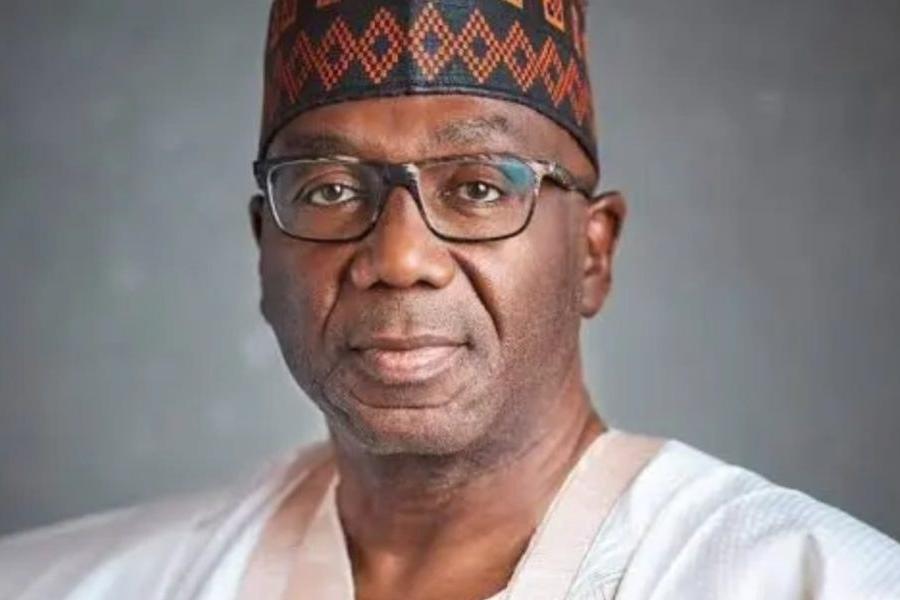
ABUJA, October 15, 2026 — Anambra State Governor, Professor Chukwuma Charles Soludo, has described the growing political alignment behind President Bola Ahmed Tinubu’s re-election bid as an unusual development in Nigeria’s democratic history, highlighting the emergence of cross-party cooperation around national leadership, economic reforms and the country’s long-term development prospects.
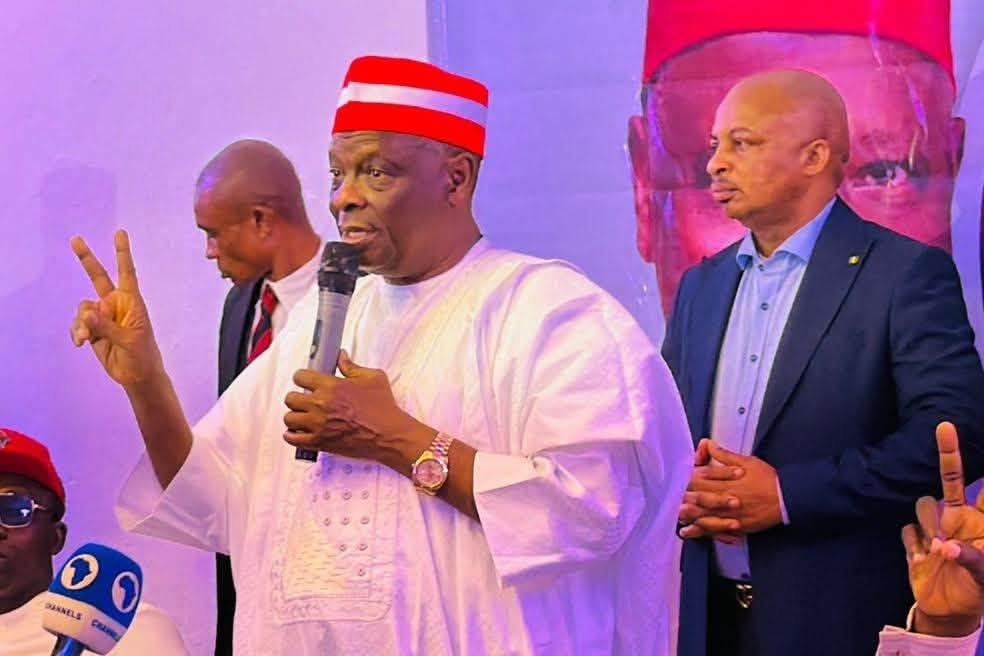
Soludo, a former Governor of the Central Bank of Nigeria (CBN), made the observation at the inauguration of the All Progressives Congress (APC) Presidential Campaign Council in Abuja on Wednesday, October 14, where political leaders, governors and other stakeholders gathered to signal their commitment to the President’s re-election project ahead of the 2027 general election.
The Anambra governor’s intervention stood out because he was elected on the platform of the All Progressives Grand Alliance (APGA), a party that maintains its independent political identity outside the APC. His participation in the event therefore illustrated the possibility of cooperation across party lines when political leaders believe that national interests, economic priorities and development objectives provide common ground.
According to a report by the Media and Publicity Team of the Forum of Chief Executives of Federal Parastatals (FORCEPA), Soludo’s address placed the political support for Tinubu within the broader context of Nigeria’s economic transformation, the responsibilities of leadership and the importance of confronting structural challenges that have constrained national development for decades.

For the governor, the significance of the gathering extended beyond the inauguration of a campaign organisation. It represented an opportunity to reflect on the relationship between political consensus and the pursuit of policies intended to reposition Nigeria for sustainable growth.
Cross-Party Cooperation Takes Centre Stage
Soludo drew attention to the participation of approximately 31 state governors associated with the gathering, describing the breadth of political alignment as an exceptional feature of the President’s re-election campaign.
The observation highlighted the extent to which Tinubu’s political project has attracted interest beyond the traditional boundaries of the APC, even as individual governors and political stakeholders retain their respective party affiliations and electoral calculations.
Such cooperation is significant in a political environment where party identity often determines the direction of alliances, campaign strategies and public debate. The willingness of prominent political figures from different backgrounds to participate in discussions around the President’s re-election bid suggests that economic policy, governance priorities and expectations about national development are increasingly important considerations in political engagement.
However, the participation of political leaders at the inauguration should not be interpreted as a formal endorsement by every governor present or as evidence that all Nigerians support the President’s re-election. Rather, it demonstrates the breadth of political engagement surrounding the administration as preparations for the 2027 election gather momentum.
Soludo’s position is particularly noteworthy because of his standing as an economist and administrator whose political career has developed outside the APC. His remarks therefore brought an additional dimension to the campaign, moving the conversation beyond party loyalty to an assessment of the economic philosophy and policy choices underpinning the Tinubu administration.
The governor’s participation also reinforced the argument that democratic politics can accommodate cooperation among leaders who do not belong to the same political party, provided such engagement remains consistent with their respective mandates and constitutional responsibilities.
In a federation as diverse as Nigeria, the ability of political leaders to identify areas of common interest can be important in promoting national cohesion, strengthening institutional relationships and sustaining policies that require cooperation across different levels of government.
Soludo’s Economic Perspective on Tinubu’s Reforms
Beyond the political significance of the inauguration, Soludo used his intervention to discuss the economic philosophy guiding the Tinubu administration.
Drawing on his experience as a former CBN governor and his academic background in economics, he characterised the administration’s approach as pragmatic progressivism—a description that captures the argument that difficult economic decisions sometimes become necessary to correct structural weaknesses and establish a foundation for more sustainable development.
The expression reflects an approach to governance in which economic reforms are assessed not only by their immediate political popularity but also by their capacity to address deep-rooted problems, improve the management of public resources and create conditions for future growth.
Nigeria has faced longstanding economic challenges, including dependence on crude oil revenues, pressure on public finances, foreign-exchange instability, infrastructure deficits and insufficient industrial capacity. These problems have limited the government’s ability to deliver public services, support businesses and create employment at the scale required by the country’s expanding population.
Successive administrations have attempted different combinations of economic policies to address these difficulties, with varying degrees of success. Tinubu’s administration has pursued significant changes intended to alter the structure of public finance and the management of the economy.
Supporters argue that such reforms are necessary to reduce distortions, improve fiscal sustainability and encourage investment. They maintain that postponing difficult decisions can deepen existing problems, increase the eventual cost of adjustment and leave future governments with fewer options.
Soludo’s intervention placed the President’s economic decisions within this broader debate, emphasising the importance of confronting structural weaknesses rather than relying indefinitely on arrangements that may provide temporary relief while leaving underlying problems unresolved.
His economic perspective is relevant to the current national discussion because the consequences of major policy changes extend beyond the federal government. State governments, local authorities, businesses and households all operate within the economic environment shaped by decisions on taxation, public expenditure, energy, foreign exchange and investment.
For a governor responsible for managing the economy of Anambra State, the relationship between national economic policy and state-level development is particularly important. The performance of the wider economy can affect the cost of infrastructure projects, the availability of credit, business expansion, household purchasing power and the capacity of state governments to deliver essential services.
From Economic Adjustment To Sustainable Prosperity
One of the central questions surrounding the Tinubu administration is whether the economic adjustments already undertaken will translate into lasting improvements in productivity, investment and living standards.
Soludo’s remarks, as reported by FORCEPA, presented the administration’s reform direction as an attempt to move Nigeria away from persistent instability and towards a more sustainable economic footing.
The argument rests on the distinction between making necessary policy adjustments and achieving the full benefits those adjustments are intended to produce.
Economic reform is rarely a single event. It is generally a process involving changes in public finance, institutional capacity, market incentives and the relationship between government and the productive economy. Its ultimate success depends on the consistency with which policies are implemented, the credibility of public institutions and the ability of businesses and households to adapt to changing conditions.
For Nigeria, this means that reform must be accompanied by measures that expand domestic production, strengthen agriculture, improve transportation and power infrastructure, support manufacturing and create employment opportunities for millions of young people entering the labour market.
A more productive economy would give businesses greater capacity to compete, reduce excessive dependence on imported goods and improve the resilience of public revenues. It would also provide a stronger basis for funding education, healthcare, security and other services that citizens expect from government.
Soludo’s emphasis on the economic philosophy behind the administration’s policies is therefore an invitation to consider the broader objectives of reform rather than treating each policy decision in isolation.
Nevertheless, the durability of the reforms will ultimately depend on measurable outcomes. Nigerians will want to see improvements in real household incomes, employment, food affordability, business confidence, electricity supply and access to essential public services.
The administration’s supporters believe that the current policy direction can establish the conditions for those improvements. Critics, however, argue that the benefits are not reaching ordinary citizens quickly enough and that the immediate pressures associated with economic adjustment remain severe for many households.
These concerns are important to the national conversation. A successful reform programme must not only improve macroeconomic indicators; it must also create credible pathways through which the benefits of greater economic stability reach workers, traders, farmers, entrepreneurs and vulnerable households.
The challenge for the government is to sustain the direction of reform while strengthening the measures that protect livelihoods, stimulate production and expand opportunities for ordinary Nigerians.
Why Soludo’s Position Matters
Soludo’s participation in the APC campaign council inauguration carries political significance because it demonstrates that discussions about Tinubu’s re-election are not confined entirely to the ruling party’s established membership.
As an APGA governor, Soludo occupies a political space distinct from the APC, and his intervention provides an example of how political actors outside the President’s party can engage with the administration’s national development agenda.
Such engagement does not erase differences between parties or remove the need for opposition scrutiny. Rather, it illustrates that political competition and cooperation can coexist within a democratic system.
Political parties remain essential to democracy because they organise competing ideas, articulate policy alternatives and provide voters with choices. Cross-party cooperation, meanwhile, can help governments address issues that require broad participation, particularly where economic development, national security and institutional effectiveness are concerned.
The significance of Soludo’s intervention lies in its emphasis on economic policy as a legitimate basis for political engagement. Instead of approaching the President’s re-election solely as a contest between political personalities, the governor’s address placed attention on the policy choices and development objectives that voters will be expected to evaluate in 2027.
That approach offers an opportunity for a more substantive electoral debate in which candidates and parties explain how their programmes would improve the lives of citizens.
For the APC, the participation of political figures from outside its ranks can strengthen the visibility of the President’s campaign and broaden the conversation about his administration’s economic direction. It also places a responsibility on the ruling party to demonstrate that its programme can deliver results that justify the confidence expressed by its political allies.
For other political parties, the development reinforces the need to present convincing alternatives and explain how their proposals would address the country’s economic and social challenges.
Ultimately, it is the Nigerian electorate that will determine the outcome of the 2027 presidential election. Political gatherings can signal support, but electoral legitimacy depends on the freedom of citizens to make their choices and the credibility of the electoral process.
Public Institutions and The Delivery of Reforms
The FORCEPA report also drew attention to the importance of public institutions in translating government policies into tangible outcomes.
As a forum bringing together chief executives of federal parastatals, FORCEPA emphasised the role of public-sector institutions in implementing development programmes, documenting government performance and making reliable information available to citizens.
This institutional dimension is critical because economic policies cannot succeed through presidential directives alone. Their implementation requires competent agencies, transparent administrative processes, effective coordination and accountability for public resources.
Federal parastatals and other public institutions operate at the intersection between policy formulation and service delivery. Their performance can influence the quality of infrastructure, the efficiency of regulatory systems, the management of public assets and the experience of citizens and businesses dealing with government.
When institutions operate effectively, they can help reduce administrative bottlenecks, improve the delivery of services and ensure that public expenditure produces measurable benefits. Where institutional weaknesses persist, even well-designed policies may fail to achieve their intended objectives.
The Tinubu administration’s economic programme will therefore require sustained institutional discipline, accurate reporting, effective monitoring and the willingness to correct implementation failures where they occur.
Public communication is equally important. Nigerians need credible information about government policies, their costs, their expected benefits and the progress being made towards stated objectives. Transparent communication can strengthen public understanding, while independent scrutiny helps ensure that claims about progress are supported by verifiable evidence.
For the administration, maintaining public confidence will require demonstrating not only that difficult decisions have been taken but also that those decisions are producing practical improvements in the lives of citizens.
The 2027 Election and The Test of Public Confidence
With the 2027 general election approaching, the political environment surrounding Tinubu’s re-election bid is likely to become increasingly competitive. The APC will seek to present the President’s record as a basis for another mandate, while opposition parties will attempt to persuade voters that alternative approaches offer better prospects for the country.
Against this background, Soludo’s description of the political gathering as an unusual demonstration of consensus adds to the debate about the forces shaping the next presidential contest.
The presence of influential political figures can strengthen a campaign organisation, but the decisive question remains whether the administration can connect its policy objectives with the everyday experiences of Nigerians.
Voters will assess the government not only by the strength of its political alliances but also by the availability of jobs, the cost of food, the affordability of transportation, the security of communities and the prospects for a better future.
This makes the period between now and the election especially important. Continued efforts to stabilise the economy must be matched by a determined focus on production, investment, employment and social welfare. Greater economic activity must ultimately translate into opportunities that people can recognise in their households and communities.
At the same time, a credible democratic process must allow competing political parties to campaign freely, challenge government policies and present alternative programmes. Consensus among political elites should never be confused with unanimity among citizens, whose constitutional right to choose their leaders remains fundamental.
A mature democracy can accommodate broad cooperation around national objectives while preserving vigorous competition over the best means of achieving them.
A Call to Place Development At The Heart Of Politics
Soludo’s intervention at the APC Presidential Campaign Council inauguration has brought economic policy and cross-party engagement into sharper focus as Nigeria prepares for another consequential electoral cycle.
His description of Tinubu’s approach as pragmatic progressivism reflects the argument that confronting longstanding economic difficulties requires difficult decisions, policy consistency and a willingness to pursue structural change.
The political significance of the gathering, meanwhile, lies in the participation of leaders whose affiliations extend beyond the APC, illustrating the possibility of cooperation around issues considered important to national development.
For Tinubu and the APC, the challenge is to convert the political support demonstrated at the inauguration into a compelling record of delivery. For the wider political class, the challenge is to ensure that the 2027 election becomes a contest of ideas, programmes and verifiable achievements rather than a struggle defined exclusively by personalities and party rivalries.
For Nigerians, the ultimate measure will be whether the country moves towards greater economic security, stronger institutions, improved public services and wider opportunities for productive work.
The message emerging from Soludo’s address is that political alignments acquire their greatest value when they help advance national objectives. If the emerging cooperation around the President’s re-election bid contributes to a more serious discussion of economic transformation, institutional performance and the responsibilities of leadership, it could enrich the national debate ahead of 2027.
The enduring test, however, will be results. Political consensus may provide momentum, but sustainable prosperity requires effective governance, accountable institutions and a tangible improvement in the living conditions of citizens.
As Nigeria moves towards the next election, the opportunity is to make national development the central question of political competition, ensuring that every campaign, alliance and policy commitment is ultimately judged by its contribution to a more productive, secure and prosperous country.