PublicSphere Live
Politics
APC Campaign Inauguration: Tinubu’s Broad-Based Politics and The Challenge of Turning Consensus Into Victory
Taken together, these themes provide a useful framework for understanding the APC’s emerging campaign strategy and the opportunities available to Tinubu as he seeks to consolidate his political standing.
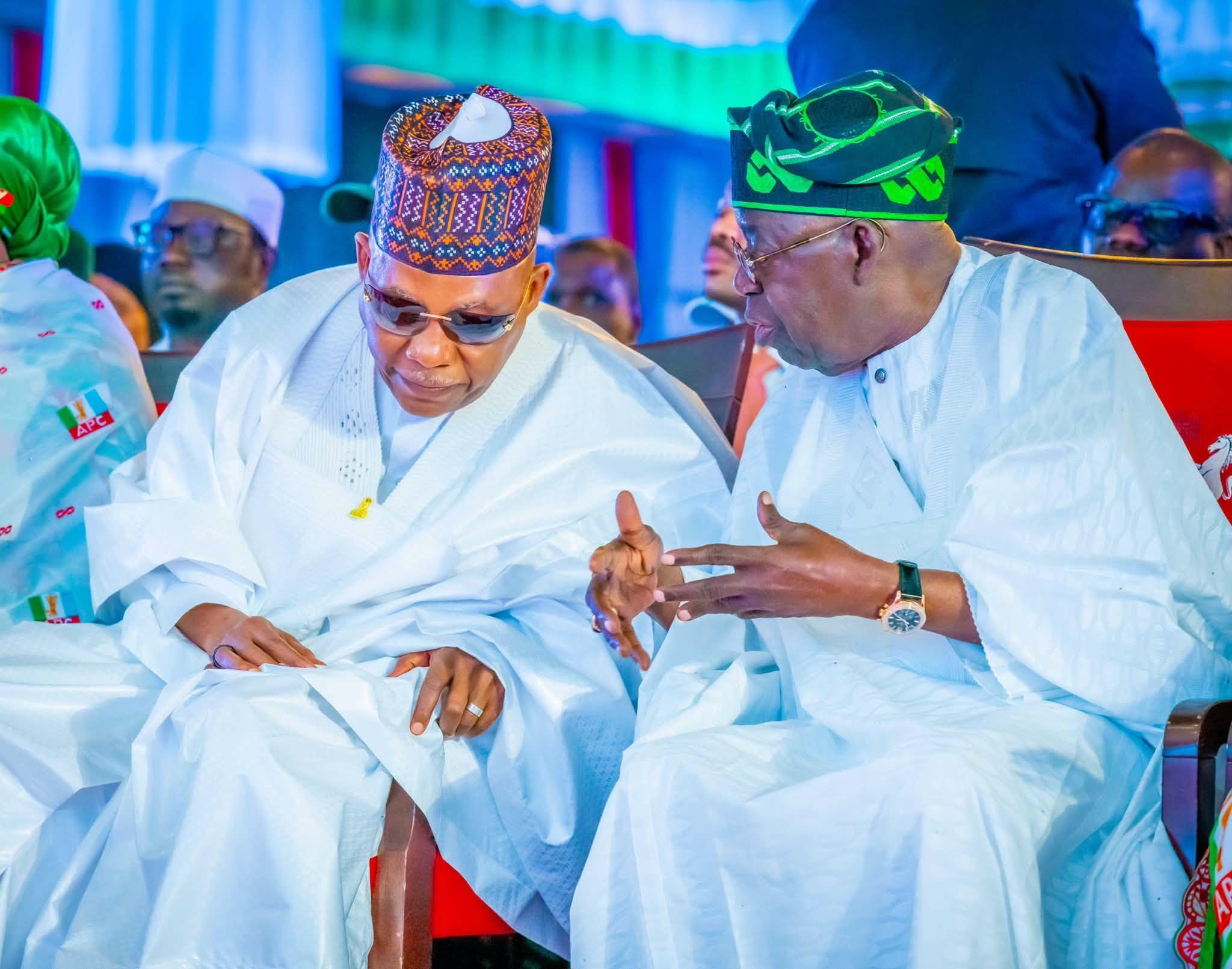
The inauguration of the All Progressives Congress Presidential Campaign Council offers President Bola Tinubu an opportunity to consolidate political alliances, demonstrate inclusive leadership and present his administration’s record to Nigerians. But beyond the gathering of political heavyweights, the real test will be the ability to translate the emerging consensus into measurable improvements in citizens’ lives.
The inauguration of the All Progressives Congress (APC) Presidential Campaign Council on Wednesday, October 14, 2026, has provided an important window into the political calculations, strategic priorities and leadership philosophy that could shape the battle for the 2027 presidential election. More than the formal commencement of preparations for President Bola Tinubu’s re-election, the event offered a glimpse of the coalition-building strategy through which the governing party hopes to strengthen its national appeal and secure another four-year mandate.
The observations made by Fredrick Nwabufo in his assessment of the inauguration draw attention to five significant themes: the emergence of a broad political consensus, the need for a disciplined campaign, the continuity of governance during the election season, the growing importance of women in electoral mobilisation and the centrality of young Nigerians to the country's future.
Taken together, these themes provide a useful framework for understanding the APC’s emerging campaign strategy and the opportunities available to Tinubu as he seeks to consolidate his political standing.
The inauguration also raises a fundamental question about Nigerian democracy: can political leaders with different backgrounds, interests and party affiliations find sufficient common ground to support a shared national development agenda, even when their political journeys have followed different paths?
The answer could have far-reaching implications for the 2027 election and for the country's broader political culture.
Broad Consensus and The Politics Of Inclusion
One of the most significant takeaways from the inauguration is the emphasis on broad-based political engagement. Nigerian politics has traditionally been characterised by intense competition between political parties, often accompanied by sharp disagreements, personal rivalries and the tendency to interpret political differences as permanent divisions.
Against this background, the willingness of politicians from different political traditions to engage with the Tinubu administration and its re-election project presents an opportunity to expand the boundaries of political cooperation.
Nwabufo interprets the development as evidence of an expansive leadership approach, one that seeks to accommodate different voices rather than confine political participation to members of the governing party. This interpretation highlights an important dimension of democratic leadership: the ability to build relationships beyond one's immediate political constituency.
President Tinubu's extensive experience in Nigerian politics provides a foundation for this approach. Over the years, he has cultivated political relationships across different regions and political tendencies, while maintaining a reputation for strategic alliance-building. Such relationships can become valuable assets during an election cycle, when the capacity to negotiate interests and maintain a broad coalition often determines the strength of a campaign.
Governor Chukwuma Soludo of Anambra State, as cited in Nwabufo's account, described the emerging alignment as an unprecedented level of elite consensus concerning the country's political future. Whether that assessment ultimately translates into a durable national consensus remains to be seen, but the observation underscores the significance of political dialogue across established boundaries.
Nevertheless, political consensus should not be confused with unanimity. Nigeria remains a plural society with diverse economic interests, regional priorities and ideological preferences. A healthy democracy requires room for disagreement, criticism and competing policy alternatives.
The opportunity for Tinubu, therefore, is to make political inclusion a practical feature of governance rather than merely a campaign message. If supporters from different political backgrounds can contribute meaningfully to national development, the benefits of coalition-building could extend beyond electoral calculations.
For the APC, a broader coalition could strengthen its reach, improve its understanding of different constituencies and help it communicate its policies to Nigerians who might not traditionally identify with the party.
Ultimately, the strength of this consensus will depend not simply on the number or stature of political figures associated with it, but on its ability to command public confidence.
A Disciplined Campaign Built Around Ideas
Another important message from the inauguration is the call for a peaceful and issue-based campaign.
APC National Chairman Nentawe Yilwatda, according to Nwabufo's account, urged political actors to make the coming election a contest of ideas, records and policies, conducted with respect for Nigerians.
This is a constructive position, particularly at a time when political communication can easily be overwhelmed by provocative statements, misinformation and personality-driven confrontations.
For Tinubu and the APC, a disciplined campaign presents an opportunity to explain the administration's decisions, outline its achievements and make a persuasive case for continuity. Rather than relying exclusively on political endorsements or the strength of the governing party's machinery, the campaign can engage voters through evidence, policy explanations and a clear account of what the administration hopes to accomplish.
The importance of this approach cannot be overstated. Elections are not merely competitions between political personalities; they are also opportunities for citizens to evaluate competing ideas about the direction of their country.
The APC has a particular interest in ensuring that the 2027 contest focuses on its policy choices and governing record. Where the administration believes its reforms are producing results, the campaign should provide clear explanations supported by credible data. Where the benefits remain uneven or implementation is incomplete, it should communicate how it intends to address those shortcomings.
Such an approach would help voters distinguish between the immediate costs of economic adjustment and the longer-term objectives of reform.
It would also allow the governing party to challenge its opponents through substantive arguments rather than personal attacks.
However, campaign discipline must be reciprocal. While the APC should maintain a respectful tone, it must also recognise that opposition parties have a legitimate responsibility to question government policies and propose alternatives. Criticism is not necessarily hostility, just as political disagreement does not automatically imply a lack of patriotism.
The most persuasive campaign will be one that can defend its record confidently while treating opposing views with respect.
For Tinubu, this would reinforce the inclusive leadership message presented at the inauguration and demonstrate that the administration is comfortable engaging Nigerians on the merits of its policies.
Governance Must Continue During The Campaign
Perhaps one of the most consequential points highlighted by Nwabufo is the commitment to maintain the machinery of government throughout the election season.
Nigeria's political calendar has sometimes encouraged a diversion of attention and resources towards electoral calculations, leaving citizens concerned about whether governance receives sufficient priority during campaign periods.
The decision to maintain a focus on governance while preparing for the election is therefore significant. It recognises that an elected administration's responsibilities do not diminish simply because another election is approaching.
Tinubu's mandate runs until May 29, 2027. Until that date, the administration remains responsible for economic management, security, infrastructure, public services and the implementation of policies intended to improve citizens' welfare.
The campaign should consequently operate alongside government business rather than become a substitute for it.
This is especially important because the performance of the administration during the remaining months of its current tenure will influence how voters assess its claim to another mandate. Political messaging can explain policies, but the everyday experiences of citizens will ultimately shape perceptions of their effectiveness.
For example, progress in transport infrastructure, electricity supply, agricultural productivity, industrial development and employment creation would provide tangible grounds on which the administration could make its case. Equally, improvements in the cost and availability of essential goods, household purchasing power and access to economic opportunities would help Nigerians judge whether policy changes are delivering the anticipated benefits.
The administration's economic reforms have involved difficult adjustments, making the relationship between policy objectives and citizens' experiences particularly important. A credible explanation of long-term goals must be accompanied by visible attention to immediate hardships and the needs of vulnerable households.
Maintaining governance during the campaign would also demonstrate institutional maturity. It would show that the presidency understands the distinction between the temporary demands of political competition and the continuing obligations of public office.
For the APC, effective governance is not separate from electoral strategy. It is among the strongest foundations on which a re-election campaign can be built.
Women: A Decisive Constituency In 2027
The emphasis on women at the inauguration reflects another important reality of Nigerian electoral politics: women are central to both democratic participation and national development.
Women contribute significantly to agriculture, commerce, education, healthcare, manufacturing and the informal economy. They also play indispensable roles in household management, community organisation and political mobilisation.
Consequently, any serious campaign for national leadership must address women's economic opportunities, representation, security and access to public services.
Nwabufo points to the representation of women in the Tinubu administration, as well as programmes such as the Nigeria for Women Programme Scale-Up and the Renewed Hope Initiative led by First Lady Oluremi Tinubu.
These initiatives provide a platform for discussing women's empowerment, including access to finance, agricultural support, education and livelihood opportunities. Their ultimate significance, however, will depend on the scale of participation, the effectiveness of implementation and the durability of their benefits.
The President's reported pledge to support the Reserved Seats for Women Bill is also noteworthy. The proposal addresses the longstanding concern that women remain underrepresented in elected political offices despite their substantial contribution to society and the electorate.
Greater representation could broaden legislative perspectives, strengthen democratic inclusion and improve attention to issues affecting women and families.
For the APC, engagement with women should go beyond campaign mobilisation. Women need opportunities to participate in policy formulation, leadership, enterprise development and decision-making at every level.
The claim that women constitute a particularly influential voting bloc also highlights the importance of listening to their priorities rather than assuming that demographic strength automatically translates into political support.
Economic pressures, access to healthcare, education costs, maternal welfare, personal security and employment opportunities are among the issues that can shape women's electoral choices.
If the APC can demonstrate measurable progress in these areas, its engagement with women could become a meaningful component of its wider development argument.
Young Nigerians and The Future Of The Nation
The attention given to young people at the inauguration reflects another strategic consideration for the 2027 election.
Nigeria's youthful population represents an enormous reservoir of talent, creativity, entrepreneurship and productive energy. It also presents a major policy responsibility, particularly in a country where many young people seek stable employment, affordable education, access to capital and opportunities to build sustainable livelihoods.
Tinubu's reported commendation of the Shaping the Future Together Colloquium, organised by Seyi Tinubu, was presented as an example of the importance of listening to different generations and encouraging young Nigerians to participate in nation-building.
The broader principle is sound: young people should not be treated merely as campaign volunteers, social media advocates or election-day mobilisers. They should have a meaningful place in discussions about economic policy, innovation, education, technology and the country's institutional future.
For the APC, the challenge is to connect its reform agenda to the aspirations of young Nigerians. Policies that encourage small businesses, expand digital opportunities, improve vocational training, support creative industries and strengthen access to quality education could help demonstrate how national economic changes translate into opportunities for the next generation.
The same applies to employment. Economic growth becomes more persuasive when it creates productive jobs, supports new enterprises and enables young people to develop skills that are relevant to an evolving economy.
The administration's argument that reforms are intended to protect future generations will be more convincing when accompanied by visible opportunities for those generations in the present.
Young Nigerians are also increasingly active participants in public debate. They are capable of examining government policies, questioning political claims and comparing the promises of competing parties. Their engagement therefore requires honesty, accessibility and a willingness to explain difficult decisions.
An APC campaign that listens to young people, recognises their concerns and offers credible pathways to economic participation could strengthen its appeal among a constituency that will be crucial to the country's democratic future.
From Political Momentum To Public Confidence
The inauguration of the APC Presidential Campaign Council has highlighted several opportunities for Tinubu and the governing party. Coalition-building can widen political engagement, campaign discipline can elevate public debate, continuity in governance can demonstrate responsibility, and greater attention to women and young people can strengthen the administration's development agenda.
Yet these opportunities are interconnected. Broad political consensus will be more durable when supported by effective governance. A disciplined campaign will be more persuasive when it presents verifiable achievements. Engagement with women and young people will carry greater weight when it produces meaningful participation and tangible benefits.
The APC should therefore approach the coming months as an opportunity to consolidate its political relationships while demonstrating that its priorities remain firmly connected to the welfare of Nigerians.
Political endorsements can generate momentum, but the ultimate decision belongs to the electorate. The governing party's task is to explain its record, articulate its plans and show why continuity under Tinubu would serve the national interest.
That requires a campaign that is confident without being dismissive, ambitious without being unrealistic, and politically energetic without neglecting the responsibilities of government.
It also requires the recognition that national development is a continuing process. No administration can resolve every challenge within a single term, but citizens are entitled to assess the direction of policy, the quality of implementation and the extent to which government decisions improve their lives.
The inauguration's emphasis on inclusion, peace, governance and generational responsibility offers a framework within which these questions can be addressed.
For Tinubu, the opportunity is to turn the gathering of political leaders into a broader demonstration of national purpose. For the APC, it is to show that a coalition assembled for an election can also contribute to the country's development beyond the campaign period.
And for Nigeria, a more issue-based and respectful election would be a welcome development, strengthening democratic participation while allowing competing political parties to make their cases before the people.
The defining test of the 2027 campaign will not simply be the size of the crowds, the prominence of the endorsements or the number of political figures who stand with the President. It will be whether the campaign can connect its message of broad consensus to the everyday hopes and concerns of ordinary Nigerians.
If the APC succeeds in doing so while sustaining effective governance, the political momentum generated by the inauguration could become an important asset in its quest for another mandate.