PublicSphere Live
Features
IMF Urges Nigeria to Improve Revenue Collection, Spending Quality, Calls For Targeted Cash Transfers
The Fund warns that economic growth has yet to translate into meaningful relief for millions of Nigerians grappling with poverty and food insecurity.
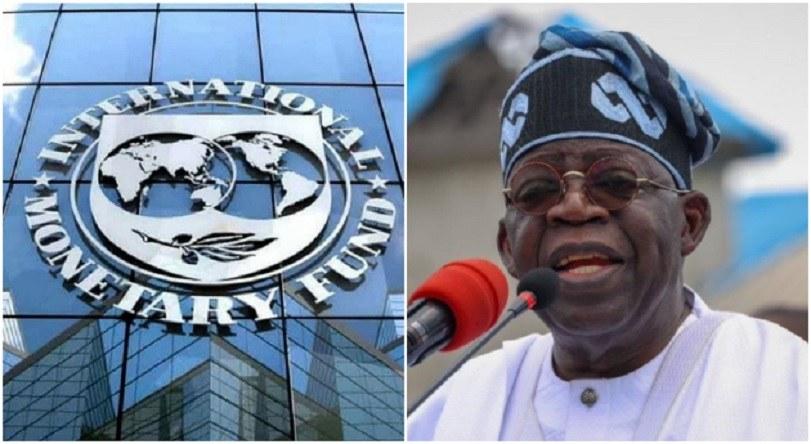
The International Monetary Fund (IMF) has urged the Federal Government to improve the quality of public expenditure and strengthen revenue collection, warning that Nigeria must do more to ensure that the benefits of economic reforms translate into better living conditions for its citizens.
The global financial institution also expressed concern over Nigeria’s persistently high poverty levels and worsening food-security challenges, recommending targeted and temporary cash transfers to vulnerable households as part of efforts to cushion the effects of economic hardship.
The recommendations were made by Ms Deniz Igan, Division Chief in the IMF’s Research Department, during a media briefing on the World Economic Outlook at the Fund’s Annual Meetings in Thailand.
Although the IMF acknowledged that Nigeria’s economy had continued to record growth despite significant domestic and global challenges, it stressed that economic expansion alone was insufficient to address the difficulties confronting millions of households.
Igan noted that Nigeria’s position as an energy-exporting country had helped sustain economic growth, but the benefits had not adequately reached large sections of the population, particularly households struggling to afford food and other basic necessities.
“While the growth held up in Nigeria, given it is an energy exporter, poverty rates are still very high, and we are very mindful that the population is suffering when it comes to especially food security,” she said.
The IMF official maintained that the government needed to provide direct assistance to the most vulnerable Nigerians while ensuring that such interventions were consistent with the country’s medium-term fiscal framework.
“What we’re advocating for is cash transfers and income support — targeted, temporary income support for the most vulnerable households,” she added.
According to Igan, cash transfers could help alleviate poverty and improve food security, provided the programme was properly targeted and accompanied by measures to improve the efficiency of government spending and increase revenue mobilisation.
The intervention places renewed attention on the central challenge confronting Nigeria’s economic management: how to sustain macroeconomic reforms, strengthen public finances and improve growth while protecting households whose purchasing power has been eroded by rising living costs.
Growth Without Sufficient Relief
Nigeria’s economic reform programme has sought to address long-standing structural weaknesses, including distortions in the foreign-exchange market, the fiscal burden associated with petrol subsidies and the country’s weak capacity to generate public revenue.
The administration of President Bola Tinubu has defended its reforms as necessary measures to restore economic stability, attract investment, improve government finances and establish the foundation for sustainable growth.
However, the immediate consequences of these policy changes have placed considerable pressure on households and businesses. Higher transport costs, elevated food prices and rising expenses for essential goods and services have reduced the purchasing power of many Nigerians.
For households whose earnings have not increased at the same pace as prices, even modest economic growth may offer little immediate relief.
The IMF’s assessment therefore highlights the difference between improvements in headline economic indicators and changes in the welfare of ordinary citizens.
An economy may expand because of increased oil production, higher export earnings, improved business activity or growth in selected sectors without generating sufficient employment, real wage increases or affordable access to food, healthcare and education.
The distribution of economic gains is consequently as important as the pace of growth.
For Nigeria, the challenge is particularly significant because the country’s large population means that improvements in national output must be sufficiently broad-based to produce meaningful gains in household welfare.
Growth that is concentrated in capital-intensive sectors may increase national income without creating enough jobs or lifting millions of people out of poverty.
The IMF’s intervention suggests that Nigeria must complement its macroeconomic stabilisation programme with deliberate measures to protect vulnerable households and strengthen the connection between economic growth and social development.
Cash Transfers As A Safety Net
The IMF’s recommendation for targeted and temporary cash transfers reflects the need to provide immediate relief without creating an open-ended expansion of government expenditure.
Under such a programme, eligible households would receive direct financial assistance to help them purchase food and meet other essential expenses during periods of economic distress.
Unlike broad subsidies, which may benefit higher-income households as well as the poor, a properly designed cash-transfer system can concentrate available resources on people with the greatest need.
This distinction is important in a country where fiscal resources are limited and competing demands on the public purse are substantial.
However, the effectiveness of cash transfers depends on how beneficiaries are identified, how payments are delivered and how the government prevents diversion, duplication and political interference.
Nigeria has previously pursued social-protection initiatives intended to support poor and vulnerable households. The challenge is to ensure that assistance reaches the intended beneficiaries promptly, transparently and in amounts that provide meaningful relief.
An effective programme would require reliable beneficiary records, accessible payment channels, clear eligibility criteria and independent monitoring of disbursements.
It would also need a mechanism for correcting exclusions, since some of the poorest households may lack formal identification, banking access or reliable digital connectivity.
The government must guard against a situation in which administrative weaknesses, inaccurate databases or corruption prevent assistance from reaching the people for whom it is intended.
Furthermore, cash transfers should not be treated as a substitute for addressing the structural causes of poverty.
While direct payments can help households cope with immediate hardship, sustainable improvements in living standards require stronger agricultural productivity, better infrastructure, increased industrial production, reliable electricity, job creation and improved access to quality education and healthcare.
Cash assistance can provide breathing space for vulnerable families, but the longer-term objective should be to enable more Nigerians to earn stable incomes and meet their needs without depending on government support.
Why Expenditure Quality Matters
The IMF’s emphasis on expenditure quality raises questions about how effectively public funds are allocated and whether government spending produces measurable economic and social benefits.
Improving expenditure quality does not necessarily mean reducing every category of public spending. Rather, it requires the government to distinguish between expenditure that delivers lasting public value and spending that produces limited benefits relative to its cost.
Nigeria’s development priorities include transport infrastructure, electricity, education, healthcare, security, agriculture and industrial development. These sectors can strengthen productivity, create employment and expand the economy’s capacity to generate revenue.
However, the impact of public expenditure depends on project selection, procurement procedures, implementation standards, maintenance and accountability.
A road project that is poorly executed, an abandoned hospital, an inadequately equipped school or an infrastructure contract inflated by corruption may consume substantial public resources without delivering commensurate benefits.
Conversely, well-planned investments can reduce business costs, improve access to markets, encourage private-sector investment and raise the productive capacity of the economy.
The Federal Government therefore needs to ensure that its budgets are guided by clear priorities, credible cost estimates and measurable performance indicators.
It must also strengthen procurement oversight, reduce waste, publish relevant expenditure information and ensure that projects are evaluated according to the benefits they deliver to citizens.
The quality of recurrent expenditure is equally important. Government salaries and essential administrative costs are necessary, but public institutions must demonstrate efficiency, while spending on non-essential activities should not displace urgent development priorities.
The same scrutiny should apply to public borrowing. Loans contracted for productive investments capable of generating economic returns may strengthen long-term development, but borrowing to finance wasteful or poorly targeted expenditure can increase debt-service obligations without improving the country’s capacity to repay.
Ultimately, every naira spent by government should be assessed against the public value it creates.
Revenue Collection and The Fiscal Challenge
The IMF’s second major recommendation concerns revenue mobilisation, an area that has remained a persistent weakness in Nigeria’s public finances.
Despite its large population, substantial natural resources and sizeable domestic market, Nigeria has historically struggled to generate sufficient public revenue relative to the size of its economy.
This constrains the government’s capacity to finance infrastructure, provide essential services, support vulnerable households and respond to economic shocks without excessive borrowing.
The country’s dependence on oil revenue also exposes public finances to fluctuations in international crude prices, production disruptions, oil theft and other challenges affecting export earnings.
When oil receipts fall below expectations, the consequences can include budget shortfalls, additional borrowing, delayed payments to contractors and pressure on government agencies responsible for delivering public services.
Strengthening non-oil revenue collection would help reduce this vulnerability.
The government can improve revenue performance by broadening the tax base, closing loopholes, reducing evasion, improving customs administration and deploying technology to make tax assessment and collection more transparent.
However, better revenue collection must not become an excuse for imposing indiscriminate taxes on already struggling households or placing excessive burdens on small businesses.
The objective should be a fairer and more efficient tax system in which those with the capacity to pay contribute appropriately, exemptions are justified, and compliance is easier for legitimate businesses and individuals.
Tax administration should also minimise harassment, arbitrary assessments and multiple taxation, particularly at the state and local government levels, where overlapping levies can discourage business expansion and formalisation.
Improving public confidence is equally essential. Citizens are more likely to accept their tax obligations when they can see evidence that public revenue is being used responsibly to improve roads, schools, hospitals, security and other services.
Revenue mobilisation and expenditure reform must therefore proceed together. Asking citizens and businesses to pay more without demonstrating greater efficiency and accountability in government spending could undermine confidence in the reform programme.
Reforms Must Deliver Visible Benefits
The IMF’s position presents the Federal Government with a policy challenge that extends beyond balancing its books or improving selected economic indicators.
The government must demonstrate that its reform programme can deliver sustainable economic growth while reducing the hardship experienced by vulnerable Nigerians.
Macroeconomic stability remains important because persistent inflation, exchange-rate instability and uncertainty can undermine investment, discourage production and erode household incomes.
Nevertheless, stabilisation must be accompanied by policies that expand employment opportunities, strengthen domestic production and improve access to essential goods.
Agriculture deserves particular attention because food prices are a major determinant of household welfare. Investment in rural roads, irrigation, storage facilities, improved seeds, mechanisation and security in farming communities could increase supply, reduce post-harvest losses and moderate food-price pressures over time.
Industrial development is equally important. A stronger manufacturing base can create jobs, increase domestic value addition, reduce dependence on imported products and broaden the tax base.
Small and medium-sized enterprises also require a more supportive operating environment, including reliable electricity, access to affordable finance, predictable taxation and efficient infrastructure.
These measures would help move the economy beyond growth driven mainly by commodity earnings towards a more diversified structure capable of generating employment and raising incomes across a wider segment of society.
The government must also ensure that its social-protection policies are aligned with fiscal realities. Targeted assistance should be adequately funded, regularly reviewed and designed to respond to the needs of households facing the greatest hardship.
At the same time, the authorities should communicate clearly how beneficiaries are selected, how much assistance is provided and what safeguards exist to prevent abuse.
The Accountability Test
The IMF’s recommendations ultimately raise a question of accountability: what practical improvements will Nigerians experience as the economy grows and government revenues increase?
Economic reform cannot be judged exclusively by fiscal balances, investment announcements, export receipts or headline growth rates. Those indicators matter, but they must eventually translate into stronger purchasing power, improved access to essential services, productive employment and declining poverty.
The Federal Government faces the task of balancing immediate relief with long-term reform. Excessive spending without sustainable financing could weaken public finances, while insufficient assistance could deepen hardship and undermine public confidence in the reform programme.
The IMF’s proposed combination of temporary cash transfers, better expenditure management and stronger revenue collection offers a framework for addressing these competing demands.
Its success, however, will depend on implementation rather than policy declarations.
Nigeria needs a social-protection system that reaches vulnerable citizens, a public expenditure framework that prioritises measurable development outcomes and a revenue system that is broad-based, fair and efficient.
The government must also recognise that protecting the poor is not merely a humanitarian obligation. When households cannot afford adequate food, education or healthcare, their ability to participate productively in the economy diminishes, with consequences for national productivity and long-term growth.
For the millions of Nigerians confronting rising living costs, the critical measure of economic progress is not simply whether the economy is expanding, but whether they can afford to live with dignity.
The IMF has acknowledged the resilience of Nigeria’s growth while drawing attention to the inadequacy of the welfare gains reaching ordinary citizens. The message is clear: economic reforms must be judged not only by their contribution to macroeconomic stability, but also by their ability to improve livelihoods.
For the Tinubu administration, the challenge is to turn that principle into tangible results through disciplined spending, stronger revenue institutions, credible social protection and policies that expand productive opportunities.
The ultimate test of Nigeria’s economic strategy will be whether growth becomes more inclusive, public resources deliver greater value and fewer households are left struggling to secure their next meal.