PublicSphere Live
News
FG Flags Off N1.5trn Lambata-Bida-Mokwa-Kontagora Highway, Umahi Seeks Tinubu’s Re-Election
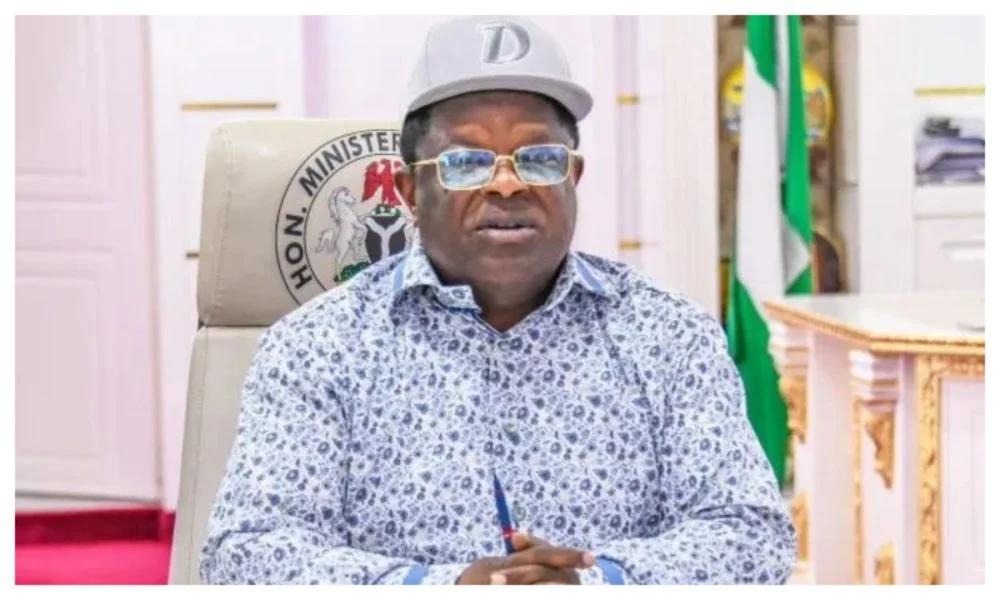
Umahi said the Tinubu administration was currently executing about 5,500 kilometres of new and ongoing road projects nationwide, with Niger State accounting for approximately 1,055 kilometres.
…Dangote Group to construct road with concrete pavement under tax-credit scheme
…Project to boost agriculture, commerce and regional connectivity in North-Central
The Federal Government has flagged off the reconstruction and dualisation of the Lambata-Bida-Mokwa-Makera-Kontagora highway in Niger State at an estimated cost of N1.5 trillion, with the Minister of Works, David Umahi, describing the project as a major infrastructure intervention that requires continuity in government for successful completion.
At the groundbreaking ceremony held in Bida, Umahi called on Nigerians to support President Bola Tinubu’s re-election bid in 2027, arguing that the President needed another four-year term to complete the numerous road projects initiated by his administration across the country.
The ceremony was attended by Niger State Governor, Mohammed Umaru Bago, who represented the President, as well as other government officials, lawmakers, traditional rulers and representatives of the Dangote Group, which is participating in the project through the Federal Government’s infrastructure tax-credit scheme.
Umahi said the Tinubu administration was currently executing about 5,500 kilometres of new and ongoing road projects nationwide, with Niger State accounting for approximately 1,055 kilometres.
He described the Lambata-Bida-Mokwa-Makera-Kontagora highway as a potential fifth legacy road project of the administration, citing its length, the adoption of reinforced concrete pavement and the involvement of the Dangote Group in its execution.
According to the minister, the project is expected to improve transportation within Niger State, strengthen connections between communities in the North-Central region and other parts of the country, and facilitate the movement of agricultural produce, commercial goods and industrial materials.
The highway is particularly significant because of its potential to improve access between major settlements and economic centres in Niger State, one of Nigeria’s largest states by land area, where long-distance road transportation remains essential to agriculture, trade and the distribution of essential commodities.
Umahi maintained that the Federal Government was committed to infrastructure development across the country’s geopolitical zones, adding that the administration’s ongoing road projects were intended to address longstanding transportation challenges and support economic activities.
He also disclosed that 162 kilometres of roads and 115 metres of bridges had been completed in the North-Central region.
The minister commended Bago for what he described as significant infrastructure development in Niger State, noting that the governor had constructed more than 300 kilometres of roads, over five flyovers and an underpass.
Umahi attributed the pace of infrastructure investment to the economic reforms introduced by the Tinubu administration, arguing that the policies had created opportunities for governments to direct resources towards critical development projects.
He said continuity in government would enable the administration to consolidate its infrastructure programme and complete projects already under construction.
However, his appeal for Tinubu’s re-election places the highway project within the broader political debate over the relationship between continuity in governance, infrastructure delivery and electoral accountability ahead of the 2027 general election.
While governments frequently defend the need for continuity to complete long-term projects, the ultimate assessment of such programmes will depend on their execution, adherence to timelines, cost management and the extent to which they deliver tangible benefits to citizens.
Bago Pledges Massive Support For Tinubu
Governor Bago, who represented Tinubu at the ceremony, described the highway as a strategic transportation corridor with considerable potential to improve connectivity among communities and facilitate the movement of people and goods.
He thanked the President for approving the project and other road interventions in the state, maintaining that the Federal Government’s investment would contribute to economic development and improve the quality of transportation infrastructure.
The governor pledged that Niger State would deliver the highest number of votes nationwide for Tinubu in the 2027 presidential election.
He also called on Nigerians to maintain peace and support political stability, arguing that the President should be allowed to complete a second term before power returned to the North.
Bago’s comments underscored the political significance attached to the highway project by the state government, particularly as the country moves towards another presidential election.
Nevertheless, the economic importance of the road extends beyond the political commitments made at the ceremony. Its eventual value to residents, farmers, traders, transport operators and businesses will depend on the quality of construction and the timely completion of the project.
For communities along the corridor, a properly reconstructed and dualised highway could reduce transportation difficulties, improve access to markets and public services, and strengthen commercial relationships between settlements that depend on road transport for their economic survival.
Dangote Group To Use Concrete Pavement
The participation of the Dangote Group represents a significant component of the project, particularly because the company will undertake construction through the Federal Government’s infrastructure tax-credit scheme.
Speaking at the ceremony, Mansir Ahmed, Special Adviser to the President and Chief Executive Officer of the Dangote Group, said the company was pleased to participate in the initiative, describing the highway as a critical economic corridor.
Ahmed disclosed that construction would commence from four locations to accelerate the delivery process.
He also said the highway would be constructed with concrete pavement rather than conventional asphalt, expressing confidence that the project would improve the movement of agricultural produce, commercial goods and industrial materials while creating employment opportunities for young Nigerians.
The use of concrete pavement is expected to be one of the defining features of the project. Concrete roads can offer durability and lower routine maintenance requirements under appropriate design and construction conditions, although their long-term performance depends on engineering standards, drainage, construction quality and the management of joints and other vulnerable sections.
For a highway intended to support heavy commercial traffic, the choice of pavement material is especially important. Trucks transporting agricultural commodities, industrial inputs and other goods place considerable pressure on road infrastructure, making structural strength and maintenance planning central to the project's long-term economic value.
The proposed commencement of construction from four locations could also help accelerate work along the extensive corridor, provided that the different construction fronts are adequately coordinated and supported by the necessary funding, materials, equipment and technical supervision.
The Dangote Group's participation also highlights the growing importance of public-private collaboration in Nigeria's infrastructure development.
Under the infrastructure tax-credit framework, eligible companies can finance approved public infrastructure projects and receive tax credits in accordance with the applicable scheme. The arrangement is intended to mobilise private-sector capital for public infrastructure without relying exclusively on direct government budgetary expenditure.
However, the effectiveness of such an arrangement ultimately depends on transparent project selection, clear contractual responsibilities, effective monitoring and public disclosure of the financial and construction obligations involved.
For a project valued at N1.5 trillion, Nigerians will expect clarity on its scope, implementation timetable, financing arrangements and mechanisms for ensuring that the road is delivered to the required standards.
Information Minister Hails Economic Reforms
The Minister of Information and National Orientation, Mohammed Idris, also commended the project, describing it as evidence of the Tinubu administration's commitment to infrastructure renewal.
Idris said the country's road infrastructure programme was making progress and urged Nigerians to support the administration's policies.
The Secretary to the Niger State Government, Abubakar Usman, similarly commended Tinubu for prioritising infrastructure development and Bago for his efforts in securing the project.
Usman said the highway would improve commerce, strengthen transportation links and stimulate economic activities at the grassroots.
He noted that better road connectivity could support businesses by making it easier to transport goods, connect producers with markets and improve the movement of people between communities.
For Niger State, where agriculture is an important source of livelihood, improved roads could be particularly valuable in reducing the difficulties farmers encounter when moving produce from rural areas to urban markets and distribution centres.
Poor road conditions can increase vehicle operating costs, prolong journey times, contribute to post-harvest losses and raise the final prices paid by consumers. A reliable highway network can help reduce some of these costs, although the extent of the benefits will depend on the road's accessibility, condition and connections to feeder roads and other transport infrastructure.
The Etsu Nupe and Chairman of the Niger State Council of Traditional Rulers, Yahaya Abubakar, welcomed the project on behalf of the state's traditional institutions.
He assured the Federal Government that the emirate councils would support efforts to ensure the successful completion of the highway.
The participation of traditional institutions is important in a project of this scale, particularly where construction may require cooperation with communities, resolution of local concerns and effective communication about the expected benefits and temporary disruptions associated with roadworks.
Lawmakers Support Infrastructure Continuity
The Chairman of the Senate Committee on Works, Allwell Heacho Onyesoh, and the Chairman of the House of Representatives Committee on Works, Akin Alabi, also highlighted the expected economic benefits of the project.
They joined other officials in calling for continuity in the administration's infrastructure programmes.
Abiodun Essiet, Senior Special Assistant to the President on Community Engagement, North-Central, similarly emphasised the importance of the project to the region.
Their support reflects the broad political and institutional interest in infrastructure development, especially projects capable of improving regional connectivity and supporting commercial activities across state boundaries.
Nevertheless, the implementation of the highway will require sustained coordination among the Federal Government, the relevant works authorities, the private-sector participant and the communities along the route.
The project's success will also depend on effective supervision, compliance with engineering specifications and measures to minimise disruptions to residents and businesses during construction.
A Major Test of Infrastructure Delivery
The N1.5 trillion Lambata-Bida-Mokwa-Makera-Kontagora highway project represents a substantial investment in Niger State's transportation infrastructure and could become an important link in the North-Central region's economic network.
Its strategic value lies not simply in the construction of a longer or wider road, but in its potential to improve the efficiency of trade, lower transportation costs, support agricultural production and strengthen connections between communities and markets.
The decision to use concrete pavement and begin construction from four locations suggests an effort to combine durability with faster execution. Whether those objectives are achieved will become clearer as work progresses and the government provides updates on implementation.
The scale of the investment also makes transparency and accountability essential. Nigerians will want to know when the project is expected to be completed, how its costs will be managed, what standards will govern construction and how the authorities will ensure that the road remains serviceable after commissioning.
The infrastructure tax-credit arrangement will similarly attract attention because it illustrates how private-sector participation can complement public investment. Its ultimate success should be measured by the quality of the infrastructure delivered and the value generated for the public, alongside compliance with the applicable financial and tax provisions.
For residents and businesses along the corridor, the immediate priority is a road that is safely constructed, completed within a reasonable period and maintained to withstand the demands of commercial transportation.
Umahi's call for Tinubu's re-election has introduced a political dimension to the groundbreaking ceremony, but the highway's lasting significance will ultimately be determined by the benefits it delivers rather than the promises made at its launch.
If completed to the required standards, the road could strengthen Niger State's economic links with other parts of the country, improve the movement of agricultural and industrial goods and contribute to a more efficient national transportation network.
The challenge before the Federal Government and its private-sector partner is therefore to translate the N1.5 trillion commitment into a durable public asset whose economic benefits will extend well beyond the 2027 election cycle.