PublicSphere Live
International Finance
IMF Warns of Uneven Global Growth As Energy Costs, Debt And Trade Tensions Threaten Outlook
AI investment boom creates opportunities for some economies, while Africa and other energy-importing countries face mounting pressures
The International Monetary Fund (IMF) has warned that the resilience of the global economy is increasingly uneven, with countries benefiting from the artificial intelligence (AI) investment boom and favourable terms of trade performing relatively well, while many lower-income economies and energy-importing nations face mounting economic pressures from higher prices, rising borrowing costs and geopolitical tensions.
In its latest edition of the World Economic Outlook, released in Bangkok, Thailand, during the IMF-World Bank Annual Meetings, the Fund projected global economic growth of 3.1 per cent this year and 3.4 per cent next year, while warning that elevated food and energy prices could push inflation to 4.7 per cent in the current year.
The projections highlight a global economy that continues to expand despite successive shocks but is becoming increasingly divided in its capacity to withstand economic disruptions, with the benefits of technological investment and favourable market conditions accruing unevenly across countries.
Deniz Igan, Division Chief in the IMF’s Research Department, said the global economy had demonstrated considerable resilience but cautioned that the forces supporting that performance were weakening.
“The global economy continues to prove resilient, but this resilience is becoming increasingly uneven,” Igan said, explaining that countries benefiting from AI-driven investment or favourable terms of trade were performing relatively well, unlike many economies exposed to higher energy import costs and persistent development constraints.
The Fund’s assessment carries significant implications for advanced economies, emerging markets and developing countries, particularly across Africa, where exposure to international commodity prices, limited fiscal capacity and high financing costs can make economic adjustment more difficult.
For Nigeria, the outlook raises important questions about the management of inflation, energy prices, public debt and foreign exchange pressures, as well as the country's ability to convert its position as a major oil producer into broader economic resilience, industrial expansion and improved living standards.
Global Economy: Resilience Under Pressure
The IMF’s growth projections suggest that the world economy is continuing to expand, but the underlying performance of individual countries is becoming more divergent as technological change, commodity-market developments and geopolitical risks reshape the distribution of economic gains.
The AI investment boom has emerged as an important source of support for economies with the technological infrastructure, capital markets, skilled workforce and industrial capacity required to benefit from increased spending on computing infrastructure, advanced software and related technologies.
However, the Fund’s assessment also points to the possibility that the economic benefits associated with AI could be accompanied by financial instability if market expectations rise beyond what actual productivity improvements eventually justify.
Igan warned that expectations surrounding AI could prove too optimistic, potentially triggering corrections in financial markets. At the same time, she acknowledged that faster-than-expected productivity gains could provide an additional boost to economic growth.
This two-sided risk presents policymakers and investors with a difficult challenge: encouraging technological innovation and productive investment without allowing excessive market valuations or speculative expectations to undermine financial stability.
The global outlook is also being shaped by persistent tensions in the Middle East, which could sustain pressure on energy and food prices, weaken purchasing power and increase production and transportation costs.
Higher energy prices can affect virtually every segment of economic activity, from electricity generation and manufacturing to agriculture, shipping and household consumption. When these increases are sustained, businesses may pass part of the additional costs to consumers, while central banks face difficult decisions over whether to maintain restrictive monetary conditions to contain inflation.
The IMF also identified rising sovereign bond yields and renewed trade tensions as significant risks. Higher government borrowing costs can narrow the resources available for infrastructure, healthcare, education and other public services, while trade disputes can disrupt supply chains, discourage investment and weaken demand for exports.
Consequently, the projected global expansion should not be interpreted as evidence that all economies are recovering at the same pace or that the risk of further disruption has disappeared. The Fund's warning is that the financial and policy buffers that helped countries absorb earlier shocks are diminishing, leaving them more exposed to another period of instability.
Inflation And The Cost-Of-Living Challenge
The IMF’s projection that inflation will reach 4.7 per cent this year places renewed emphasis on the cost-of-living challenge confronting households and businesses across the world.
Although inflation rates vary considerably between countries, higher food and energy prices can have particularly damaging effects on households that devote a large share of their incomes to essential consumption. Lower-income families generally have less room to absorb price increases because food, transportation, electricity and other basic necessities account for a substantial portion of their expenditure.
Businesses face a parallel challenge as higher fuel, logistics and financing costs squeeze profit margins and complicate investment decisions. Manufacturers may be forced to increase prices, reduce production or postpone expansion, while small businesses with limited access to affordable credit may struggle to remain competitive.
The pressure is especially complicated for central banks because monetary policy cannot directly produce more food, reduce geopolitical tensions or eliminate a disruption in global energy supplies. Higher interest rates may help restrain demand and prevent inflation expectations from becoming entrenched, but they can also increase borrowing costs for households, businesses and governments.
This explains the IMF’s call for monetary policy to remain data-dependent and tailored to individual country circumstances rather than following a uniform prescription across economies with different inflation patterns, debt profiles and exposure to international shocks.
The distinction is important because an economy facing demand-driven inflation may require a different response from one experiencing inflation largely driven by imported fuel, food shortages or exchange-rate depreciation.
Africa Faces A More Difficult Adjustment
For African economies, the IMF’s warning about uneven growth highlights the importance of distinguishing between countries that benefit from favourable commodity prices and those that must spend more to import energy, food, machinery and industrial inputs.
Oil and gas exporters may receive additional foreign-exchange earnings when international prices rise, potentially strengthening government revenues and external balances. However, these benefits are not automatic and depend on production volumes, fiscal arrangements, domestic consumption, the cost of imports and the extent to which additional revenues are managed effectively.
Oil-importing African countries face a different set of pressures. When international energy prices increase, their import bills can rise, putting pressure on foreign-exchange reserves, weakening currencies and increasing the cost of transportation, electricity and production.
Countries that rely heavily on imported food may experience similar difficulties when geopolitical tensions, shipping disruptions or adverse weather conditions push up international prices.
These pressures can become particularly severe where governments already face high debt-servicing obligations and limited fiscal room to protect vulnerable households. The result may be a difficult choice between expanding social assistance, maintaining investment in infrastructure and meeting existing debt commitments.
Africa’s exposure to these pressures also reflects differences in economic structure and productive capacity. Economies with diversified exports, stronger domestic food production, reliable electricity and deeper local financial markets generally have more options for responding to external shocks than those heavily dependent on a narrow range of exports or imported essentials.
The IMF’s emphasis on rebuilding fiscal space is therefore relevant to African governments seeking to reduce vulnerability without undermining the development spending needed to improve productivity and generate employment.
Fiscal space refers to a government’s ability to increase spending or respond to emergencies without jeopardising debt sustainability or financial stability. Where debt-service costs consume a large share of public revenue, governments have less flexibility to respond to rising food prices, natural disasters or economic downturns.
For African countries, strengthening fiscal resilience will require more than cutting expenditure. It will also involve improving revenue mobilisation, widening the tax base fairly, reducing waste, strengthening public financial management and ensuring that borrowing supports productive investments capable of generating economic returns.
The Fund’s warning also reinforces the case for regional trade, agricultural development, energy cooperation and industrialisation. Greater intra-African trade and more efficient regional supply chains could help reduce dependence on distant suppliers and improve the continent’s ability to withstand international disruptions.
Nevertheless, such opportunities depend on reliable transport infrastructure, competitive production costs, access to finance and the removal of barriers that prevent African businesses from trading efficiently across national borders.
Nigeria: Oil Producer, But Not Immune to Global Shocks
Nigeria occupies a distinctive position in the global economic outlook because it is a major crude oil producer but remains exposed to imported inflation, exchange-rate pressures, domestic energy costs and constraints on public finances.
An increase in international oil prices can improve government revenue and foreign-exchange inflows, provided production levels, export volumes and the fiscal framework allow the country to capture the benefits. Higher oil receipts may also improve the external position and create additional resources for investment in infrastructure and public services.
However, higher global energy prices can simultaneously increase costs across the domestic economy. Transportation, food distribution, manufacturing and electricity generation are all sensitive to energy prices, meaning that international developments can affect Nigerian households even when they offer potential benefits to the petroleum sector.
The balance between these competing effects will depend on Nigeria’s ability to expand productive capacity, manage public revenue effectively, strengthen foreign-exchange supply and reduce the economy’s vulnerability to imported goods and intermediate inputs.
Food prices are particularly important because increases in the cost of fertiliser, agricultural machinery, transportation, storage and processing can feed through to retail markets. Insecurity in farming communities, infrastructure gaps, weather-related disruptions and weaknesses in distribution networks can further complicate the response to international price movements.
The IMF’s projected rise in global inflation therefore provides a warning that Nigeria’s domestic disinflation efforts could face renewed external headwinds, even where domestic policy measures are helping to address specific sources of price pressure.
Monetary policy will remain an important part of the response, but the Fund’s assessment suggests that interest-rate decisions need to reflect the actual sources of inflation and the country’s exposure to global developments. Monetary tightening alone cannot resolve structural weaknesses in agriculture, transport, energy supply or domestic production.
Nigeria’s fiscal position is another important consideration. When borrowing costs rise internationally, developing economies can face more expensive financing and greater pressure to allocate revenue to debt service. This reduces the resources available for infrastructure, healthcare, education and targeted support for vulnerable citizens.
For Nigeria, stronger revenue mobilisation, prudent borrowing, transparent public spending and investment in projects that expand productive capacity would help create greater room to respond to future shocks.
The country’s capacity to benefit from its natural resources will also depend on reducing the longstanding gap between resource production and domestic industrial development. Expanding refining capacity, improving gas utilisation, strengthening petrochemicals and supporting local manufacturing could help retain more value within the economy, reduce certain import dependencies and create jobs.
However, the benefits of industrial investment will depend on reliable power, affordable financing, competitive logistics, policy consistency and the capacity of domestic firms to supply inputs and services.
Nigeria’s large domestic market offers opportunities for agriculture, manufacturing, technology and services, but translating market size into sustainable growth requires improvements in productivity and the business environment. The IMF’s assessment underscores the importance of building an economy that can withstand fluctuations in commodity prices rather than relying predominantly on the revenue generated by a single export sector.
AI And The Opportunity For African Economies
Beyond the immediate challenges posed by inflation, energy costs and debt, the IMF has identified technological change as an important factor that could widen or narrow differences in economic performance.
Countries that can harness artificial intelligence to improve productivity may gain advantages in manufacturing, financial services, logistics, healthcare, education and public administration. Yet the capacity to benefit from this transformation is unevenly distributed, particularly where reliable electricity, affordable internet access, computing infrastructure and specialised skills remain limited.
For Africa, the danger is that a global investment boom in AI could concentrate its benefits in countries with established technology ecosystems while leaving economies with weaker digital infrastructure further behind.
The opportunity, however, extends beyond developing locally owned AI systems. African businesses and public institutions could use existing technologies to improve agricultural forecasting, reduce logistics costs, strengthen financial inclusion, support medical diagnosis and make public services more efficient.
Nigeria, with its substantial population, entrepreneurial community and expanding digital economy, has an opportunity to develop technology-enabled businesses and improve the productivity of established industries. Achieving that objective will require investment in digital infrastructure, technical education, research, reliable electricity and regulatory frameworks that encourage innovation while protecting consumers.
The IMF’s warning about financial-market risks also carries a lesson for policymakers and investors: technology investment should be assessed according to its capacity to produce sustainable productivity gains, rather than the assumption that every new application or company will generate exceptional returns.
For developing economies, the priority should be to ensure that technological adoption supports broad-based economic development, strengthens local skills and creates opportunities for businesses beyond a narrow group of large technology firms.
IMF Calls For Fiscal Discipline And Targeted Support
Against this backdrop, the Fund has urged governments to respond to immediate economic pressures without sacrificing medium-term stability.
Igan said countries needed to rebuild fiscal space promptly, given high debt levels and rising borrowing costs, while ensuring that support for households affected by higher food and energy prices remained temporary, targeted and non-distortionary.
The recommendation reflects the difficulty of protecting households from sudden increases in essential costs without creating fiscal commitments that become difficult to sustain.
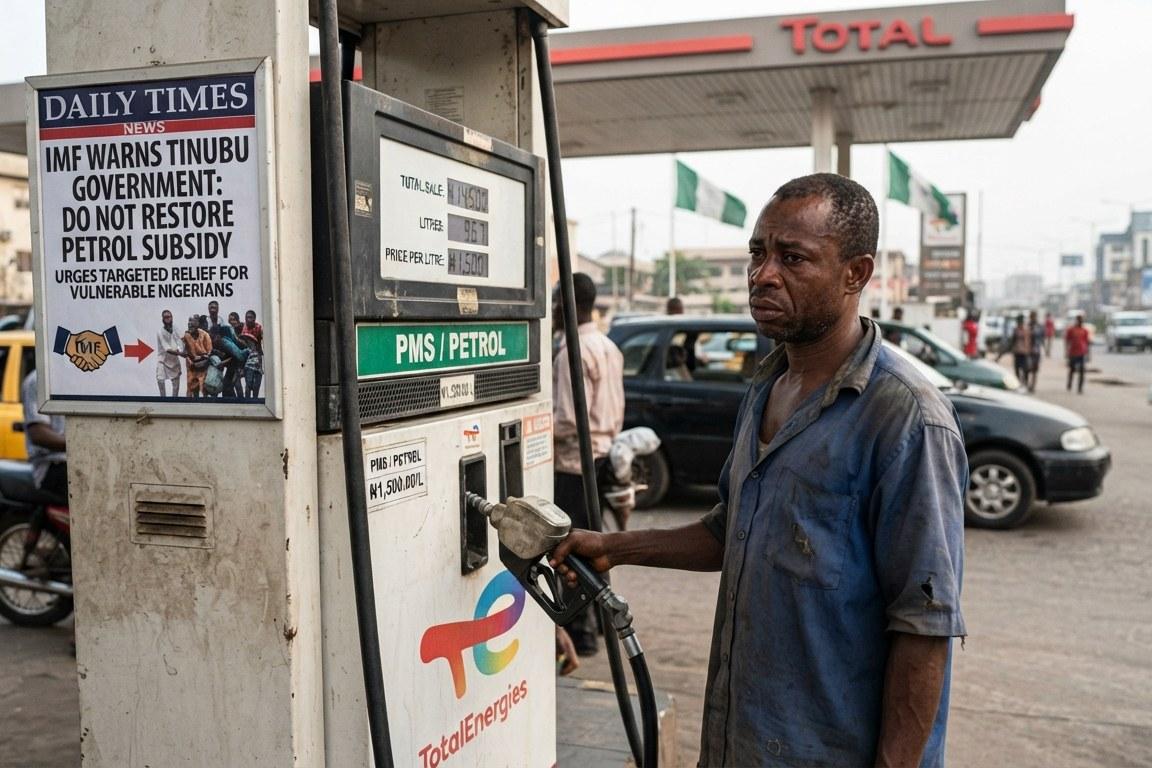
Broad-based subsidies can provide immediate relief, but they may also benefit higher-income consumers who use more energy or consume more subsidised products. If maintained for too long, such measures can place considerable pressure on public finances and divert resources from infrastructure and social services.
Targeted support, by contrast, seeks to direct assistance towards households and groups most affected by price increases. Its effectiveness depends on reliable beneficiary information, transparent implementation and the ability to deliver assistance without excessive administrative costs or exclusion of eligible recipients.
For Nigeria and other African economies, this presents an important policy challenge: how to protect vulnerable citizens while maintaining the resources needed for investment in infrastructure, agriculture, education and healthcare.
The IMF’s position does not imply that governments should withdraw all assistance during periods of hardship. Rather, it emphasises the need to design interventions that address immediate needs while preserving fiscal sustainability and avoiding measures that unnecessarily distort economic activity.
The Fund also called for monetary policy to remain responsive to country-specific conditions, recognising that the effects of geopolitical conflict, energy disruptions and technological change differ from one economy to another.
Over the longer term, it identified stronger energy security, improved readiness for AI and the preservation of open trade and international cooperation as essential priorities.
Energy Security And Open Trade As Long-Term Priorities
The emphasis on energy security is particularly significant because disruptions to oil and gas supplies can transmit economic shocks across continents, affecting production, transport, food prices and inflation.
For energy-importing countries, diversifying supply sources, improving efficiency and investing in reliable energy infrastructure can reduce exposure to sudden international price increases. For energy-producing countries such as Nigeria, the challenge is to turn resource endowments into dependable domestic supply, stronger industrial capacity and more diversified exports.
Open trade and international cooperation are equally important. Trade tensions can raise costs for businesses and consumers, disrupt established supply chains and discourage investment. Countries that rely on exports or imported production inputs may be particularly vulnerable when major trading partners impose new restrictions.
For Africa, the case for stronger regional economic integration is reinforced by the need to widen markets, increase the scale of domestic industries and make it easier for businesses to source inputs and reach consumers across borders.
However, openness must be accompanied by efforts to improve domestic competitiveness. Better infrastructure, access to affordable credit, predictable regulation and investments in skills can help African producers compete more effectively while taking advantage of regional and international markets.
A Narrowing Window For Policy Action
The central message of the IMF’s latest World Economic Outlook is that global economic resilience should not be mistaken for the disappearance of risk.
The projected expansion of the world economy offers opportunities, but rising food and energy prices, geopolitical tensions, higher sovereign borrowing costs and renewed trade disputes threaten to weaken growth and increase pressure on governments and households.
The unequal distribution of the benefits from AI investment and favourable terms of trade adds another dimension to the challenge, raising questions about how countries can improve productivity without leaving vulnerable economies further behind.
For Africa, the priorities include strengthening fiscal resilience, improving food and energy security, diversifying production and exports, expanding regional trade and investing in the infrastructure needed to benefit from technological change.
For Nigeria, the implications are equally practical: manage oil revenues prudently, strengthen domestic production, address structural drivers of food and energy costs, preserve debt sustainability and create conditions for technology and industrial investment to translate into jobs and higher productivity.
The Fund’s warning is ultimately a call for governments to use the period of continued global growth to strengthen their capacity to withstand future shocks. As the financial and policy buffers supporting the world economy narrow, the ability to respond will increasingly depend on sound public finances, credible economic policies, productive investment and international cooperation.
The challenge for policymakers is not merely to sustain growth in the immediate term, but to ensure that the gains are broad enough, durable enough and sufficiently supported by domestic productive capacity to withstand the next global disruption.