PublicSphere Live
International Finance
IMF To Launch October 2026 Global Financial Stability Report In Bangkok
The briefing, scheduled for 10:15 a.m. Bangkok time, equivalent to 11:15 p.m. on Monday, October 12, in Washington, D.C., will provide an opportunity for journalists to engage IMF officials on the report and its assessment of global financial stability.
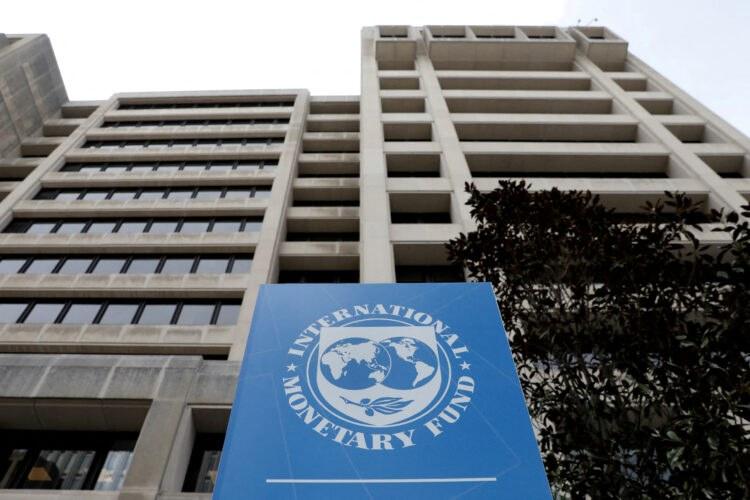
The International Monetary Fund (IMF) will on Tuesday, October 13, 2026, unveil its October edition of the Global Financial Stability Report (GFSR) during a press briefing in Bangkok, Thailand, bringing together senior officials of the global financial institution to discuss developments and risks in the international financial system.
The briefing, scheduled for 10:15 a.m. Bangkok time, equivalent to 11:15 p.m. on Monday, October 12, in Washington, D.C., will provide an opportunity for journalists to engage IMF officials on the report and its assessment of global financial stability.
The GFSR is one of the IMF's key publications on international financial markets, examining vulnerabilities in the global financial system, emerging risks and the implications of financial developments for economic stability. Its findings are closely followed by policymakers, central banks, financial institutions, investors and other stakeholders concerned about the resilience of the global economy.
The October 2026 edition is expected to contribute to ongoing discussions about the condition of international financial markets and the challenges confronting financial authorities amid changing economic and market conditions. Specific findings and recommendations, however, will be established by the report upon its release.
The press briefing will feature Athanasios Vamvakidis, Deputy Director of the IMF's Monetary and Capital Markets Department; Jason Wu, Assistant Director in the same department; and Caio Fonseca Ferreira, Deputy Division Chief.
The session will be moderated by Camila Perez, Senior Communications Officer at the IMF.
The event will take place at the Queen Sirikit National Convention Center in Bangkok, with the physical briefing scheduled for Room G-03. The IMF will also provide virtual participation through WebEx, allowing journalists who cannot attend in person to follow the proceedings and engage with the officials.
In addition, the briefing will be livestreamed through the IMF website, YouTube and other platforms, expanding access to the report's presentation and the accompanying media engagement.
Journalists intending to participate in the online press conference are required to register in advance through the IMF's registration facility for the October 2026 Global Financial Stability Report briefing.
Questions may be submitted through the IMF Press Center and WebEx, providing media representatives with channels to seek clarification on the report's findings and the institution's assessment of financial stability issues.
The launch comes as global financial authorities continue to monitor developments in financial markets and assess potential vulnerabilities that could affect economic growth, capital flows, investment and the capacity of financial institutions to withstand shocks.
The GFSR provides a platform for the IMF to examine such issues and communicate its assessment of risks that could threaten financial stability, including developments in banking, capital markets and the broader financial system.
The report's analysis is particularly relevant to emerging and developing economies, which can be exposed to changes in international borrowing costs, exchange rates, investor sentiment and cross-border capital movements. Shifts in global financial conditions can influence governments' debt-servicing costs, businesses' access to credit and the availability of financing for development.
For countries seeking to sustain economic growth while managing inflationary pressures and fiscal constraints, assessments of global financial stability can help inform policy discussions on financial regulation, monetary policy and the management of external vulnerabilities.
The IMF's Monetary and Capital Markets Department plays a central role in the institution's work on financial-sector surveillance, market developments and policies designed to strengthen the resilience of financial systems.
The October report's detailed assessments and policy recommendations will become available with its official release, after which policymakers, analysts and market participants will be able to evaluate its implications for individual economies and the international financial system.
.