PublicSphere Live
World
Houthi Attack on Saudi Arabia: A Dangerous Escalation That Threatens Regional Peace and Global Security
Beyond the immediate human tragedy, the attack raises fundamental questions about the vulnerability of critical infrastructure, the limits of military deterrence, the growing influence of Iran in regional conflicts and the possibility that a war already devastating.
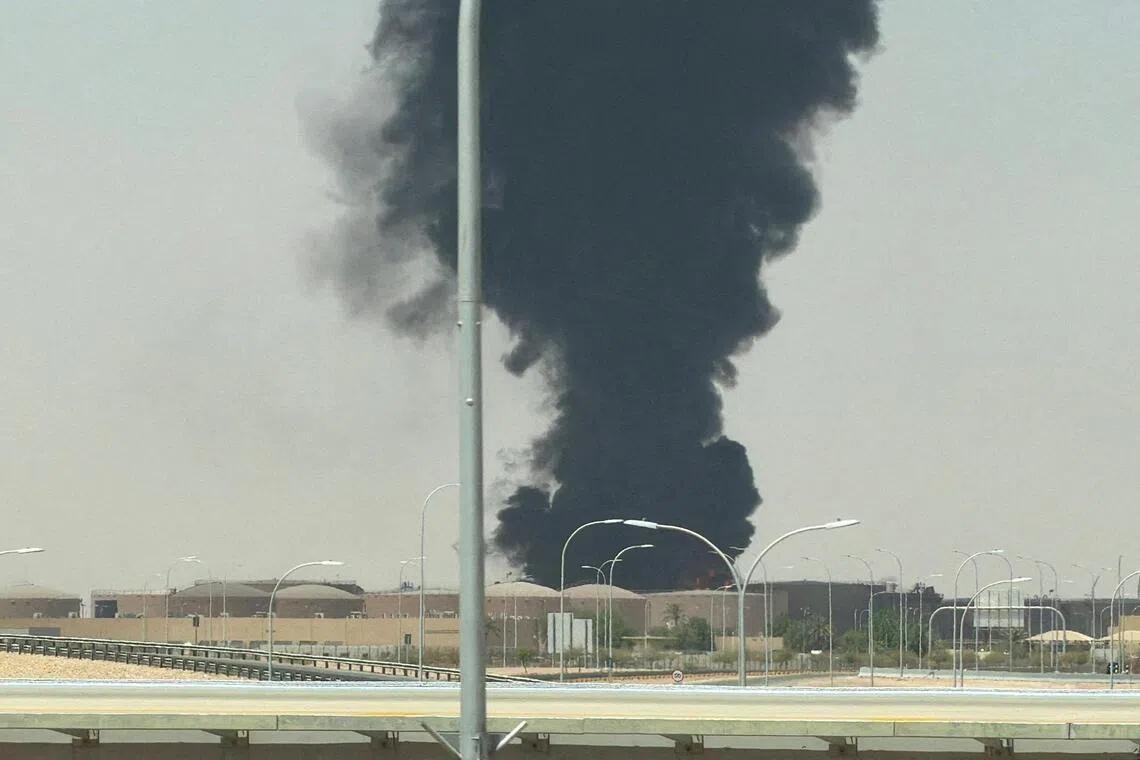
The deadly Houthi attack on Saudi Arabia’s King Khalid International Airport in Riyadh, which killed at least 12 people and wounded more than 300 others on October 10, 2026, represents a dangerous escalation in the protracted conflict between the Yemeni armed movement and the Saudi-backed forces fighting to reverse its territorial gains in Yemen. Beyond the immediate human tragedy, the attack raises fundamental questions about the vulnerability of critical infrastructure, the limits of military deterrence, the growing influence of Iran in regional conflicts and the possibility that a war already devastating Yemen could draw additional countries into direct confrontation.
The attack was the third reported strike on Riyadh’s airport in the same week, and its scale made it one of the deadliest assaults on Saudi territory in more than a decade. Saudi authorities reported that the victims included citizens of several countries, while flights were diverted and airport operations suspended. The international character of the casualties underscores an important reality: when armed groups target major civilian transport hubs, the consequences extend far beyond the immediate battlefield.
The tragedy must therefore be examined not merely as another episode in the Saudi-Houthi confrontation, but as a warning about the consequences of allowing regional rivalries to develop into an open-ended cycle of attacks and retaliation.
The Human Cost of A Widening Conflict
The most immediate consequence of the attack is the loss of innocent lives and the suffering inflicted on hundreds of people who had gathered at an international airport to travel, work or meet family members. Among those killed were four Saudi nationals, two Bangladeshis and citizens of the United States, Jordan, Palestine, Syria, Sudan and Egypt, according to Saudi civil aviation authorities. The reported death toll stood at 12, with 309 people wounded.
These figures reveal the indiscriminate character of the danger facing civilians when heavily populated facilities become targets in military confrontations. An airport is not simply a building that facilitates air travel; it is an essential component of a country's economic infrastructure, connecting families, businesses, diplomatic missions, international organisations and humanitarian operations.
The human consequences also extend to survivors, emergency workers, medical personnel and relatives who must cope with the aftermath. Hospitals receiving large numbers of casualties face immediate pressure, while the suspension of flights leaves passengers stranded and disrupts journeys across international aviation networks.
Although the political and military circumstances surrounding an attack may be contested, the deaths of civilians cannot reasonably be dismissed as an incidental detail in a strategic calculation. The protection of civilian life must remain central to any legitimate assessment of the conflict.
Why The Houthis Are Targeting Saudi Arabia
To understand the attack, it is necessary to examine the changing military situation in Yemen, where the conflict has evolved from an internal struggle for political control into a regional confrontation involving competing national and international interests.
The Houthis, a movement rooted in Yemen's Zaydi Shia community, seized the capital, Sanaa, in 2014 and expanded their control over significant parts of the country. Saudi Arabia intervened militarily in 2015 at the head of a coalition supporting Yemen's internationally recognised government, seeking to reverse the Houthi advance and restore that government's authority.
The intervention failed to produce a decisive military victory, and years of fighting contributed to one of the world's most severe humanitarian crises. A ceasefire reached in 2022 reduced major cross-border hostilities, although it did not resolve Yemen's underlying political divisions or establish a comprehensive peace settlement.
That relative calm has now broken down amid a wider regional war and renewed fighting over strategic territory along Yemen's Red Sea coast. The Houthis have intensified attacks against Saudi targets as Saudi Arabia and forces aligned with Yemen's government pursue military operations intended to weaken the movement and recover territory.
The timing is significant. The renewed offensive is not simply a contest over isolated towns or military positions. It concerns control of strategically important territory around the Bab el-Mandeb Strait, a narrow maritime passage linking the Red Sea with the Gulf of Aden and the wider Indian Ocean.
By striking deep inside Saudi Arabia, the Houthis are demonstrating that the consequences of the Yemeni battlefield need not remain confined to Yemen. Their apparent objective is to impose costs on Saudi Arabia, disrupt its strategic calculations and potentially compel Riyadh to reconsider the scale of its military involvement.
However, the tactical effectiveness of such attacks must be distinguished from their political wisdom. Inflicting civilian casualties may generate international condemnation, strengthen Saudi public support for military retaliation and make the compromises required for a negotiated settlement more difficult.
The Failure of Deterrence And The Limits Of Saudi Air Defences
One of the most troubling questions raised by the attack is how a country with substantial military resources and sophisticated defence systems could suffer repeated strikes against a major international airport within a single week.
The three reported attacks on King Khalid International Airport, including the latest strike that killed 12 people and injured more than 300, suggest that Saudi Arabia faces a security challenge that cannot be addressed simply by possessing advanced weapons or purchasing additional defensive equipment.
Missiles and drones have transformed modern warfare by allowing relatively less powerful armed groups to threaten infrastructure far beyond conventional front lines. Such weapons can be comparatively inexpensive to deploy, while the radar networks, interceptor missiles and other systems required to defend against them can be extraordinarily costly.
This imbalance creates a difficult problem for Saudi Arabia. Even when defensive systems intercept some incoming projectiles, a single successful strike can cause substantial casualties, disrupt commercial operations and undermine public confidence in the government's ability to protect its citizens and visitors.
The reported absence of an effective warning before Saturday's attack also raises questions about intelligence gathering, threat assessment, interception procedures and emergency preparedness. These are matters that Saudi authorities will need to investigate carefully before drawing conclusions about the causes of the security failure.
Nevertheless, it would be premature to conclude that Saudi air defences have become ineffective altogether. A successful strike does not establish that every defensive system failed, nor does the available information provide a complete technical account of the projectile, its trajectory or the measures deployed against it.
What is clear, however, is that the repeated attacks have exposed the limitations of deterrence. If the Houthis believe they can continue striking important Saudi facilities despite the kingdom's military superiority, the prospect of further attacks becomes a serious strategic concern.
Iran's Regional Influence And The Danger of A Wider War
The Houthi movement's relationship with Iran is another important dimension of the crisis. Tehran has provided support to the movement, including assistance that has contributed to its military capabilities, although the precise extent of Iranian direction over individual Houthi operations cannot simply be assumed.
Saudi Arabia and Iran have long competed for influence across the Middle East, supporting opposing actors in conflicts that have weakened regional stability. Yemen became one of the most prominent arenas of that rivalry, with Saudi Arabia backing the internationally recognised government and Iran supporting the Houthis.
The current escalation is particularly dangerous because it is unfolding amid a much wider confrontation involving Iran, the United States and Israel. Recent reporting has linked the renewed fighting in Yemen to that broader conflict, while Saudi Arabia has intensified its efforts to support forces seeking to recover territory from the Houthis.
This creates the possibility of a chain reaction. A Houthi attack on Saudi territory could prompt Saudi retaliation; the retaliation could lead to additional Houthi strikes; and further attacks could increase pressure on the United States to become directly involved.
Indeed, US President Donald Trump said Washington was considering whether to join Saudi military operations against the Houthis following the airport attack. US Secretary of State Marco Rubio condemned the strikes, while United Nations Secretary-General António Guterres called for attacks against civilians and civilian infrastructure to stop.
American military involvement could strengthen Saudi Arabia's ability to strike Houthi positions, but it could also widen the conflict and create further opportunities for retaliation against American interests in the region.
The central question is whether additional military pressure would weaken the Houthis sufficiently to change their calculations or instead reinforce their determination to continue fighting. Past experience in Yemen suggests that superior firepower does not automatically translate into lasting political success.
Iran, meanwhile, faces a strategic calculation of its own. Continued support for the Houthis may enable Tehran to exert pressure on Saudi Arabia and other regional opponents at relatively limited direct cost. Yet an escalation that draws American forces more deeply into the conflict could create risks that Iran might not be able to control.
The danger is that local actors, regional powers and international military forces could become locked into a confrontation in which each new attack is justified as a response to the previous one, leaving diplomacy increasingly marginalised.
Bab El-Mandeb: Why The Conflict Matters To The World
The strategic importance of the renewed fighting extends beyond the borders of Saudi Arabia and Yemen because of the Bab el-Mandeb Strait, one of the world's critical maritime passages.
The strait connects the Gulf of Aden and the Indian Ocean to the Red Sea, providing access towards the Suez Canal and the Mediterranean. Commercial vessels carrying petroleum, manufactured goods, agricultural commodities and industrial materials depend on this corridor to connect markets across Asia, Europe, Africa and the Middle East.
The Houthis' reported territorial gains around the Red Sea coast and the resulting military contest have therefore raised concerns about the security of international shipping. The latest escalation comes at a time when disruptions elsewhere in the region have already increased uncertainty over energy supplies and maritime transportation.
Any prolonged threat to shipping through Bab el-Mandeb could force vessels to take longer routes around southern Africa, increasing journey times, fuel consumption, insurance premiums and freight charges. Those additional costs would eventually affect importers, manufacturers and consumers.
For African countries, the implications could be substantial. Many depend on imported refined petroleum products, machinery, fertilisers, pharmaceuticals and other goods whose prices are sensitive to transport and insurance costs. A sustained disruption of major maritime routes could intensify inflationary pressures and complicate efforts to stabilise domestic economies.
Oil markets could also react sharply to fears that the confrontation might spread to additional shipping corridors or energy infrastructure. However, the magnitude of any price increase would depend on the duration of the disruption, the availability of alternative supplies, inventories and the responses of producing countries.
Saudi Arabia's economic interests are particularly exposed. The kingdom has invested heavily in tourism, aviation, entertainment, logistics and international business as part of its effort to diversify its economy beyond oil. Repeated attacks on a major airport threaten to undermine the perception of security on which those ambitions depend.
The implications extend to international investment events and business travel. Investors evaluating long-term commitments to the kingdom will be concerned not only about immediate physical damage but also about whether regional instability could become a persistent obstacle to commercial activity.
International Law and The Protection Of Civilians
The attack also raises serious questions under international humanitarian law, which seeks to limit the effects of armed conflict and protect people who are not participating in hostilities.
The fundamental principles of distinction and proportionality require parties to distinguish civilians and civilian objects from military targets and to avoid attacks expected to cause excessive civilian harm in relation to the anticipated concrete and direct military advantage.
An international airport is ordinarily civilian infrastructure, although particular facilities or uses may acquire military significance under specific circumstances. Establishing whether an attack violated international law requires examination of the intended target, the weapon used, the information available to those responsible and the circumstances surrounding the operation.
Nevertheless, an attack that kills and injures large numbers of people at a civilian transport hub demands a serious investigation. The presence of a military objective somewhere in the vicinity would not, by itself, justify indiscriminate or disproportionate violence.
The international community must also apply consistent standards. Attacks on civilians by the Houthis should be condemned, just as civilian deaths resulting from Saudi-led operations in Yemen must be investigated and addressed. The suffering of one population cannot justify the deliberate or reckless endangerment of another.
A credible response therefore requires more than diplomatic statements. It should include independent examination of serious allegations, cooperation in protecting civilian infrastructure, accountability where violations are established and renewed efforts to secure a political settlement.
Why Retaliation Alone Will Not Secure Peace
Saudi Arabia faces an understandable demand to protect its population and prevent further attacks. Its government cannot ignore repeated strikes against the country's capital and a major international airport, particularly after the loss of so many lives.
Yet the manner in which Riyadh responds will be crucial. A large-scale retaliatory campaign might damage Houthi military infrastructure, but it could also produce further civilian casualties in Yemen, encourage additional cross-border attacks and strengthen the movement's argument that it is fighting foreign aggression.
The experience of the Yemen war demonstrates the limitations of pursuing political objectives predominantly through military means. Years of intervention did not restore lasting stability, while the country suffered extensive destruction, displacement, food insecurity and the breakdown of essential public services.
The appropriate lesson is not that Saudi Arabia should abandon its security responsibilities. Rather, military measures should be carefully directed towards legitimate defensive objectives and accompanied by a credible diplomatic strategy.
Such a strategy would require engagement with Yemen's competing political actors, regional powers and international partners. It would also need to address the underlying questions of political representation, territorial control, security guarantees and the future structure of the Yemeni state.
A ceasefire that merely pauses hostilities without resolving the principal disputes may provide temporary relief, but it is unlikely to prevent another escalation. A durable settlement must reduce the incentives for armed groups to use attacks on neighbouring countries as instruments of political pressure.
Saudi Arabia and Iran also have a responsibility to consider whether continued rivalry serves their long-term interests. Regional security cannot be built sustainably on the assumption that weakening a rival is more important than preventing the collapse of the wider regional order.
Conclusion: A Warning The Region Cannot Ignore
The Houthi attack on Riyadh's international airport is a tragedy for the families of those killed and injured, but it is also a warning about the growing danger of a conflict whose consequences are no longer confined to Yemen.
The deaths of at least 12 people and the injuries sustained by more than 300 others demonstrate the devastating human cost of attacks on civilian infrastructure. The repeated strikes also expose challenges for Saudi air defence, threaten commercial aviation, undermine investor confidence and increase the risk of a wider confrontation involving Iran, the United States and other regional actors.
The immediate priority must be the protection of civilians, the restoration of safe aviation operations when conditions permit and a thorough investigation of the attack. Beyond that, Saudi Arabia and its partners must resist the temptation to measure success solely by the scale of retaliation or the number of enemy targets destroyed.
The Houthis must recognise that attacks endangering civilian lives cannot provide a legitimate substitute for political negotiation. Saudi Arabia, for its part, must combine its legitimate security concerns with a strategy capable of ending the cycle of violence rather than perpetuating it.
The international community must also avoid treating Yemen as a peripheral conflict whose consequences can be contained within the Arabian Peninsula. The security of Red Sea shipping, global energy markets and international aviation makes the crisis a matter of wider concern.
Ultimately, the most important test of leadership will not be which side can inflict the greatest damage, but whether regional and international powers can prevent the next attack, protect innocent lives and create conditions under which Yemen and its neighbours can move away from war.