PublicSphere Live
Opinion
Fuel Pump Price Subsidy
These posturing are not surprising considering the level of anguish in the land. After all, we must not stop reminding ourselves that the core essence of leadership is the welfare and well-being of a generality of the population.
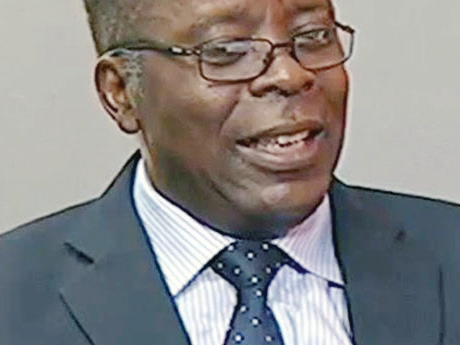
By Dr Boniface Chizea
Return of subsidy to the pump price of fuel has understandably gained current traction. This engagement was sparked by ADC Presidential candidate former Vice President Atiku Abubakar. Presidential hopeful Peter Obi has since joined in this conversation by also promising to return subsidy to the pump price of fuel. These posturing are not surprising considering the level of anguish in the land. After all, we must not stop reminding ourselves that the core essence of leadership is the welfare and well-being of a generality of the population.
The pump price today at above 1,400 Naira per litre is at the same time punitive, excruciating, even wicked, and most certainly not sustainable. All that is required for some clarity about this flow of argument is to compare the pump price alongside, say, the minimum wage, and the problem would be seen in bold outline. And this deep problem cuts across a broad spectrum of the Nigerian society.
But what is happening now across many countries of the world is not really a wholesale embrace of subsidy per se. These are emergency responses, contrary to the situation in Nigeria where no one seems to care, as other countries react to the sudden spike in pump price and the unprecedented anguish that has been unleashed on a generality of the population due to this utterly senseless war, which America as an aggressor has taken to Iran.
We thank God that bully Trump is being taught some very hard lessons. There are no minions when it comes to such aggressions. We should ask Russia how the war with Ukraine is going after four years. And this is a war I am sure the Russians thoughtwill be all over and done within a matter of months. Therefore, the various steps being taken is to temporarily ameliorate the hardship that has been visited on the population. It is often recommended as a matter of fact that it is better to subsidise production rather than consumption for more reasons than one.
In the particular Nigeria situation, what really does subsidy mean? We arrived at that situation when we discovered that we were not able to recover the landing costs of imported products. As we discuss, we must bear in mind that there is considerable add-on to this cost differential due to the pervasive nature of entrenched corruption in the land. Therefore,if Peter Obi says he will revisit subsidy, which by the way does not have my full endorsement, we might be dealing with more realistic figures as corruption must have been reduced to its bearest minimum.
There are many reasons why we should avoid going back to subsidising pump price. In the first place, such subsidy payments are wasteful misallocation of scarce resources. They don't ever get to the intended beneficiaries. We may also want to ask ourselves in the first place, where the money for the payment of such subsidy would be found having regard to its opportunity costs. Remember that we have now to popularapplause put behind us inflation stoking Ways and Means finance? We have stopped printing currency as we lie to deceptively pay our bills!
I have also seen attempts made to calculate what the pump price should be if we rely on costs based on the illusory consideration that we have natural endowment as we export crude petroleum. In the first place, crude availability is, for now, a phantom idea. Most of the crude we export today have been tied down for the payments of external commitments. If you like, go ask Dangote who auguments supply today by importing crude from America to meet requirements. If you also make pump price in Nigeria much lower than those in neighbouring countries, we weaponise irresistible and difficult to control products smuggling as economic agents take undue advantage.
Also the talk of subsidy is a take back to the importation era. Products importation is a crying shame for a country that exports crude petroleum. There is no other OPEC country that is faced with this dilemma. Nigeria must quickly find the capacity to refine products within the country. The four local refineries, as a matter of utmost urgency, must be made to work. If necessary, the option of professionally supervised and corruption free privatisation could be considered. That, for me, should be the thrust of our future engagements in this regard. We can grant carefully worked out palliatives like other countries of the world have done for now to be withdrawn as soon as the flash economic storm subsides.
What we must bear mind is that it is urgent for us as a country to think properly through how to cater for the welfare and well-being of the majority of our population living on the margin by making our budgeting pro-poor. What that means is that we prioritise health care, particularly at the primary level, provide well funded and affordable public education; affordable transportation and housing, clean water supply, and regular power supply. Often, one gets the feeling that we don't seem to appreciate what difference steady power supply would make to national productivity, GDP growth, and improved employment opportunities, thereby reducing the misery index in the land.
In the particular area of the cost of pump price all that was needed is to have provided affordable and decent means for the mass movement of people by road, water and rail, in a manner thatis accessible to all across board including the middle class.
Nigeria, as we are often reminded, is really a gas territory with associated fossil fuel. But we flare associated gas to our utter detriment instead of optimising its use. Lately, there were on and off discussions about converting cars to use Liquefied NaturalGas. But our commitment in this regard is not total. There must also be concerted efforts made at using renewable energy; particularly solar energy. I was thrilled as I listened to the Zamfara State Governor explain how far the state has gone in deploying solar energy and that the State reliance and payments for electricity supply from the national grid have drastically reduced This must be the path ahead for the rapid development and prosperity of Nigeria. Shalom.
Boniface Chizea,PhD, is an Economist and Financial Affairs Activist,