PublicSphere Live
News
Utomi Fires Warning at Judiciary: ‘History Will Judge You’ Over Role in Nigeria’s Elections

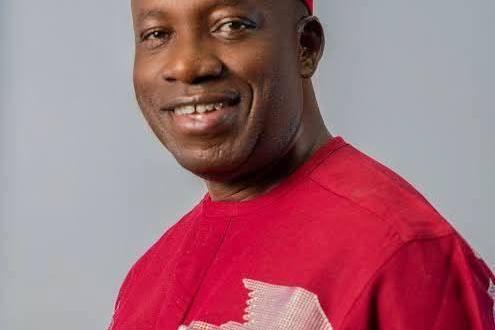
Professor of Political Economy, Pat Utomi, has launched a blistering criticism of the Nigerian judiciary, warning that the courts could face the judgment of history over the role they play in determining the outcome of elections and shaping the country’s democratic future.
Utomi, in a strongly worded post on his verified X handle on Saturday, said the judiciary had reached a critical moment in Nigeria’s democratic journey, insisting that courts must do more than simply adjudicate disputes if democracy is to retain the confidence of citizens.
His intervention comes amid continuing concerns over voter participation, electoral legitimacy and the growing importance of judicial decisions in resolving disputes arising from elections.
The professor argued that the strength of any democracy ultimately depends on the institutions established to protect citizens’ rights and preserve constitutional order.
He warned that when institutions entrusted with upholding justice fail to live up to the confidence reposed in them, the consequences could extend far beyond individual cases or election cycles.
‘History Will Judge the Judiciary’
Utomi’s central warning was directed at the judiciary and its constitutional responsibility at a time when Nigerians are increasingly questioning the credibility and effectiveness of democratic institutions.
“History will judge the role the judiciary plays at this moment,” he said, stressing that every institution must rise to the responsibility of protecting democracy and the Nigerian people.
For Utomi, the judiciary occupies a particularly sensitive position because its decisions can determine the fate of electoral contests after voters have cast their ballots.
He suggested that the responsibility of the courts goes beyond settling legal disputes between competing politicians.
According to him, courts are institutions upon which citizens depend for the protection of justice, constitutional order and the democratic process itself.
His comments effectively place the judiciary at the centre of the wider debate about the health of Nigeria’s democracy, particularly as electoral disputes frequently move from the ballot box to the courtroom.
‘Democracy Is Only as Strong as Its Institutions’
Utomi also underscored the importance of strong democratic institutions, warning that democracy cannot thrive where citizens lose faith in the institutions designed to protect their rights.
“A democracy is only as strong as the institutions that protect the rights of its citizens,” he said.
The statement represents a broader concern about institutional confidence in Nigeria, where elections have often generated prolonged legal battles and where judicial pronouncements have become a major part of the political process.
While politicians contest election results, the judiciary is ultimately called upon to determine whether electoral processes complied with constitutional and statutory requirements.
That role makes judicial independence, impartiality and public confidence particularly important.
Utomi's intervention therefore raises a fundamental question about the relationship between the ballot box and the courtroom: how can democratic legitimacy be sustained when significant electoral disputes ultimately depend on judicial interpretation?
‘Minority Government’ Claim
The political economist also linked his concerns about the judiciary to what he described as weak electoral participation.
He argued that low voter turnout raises serious questions about the strength of the mandate claimed by elected governments.
“When voter participation is low and large numbers of citizens do not participate in choosing their leaders, we must take seriously what that says about the strength of our democratic mandate,” Utomi said.
He went further to describe the present administration as a “minority government” in terms of its electoral mandate.
The characterization is rooted in his argument that the number of citizens who actually participate in elections can be significantly smaller than the overall voting-age population, raising questions about how broadly an electoral mandate should be understood.
The comment is likely to add another dimension to Nigeria's continuing debate over electoral participation, legitimacy and political accountability.
Courts at the Heart of Electoral Disputes
Nigeria's electoral system provides legal avenues through which candidates and political parties can challenge election results. Consequently, courts and election tribunals routinely become the arena for disputes over the conduct and outcome of elections.
Utomi's remarks highlight the extraordinary responsibility that accompanies that role, noting that when courts determine whether an election meets constitutional and legal requirements, their decisions can have consequences extending well beyond the immediate litigants.
A judicial ruling can determine who occupies an elected office, whether an election stands or falls, and whether the electoral process is regarded as having complied with the law.
This explains why confidence in the judiciary is so important to democratic stability.
For Utomi, the issue is not simply whether courts resolve cases according to legal procedure. It is also whether the institution succeeds in preserving public confidence in the democratic system.
Warning Against Institutional Failure
The professor warned that institutions that fail to meet their responsibilities could eventually be judged harshly by history.
He argued that those entrusted with upholding justice must recognise the weight of the responsibility placed upon them.
“If those entrusted with upholding justice fail to redeem the confidence placed in them, history may remember them as having been part of the forces that contributed to the decline of the Nigerian dream,” he said.
The warning gives his intervention a much broader significance than an ordinary criticism of a judicial decision.
Utomi is effectively framing the current institutional debate as one involving the long-term survival and credibility of Nigeria's democratic project.
His reference to the “Nigerian dream” also places the issue within the broader struggle to build a country where constitutional institutions command public trust and where citizens believe their political rights are protected.
The Ballot Box and The Bench
At the centre of the controversy is an enduring feature of Nigerian politics: the relationship between elections and litigation.
Elections are conducted through the ballot box, but disputed outcomes can ultimately be determined through judicial proceedings.
That reality makes the courts an unavoidable participant in the country's electoral architecture, even though judges themselves do not participate in elections.
The challenge, therefore, is to ensure that judicial intervention strengthens rather than undermines confidence in the democratic process.
Utomi's message is that every institution must understand the historical consequences of its actions.
He called on institutions to “rise to the responsibility” of protecting democracy and the Nigerian people.
His comments also amount to a warning to political actors and other institutions that democracy cannot be sustained by elections alone.
It requires credible institutions, meaningful citizen participation, respect for constitutional rules and confidence that disputes will be resolved through processes that Nigerians regard as fair and legitimate.
A Broader Democratic Crisis?
Utomi's intervention has opened another chapter in the increasingly intense national conversation over the quality of Nigerian democracy.
His concerns touch on three interconnected issues: declining or inadequate voter participation, the legitimacy of electoral mandates and the role of the judiciary in resolving electoral disputes.
Taken together, the issues raise difficult questions about the country's democratic future.
If citizens become increasingly disengaged from elections, the size of electoral mandates can become a matter of debate. If electoral disputes increasingly end in court, judicial decisions assume greater political significance. And if citizens lose confidence in the institutions responsible for resolving those disputes, the credibility of the entire democratic process can come under pressure.
It is against that backdrop that Utomi's warning about history assumes significance.
His message is that institutions operating today will ultimately be judged not only by the decisions they make in individual cases but also by the impact those decisions have on Nigeria's democratic development.
For the judiciary, the warning is stark: the responsibility entrusted to the courts extends beyond the courtroom.
According to Utomi, it reaches into the very foundation of constitutional democracy — the protection of citizens' rights, the preservation of justice and the defence of a political system in which Nigerians can have confidence.
And his ultimate appeal is unmistakable: at a critical moment in Nigeria's democratic journey, institutions must choose responsibility over failure, because history will eventually pass its own judgment.