PublicSphere Live
The Faith
PFN Backs Catholic Bishops, Says Attack on Bishops Is Attack on Entire Christian Community
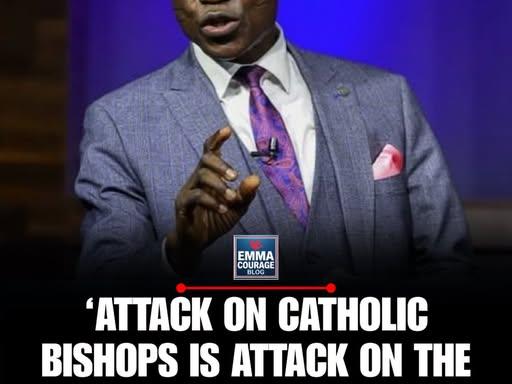
ABUJA — The Pentecostal Fellowship of Nigeria (PFN) has thrown its weight behind the Catholic Bishops Conference of Nigeria (CBCN), declaring that any attempt to attack or discredit Catholic bishops over their assessment of the country's security situation amounts to an attack on the wider Christian community.
PFN National President, Bishop Wale Oke, said the fellowship aligned itself with recent concerns expressed by Cardinal John Onaiyekan that Nigeria was “bleeding” as a result of insecurity, violence and other challenges confronting citizens across different parts of the country.
Oke said religious leaders had a moral responsibility to speak about issues affecting the welfare and security of Nigerians, insisting that such interventions should not automatically be interpreted as political opposition to government.
The PFN leader's comments come amid a growing debate over recent remarks by Catholic bishops on the state of the nation and the response from the Presidency to concerns raised by the church leaders.
Defending the bishops, Oke questioned whether the security situation in various parts of the country did not justify the description of Nigeria as a nation in distress.
“Are we not bleeding in Benue, Southern Kaduna, Borno, Kwara and Oyo?” he asked.
He argued that the realities faced by citizens in affected communities could not be ignored simply because concerns about insecurity were being raised by religious leaders.
According to him, speaking truth to those in authority is part of the responsibility of religious leaders and should not be reduced to partisan politics.
PFN: Religious leaders have duty to speak
Oke maintained that the church could not remain silent when citizens were being affected by violence, insecurity and other forms of social distress.
He said the intervention by Cardinal Onaiyekan should be viewed within the context of the responsibility of religious institutions to advocate for the welfare and protection of the people.
The PFN president's position effectively places the Pentecostal body alongside the Catholic Church in calling attention to the security and humanitarian challenges confronting Nigerians.
The comments also highlight the growing convergence among Christian leaders over the need for government to address insecurity, particularly in communities where violence has disrupted livelihoods and created fear among residents.
Oke rejected any suggestion that criticism or scrutiny of government policies by church leaders automatically amounted to partisan political activity.
He insisted that the church's responsibility included speaking up for citizens and demanding accountability from those entrusted with political authority.
Controversy over bishops' comments
The PFN's intervention follows reactions to the Catholic bishops' assessment of the country's condition and the subsequent response from the Presidency.
While some Nigerians and public commentators have defended the bishops' right to comment on matters of national importance, others have argued that religious leaders should be careful not to cross the line between legitimate civic engagement and partisan political activity.
The debate has consequently extended beyond the immediate issue of insecurity to broader questions about the role of religious institutions in Nigeria's democracy.
Supporters of the bishops maintain that faith leaders have a responsibility to speak when public policies or security failures affect the lives and welfare of citizens.
Critics, however, have questioned whether such interventions could be interpreted as political opposition, particularly when they involve strong criticism of the government in power.
Oke's intervention appears to reject the latter interpretation, with the PFN leader insisting that speaking about suffering and insecurity is a moral duty rather than a partisan political position.
PFN tackles bus preaching controversy
The PFN president also criticised proposals reportedly linked to the imposition of fines on bus preaching under amendments to road safety regulations.
Oke opposed any measure he believes could restrict Christian evangelism, declaring that Christians would continue to preach the gospel.
The issue has generated concern among some Christian groups over the extent to which road safety regulations should regulate religious activities carried out in commercial vehicles.
Oke urged lawmakers and policymakers to concentrate on issues that directly affect the welfare of Nigerians rather than measures that could unnecessarily generate tension with religious communities.
His comments suggest that the PFN sees religious freedom and the ability of Christians to evangelise as issues that should be protected within the broader constitutional framework.
The position also adds another dimension to the growing engagement between religious organisations and government institutions over public policy.
Calls for focus on insecurity
At the centre of Oke's intervention, however, was the security situation and the need for government to address the concerns raised by religious leaders and citizens.
By citing Benue, Southern Kaduna, Borno, Kwara and Oyo, the PFN president sought to emphasise that insecurity was not confined to one geographical area or community.
He questioned whether the experiences of people living in areas affected by violence could reasonably be ignored when assessing the overall state of the country.
His comments come against the backdrop of continuing public concern over attacks, communal violence, criminality and the wider impact of insecurity on communities and economic activities.
For the PFN, the church's role in such circumstances goes beyond worship and spiritual activities to include advocacy for peace, justice, security and responsible governance.
Christian community closes ranks
By declaring that an attack on Catholic bishops is an attack on the entire Christian community, the PFN has signalled solidarity with the CBCN at a time when the bishops' comments have become part of a wider national conversation.
The statement also underscores the potential for greater cooperation among Nigeria's major Christian blocs when issues affecting the broader Christian community or national welfare arise.
Oke's remarks could further intensify the debate over how far religious leaders should go in holding governments accountable and how government should respond to criticism from faith-based organisations.
For the PFN, however, the distinction between religious responsibility and partisan politics is clear: raising concerns about insecurity and the suffering of citizens, it argues, is a moral obligation.
As reactions continue to emerge from religious, political and civil society circles, the debate is likely to remain focused on two competing principles — the responsibility of government to protect citizens and the role of religious leaders in speaking publicly when they believe that responsibility is not being adequately fulfilled.